The Origins of Hard Wheat in the Castilian Plain
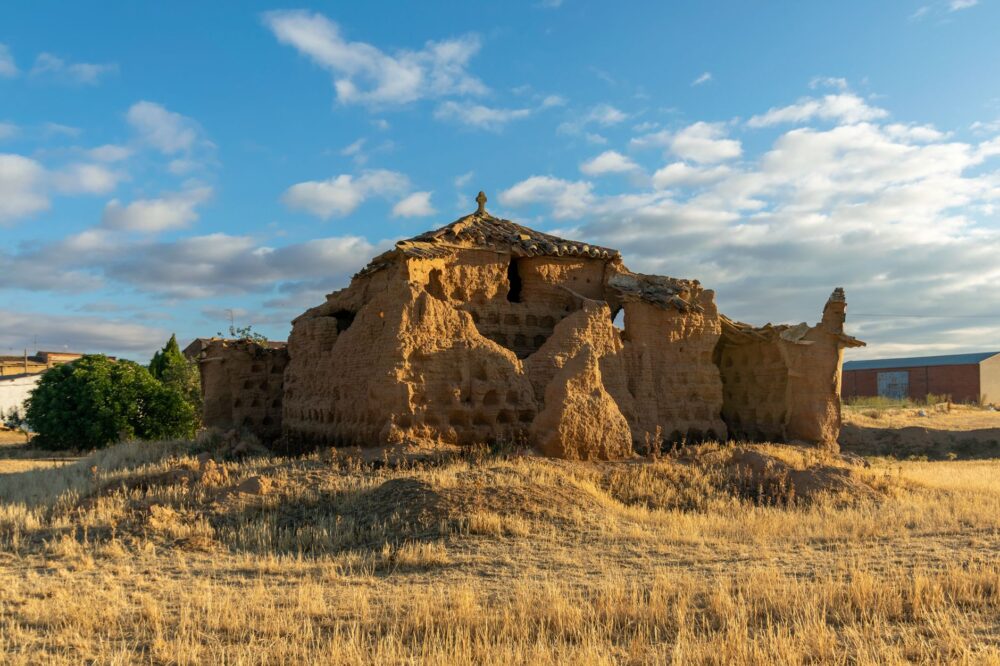
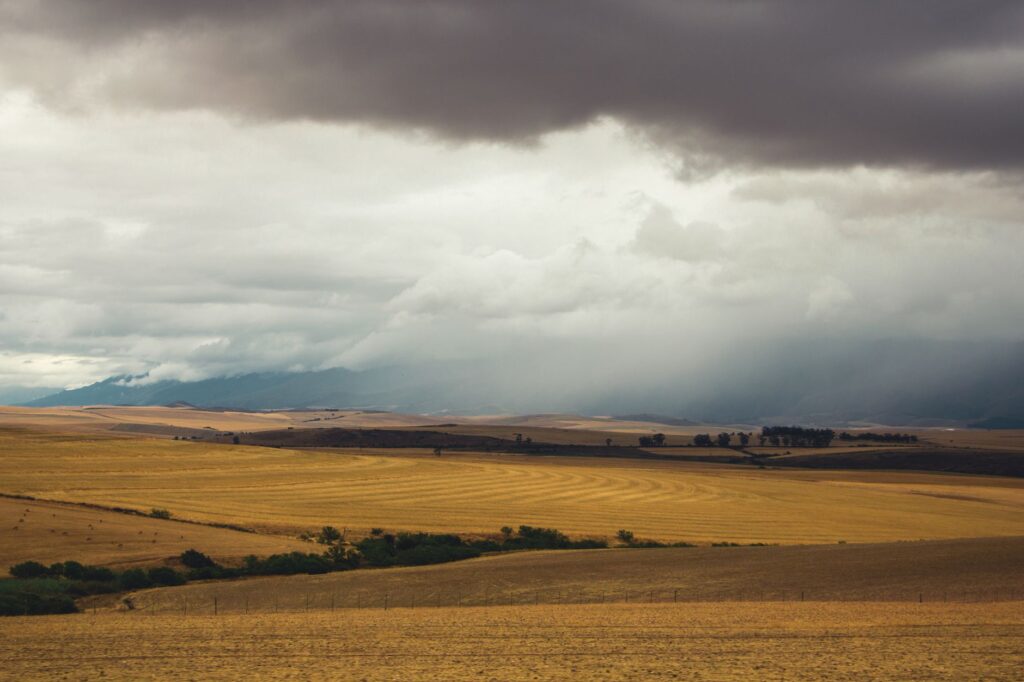
The vast expanse of Tierra de Campos, stretching across the provinces of Zamora, Valladolid, Palencia, and León, has shaped for centuries a landscape where the horizon is measured in lines of wheat and clay. In this territory of expansive proportions and infinite skies, agriculture has never been a mere means of subsistence, but rather the cultural framework supporting the daily life of its communities. The Zamora countryside, lashed by rigorous winters and relentlessly dry summers, has naturally selected those cereal varieties capable of withstanding climatic severity without losing their nutritional essence and baking qualities. Here, hardy wheat and traditional long-cycle strains find their ideal habitat, deeply anchored to a soil that demands effort in exchange for its finest yields.
The bread-making cycle begins long before the ear of wheat achieves its golden maturity beneath the summer sun. Local farmers, heirs to knowledge transmitted without interruption from parents to children, closely monitor the condition of their plots, evaluating soil moisture and prevailing wind patterns. This intimate bond with the geographical environment endows the final product with an unmistakable identity, impossible to replicate in other latitudes. Harvesting, once a communal task mobilizing entire families under the relentless July light, maintains today a cadence where modern machinery coexists with absolute respect for the natural rhythms of drying and storage in traditional stone and timber silos.

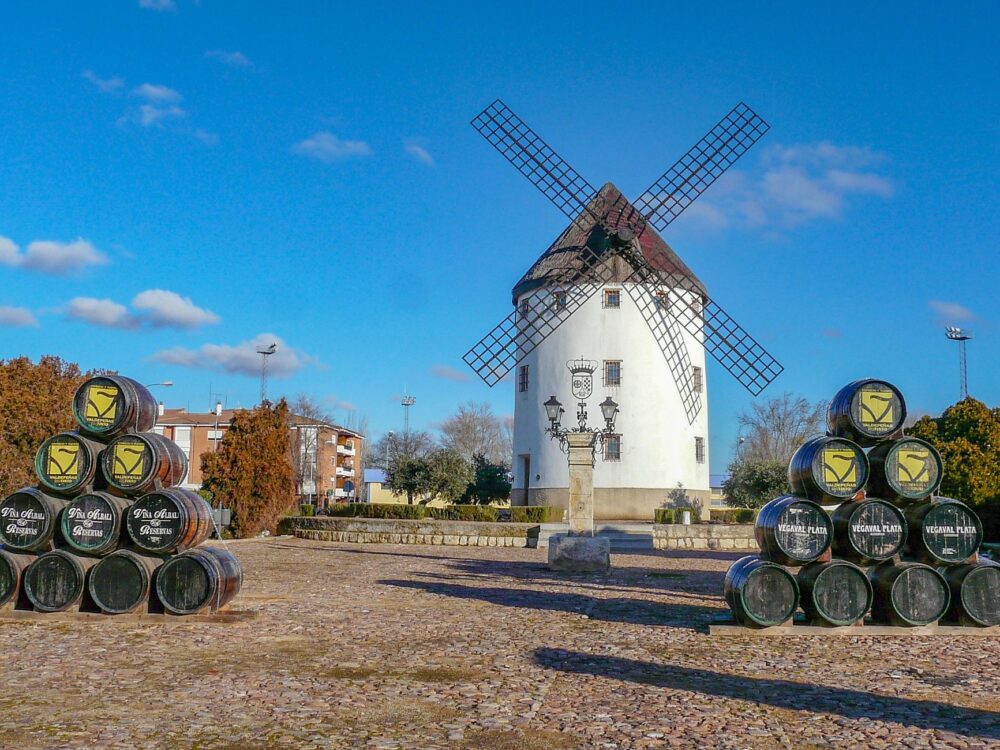
The Architecture of Water and Stone: The Flour Mills of the Órbigo River
Following the capricious course of river channels descending from mountain foothills towards the Zamoran plains, hydraulic architecture reveals an industrial heritage of incalculable ethnographical value. Flour mills, constructed with local ashlar stone and noble woods such as oak and poplar, dot the riverbanks as silent witnesses to an era when the kinetic energy of water constituted the sole available power source. These structures, many of them carefully restored by local artisans, preserve their original machinery inside—granite millstones and wooden gears that crushed the grain with pinpoint precision, preventing the excessive heating of the flour.
Unlike contemporary industrial milling, which pulverizes cereal at high speeds and alters the grain’s organoleptic properties, the traditional stone mill operates via a slow, deliberate friction. This low-speed process allows the wheat germ and traces of bran to integrate harmoniously into the flour, preserving essential oils, B-complex vitamins, and minerals that grant the bread its characteristic rustic aroma. Today’s millers, authentic guardians of a millennial technique, regulate the stones by ear and touch, checking the temperature and texture of the flour at every pass with a skill that defies technological automation.
The Centennial Bakery: The Temple of Manual Kneading
At the heart of Zamoran villages, tucked away from mass commercial routes, resilient family-run bakeries endure where time seems to have halted in the early decades of the past century. Crossing the threshold of these workshops, the warm, dense air immediately transports the visitor to another sensory dimension, where the aroma of fermented sourdough mingles with the subtle smoke of Holm oak firewood. Here, high-capacity industrial mixers and chemical improvers aimed at accelerating production are nowhere to be found; labor is entrusted exclusively to physical strength, patience, and the empirical wisdom of the bakers.
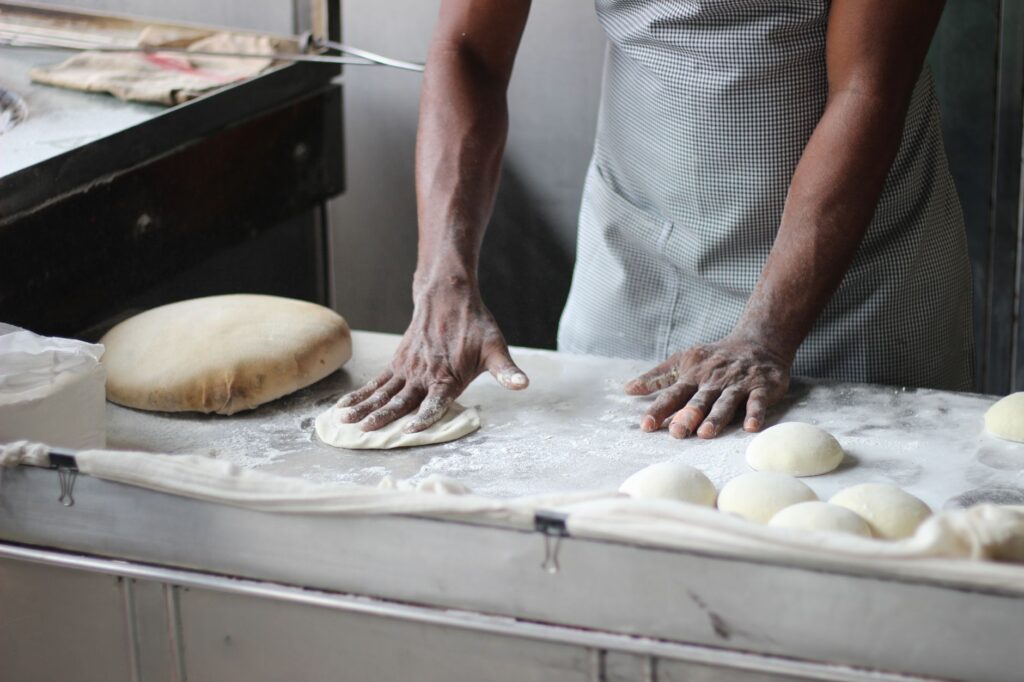
The crafting of candeal bread—also known as kneaded or rolled bread—demands notable physical mastery due to its low hydration level. After mixing wheat flour with water and a portion of sourdough from the previous batch, bakers use a traditional wooden cylinder or a heavy rolling board to repeatedly laminate the dough. This continuous folding expels excess air and grants the crumb an extraordinarily dense, fine, and compact texture, wrapped in a thin, crisp crust with a luminous golden hue that evokes Castilian sunsets. Each loaf is hand-rounded with precise gestures, a ritual repeated thousands of times over decades.
True bread is not the result of a mathematical formula, but rather the constant dialogue between the living matter of the earth, the climate, and the memory of the hands that shape it.
The Living Fire: The Liturgy of Clay Ovens and Vine Branches
The culminating moment of traditional baking lies in cooking, an art requiring absolute mastery of fire and the thermal inertia of clay ovens. Traditionally constructed with refractory brick, adobe, and a clay vault capable of retaining heat for hours, these ovens are fueled with pruning branches, vine shoots, and hard woods like Holm oak or oak. Slow combustion not only provides the optimal baking temperature, but subtly infuses the interior atmosphere with unmistakable aromatic nuances that permeate the bread’s crust during its initial minutes on the stone bed.
Igniting the oven in a traditional bakery is a task that begins at dawn. The baker calculates the necessary amount of wood by observing the color of the oven’s interior walls; when the initial blackness of combustion disappears and the bricks acquire a dazzling white tone, the hearth is cleared of remaining embers and cleaned with a damp burlap cloth. It is then that the loaves of candeal bread, previously scored with precise cuts allowing them to expand in the oven, are slid inside on the wooden peel. The enveloping heat seals the pores of the dough, generating a perfect Maillard reaction that crowns each loaf with peerless aesthetics.
The Pantry of the Moorlands: Pairings and Gastronomic Legacies
Tierra de Campos bread is not conceived as an isolated element, but rather as the backbone around which the popular gastronomy of Zamora province revolves. Its compact texture and prolonged preservation—capable of remaining tender and flavorful for several days without losing its properties—historically made it the indispensable companion for shepherds, farmers, and travelers traversing Castilian roads. In local dining rooms, this bread acts as the ideal vehicle for absorbing juices from hearty stews crafted with local produce, such as roast suckling lamb in earthenware casseroles, Fuentesaúco chickpea potages, or artisanal sheep’s milk cheeses aged in underground cellars.
Likewise, pastoral bread crumbs and traditional garlic soup find their foundational ingredient in the previous day’s candeal bread. By slicing the loaf and letting it steep with broth, Vera paprika, and a touch of garlic sautéed in extra virgin olive oil, a style of resourcefulness cooking is recovered that is deeply sophisticated in its simplicity. Local restaurateurs and young chefs in the region have begun to revalue this bread-making heritage, integrating it into haute cuisine menus that pay homage to the most austere yet culturally profound pantry of the northern plateau.
Practical guide
How to get there: The Tierra de Campos region extends across the northern part of Zamora province. The best way to tour the traditional bakeries and watermills is by rental car from Zamora capital, taking the A-6 motorway northwest or driving along the N-610 national highway toward Villalpando and Benavente.
When to go: The spring months (April to June) and early autumn (September to November) offer optimal temperatures for touring the cereal fields and enjoying the bakeries without summer crowds or Castilian heat.

Recommended bakeries: Tahona Tradicional in Villalpando (renowned for its hard wheat loaves and candeal bread) and the historically restored water mills along the lower course of the Órbigo River, where visitors can acquire stone-milled flour and freshly baked artisanal bread.
Where to stay: Overnight stays are recommended in rehabilitated rural houses located in the comarca’s historic manorial estates, many featuring old haylofts converted into cozy refuges complete with fireplaces and local gastronomy.