
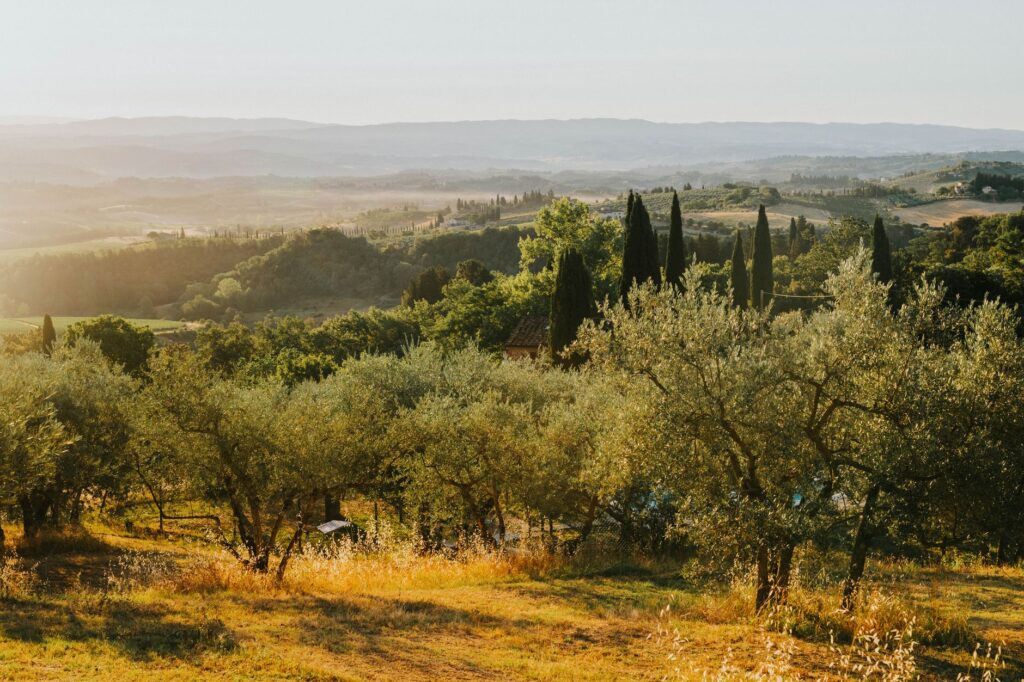
In the geographical heart of Andalusia, where hills roll in an endless sea of silver leaves, olive wood is not merely an agricultural byproduct derived from oil production. For centuries, it has been a living material charged with a dense geological and cultural biography. When a centuries-old olive tree exhausts its productive cycle or must be replaced due to agricultural renewal demands, its gnarled trunks—twisted by drought, eastern winds, and successive frosts—find a second life in the workshops of master sculptors. Far from commercial and homogeneous pine or beech wood, Andalusian olive offers an unparalleled technical challenge: a capricious grain, tight knots, natural cavities, and a stony hardness that requires absolute mastery of the gouge and chisel.
This report delves into the silent workshops of provinces like Jaén, Córdoba, and Granada to document a craft renaissance that resists industrial standardization. Here, olive wood carving does not seek symmetrical perfection or serial production, but rather a respectful dialogue with nature’s imperfection. Through a meticulous journey through natural drying techniques, the daily sharpening of cutting tools, and the application of protective oils, we will discover how a new generation of creators coexists with the elder patriarchs of the gouge to keep alive a tradition that sculpts the very memory of the Mediterranean landscape.
The Raw Material: The Biological Cycle of the Century-Old Olive Tree
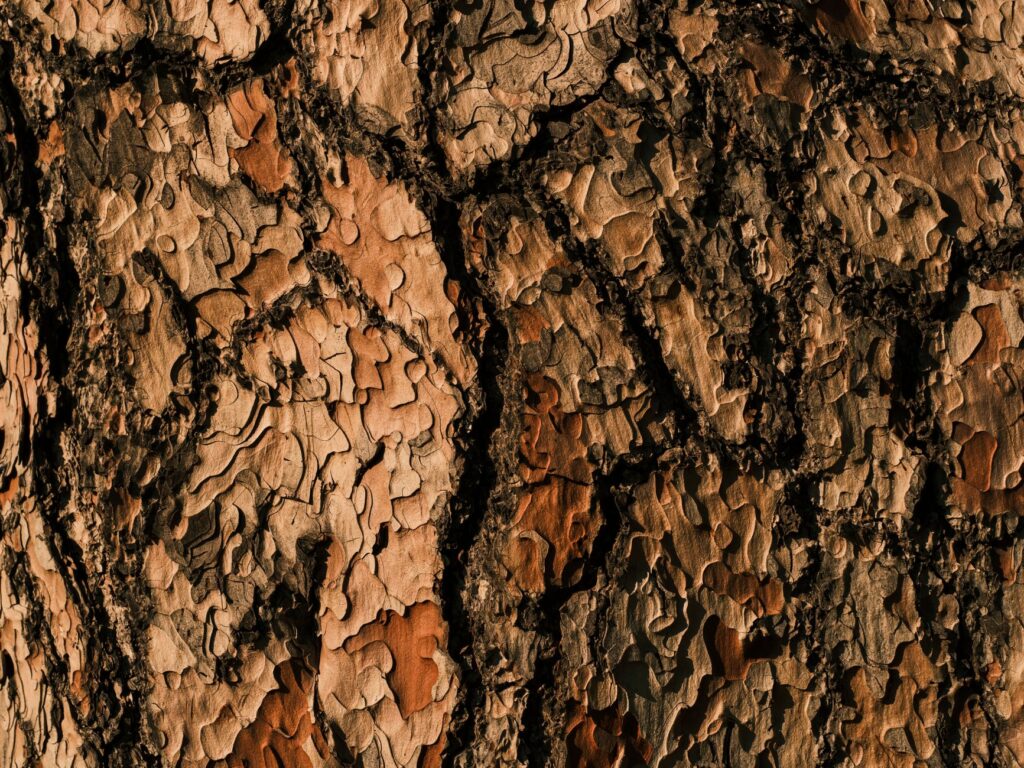
To understand the magnitude of this artistic discipline, it is essential to first analyze the material upon which work is performed. The olive tree (*Olea europaea*) is an extremely slow-growing tree. The centuries-old strains that reach the workshops usually present irregular densities and dark hearts, marked by veins ranging from light amber to deep black, passing through greenish and reddish tones. This natural polychromatism is the direct result of minerals absorbed from the Andalusian soil over decades or even centuries.
Sculptors agree that the most complex part of the process is not the carving itself, but the seasoning and drying of the wood. A freshly cut trunk contains a high concentration of moisture and sap; if worked immediately, the piece will inevitably crack and warp as it is exposed to the dry interior climate of Andalusia. For this reason, workshops maintain storage yards where blocks rest in the shade, protected from sudden drafts, for periods ranging from three to five years. This waiting time is an act of faith and patience that defines true auteur craftsmanship.
The Workshop and the Gesture: Anatomy of the Hand Tool
Crossing the threshold of a traditional workshop in La Loma, Jaén, the air smells unmistakably of linseed oil and dense sawdust. On the solid wood workbenches, an arsenal of hand tools that has barely changed since the Renaissance is displayed. Half-round gouges, flat chisels, fine-grained rasps, and shoemaker’s knives coexist in rigorous order. No numerical control machine or power saw can replace the tactile sensitivity required by olive wood; its interwoven fibers cause electric blades to slip or tear the surface unpredictably.
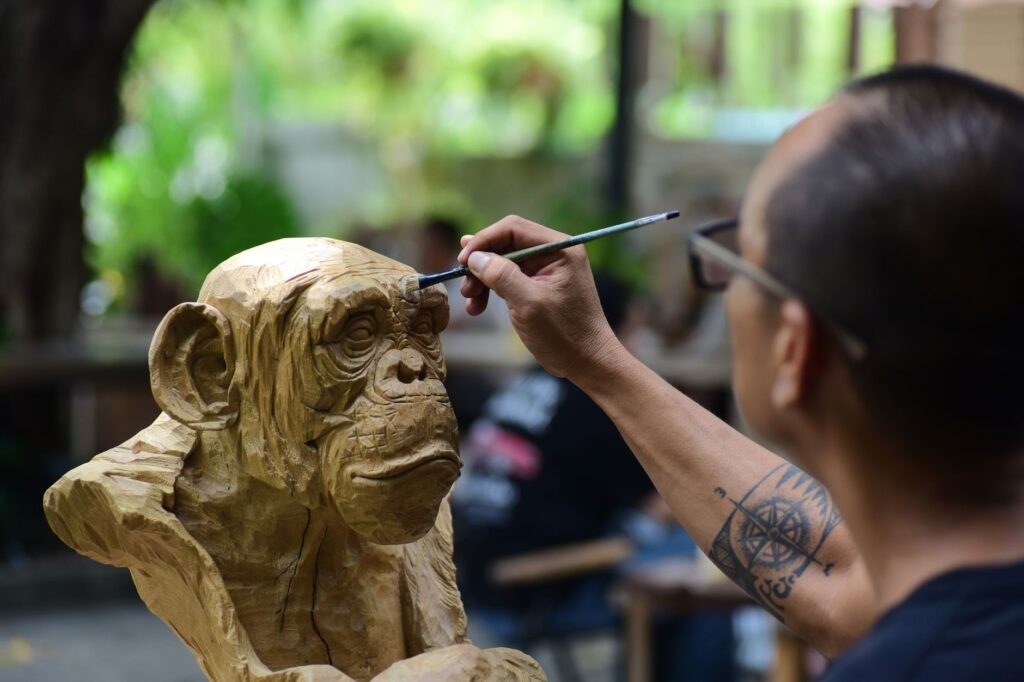
The master sculptor works standing up, throwing their body weight onto the tool to guide the blade with millimetric precision. Every blow of the beech mallet on the gouge handle is a physical and aesthetic calculation: excessive pressure can snap off a key fragment of grain that took centuries to form, ruining the piece irreversibly. This slow rhythm imposes a silent choreography where time seems to stand still, contrasting violently with the breakneck cadence of the contemporary world.
Olive wood does not submit; you accompany it in its form. The wood already knows what it wants to be before the first stroke of the gouge touches it.
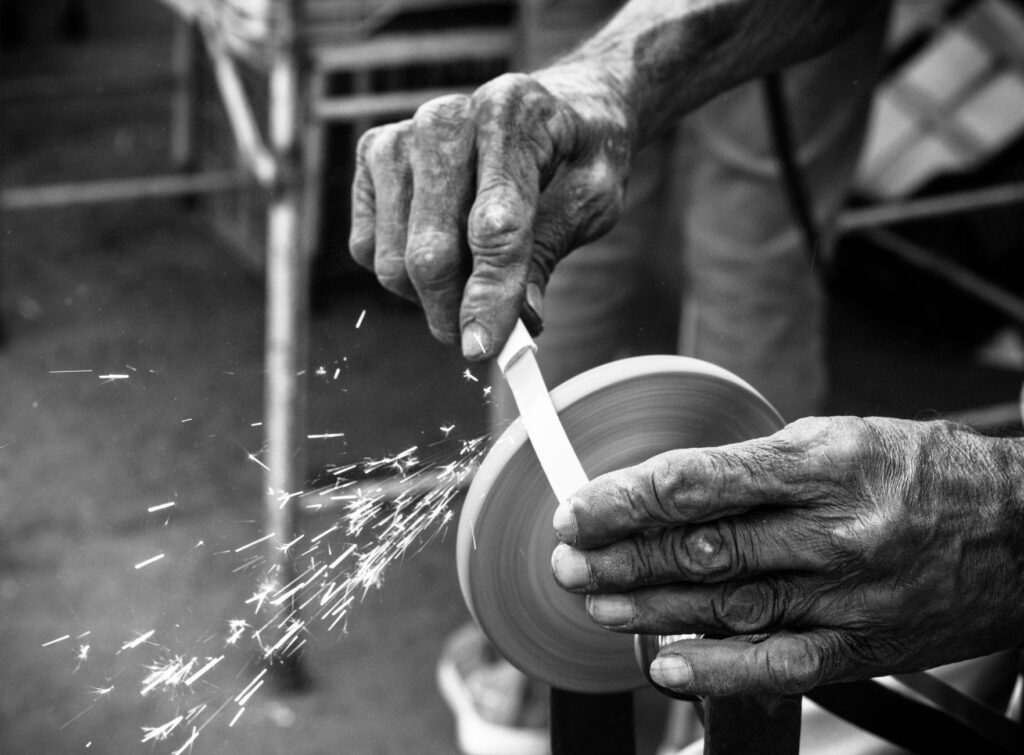
In these studios, the transmission of knowledge continues to operate under the classical model of oral instruction and direct observation. Apprentices spend months performing seemingly subordinate tasks—such as hollowing out secondary pieces or constant sharpening on waterstones—before being allowed to trace the first definitive volume on a main block. This pedagogy of effort ensures that the secrets of the trade, such as the exact sharpening angle for hard woods, endure intact.
From Root to Form: The Creative Process
The design of an olive wood sculpture begins long before the artist sketches a concept on paper. In fact, the process is usually reversed: the capricious shape of the root or stump itself suggests the final figure. The sculptor examines cavities, protruding knots, and grain directions, looking for a visual narrative already implicit in the material. If the grain traces a natural spiral, the work will tend toward organic, dynamic lines; if the block is dense and compact, the figure will seek sculptural punch and closed volume.
Once the approximate silhouette is defined using manual band saws to remove excess mass, the medium roughing phase begins. Here, larger-radius gouges are used to clean the main planes and define the volumes of light and shadow. It is a physically demanding stage requiring excellent postural conditioning and iron concentration, as any distraction can sever a fundamental part of the composition.
Final polishing is another great secret of the Andalusian workshop. While commercial carpentry resorts to synthetic varnishes that seal the wood and create a glossy plastic film, olive wood sculptors prefer oil finishes. A traditional mixture of raw linseed oil and pure beeswax is applied in successive coats through manual rubbing. This treatment nourishes the fiber in depth, enhances the contrast of dark grains against the golden background, and leaves a silky touch that irresistibly invites physical contact with the work.
Geography of the Craft: Centers of Creation in Andalusia
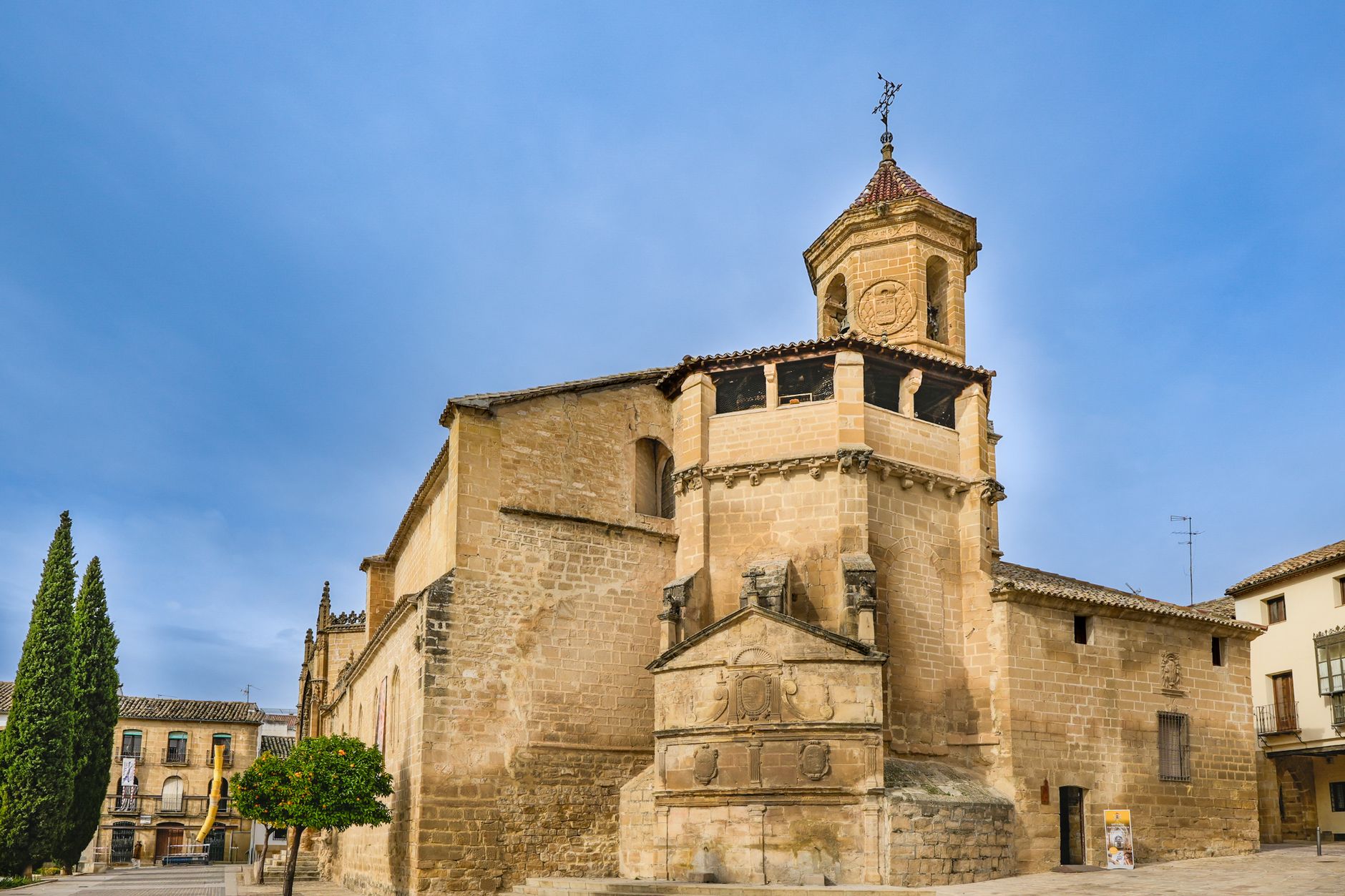
Sculptural activity in olive wood is not distributed evenly; rather, it concentrates in very specific enclaves linked to the region’s agricultural and forestry history. In the province of Jaén, towns like Úbeda and Baeza house small family workshops that have successfully diversified their production, moving from traditional utilitarian turning—mortars, spoons, and oil bowls—to large-scale contemporary sculpture. These creators frequently collaborate with interior architects and designers seeking to incorporate unique sculptural elements in high-end residential projects.
Meanwhile, in the province of Córdoba, specifically in the Subbética region, workshops adopt a profile more closely tied to sacred art and the reinterpretation of popular imagery. Although olive wood was not historically the preferred material for religious carving due to its instability against humidity in large blocks, new natural chemical stabilization methods have allowed a new generation of image-makers to recover this material, endowing their carvings with unmistakable dramatic expressiveness, accentuated by natural knots simulating human fatigue.
Market Challenges and Sustainability
Despite the technical excellence and aesthetic recognition of their pieces, the artisanal olive wood workshops in Andalusia face complex challenges to guarantee their long-term economic viability. The first of these is the scarcity of quality raw material. The modernization of olive groves, with the implementation of intensive and super-intensive cultivation systems, has led to the progressive disappearance of old single-trunk olive trees and massive trunks, replaced by linear hedges that barely generate usable wood for sculpture.
Sustainability and the Future of the Craft
Faced with this agricultural transformation landscape, sculptors have had to organize themselves to ensure an ethical and traceable supply of wood. Many studios work directly with local oil mills and agricultural cooperatives, establishing rescue protocols for those centennial specimens that must inevitably be uprooted due to disease, low productivity, or public infrastructure projects. This direct link with the farmer endows each sculpture with an implicit certificate of origin: the buyer acquires not merely a decorative object, but a fragment rescued from the Andalusian agricultural landscape that will continue its existence under a new aesthetic form.
Likewise, the integration of digital commercialization channels has allowed these small workshops to break geographical isolation. Today, a piece sculpted in a remote workshop in the Cordobese mountains can be acquired by a collector in Tokyo or New York, valued precisely for its status as an unrepeatable object, far removed from mass production circuits and conceived under strict ecological sustainability criteria.
Practical guide
How to get there: The main sculptural workshop routes are concentrated in the province of Jaén (La Loma and Sierra Mágina regions) and Córdoba (Subbética). Malaga or Seville airports are the most efficient international entry points, from which renting a car is strongly recommended to travel secondary olive grove roads.
When to go: Spring (April to June) and autumn (October to November) offer ideal weather conditions to visit the region, coinciding with periods of lower agricultural activity and greater master availability in their workshops.
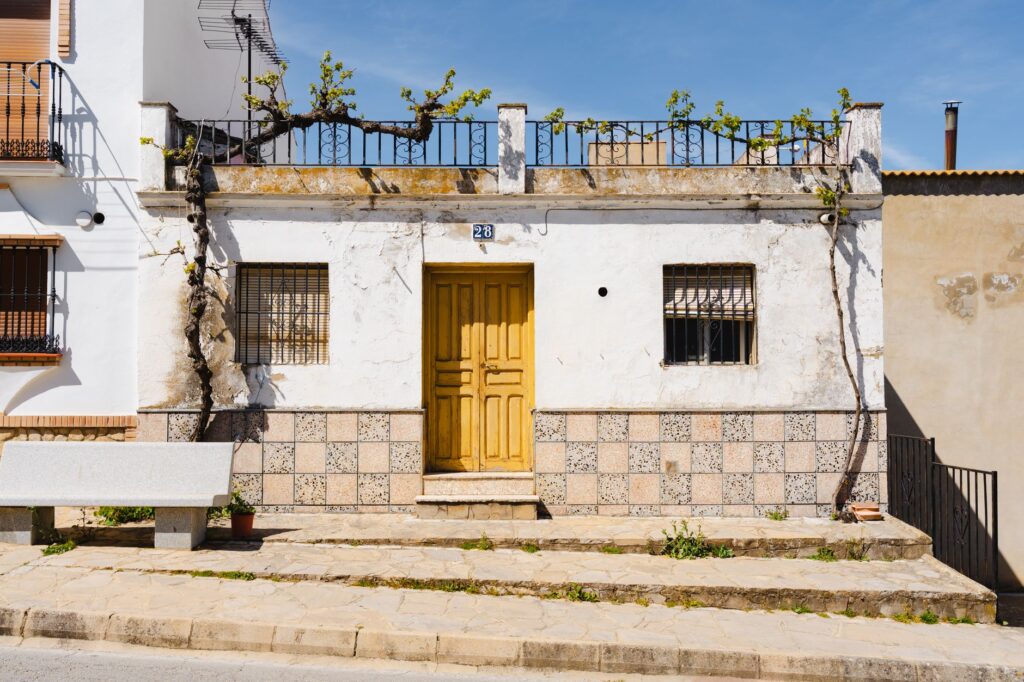
Workshop visits: The vast majority of traditional workshops are small family-run businesses. Visits must always be arranged in advance via telephone or email. These are not commercial shops, but active workspaces where respect for creative rhythms is deeply appreciated.
What to acquire: If seeking auteur pieces, always request the wood’s certificate of origin and maintenance recommendations. For small everyday items (cutting boards, bowls), avoid dishwasher cleaning and prefer manual washing with warm water and neutral soap, periodically applying mineral or olive oil to prevent the wood from drying out.
Epilogue: The Indelible Footprint of Time
When the Andalusian sunset light pierces the windows of a Baeza workshop and projects onto the polished surfaces of a freshly completed sculpture, one realizes that the true value of this art lies not solely in the gouge’s technical skill, but in its capacity to fix the ephemeral. Each sectioned growth ring, each knot rescued from decomposition, and each grain darkened by time form a mute yet eloquent language. In the hands of these last master sculptors, the gnarled wood of the olive tree ceases to be a mere field waste and becomes a perennial testimony to memory, effort, and the patient beauty of southern Europe.