


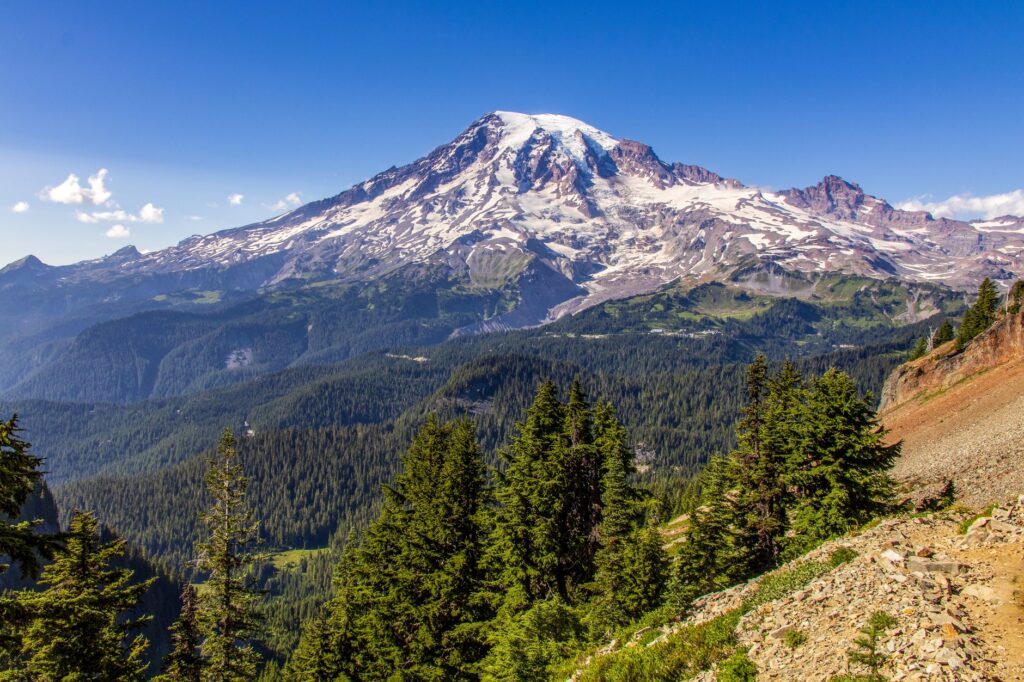
The volcanic cone of Mount Rainier rises like a colossal monolith over the Cascade Range, dominating the skyline of the American Pacific Northwest at 4,392 meters above sea level. This frozen giant is not merely a scenic backdrop; it represents a complex geodynamic system where the subterranean fire of tectonic subduction constantly collides with atmospheric ice. Established as a national park in 1899 through the efforts of pioneering naturalists and conservationists, this territory protects one of the most extensive glacial reserves in the United States outside of Alaska, housing twenty-five major glaciers that feed roaring rivers and carve deeply beautiful U-shaped valleys.
Approaching the study and exploration of this andesitic mass requires understanding its dual nature: the apparent solidity of basaltic and dacitic rock contrasts dramatically with the intrinsic instability of its internal structure. Over centuries, hydrothermal activity has chemically altered the core of the volcano, turning entire sectors into weakened clay. This phenomenon occasionally triggers colossal mudflows and debris avalanches known as lahars, which have shaped the surrounding topography and present a constant challenge to early warning systems and the safety of communities settled in the river basins of the Puyallup and White rivers.
Tectonic Origins and Volcanic Dynamics
The genesis of Mount Rainier is intimately tied to the collision of the Juan de Fuca tectonic plate with the North American plate. This subduction process, ongoing for millions of years, melts the Earth’s crust and generates magma chambers that feed the Cascade chain. Unlike the shield volcanoes of Hawaii, stratovolcanoes like Rainier are characterized by explosive, viscous eruptions, alternating layers of solidified lava, tefra, and ash.
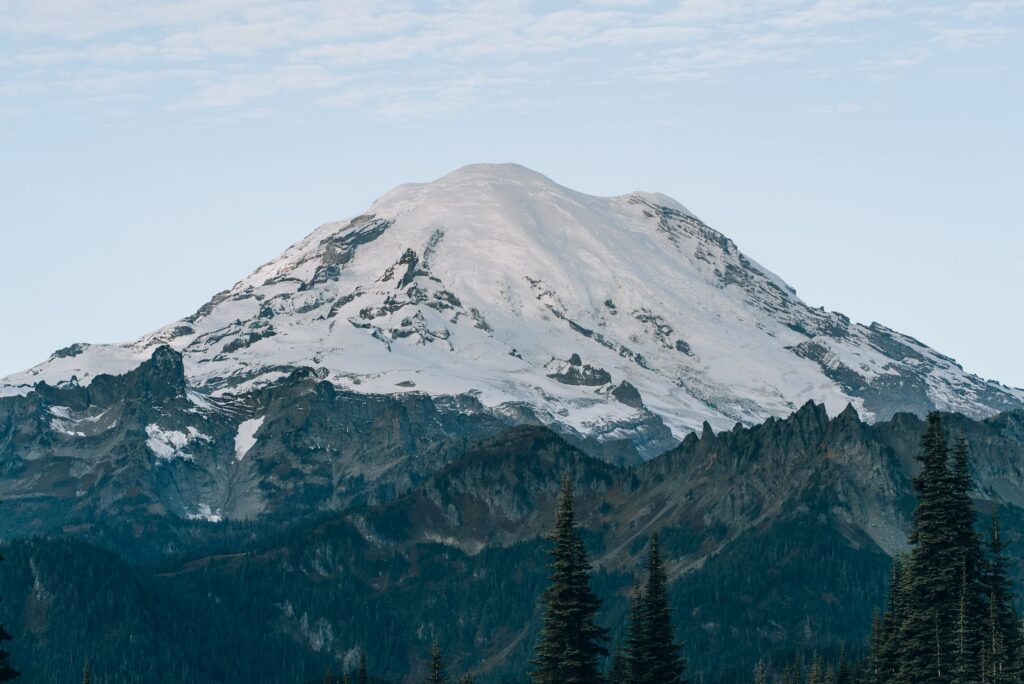
Volcanologists from the Cascades Volcano Observatory maintain rigorous instrumental surveillance over the cone. Seismic sensors, tiltmeters, and gas stations record every minor tectonic earthquake and any variation in hydrothermal emissions. Although its last significant magmatic eruption occurred approximately one thousand years ago, experts emphasize that the system remains active and dormant, demanding updated emergency protocols and public understanding of the hazards associated with modern volcanic activity.
Glacier Architecture and Climate Change
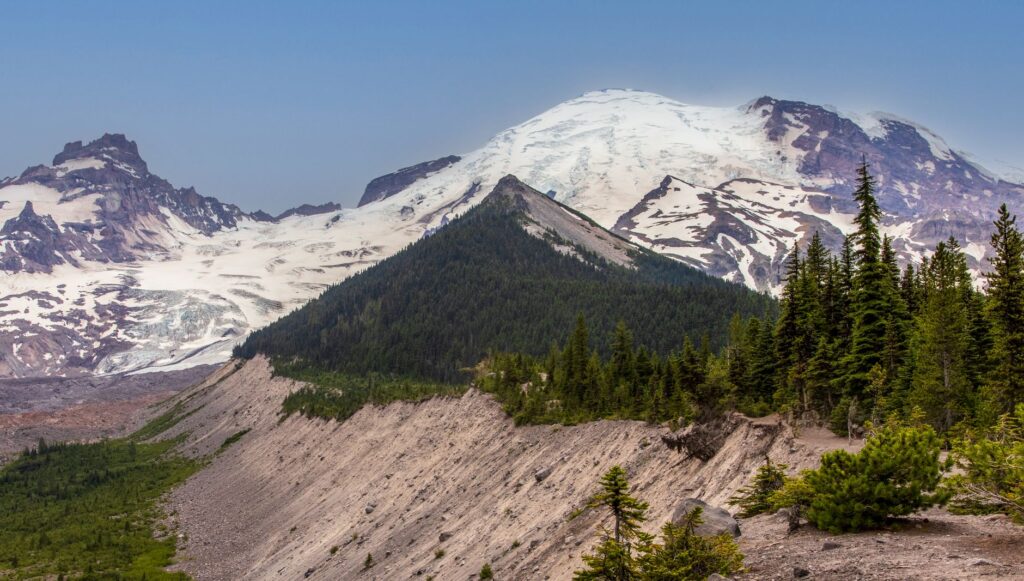
Mount Rainier’s glaciers act as the region’s visual thermometer. Masses such as the Carbon, Emmons, and Winthrop glaciers descend from the summit’s perpetual snows, gouging the rock with relentless force. However, scientific records from recent decades show an undeniable trend of retreat and thinning. Increasing summer temperatures and altered winter snowpack accumulation patterns are shrinking the total ice volume.
This phenomenon not only alters the alpine landscape but directly impacts downstream river ecosystems. During the warmest months, glacial meltwater regulates river flow, ensuring fresh water for temperate forests and salmon habitats. The decline of this seasonal supply threatens the hydrological balance of the entire ecoregion, making the park a living laboratory for studying the direct effects of global warming on high-mountain environments.

The Vital Explosion of Subalpine Meadows
Between two thousand meters of altitude and the tree line lie the park’s celebrated subalpine meadows, such as Paradise and Sunrise. During the brief boreal summer, spanning from July to September, these slopes undergo a radical transformation as the snow melts. A multicolored carpet of wildflowers—including lupines, avalanche lilies, paintbrush, and asters—emerges with urgency to complete its reproductive cycle before autumn frosts reclaim the landscape.
This plant exuberance sustains a rich community of cold-adapted fauna. Cascade marmots emit their characteristic warning whistles from the rocky outcrops, while mountain goats scale vertical cliffs with unusual agility in search of essential minerals. Researchers track these populations through telemetry and visual censuses to assess how mass tourism and habitat fragmentation affect their traditional feeding and breeding routes.
The fragility of the subalpine ecosystem lies in its seasonal brevity; stepping off marked trails in July can destroy decades of growth in a plant adapted to extreme survival conditions.
Visitor Management and Tourism Sustainability in the 21st Century
With over two million annual visitors concentrated primarily in the summer months, Mount Rainier National Park faces a carrying capacity crisis. Historic road infrastructures, designed in the early 20th century, frequently collapse under the volume of private vehicles, generating traffic congestion and environmental damage from improper parking in fragile surrounding shoulders and meadows.
The National Park Service has gradually implemented pilot advance reservation systems for access to highly vulnerable areas like Paradise during peak hours. This measure seeks to balance public access to nature with the imperative need for conservation. Concurrently, the park promotes shuttle services and educational programs designed to foster conservation ethics under the Leave No Trace principle.
The Legacy of New Deal Rustic Architecture
The park’s cultural landscape is deeply marked by architectural interventions carried out during the 1930s by the Civilian Conservation Corps (CCC) and the Public Works Administration (PWA). Iconic buildings such as the historic Paradise Inn and numerous stone shelters, bridges, and trails reflect the philosophy of American rustic design, where structures harmonize naturally with topography using local stone and heavy timber.
Preserving this architectural heritage requires constant technical effort. Severe alpine winters, characterized by record snowfalls exceeding fifteen meters annually, subject historic buildings to severe structural stress. Restoration programs combine traditional craft techniques with modern engineering to ensure seismic and thermal safety without compromising the historical integrity of the properties.
The Summit as a Global Scientific Laboratory
Beyond its tourist appeal, Mount Rainier is a fundamental benchmark for interdisciplinary scientific research. Glaciologists, volcanologists, climatologists, and ecologists collaborate on long-term projects to monitor the massif’s environmental health. High-mountain meteorological stations collect real-time atmospheric data, helping refine predictive models on global climate and natural disaster risks in the Pacific Northwest.
Additionally, scientists study extremophilic microorganisms inhabiting summit fumaroles and basal glacier layers. These investigations not only expand our knowledge of the limits of life on Earth but offer fascinating clues regarding the potential existence of life in similar extraterrestrial environments, such as the icy moons of Jupiter or Saturn.

Practical guide
Planning a visit to Mount Rainier National Park requires logistical rigor due to weather variability and seasonal access restrictions. Below are the essential aspects to organize an informed and safe expedition.
- Getting There: The park is located about 90 kilometers southeast of Tacoma and Seattle. The primary gateway is Seattle-Tacoma International Airport (SEA). A rental vehicle is required; public transit access is extremely limited.
- When to Go: The peak season for alpine hiking runs from July through September. Spring offers roaring waterfalls but snowy trails; autumn brings golden foliage and early snows; winter is ideal for snowshoeing in Longmire.
- Lodging and Reservations: In-park accommodations include the historic Paradise Inn and the National Park Inn in Longmire, alongside three main campgrounds (Mowich Lake, Ohanapecosh, and White River). Reservations open months in advance and are highly competitive.
- Permits and Regulations: Backcountry camping requires a specific permit managed through Recreation.gov. Adherence to Leave No Trace principles is strictly mandatory.
- Mountain Safety: Weather can change dramatically within minutes. Carrying waterproof layers, technical mountain footwear, physical topographic maps, water, and an emergency communication device is essential.
Epilogue: The Giant’s Shadow at Dusk
As the sun descends in the west, the last golden rays set Mount Rainier’s snowy peak ablaze, casting a perfect conical shadow over the hazy valley atmosphere. In that moment of absolute silence, broken only by the distant cracking of shifting ice, the true magnitude of the park is revealed. It is not merely a recreational destination, but a geological sanctuary where the Earth displays its creative power and infinite fragility. Observing this colossus from silent meadows invites deep reflection on our role as temporary custodians of landscapes that have endured millennia, reminding us that preserving these summits is ultimately the preservation of our own future on the planet.
Protecting extreme natural environments is not an act of human isolation, but the highest manifestation of our ecological responsibility toward future generations.


