


The whistle of the diesel train breaks the morning silence at Shrewsbury station, marking the departure of one of Britain’s most distinctive railway journeys. The Central Wales Line, meandering for just over 190 miles down to Llanelli, is neither a high-speed megaproject nor an electrified commuter corridor. It is a single-track, sinuous, and resilient artery that for over a century has connected isolated agrarian communities, declining mining valleys, and small mountain villages that rely entirely on this metallic thread to stay linked to the rest of the country. In an era where efficiency is measured in microseconds and total automation, this route continues to operate under nearly artisanal logic, where human expertise and relentless geography dictate the rhythm of every mile.
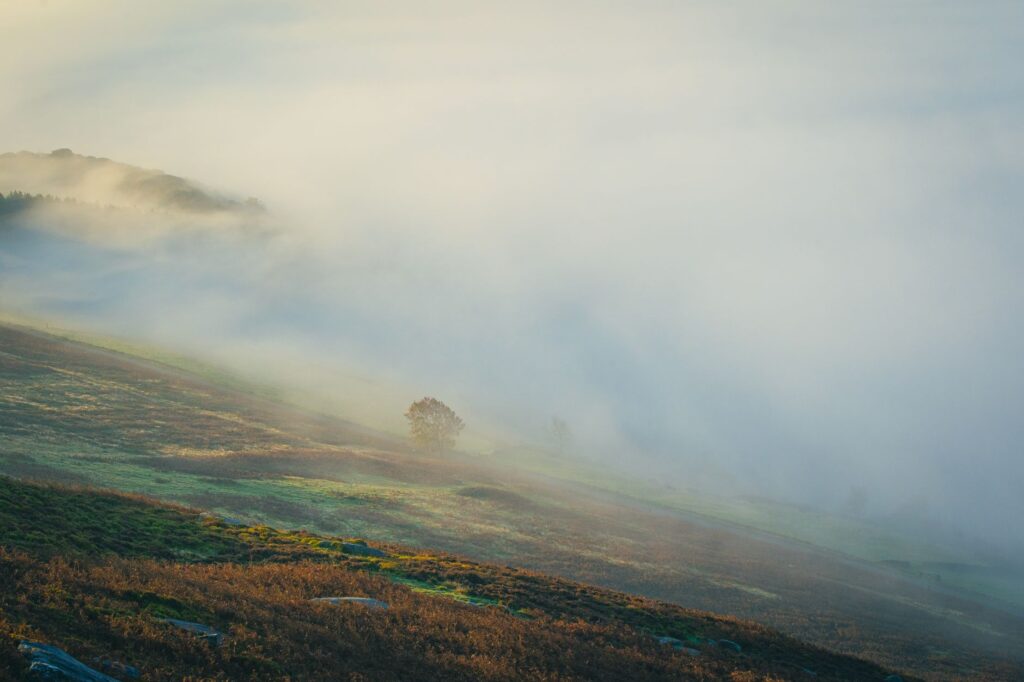
As the convoy leaves the Shropshire plain and pushes deep into the Welsh county of Powys, the landscape shifts radically. Neat farmlands give way to damp moorlands, bracken-covered hills, and river gorges carved by centuries of erosion. Here, railway infrastructure turns into a constant exercise in adaptation to the terrain. Nineteenth-century engineers did not blast massive straight tunnels or raise colossal viaducts; instead, they chose to embrace contour lines, weaving a track that curves gracefully along the slopes as if it were a natural part of the environment. This topographic approach, while charming to the contemporary traveler, imposes severe operational constraints that define the technical personality of the entire route.
The Geography of Isolation and the Original Layout
Built in phases between the 1850s and 1860s by several independent railway companies before being unified under the London and North Western Railway, the line was created with the fundamental purpose of hauling coal, iron ore, and livestock toward South Wales ports. However, the subsequent deindustrialization of the region radically transformed its economic vocation. What was once a heavy freight corridor turned, almost by chance, into a social mobility lifeline for small settlements lacking dual carriageways or efficient bus connections.

The current alignment constantly defies the laws of lightweight physics. With gradients reaching up to 1% in specific stretches—locally known for testing the traction of Class 150 or 153 diesel units—the train must negotiate sharp curves where maximum speed rarely exceeds 50 miles per hour. This deliberate slowness, far from being a flaw, is a necessity derived from ballast fragility and the antiquity of drainage structures designed to cope with the proverbial rainfall of the British west. Each seasonal storm tests the responsiveness of maintenance teams who closely monitor unstable slopes and centenarian masonry bridges.
Signaling Systems and Manual Crossings
One of the most fascinating and anachronistic aspects of the Central Wales Line is its traffic control system. Unlike Britain’s main trunk routes, governed by centralized control centers and advanced computing systems, this corridor maintains an active traditional token-and-block mechanical interlocking system across several sections. At key stations like Knighton or Llandrindod, passengers can witness a ritual that seems frozen in time: the driver steps down from the cab to exchange words with the station master or personally operate forged iron levers moving switch points.
This reliance on manual infrastructure is no nostalgic whim, but the result of economic and technical calculation. As a low-density line, installing state-of-the-art digital signaling would be prohibitively expensive. Instead, trust is placed in rigorous operating protocols and constant radio communication between drivers and interlocking posts. This model, though vulnerable to cumulative minor delays, guarantees a high level of safety and turns every journey into a practical demonstration of classic railway engineering where the human factor remains the core of reliability.
The railway in the Welsh valleys is not merely a mode of transport; it is the physical record of a working-class and rural memory that refuses to vanish beneath modern asphalt.
Stations along the route are silent witnesses to this evolution. Many have lost their original buildings or seen platforms reduced to bare essentials, turning into flag stops where travelers must press an indicator button for the train to halt. There are no automatic turnstiles or giant information screens; instead, hand-painted wooden signs and timetables printed on paper project an atmosphere of peaceful timelessness. Yet beneath that apparent simplicity operates a perfectly greased logistical machinery coordinating connections with the national network at both ends of the route.
Socioeconomic Impact on Rural Communities
The role of the Central Wales Line extends far beyond daily commuting; it acts as a buffer against rural depopulation. In towns like Llangammarch Wells or Builth Road, the train is regularly used by students attending colleges in larger towns, older residents relying on it for medical appointments at regional hospitals, and a steady stream of hikers exploring the Brecon Beacons National Park and the Cambrian highlands.
However, the financial sustainability of such a service always walks a tightrope. Operational costs of maintaining a single track with dozens of manual level crossings and historic bridges far outweigh direct ticket sales revenue. Government subsidies and public service contracts with the Welsh administration remain the sole support preventing permanent closure. Periodically, political debates over the economic viability of the route revive anxiety among locals, who understand that losing the train would mean losing their connection to modernity.

Infrastructure Challenges Amid Climate Change
In recent years, more intense and frequent Atlantic storms have begun to take a toll on Welsh railway infrastructure. Flash floods and overflowing rivers like the Towy or Irfon cause periodic disruptions requiring temporary bus replacement fleets. These incidents highlight the vulnerability of a network built in the 19th century for weather patterns no longer aligned with 21st-century climate reality.
For Network Rail engineers, the challenge lies in modernizing without destroying protected architectural heritage. Interventions must respect conservation criteria for historic structures while introducing contemporary drainage and slope reinforcement solutions. This includes advanced geogrids, motion sensors on landslide-prone hillsides, and remote monitoring systems on key bridges. The goal is clear: ensure service continuity without altering the topography that makes this line a benchmark for landscape integration.
Practical Guide
Planning a journey aboard the Central Wales Line requires patience, flexibility, and a clear understanding of its operational quirks. Unlike major British arterials, minute-by-minute improvisation is not an option here.

Frequency and Timetable: Service is limited, typically running four daily trains in each direction from Monday to Saturday, with an even sparser schedule on Sundays. Checking National Rail Enquiries before departure is essential to avoid surprises from unannounced maintenance work.
Fares and Tickets: Anytime or Off-Peak tickets can be purchased at major stations or onboard if boarding at an unstaffed flag stop. The Heart of Wales Line Ranger ticket offers excellent flexibility for those wishing to make unlimited stops over several days.
Strategic Connections: Shrewsbury acts as the northern gateway, linking directly to Birmingham, Manchester, and North Wales. Llanelli and Swansea at the southern end connect to the South Wales Main Line toward Cardiff and London Paddington.

Luggage and Accessibility: Operating diesel units feature limited space for bulky luggage and bicycles, so notifying the operating company in advance when traveling with special items is highly recommended. Accessibility at intermediate stations can be complex due to traditional platform heights.
The final leg of the journey toward the Carmarthenshire coast descends gently from the highlands, offering a final glimpse of green valleys before merging with the urban bustle of the industrial south. Through the windows, passenger reflections blend with the shifting landscape, condensing in a few hours the very essence of a territory resisting oblivion.
The Metallic Echo of the Future
When the convoy finally comes to a halt at the Llanelli platform, the faint hum of the diesel engine dies down, giving way to the distant sound of gulls and Welsh coastal traffic. The Central Wales Line survives as living proof that mobility is not solely measured by top speed or the grandiosity of megaprojects, but also by the capacity to sustain human territory with respect and consistency. In every wooden sleeper replaced by hand, in every wave between driver and track worker, lies the proof that the railway continues to beat strongly in the most unexpected corners of Europe.


