
Introduction to the Archipelago of a Thousand Cultures and Living Tides
The Chiloé archipelago, located in southern Chile, represents one of the most complex and fascinating insular territories in the South American Cone. Separated from the mainland by the Chacao Channel, this cluster of islands has historically depended on a complex network of traditional boats, wooden walkways, and rural roads winding through temperate rainforests and glacial hills. For decades, connectivity was marked by climatic vulnerability, heavy dependence on fossil fuels, and logistical constraints that affected both local residents and travelers eager to explore its rich stilt-house architecture and UNESCO-listed wooden churches.
Today, the territory is undergoing a radical transformation driven by the urgent need to decarbonize public and maritime transport. Faced with the debate over large fixed infrastructure mega-projects, local communities, transport operators, and regional administrations have embraced a decentralized model of sustainable mobility. This approach prioritizes the integration of hybrid and electric ferries to cross the Chacao Channel, the modernization of clean-energy bus fleets on interior routes between Castro, Ancud, and Dalcahue, and the recovery of historic trails for non-motorized travel. The result is a living laboratory where ecological transition does not seek to homogenize the territory, but rather to protect its fragile environmental and cultural balance.
The Maritime Backbone: The Challenge of the Chacao Channel
The nerve center of Chilota connectivity is undoubtedly the Chacao Channel. Every day, thousands of passengers, cargo vehicles, and residents cross this narrow arm of the sea where strong ocean currents, intense winds, and changing weather conditions converge. Traditionally operated by fleets powered by heavy diesel, this maritime corridor has begun an unprecedented technological conversion process in the Los Lagos region.

The gradual introduction of vessels with hybrid propulsion and high-capacity battery energy storage systems has drastically reduced greenhouse gas emissions and noise pollution in the channel. These new vessels not only optimize energy consumption during docking and undocking maneuvers at the Pargua and Chacao ports, but also improve the safety and predictability of itineraries against climatic variability. Operating companies, in collaboration with the Ministry of Transport and Telecommunications, have established fast-charging shore stations powered by local renewable sources, setting a pioneering standard for insular navigation in Latin America.
Interior Mobility: Clean Bus Networks in the Heart of the Big Island
Beyond the Chacao Channel, the big island of Chiloé unfolds a geography of rolling valleys, wetlands, and rugged coastlines where land transport plays a vital role. The backbone of this territory relies on Route 5 South and a dense network of secondary roads connecting emblematic communes such as Castro, Quellón, Achao, and Chonchi. For years, intercity and rural bus services were dominated by aging units with high pollutant emission indices.
The current sustainable mobility strategy focuses on the comprehensive renewal of the public fleet and the creation of intermodal corridors that efficiently connect bus services with local ferry terminals. The progressive incorporation of vehicles with advanced energy efficiency standards, alongside pilot tests of green hydrogen-powered buses generated from Patagonian wind energy, is transforming the landscape of Chilota land transport. These advancements are complemented by the digitalization of schedules and tariff integration, making it easier for both residents and visitors to plan their journeys without relying on private vehicles.
The Renaissance of Inland Channels and Community Fluvial Navigation
While Route 5 serves as the terrestrial backbone, the inland channels separating the main island from the smaller islands of the archipelago—such as Quinchao, Lemuy, and the Desventuradas—act as vital veins for subsistence economies and social cohesion. In these sheltered water bodies, local communities have promoted community river transport cooperatives based on smaller-scale boats powered by solar-electric motors.
This decentralized community transport model addresses the specific needs of inhabitants on smaller islands, where large ferries cannot operate due to shallow artisanal docks. Solar-powered launches, designed with lightweight materials and low hydrodynamic resistance hulls, enable daily trips to supply centers, schools, and health clinics without generating erosive wakes that damage the fragile ecosystems of coastal wetlands and kelp beds. This initiative demonstrates how zero-emission technology can serve traditional local economies.
Soft Infrastructure and the Trail Network for Non-Motorized Mobility
The sustainability of transport in Chiloé is not limited to the electrification of large mechanical vehicles; it also encompasses the revaluation of active mobility and the design of infrastructure for cyclists and pedestrians. Over recent years, municipalities and civil organizations have promoted the recovery of disused railway tracks and agricultural gathering trails, converting them into safe greenways.
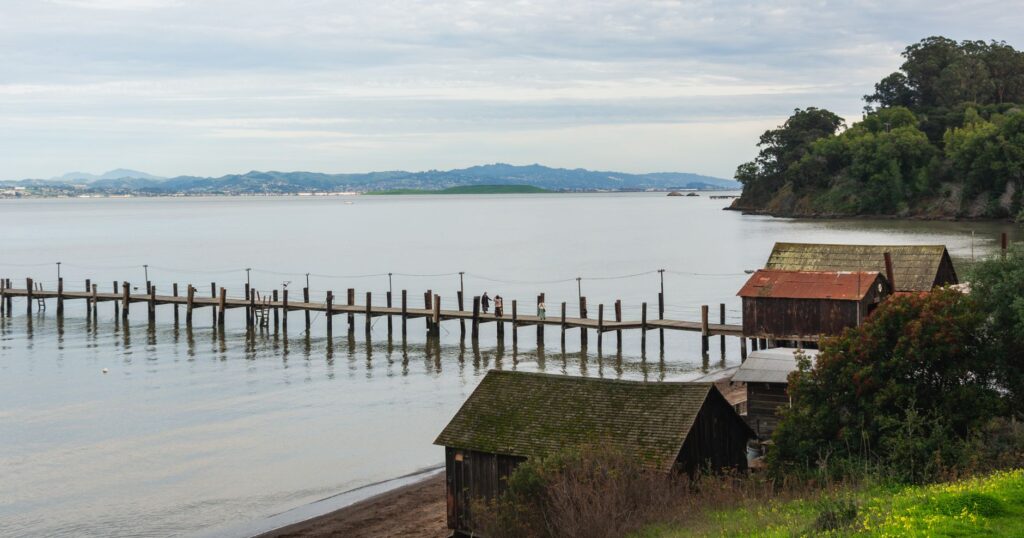
These soft mobility routes connect rural communities with historic urban centers, offering safe alternatives for daily commutes and encouraging low-emission tourism. In towns like Castro and Dalcahue, the implementation of peripheral cycle paths and the partial pedestrianization of commercial zones near fluvial markets and heritage churches have reduced vehicular congestion during peak tourism months.
The true value of sustainable mobility in Chiloé lies in its capacity to preserve the unhurried rhythm of island life, proving that technological modernization can coexist harmoniously with cultural and natural heritage.
These interventions prioritize respect for the surrounding landscape, integrating native wood signage and autonomous lighting systems that minimize light pollution in the archipelago’s night skies.
The Role of Community Governance and Citizen Science in Planning
One of the most notable aspects of the transport model in Chiloé is the integration of local communities into decision-making processes. Unlike infrastructure plans imposed from continental urban centers, the planning of sustainable mobility in the archipelago relies on territorial dialogue tables involving artisanal fishing unions, rural transport associations, neighborhood councils, and environmental collectives.
This participatory governance has helped identify operational bottlenecks that traditional technical studies often overlooked, such as schedule coordination between minor ferries and rural bus lines connecting interior archipelagos. Similarly, citizen science projects continuously monitor air quality along main transport corridors and the acoustic impact of vessels on migratory routes of seabirds and cetaceans. This constant feedback ensures that public transport policies evolve at the same pace as the socio-ecological needs of the territory.
Practical guide
How to get there: The main access to Chiloé is via land and sea through Route 5 South to the town of Pargua, where you take the ferry across the Chacao Channel. Regular flight connections are also available from Santiago to Mocopulli Airport, located near Dalcahue.
When to visit: The months of the austral spring and summer (November to March) offer the best weather conditions and higher frequency in public transport and maritime services. However, traveling during the shoulder season allows you to experience the true dimension of island life in total tranquility.
How to get around: Use the integrated network of intercity buses to travel between major towns (Ancud, Castro, Quellón) and combine your journeys with electric and hybrid ferry services to visit the minor islands of Quinchao and Lemuy. Renting electric bicycles at local tourist offices is recommended for exploring secondary heritage routes.

Sustainability tips: Respect local schedules for community boats, avoid single-use plastics during your crossings, and support local markets and sheep wool crafts dyed with natural pigments.
The Final Beat: The Memory of the Sea and the Sustainable Horizon
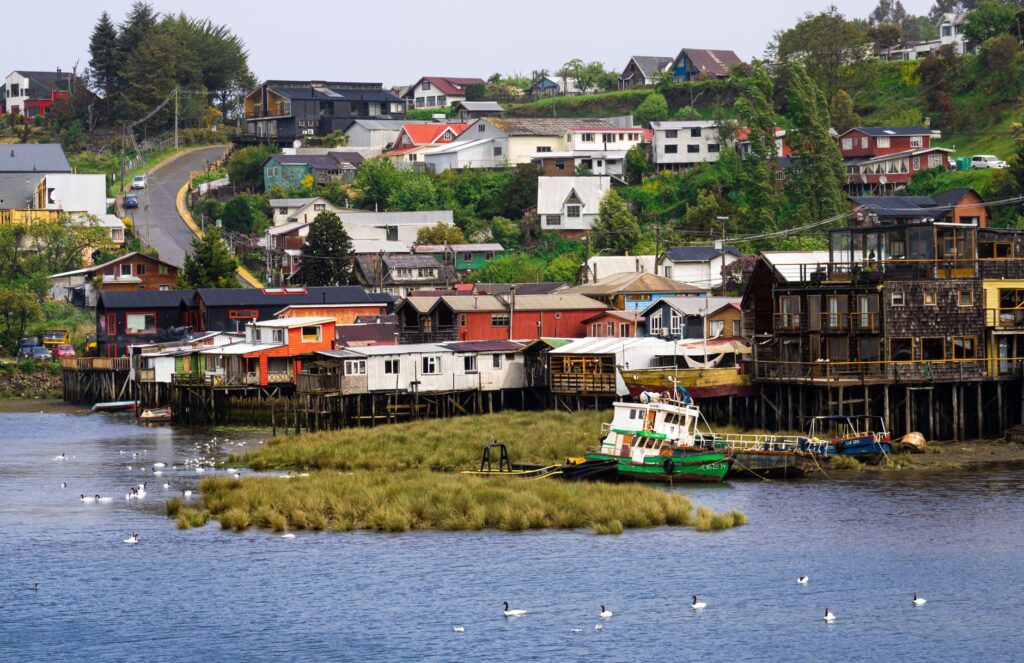
Sunset over the channels of Chiloé paints the water in shades of copper and violet, reflecting the unmistakable silhouette of stilt houses patiently defying the force of the tides. In this southern corner of the planet, where myth and daily reality are inextricably intertwined, transport transformation is not merely an exercise in engineering or a response to international emission reduction regulations. Above all, it is an act of cultural and environmental survival.
Observing the silent silhouette of an electric ferry gliding effortlessly across the waters of the Chacao Channel or watching local residents travel along recovered paths reminds us that the future of insular mobility is possible when designed through active listening to the territory. Chiloé shows the world that green modernity is not about erasing the past, but about navigating wisely toward the horizon, respecting the currents that have shaped its identity for centuries.