
Leaving Colombo behind and heading south is not merely a change in geographical coordinates, but a transition in the tempo of time. As the capital dissolves into suburban sprawl and the railway tracks begin to run parallel to the breaking waves of the Indian Ocean, the air grows saltier and urban urgency fades away. The island, historically known as Taprobana, reveals in its southern latitudes a geography where the thickness of the tropical jungle coexists in harmony with the rawness of the sea and the legacy of the merchant empires that once sailed these spice routes.
This journey does not seek an exhaustive catalogue of monuments, but rather an immersion in a territory where the rhythm is marked by tides, the swaying of fishermen on their traditional stilts, and the dim quietude of Buddhist sanctuaries. From the walled fortress of Galle to the golden sands of hidden bays like Hiriketiya, the southern coast offers a necessary pause—an exercise in slow travel that invites careful observation of a daily life deeply rooted in both earth and water.
The Colonial Threshold of Galle and Its Memory in Stone
Passing through the bastions of Galle’s old town is crossing an invisible border where the twenty-first century adopts a measured cadence. Initially built by the Portuguese in the sixteenth century and masterfully expanded by the Dutch from 1640 onward, this walled city is a living testimony of military architecture adapted to the tropics. Its perfectly grid-aligned streets, flanked by high-roofed mansions and noble wooden porches, now shelter a vibrant community of independent bookstores, art galleries, and cafés where the aroma of Ceylon tea blends with the sea breeze.
Strolling along the ramparts at sunset is a secular tradition for locals and travelers alike. From Star Bastion to the imposing structure of the colonial lighthouse, the view encompasses the fierce swell of the Indian Ocean and the silhouettes of young locals defying the abyss by diving straight off the cliffs. Far from being a mere museum backdrop, Galle throbs with the authenticity of century-old schools, law courts, and temples where Protestant churches, mosques, and Buddhist shrines coexist, reflecting the tolerant, mestizo character of the ocean trade route.

The Waterline and the Stilt Fishermen
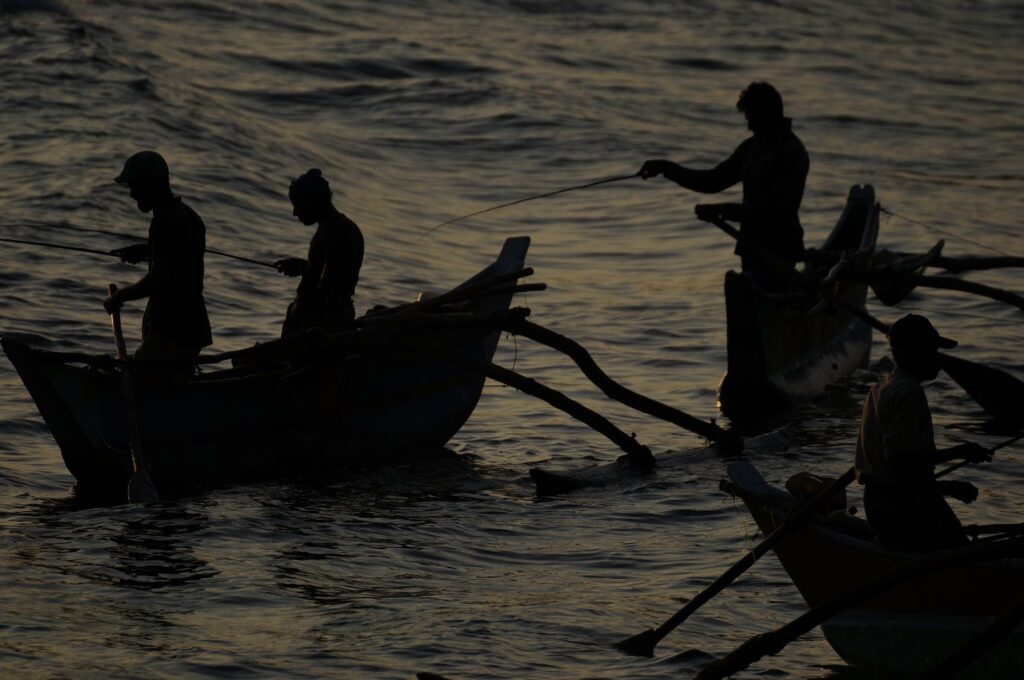
Moving along the coastal highway connecting Galle to Matara offers a glimpse into one of Sri Lanka’s most iconic yet misunderstood images: the stilt fishermen. Known locally as ritipanna, this artisanal technique emerged after the Second World War amidst food shortages and the depletion of traditional fishing grounds. Men perch on a wooden frame driven into the coral reef, balancing for hours with infinite patience, armed solely with a rudimentary rod to catch small mojras and mackerels.
While much of this practice has transformed today into a photographic spectacle—where a financial contribution is frequently requested in exchange for a pose—its anthropological value remains undeniable. It represents the extreme vulnerability and resilience of coastal communities facing an unpredictable sea. Locals explain how balancing on the poles requires not only physical dexterity but an intimate reading of currents, lunar phases, and the behavior of fish shoals.
Ahangama and the Creative Pulse of the Indian Ocean
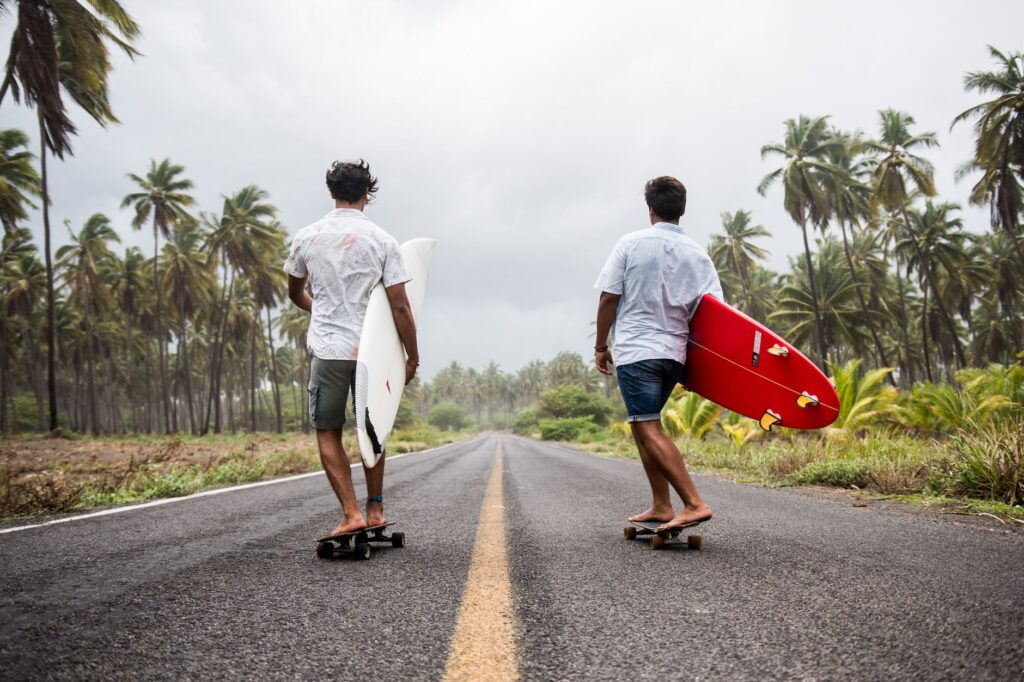
In recent years, Ahangama has evolved from a simple waystation on the southern railway map into the epicenter of a quiet cultural and aesthetic revolution. Sustainable design lodges built with local timbers and exposed concrete coexist with former plantation houses converted into yoga studios and specialty coffee roasters. Surfers from around the globe arrive drawn by consistent waves like Kabalana, while a new generation of local and foreign creators has found in this nook an endless source of inspiration.
The appeal of Ahangama lies precisely in this well-understood contrast. Just a few meters away from surf schools and co-working spaces, local markets continue to offer the morning harvest of mangoes, papayas, and leafy greens cultivated in the interior. Women bustle about preparing fish curry with coconut milk and gotu kola leaves, keeping family recipes alive that have been passed down through generations with hardly any modification.
Hiriketiya, the Secret Horseshoe of Surf and Calm
Hidden behind a fringe of coconut palms that seems to shield it from the hustle of the main road, Hiriketiya Bay—popularly known as Hiri—is a small masterpiece of island geography. Shaped like a perfect horseshoe, this cove concentrates in a few meters of white sand a unique atmosphere where experienced surfers seeking the steady left-hand break on the eastern side mingle with bathers floating placidly in the calm waters of the bay’s center.
The tourism development of Hiriketiya has remained, to date, within parameters of respect for the natural environment, avoiding massive hotel complexes. Mediterranean and tropical-inspired restaurants share space with traditional fresh fruit juice stands. As evening falls, the beach turns into an impromptu meeting point where dim lights are lit, acoustic music plays at a discreet volume, and travelers share the day’s experiences with their gaze fixed on a horizon where the sun melts into the ocean.
The Leopard’s Domain in Yala National Park
Further to the east, where coastal vegetation gives way to dry forests and brackish lagoons of Yala National Park, the landscape acquires a wild and atavistic dimension. Yala is the territory with the highest density of leopards (Panthera pardus kotiya) on the planet, an endemic subspecies of Sri Lanka that reigns supreme in this protected ecosystem. Dawn safaris aboard open-top four-wheel-drive vehicles demand rigorous early starts and a considerable dose of patience and silence.
The deep, muffled roar of a leopard at dawn is not merely a sound in the thicket; it is the realization that places still exist where humans are once again simple guests.
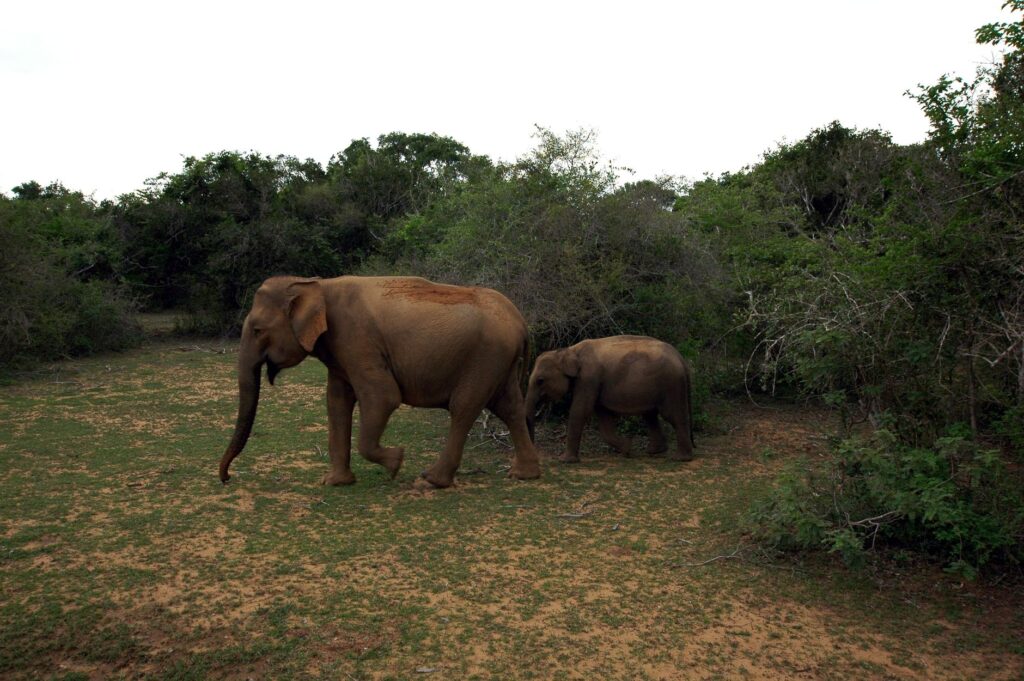
Yala’s territory does not end with its most illustrious feline. The plains and wetlands shelter herds of Asian elephants, sloth bears, fish owls, and an overwhelming avifauna including colorful kingfishers and majestic storks. Local guides, capable of identifying an animal’s passage by a barely perceptible footprint in the dust or the alarm call of langur monkeys, impart a profound respect for the ecological balance of this sanctuary periodically threatened by human pressure.
Among Hidden Temples and Cinnamon Plantations
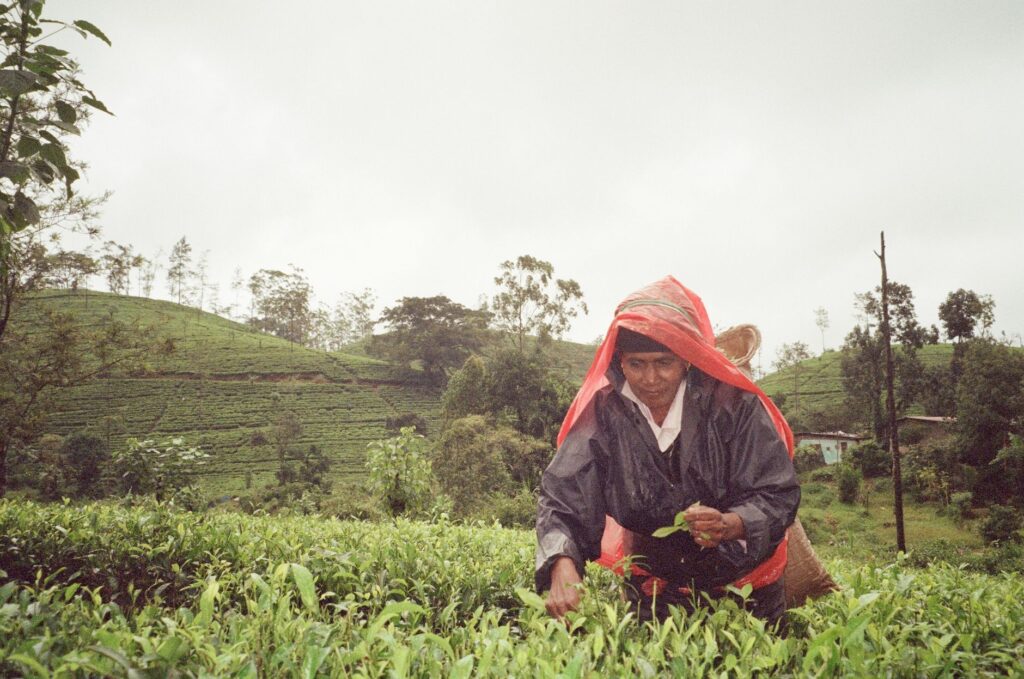
Venturing just a few kilometers away from the southern coast reveals the island’s most intimate and verdant face. Rolling hills are carpeted with cinnamon plantations, where farmers perform the delicate craft of peeling the inner bark of trees with curved knives, an artisanal process that has brought global fame to Ceylonese spice since the days of the Phoenicians and Romans. The air along these rural paths smells intensely of damp earth, dry wood, and essential oils.
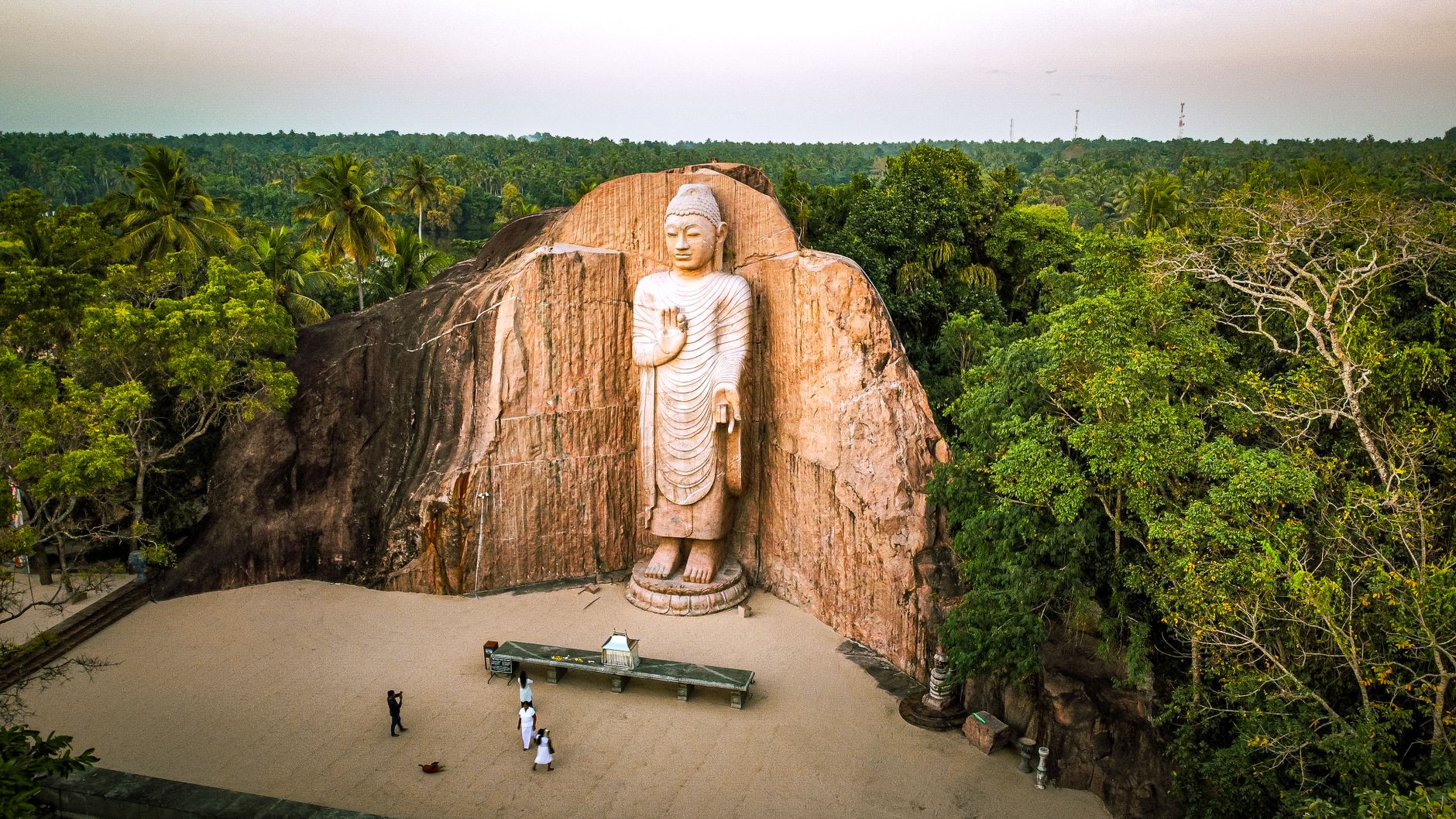
In this silent interior lie hidden rock temples like Wewurukannala or less-frequented Buddhist monasteries where monks welcome visitors with a serene smile and a cup of spiced tea. These sanctuaries, often guarded by colossal statues of a reclining Buddha, are spaces of spiritual retreat where time seems to have stopped, entirely removed from the bustle of the commercial routes running along the sea.
Practical Guide
How to get there: Bandaranaike International Airport in Colombo is about 150 kilometers from Galle. The most efficient option to start the southern route is hiring a private transfer or using the E01 expressway, which reduces the journey to just over two hours. The coastal train is an excellent scenic alternative, though schedules can experience changes.
When to go: The best time to tour southern Sri Lanka spans from December to April, coinciding with the dry season on this side of the island, ensuring clear skies and calm seas for swimming and surfing.
Recommended accommodation: In Galle, restored boutique hotels within the historic fort offer a unique architectural immersion. In Ahangama and Hiriketiya, small sustainable design guesthouses and nature-integrated villas predominate.
Gastronomy: A must-try is the traditional rice and curry accompanied by coconut sambol (pol sambol), grilled fresh fish, and local kippers. Ceylon tea is served at any time of the day, plain or with milk.
Yala National Park: Safari tickets must be booked in advance through authorized local operators. The early morning slot (6:00 AM) is recommended to maximize wildlife sighting opportunities.
The Final Beat of the Southern Indian Ocean
At the end of the journey, when the body has acclimatized to the slow tempo of the south, the afternoon light acquires an almost tactile consistency over the coastal rocks. In small inlets where wooden boats rest upside down on the sand, life passes without fuss, guided by ancestral wisdom that understands the sea not as a border, but as an endless bridge.
Traveling slowly through these lands means accepting that beauty lies not in accumulating ticked-off destinations on a map, but in the intensity with which every single moment is inhabited.
Sri Lanka, at its southern extremity, offers a subtle lesson in hospitality and resilience. Its people, having weathered political storms and natural disasters with unbreakable dignity, continue to offer a genuine smile to every traveler willing to look beyond the surface. The south is not just a place on a map; it is a state of mind that lingers long after the return flight has taken off.
Source in English: In Southern Sri Lanka, a Journey Without Rush and with Soul