White silence: when language breaks down
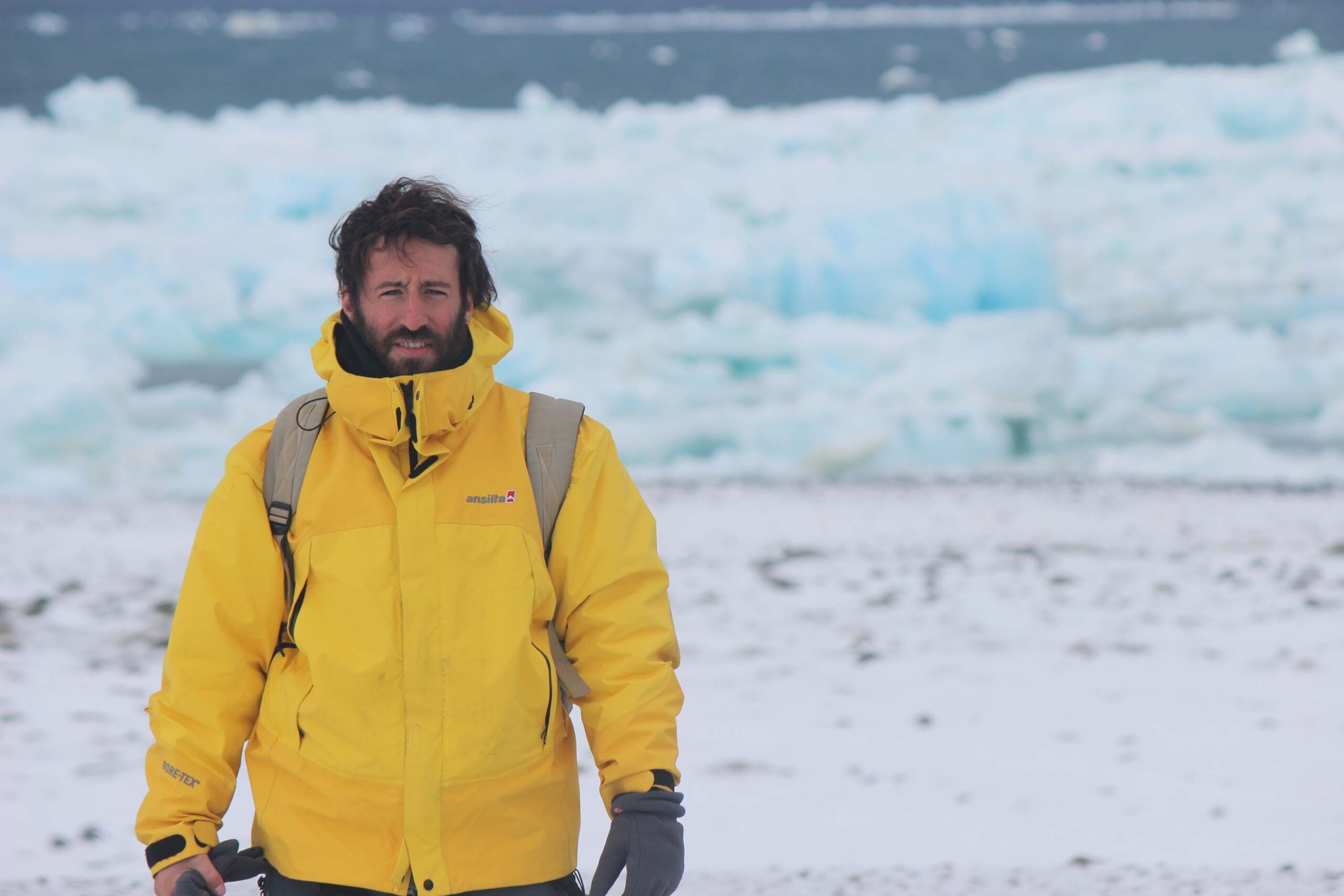
There are geographies on the planet that challenge not only the physical endurance of those who inhabit them, but the very capacity of language to account for them. Antarctica is, par excellence, that borderland where traditional adjectives crumble before vastness. Federico Bianchini, an Argentine chronicler and novelist, experienced this limitation firsthand during twenty-five days of isolation on the frozen continent, an experience captured in his book Antártida: 25 días encerrado en el hielo. Far from seeking the touristic postcard or the traditional heroic narrative, Bianchini delved into the backstage of scientific bases to understand how extreme isolation transforms the perception of time, space, and self.
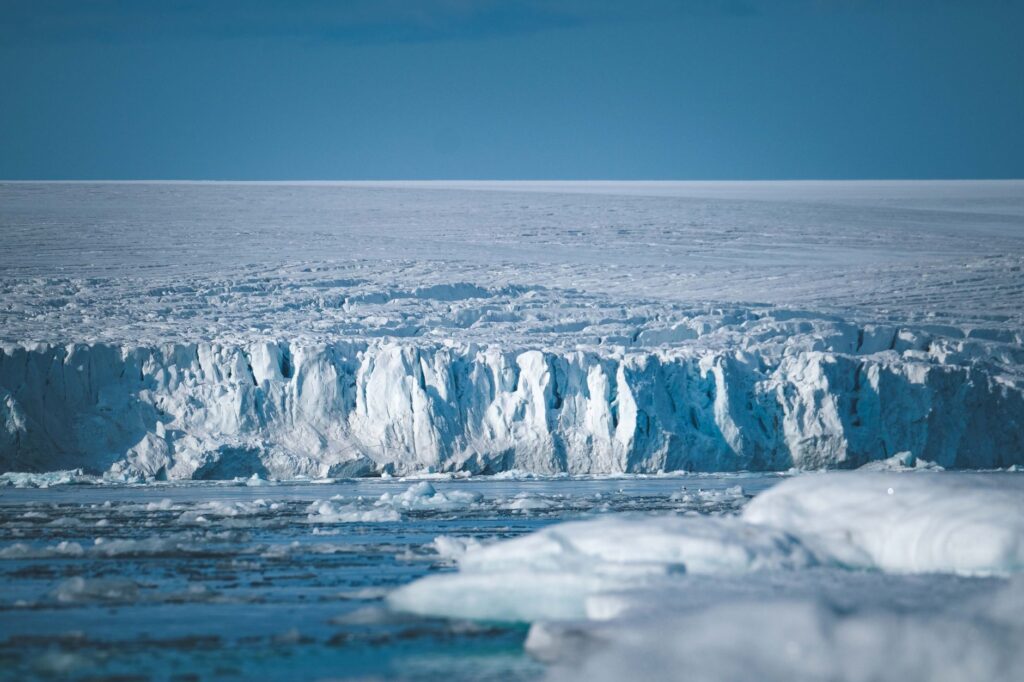
The journey to the sixth continent does not begin the moment a military plane or vessel crosses the dreaded Drake Passage, but long before, in the realm of expectations. For a writer accustomed to decoding urban reality, confronting a vastness where human scale lacks visual references entails a radical experience of disorientation. There are no trees, no artificial straight lines, merely the capricious sinuosity of icebergs and the brutal geometry of glaciers. In this context, beauty does not act as a comforting aesthetic balm, but as an overwhelming presence that demands respect and, occasionally, a subtle vertigo.
The backstage of science under limit conditions
To understand contemporary Antarctica, one must shift the gaze from historical exploration milestones to the daily labor of scientists and military personnel who make human presence on the ice possible. During his stay, Bianchini shared routines with meteorologists, biologists, mechanics, and cooks. These interactions reveal the true pulse of Antarctic life, a gear where survival depends as much on technical precision as on emotional stability. Coexistence in confined spaces during the austral winter generates complex social dynamics, where tolerance and humor function as protective shields against environmental claustrophobia.
The science practiced at these stations seeks not merely the accumulation of abstract data, but answers to fundamental questions about the future of the planet. Ice cores extracted from hundreds of meters deep preserve Earth’s atmospheric memory, a climate archive now indispensable for calibrating the urgency of the global ecological crisis. Yet in daily life, this planetary mission translates into mundane tasks: shoveling snow to clear entrances, repairing generators struggling with extreme temperatures, or maintaining communication systems that can be cut off within minutes by a whiteout storm.
The weight of arrested time and the tyranny of weather
One of the most fascinating aspects of Bianchini’s testimony is the alteration of temporality. In Antarctica, meteorological time relentlessly dictates the human agenda. Plans for a week can vanish in seconds when a whiteout storm lashes the facilities and visibility drops to zero. This suspension of certainty forces temporary inhabitants to develop an ancient patience. The identical horizon, tinted in an infinite palette of whites, grays, and pale blues, erases the difference between days, turning the stay into a continuous flow where the recent past and immediate future blur.

Antarctica does not change you all at once; it strips you layer by layer until you are face to face with your own thoughts, the ones you try to escape in the city.
This prolonged isolation fosters inevitable introspection. The noises of civilization —traffic, constant notifications, artificial urgencies— are replaced by the muffled crack of ancient ice and the steady hiss of the wind. For a writer, this external silence becomes an internal resonance chamber. Everyday quirks acquire magnetic dimensions, and the detailed observation of a lone penguin or changing light over the sea ice takes center stage in mental focus.
The impossibility of naming the invisible
The title and conceptual axis of Bianchini’s reflection revolve around a paradox: the impossibility of precisely describing what is seen and felt. How do you narrate a landscape lacking scale? How do you convey the thermal sensation of a cold that is not just a thermometer reading, but a physical entity penetrating bones and altering respiratory rhythm? Human language, built over millennia to describe forests, cities, rivers, and prairies, experiences its own boundaries here. Words fall short, and the chronicler must resort to ellipsis, restrained metaphor, and phrase rhythm to suggest what direct definition fails to encompass.
This descriptive limitation grants Antarctic literature a particular texture, where the unsaid acquires as much relevance as factual data. This is not an exercise in precious rhetoric, but intellectual honesty: admitting that Antarctic nature preserves an unassailable reserve of mystery. The traveler or writer attempting to domesticate this territory with grandiloquent adjectives fails; only those who accept their status as fragile observers manage to capture a glimpse of its true essence.

Fragile ecosystems under global pressure
Although Antarctic immensity conveys an illusory sense of invulnerability, scientific data confirms that it is one of the planet’s most sensitive ecosystems. Global warming is already altering the stability of ice shelves and modifying the feeding habits of key species like krill, the base of the southern trophic pyramid. During his conversations with researchers, Bianchini noted growing concern over retreating glaciers and the frequency of anomalous phenomena in the marine climate.
The protection of this territory, regulated by the Antarctic Treaty, faces new geopolitical and commercial challenges driven by resource scarcity elsewhere in the world. The preservation of the white continent is not merely a matter of conserving a scenic sanctuary, but an essential requirement for the climatic stability of the entire planet. Every fracture opening in an ice shelf is a warning echoing far beyond polar circles, reminding us that Antarctica’s fate is inextricably linked to that of northern hemisphere metropolises.

Practical guide for understanding modern Antarctic exploration
Approaching Antarctica requires planning, institutional respect, and deep informational rigor. Unlike conventional tourist destinations, travel and research on this continent are strictly regulated by international rules designed to minimize environmental impact.
- Regulatory framework: All tourism and scientific activity must comply with the Protocol on Environmental Protection to the Antarctic Treaty.
- Maritime access: The most common route for independent travelers and commercial expeditions departs from Ushuaia, crossing the Drake Passage during roughly two days of navigation.
- Strict biosecurity rules: Disinfecting footwear and clothing is mandatory to prevent introducing seeds, spores, or foreign organisms that could alter local flora and fauna.
- Prudent distance: Interacting with or approaching closer than five meters to native wildlife, especially penguins, seals, and seabirds, is strictly prohibited.
Epilogue: the return and the indelible footprint
Leaving Antarctica and returning to the American mainland produces an overwhelming cultural and sensory shock. Urban noise, the glaring colors of billboards, and daily haste act as a violent blow after weeks of chromatic purity and absolute silence. Yet those who have trodden the ice discover that the experience does not end with disembarkation; it remains latent, transforming their view of the world and everyday priorities.
Ice is never forgotten; it lodges in memory as a constant reminder that there are places on Earth where human beings are merely temporary and silent guests.
The ice is never forgotten; it lodges in memory as a constant reminder that there are places on Earth where human beings are merely temporary and silent guests.
Federico Bianchini’s testimony reminds us that traveling is not merely accumulating geographic coordinates, but allowing places to challenge us intellectually and emotionally. Antarctica, in its radical beauty and essential inaccessibility, remains that uncomfortable and fascinating mirror where our species can measure both its capacity for knowledge and its profound fragility.
Source in EN: Condé Nast Traveler Spain