Introduction to the Coast of Invisible Threads
On the westernmost edge of France, where the Atlantic wind batters granite cliffs and salt permeates every corner of the landscape, a form of silent resistance survives. This is not about medieval fortifications or solitary lighthouses beaten by tides, but rather a network of wood, flax, and wool that defies the logic of unbridled industrial production. Brittany’s textile workshops, rooted in towns like Locronan, Quimper, and the offshore islands, are experiencing an unprecedented transformation. This renaissance seeks neither folkloric nostalgia nor superficial novelty, but a profound reconciliation between ancestral materiality, ecological sustainability, and contemporary haute couture design.
For decades, the global textile industry shifted production toward regions with reduced labor costs, emptying historic Breton spinning and weaving centers of both content and skilled hands. However, a shifting sensibility within the luxury market and author-driven design has sparked a return to local sources. Textile artists, agronomists specializing in bast fibers, and art historians have joined forces to rescue native flax varieties that had nearly vanished from French fields. The result is a creative ecosystem where every woven piece tells the story of the territory that birthed it, from the color extracted from seaweed to the rhythmic cadence of manual and mechanical looms.
The Agrarian Landscape and the Recovery of Native Flax
The cycle of sustainable haute couture in Brittany begins long before thread ever touches a loom’s shuttle. It starts in the clayey, damp fields of the interior, where small agricultural collectives have revived the cultivation of flax (Linum usitatissimum). Unlike imported flax from intensive monocultures, the Breton variety benefits from a unique microclimate characterized by constant rainfall and moderate sunshine, granting the fiber exceptional fineness and tensile strength. This agrarian revival not only nourishes local workshops but also regenerates soils battered by decades of conventional farming.
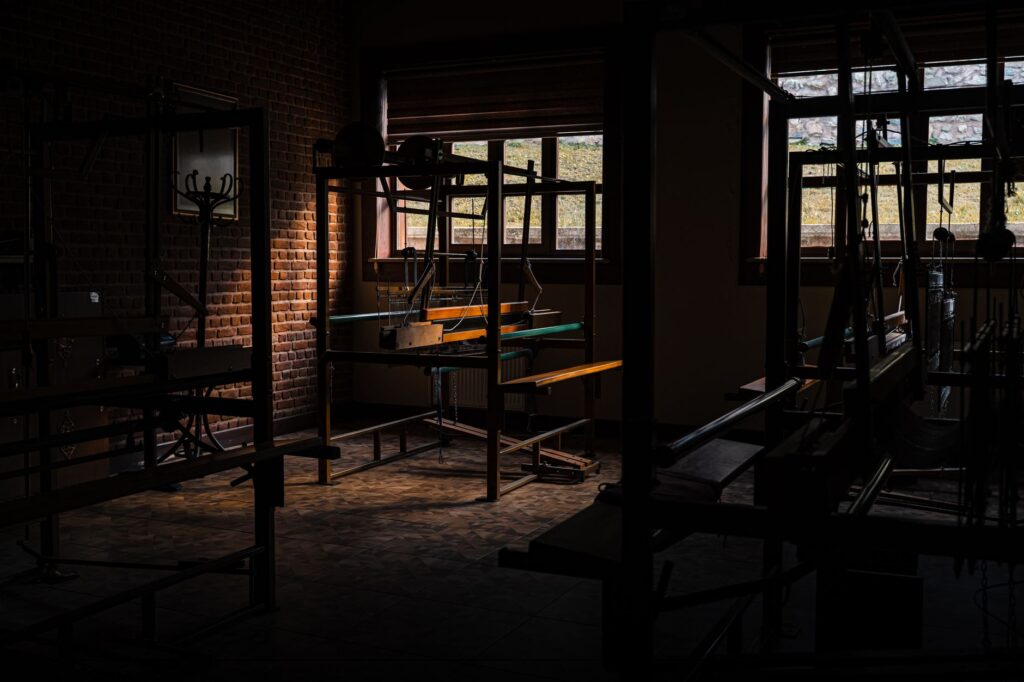
The retting process—the controlled decomposition of pectins binding fibers to the stalk—is still carried out in certain areas by harnessing the flow of local rivers and estuary tides. This traditional method, though labor-intensive, avoids harsh chemical treatments and preserves the structural integrity of the cellulose. Master artisans insist that each harvest possesses a distinct personality. The specific weather of each year is indelibly imprinted onto the raw material, meaning a dress or fabric woven in a Breton workshop carries the exact memory of the meteorological conditions that shaped the plant.
Architecture of the Workshops: Between Oak and Wrought Iron
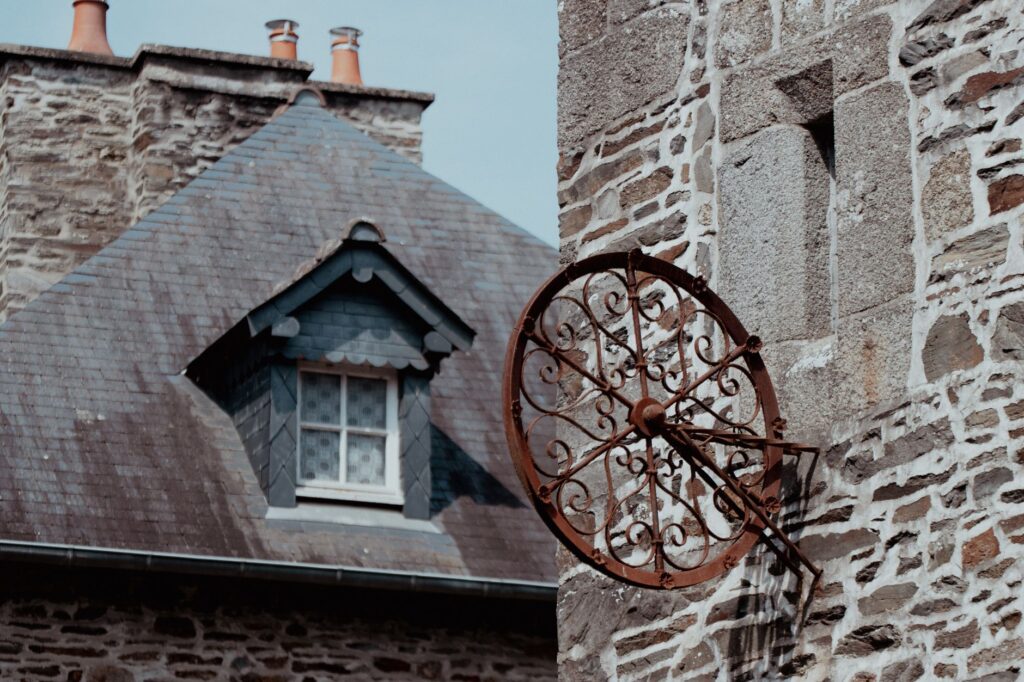
Stepping inside Brittany’s traditional workshops is crossing the threshold into another temporal dimension. Housed in rehabilitated stone buildings that once served as salt warehouses or fish-salting stations, looms combining century-old oak frames with nineteenth-century wrought iron elements operate daily under the supervision of weavers who learned their craft through rigorous oral and technical transmission.
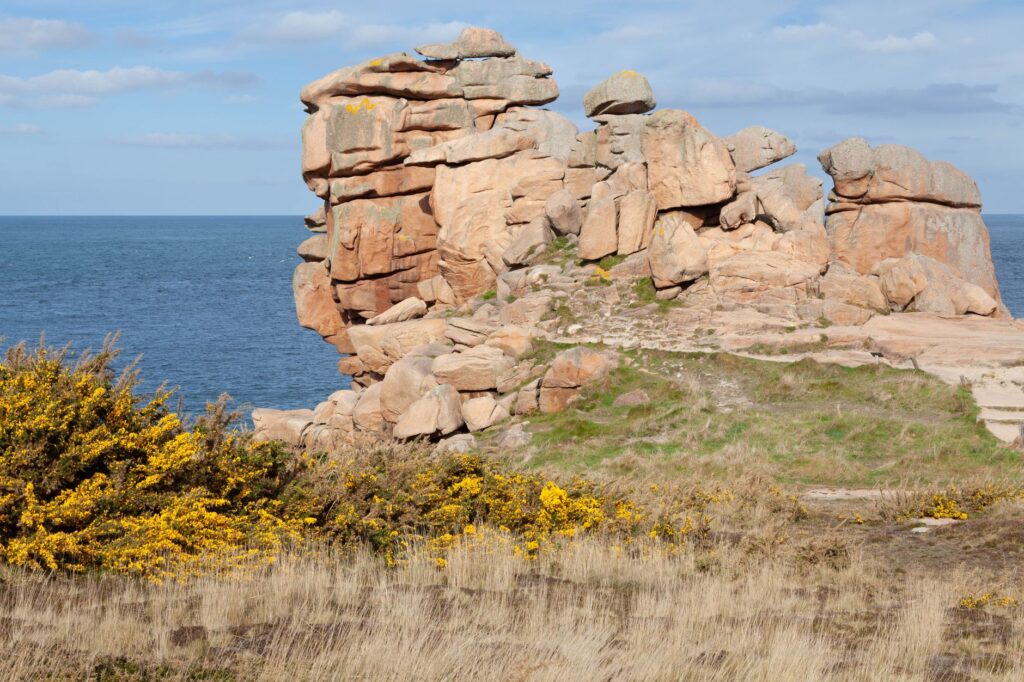
The soundscape within these spaces is a hypnotic tempo: the dry click of the heddles, the rhythmic snap of the shuttle, and the steady whisper of thread under tension. Each loom requires meticulous preparation, known as warping, which can take entire days. A single miscalculation in placing the warp threads would ruin meters of fabric. It is here that the master weaver assumes a choreography-like role, coordinating hands and feet with pinpoint precision achieved only after decades of uninterrupted practice at the frame.
The value of a contemporary Breton textile does not lie in industrial perfection, but in the micro-imperfections that betray human pulse and material resistance.
Designers collaborating with these workshops actively seek this trace of deliberate imperfection. In an era dominated by digital uniformity, capsule collections born in Brittany champion tactile texture, the honest weight of materials, and the noble irregularity of natural yarn. International high-end fashion houses turn to these workshops in pursuit of exclusivity, acutely aware that true opulence today resides in the time invested in creation and the absolute traceability of every fiber.
Marine Alchemy: Natural Dyes and the Atlantic Palette
One of the most fascinating chapters of this textile renaissance is the research and recovery of natural dyes derived from Brittany’s marine and insular ecosystem. Far from relying on petroleum-based synthetic colorants, contemporary workshops have retrieved historical recipes and updated them through advanced chemical analysis. Brown algae, marine mollusk shells, cliff lichens, and halophytic plant roots compose a color palette as understated as it is breathtaking.

The dyeing process is an exercise in patience and respect for natural rhythms. Skeins of virgin wool and flax are submerged in large cauldrons where weeds and marine extracts interact at specific temperatures. Tones ranging from slate grays and the deep blues of a gale to the golden ochres of low tide and the mossy greens of the rocky coast permanently infuse the fibers. This Atlantic palette endows textile designs with an unmistakable visual identity, instantly connecting the wearer to the raw, poetic beauty of the Breton landscape.
Technical Innovation and Avant-Garde Design
It would be a grave error to view this movement as mere industrial archaeology. Breton workshops collaborate closely with design schools in Nantes, Rennes, and Paris to fuse traditional craftsmanship with cutting-edge textile technology. Experiments involving the hybridization of natural fibers and biodegradable polymers yield fabrics with shape-memory properties that respond to bodily thermal shifts without losing the tactile essence of flax or wool.
Furthermore, pattern architecture has evolved. Modern designers apply zero-waste pattern-making concepts, ensuring every square meter of woven fabric is fully utilized in garment construction, eliminating residual scraps. This rigorous approach demonstrates that artisanal haute couture can be both avant-garde and deeply environmentally conscious, transforming technical limitation into an endless wellspring of formal creativity.
Practical Information for Travelers and Textile Enthusiasts
For those interested in delving into this living heritage, Brittany offers specialized routes combining cultural tourism with visits to active workshops and interpretation centers. Planning requires keeping in mind that most ateliers are active workspaces rather than commercial museums, making advance appointment booking an absolute necessity.
- Core Hubs: Locronan, Quimper, and the Crozon Peninsula concentrate the highest density of traditional textile workshops and spinning cooperatives.
- Access and Transport: Brest-Bretagne Airport and the high-speed rail network (TGV) connecting Paris to Rennes and Quimper are the best options to start the journey. Renting a vehicle is strongly recommended to reach isolated rural workshops.
- Best Time to Visit: Spring and autumn offer exceptional light for landscape photography and coincide with flax harvesting and processing cycles. During summer, several municipalities host monographic textile craft fairs featuring live demonstrations.
- Historic Accommodations: Numerous former weaver’s homes and converted mills now operate as characterful small hotels or rural guesthouses, offering complete immersion in the local atmosphere.
- Responsible Purchasing: Original pieces can be acquired directly at the workshops or through designer boutiques in Quimper and Nantes. Always request the traceability certificate guaranteeing the local origin of the fiber and dyes.
Human Legacy and the Transmission of Craft
Beyond machines and fabrics, the true treasure of this renaissance is its human capital. At a time when digitization threatens to alienate manual skills, young apprentices entering Breton workshops find in sewing and weaving a profound sense of rootedness and personal fulfillment. Master artisans, many nearing retirement, generously transmit the secrets of thread tension, wooden gear maintenance, and weather reading through material.

This generational handover ensures that tradition does not become a static museum piece, but a living language capable of dialoguing with the future. The commitment of these artisans transcends mere commercial activity; it constitutes a political and aesthetic act in defense of slowness, material quality, and cultural identity within a globalized world prone to erasing differences.
Visual Close: The Tide and the Frame
As evening falls, when the tide rises and covers the mudflats of the Breton estuaries, the rhythm within the coastal workshops never truly stops. There remains the faint murmur of final threads being snipped with steel scissors and the reflection of Atlantic light gleaming over freshly ironed rolls of linen. In that fleeting instant, the essence of a territory that turned geographic isolation and inclement weather into creative fortitude is fully synthesized. Breton haute couture does not merely dress bodies; it weaves the living memory of an untamable landscape.