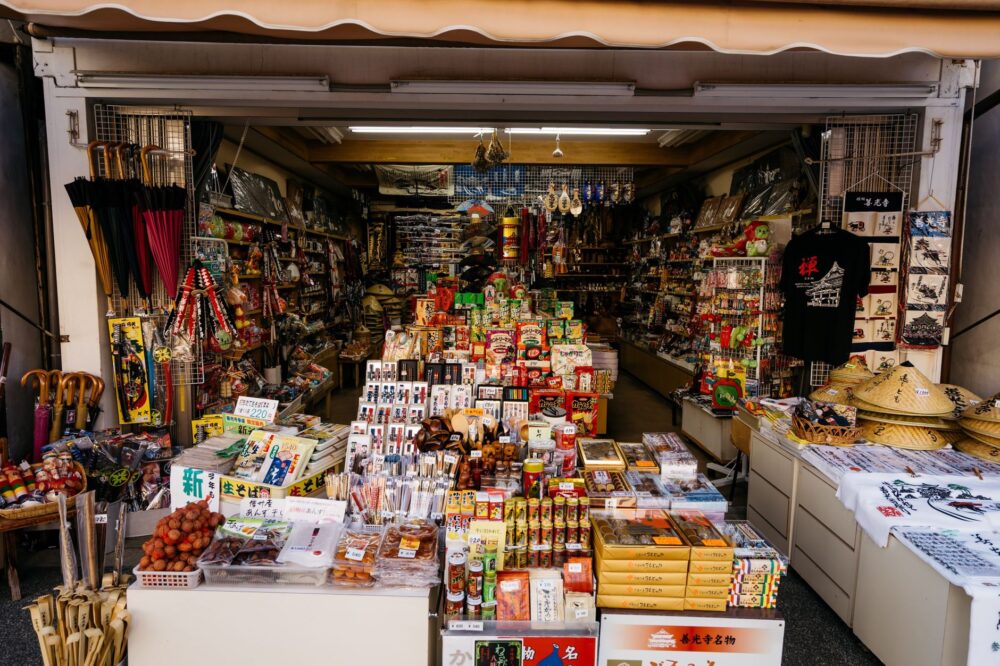
Silence, Weft, and Paper in Kyoto’s Alleyways
In the heart of Nishijin, Kyoto’s historic textile district where looms have set the city’s rhythm for over five centuries, a craft survives that transcends simple book manufacturing to enter the realm of paper architecture. Here, in small workshops shielded by cedarwood lattices, master bookbinders continue to work with the exact patience their ancestors applied to the creation of Buddhist sutras. This is not a mere imitation of the past, but a material resistance against digital obsolescence, where every single fiber of kozo and every thread of natural silk tells a story of aesthetic resilience.
The air in these studios smells of slowly boiled rice starch glue, paulownia wood, and the dry scent of antique paper waiting to be mended. While global publishing houses accelerate their mass production cycles, these artisans dedicate entire weeks to the preparation of a single cover. The question running through this report is not how to keep a dying craft alive, but what this radical slowness teaches us about our own need for permanence in an era of ephemeral consumption.
The Alchemy of Washi Paper and Plant Fibers
The foundation of any traditional Japanese bookbinding lies in the uncompromised quality of its materials. A few miles from the urban workshops, in small river valleys where pure spring water flows without impurities, paper artisans continue to harvest the inner bark of three native shrubs: kozo, mitsumata, and gampi. Each species imparts completely distinct mechanical and tactile properties to the final product.
Kozo, derived from the paper mulberry, offers almost indestructible tensile strength thanks to its long, intertwined fibers. During winter, harvested branches are boiled in large iron vats using wood ash as an alkaline agent, a process that dissolves impurities without harming the cellulose. Afterward, the pulp is beaten by hand on wooden boards and sieved using water mixed with neri, a vegetable mucilage extracted from the root of the tororo aoi plant, which allows the fibers to float freely before being formed into homogeneous sheets.
In Master Kenjiro Tanaka’s workshop, located on a narrow street near the Kamogawa River, stacks of washi rest under heavy stones for days to remove excess moisture. Tanaka explains that a good paper is not one that appears perfectly smooth, but one that retains subtle irregularities perceptible to the touch, serving as a constant reminder of its organic and human origin.
Invisible Structures: The Technique of Yotsume Toji
Unlike Western bookbinding, which prioritizes the total opening of the spine through the use of gauze and rounded backs, the Japanese tradition seeks geometric stability and the protection of signatures through exposed bindings known generically as toji. Among all variants, Yotsume Toji, or four-hole binding, stands out for its apparent simplicity and absolute structural elegance.
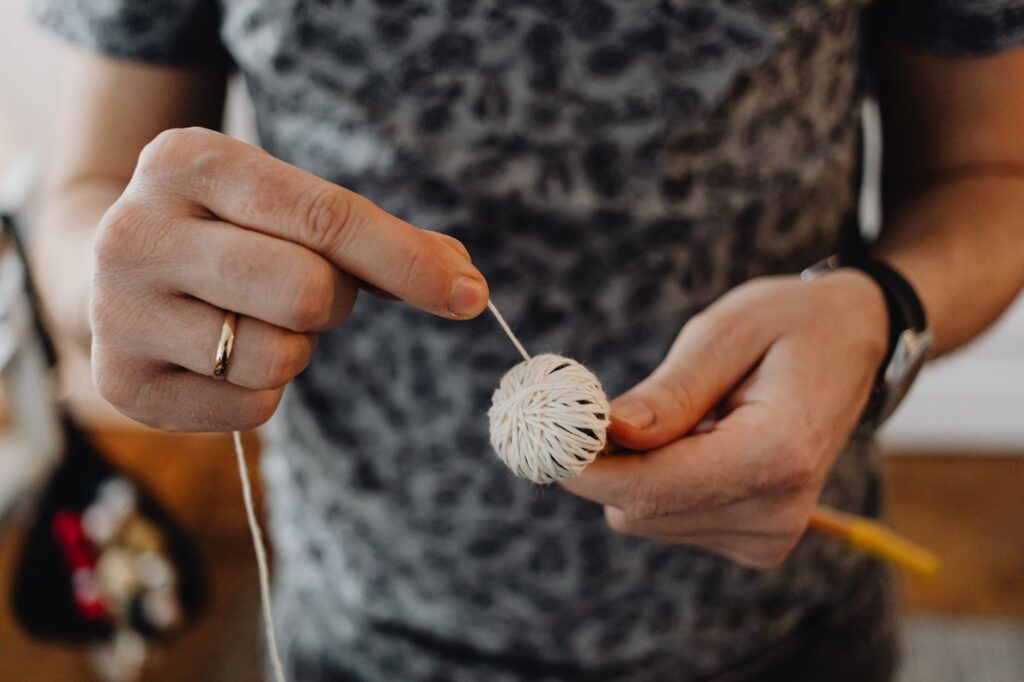
In this method, paper folds are manually pierced using a sharpened steel awl over a beeswax base. The thread, traditionally made of waxed hemp or silk dyed with natural pigments such as indigo or gallnut, passes through the perforations following strict geometric patterns that not only ensure the compaction of the volume, but act as a primary decorative element.

blockquote>The Japanese book is not an object closed in upon itself; it is a flexible organism that breathes with environmental humidity and ages gracefully alongside its reader.
Masters insist that thread tension must be absolute: neither too tight to tear the washi paper at the slightest seasonal change, nor too loose to let the signatures misalign. This millimeter precision is acquired after decades of practice, where the artisan’s hands develop a tactile sensitivity capable of detecting micron-level variations in paper thickness.
The Art of Natural Dyeing and Silk Covers
The covers of volumes bound in Kyoto are rarely neutral. Artisans frequently draw upon recycled kimono fabrics or raw silks dyed through ancestral techniques such as katazome, a stencil-printing method utilizing papers waterproofed with fermented persimmon juice (shibugami) and resist pastes. The pigments used originate from mineral earths, roots, and local flowers, guaranteeing hues that evolve subtly with light exposure.

The process of lining acid-free cardboard covers requires absolute mastery in moisture management. If glue is applied too heavily, the board warps; if applied too sparingly, the silk peels away over years of handling. Artisans use whalebone spatulas or polished bamboo to smooth the fabric from the center outward, expelling microscopic air bubbles without marring the delicate texture of the textile fiber.
In contemporary studios, this tradition engages with graphic designers and modern artists seeking physical supports for independent publishing projects. Far from closing their doors to innovation, masters collaborate in creating artist books where Japanese binding combines with European typographic techniques, generating a unique intercultural dialogue on paper.
Preventive Conservation and the Rescue of Historical Archives
Work in these studios is not limited to new creation; a fundamental part of daily labor involves the restoration of scrolls and books (kansubon and fukuro-toji) originating from Buddhist temples, Shinto shrines, and private collections across the country. These volumes, affected by centuries of humidity, insect damage, and the inexorable passage of time, require surgical interventions where hand-dyed repair paper is applied to blend seamlessly with the original.

Restorers use a reversible starch-based adhesive that allows repairs to be removed in the future without damaging original fibers, applying an ethical philosophy radically opposed to twentieth-century industrial restoration methods that utilized irreversible synthetic vinyls.
Each intervention is documented photographically and in writing, creating an archive of material memory that guarantees the transmission of technical knowledge to new generations of apprentices arriving from around the world, drawn by the rigor of these workshops.
Practical guide
Planning a respectful visit to Kyoto’s artisan workshops requires understanding the rhythms and codes of local culture, where privacy and the masters’ deep concentration are paramount values.
- How to get there: The Nishijin district is located in northwest Kyoto and is easily accessible via city bus lines 9 and 12 from Kyoto Central Station. It is recommended to get off at the Horikawa Imadegawa stop.
- Workshop access: The vast majority of traditional workshops operate strictly by appointment and do not function as commercial retail shops open to the general public. Arranging visits through cultural tourism specialists or via formal introduction is essential.
- Recommended season: Autumn (November) and spring (April) offer ideal climatic conditions of temperature and humidity for handling washi paper without risk of degradation from environmental dryness.
- Workshops and experiences: Authorized educational spaces, such as the Nishijin Textile Center, offer controlled demonstrations and brief Japanese binding workshops for visitors interested in understanding basic techniques.
- Etiquette: Touching materials or tools without the master artisan’s explicit permission is strictly prohibited. Photography of workspaces is typically restricted due to intellectual property concerns and respect for labor silence.
- Acquiring pieces: For those wishing to purchase traditionally bound notebooks or books, visiting specialized antiquarian and artisan paper shops in the Teramachi and Shijo districts ensures authenticity of materials.

The Pulse of Time in Open Pages
At the end of the day, when Kyoto’s zenith light begins to filter horizontally through shoji paper lattices, silence settles once more into Master Tanaka’s workshop. On the workbench, a freshly sewn volume rests under light pressure, waiting for the glue to dry completely before delivery to its recipient. There are no flashing screens or urgent notifications interrupting this millenary cycle of matter and attention.
blockquote>True contemporary luxury no longer lies in connection speed, but in the time invested in creating objects that resist oblivion and hold the warmth of human hands.
This silent renaissance in the alleyways of Nishijin proves that the future of the book does not lie in relentless digital replacement, but in the reclamation of its tactile and spiritual dimension. In a world saturated with fleeting stimuli, Japanese bookbinding stands as an eloquent reminder that beauty, to be enduring, demands patience, respect for material, and a profound commitment to collective memory.