

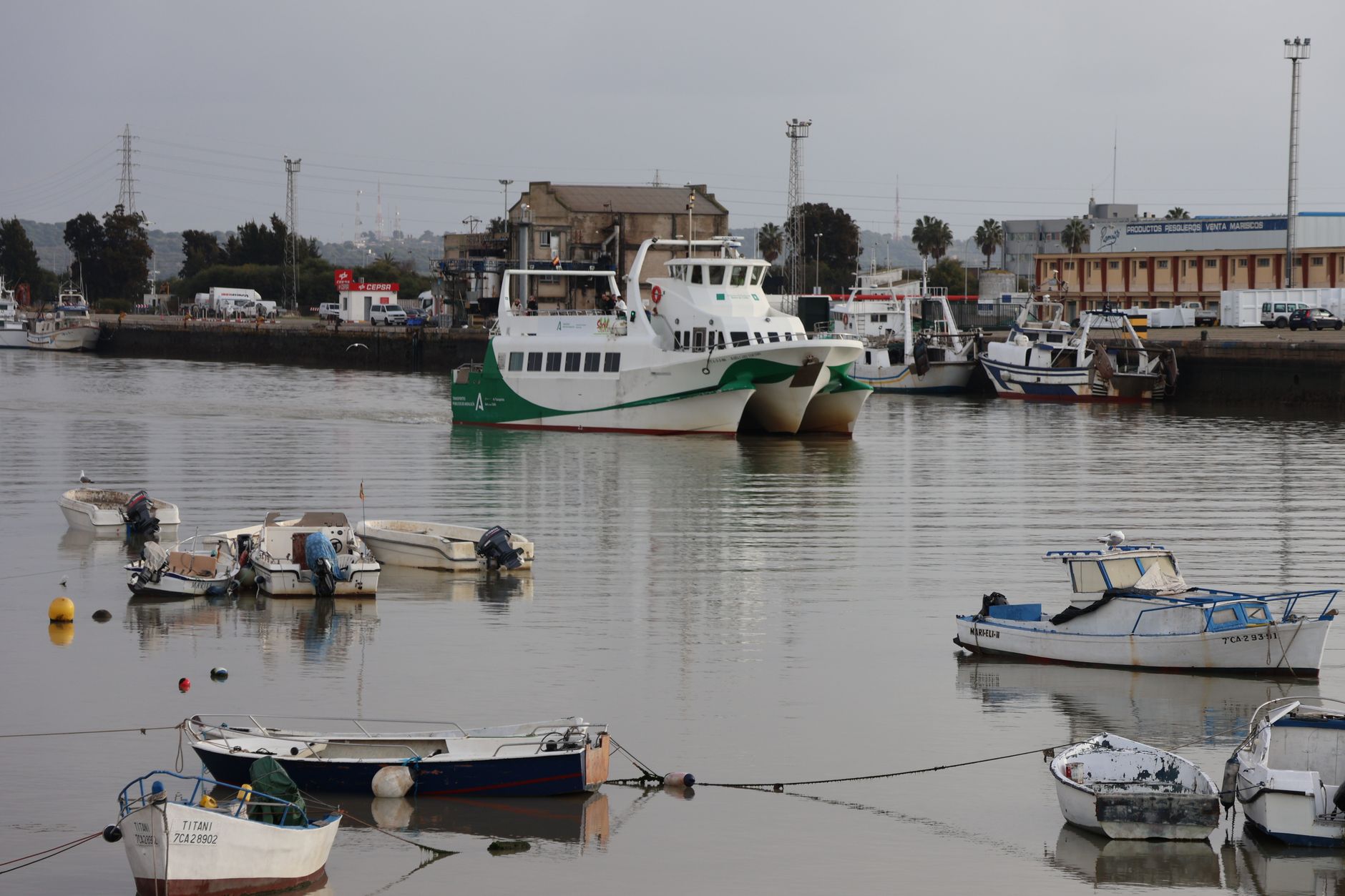
The Insular Geopolitics of the Lamu Channel
At the northernmost tip of Kenya’s coast, where the Indian Ocean carves a labyrinth of mangroves and brackish creeks, geography is not a mere backdrop but a testament of resilience. The Lamu Archipelago, designated a UNESCO World Heritage site, represents far more than an architectural refuge of coral stone and carved timber; it is a living artery of mobility where solid earth yields to the supremacy of water. For centuries, connectivity between the main island, Manda, Pate, and Kiwayu has relied on a delicate balance between monsoonal currents and the nautical mastery of Swahili mariners.
However, understanding this territory requires stripping away the romantic postcard to examine the raw logistical machinery that sustains it. Today, the daily transit of goods, students, medical patients, and construction materials contends with the obsolescence of port infrastructure that has barely evolved since the colonial period. Recent government investments in the Mokowe jetties and the modernization of island moorings aim to alleviate a historical bottleneck while simultaneously generating palpable tensions between contemporary efficiency and respect for the fragile coastal ecosystem.
The Backbone of Timber and Sail: The Renaissance of Dhows
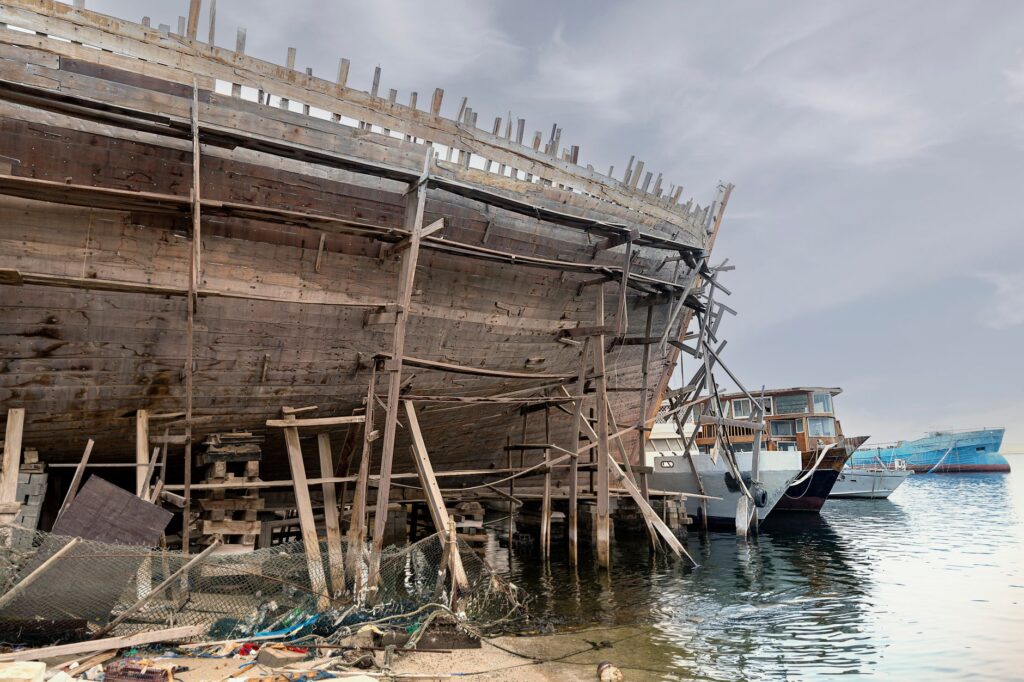
While high-speed ferries have monopolized island transport in other latitudes, Lamu endures thanks to its fleet of traditional dhows. These lateen-rigged vessels, built by hand without printed blueprints and joined using ancestral coconut-fiber sewing techniques, remain the primary vehicles for heavy cargo. Indigenous naval engineering survives not merely for aesthetic reasons, but because flexible wooden hulls effectively absorb the impact of shallow coral reefs and shifting sandbars that would wreck conventional motorized skiffs.
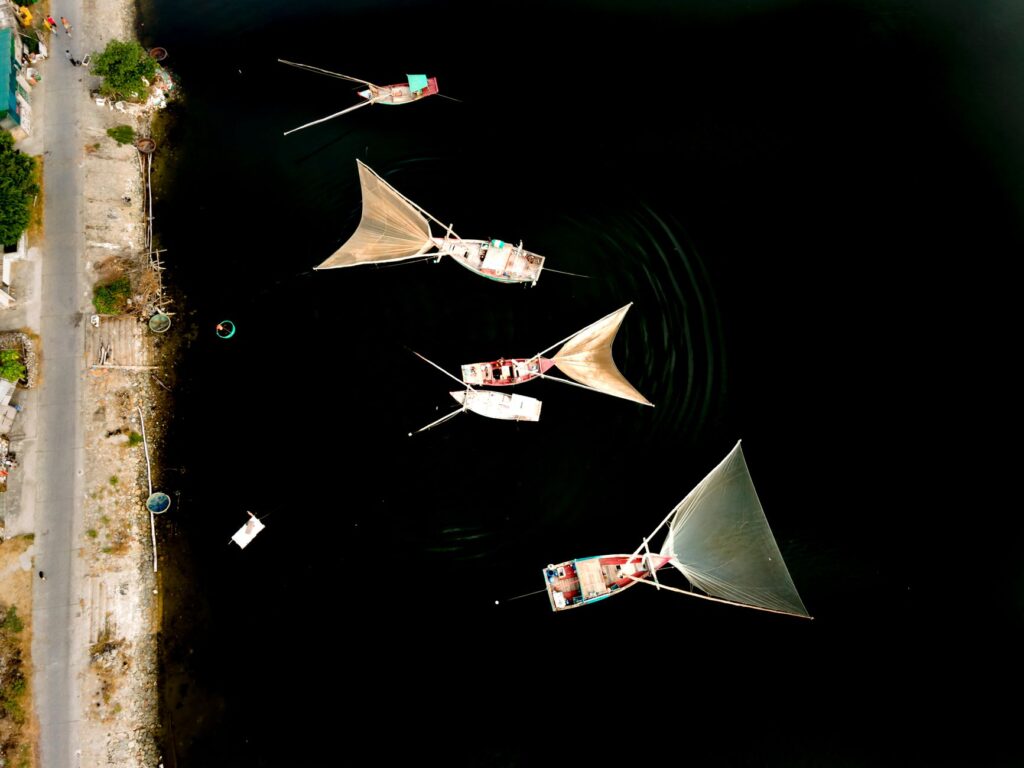
Despite their undeniable heritage value, dhow captains face an increasingly complex financial landscape. The rising cost of imported teak and mahogany, coupled with unfair competition from fiberglass boats powered by Chinese outboard engines, threatens to destabilize the shipyard economy of Matondoni. Local shipwrights, guardians of knowledge transmitted across generations, demand forest protection policies that guarantee a sustainable supply of raw materials without suffocating the commercial activity supporting hundreds of families.
The Crucible of Community Piers: Between Floating Docks and the Tide
The terrestrial infrastructure of the archipelago suffers the consequences of centralized planning that has rarely accounted for extreme tidal fluctuations. On Lamu Island, the main pier becomes systematically congested during morning peak hours when passenger boats from Mokowe, freshwater barges, and returning fishermen converge on the high tide. Port congestion is not merely an inconvenience for the traveler, but a critical operational risk for transporting urgent medical supplies to the regional hospital.
To counter this vulnerability, local authorities and community organizations have promoted the construction of small floating jetties on the lesser islands of Pate and Siyu. These modules, designed to adapt to the vertical rise and fall of water without damaging the mangrove seabed, have dramatically improved landing safety. Nonetheless, the maintenance of these structures remains precarious due to extreme salt corrosion and meager municipal budgets allocated for preventive conservation.
The Energy Dilemma: The Transition Toward Riverine Electric Mobility
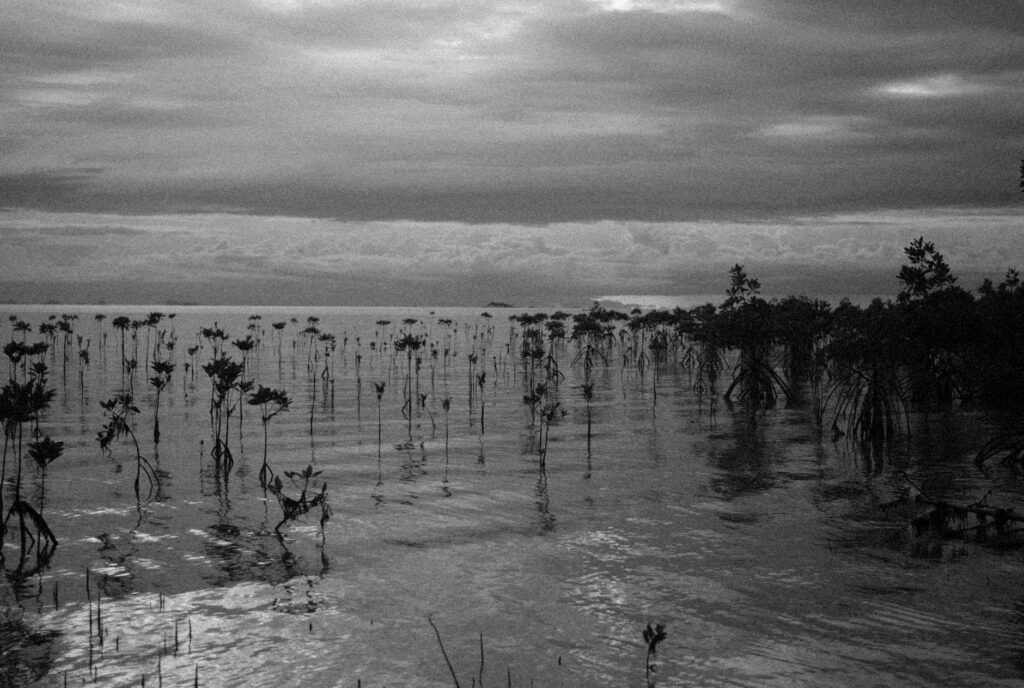
One of the most intense debates currently agitating the seafaring community revolves around the electrification of the passenger transport fleet. Historically dependent on two-stroke gasoline engines—which are heavily polluting and noisy—local captain associations are participating in pilot programs to incorporate electric motors powered by solar energy. The decarbonization of the channels is not an ecological chimera, but an urgent necessity to preserve the purity of waters nourishing fish nurseries and sea turtle sanctuaries.
Despite initial enthusiasm, the large-scale adoption of this technology encounters formidable financial barriers. The upfront cost of importing lithium batteries and photovoltaic panels far exceeds the credit capacities of independent operators. Furthermore, the absence of a robust charging network on peripheral islands limits vessel autonomy, forcing operators to maintain a hybrid dependence that drives up daily transit costs and generates economic uncertainty in the sector.
The Healthcare Pulse: The Water Ambulance and the Geography of Emergency
Insularity carries a high human cost when accessing specialized medical services. If a pregnant woman experiences complications during childbirth in the remote settlement of Kizingitini, the difference between life and death depends entirely on the efficiency of the riverine emergency transport system. The water ambulance network, managed jointly by the Lamu County regional government and international health foundations, constitutes an indispensable lifeline across this geographical labyrinth.
These high-speed vessels are equipped with basic life support and satellite communication to coordinate evacuations to the reference hospital on the main island. However, operators frequently decry the lack of nighttime navigation markers in secondary channels. Navigating at high speed among submerged reefs and seagrass fields after sunset represents an extreme hazard, restricting many rescue operations to daylight hours and leaving isolated communities stranded throughout the night.
The Invisible Trade Route: Provisions, Fuel, and Mainland Dependence
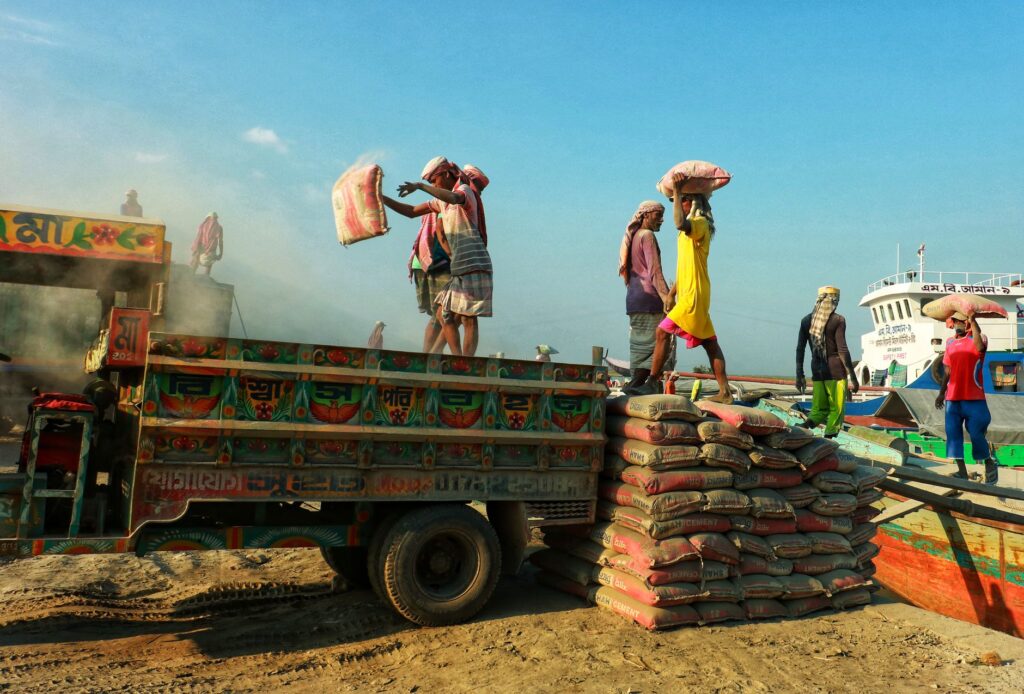
No island is self-sufficient, and the Lamu Archipelago is no exception. Practically all the fuel powering electrical generators, authorized cargo vehicles, and boats, as well as seventy percent of the fresh food consumed in local markets, must cross the channel from the mainland port of Mokowe. The inter-island supply chain functions like a Swiss watch that nonetheless stops abruptly at the slightest weather disturbance or the grounding of a freight barge.

Merchants report that port tariffs and cargo handling fees imposed in Mokowe artificially inflate the final price of basic goods in the coral stone shops of the Old Town. This logistical friction fuels a constant economic debate regarding the need to diversify regional supply sources and promote subsistence agriculture through solar desalination techniques in the interior of Manda Island.
Water does not separate this territory; it vertebraes it through an invisible calligraphy written with dhow timber, salt, and seafaring memory.
Conscious Tourism in Fragile Waters: The Challenge of Carrying Capacity
The surge of international tourism toward Lamu raises a critical question about the carrying capacity of its transport infrastructure. Unlike other Indian Ocean enclaves overwhelmed by cruise ships, the local model relies on independent travelers seeking cultural heritage. Nevertheless, visitor concentration during annual festivals, such as the renowned Lamu Cultural Festival, completely saturates public ferry capacity and places unsustainable pressure on marine waste management services.
Hotel associations and river transport operators have begun negotiating voluntary protocols to limit tour group sizes aboard single commercial vessels, prioritizing traditional sailboats over noisy motorized skiffs. The balance between conservation and development requires visitors to accept that moving around Lamu means embracing the unhurried rhythms of the tide and the absolute priority of resident daily needs over recreational urgency.
Practical Information for Travelers in the Archipelago
Planning a journey through the Lamu region requires logistical rigor, patience, and flexibility in the face of weather disruptions. Below are the essential guidelines for safe and environmentally respectful mobility:
- Main Access Point: All domestic flights originating in Nairobi land at the sandy airstrip on Manda Island. From there, public and private skiffs connect directly to Lamu Town in a ten-minute ride.
- Cargo and Passenger Transport: Government public ferries operate regularly between the mainland Mokowe jetty and Lamu Island from dawn until 6:00 PM. Local schedules posted at the dock boards should be checked for updates.
- Navigation Regulations: The use of single-use plastics is strictly prohibited aboard commercial and tourist vessels operating within the boundaries of the protected marine reserve.
- Medical Emergencies: Comprehensive travel insurance covering emergency air and maritime medical evacuation from remote islands to higher-complexity hospitals is essential.
- Cultural Ethics: When utilizing community transport such as shared cargo dhows, modest attire is required, and permission should be requested before photographing port workers and local captains.
Epilogue: Insular Permanence Against the Horizon of Change
The Lamu Archipelago survives on a historical tightrope, caught between the urgency of logistical modernization and the preservation of a unique cultural ecosystem on the East African littoral. Every dhow setting sail at dawn from Matondoni and every floating pier resisting high tide represents a daily act of insular sovereignty. The true connectivity of this territory is measured not solely in knots per hour or tons of cargo transported, but in the capacity of its inhabitants to keep alive an amphibious culture that defies the uniformity of the modern world without surrendering its right to the future.

