
Introduction to a Colossal Journey
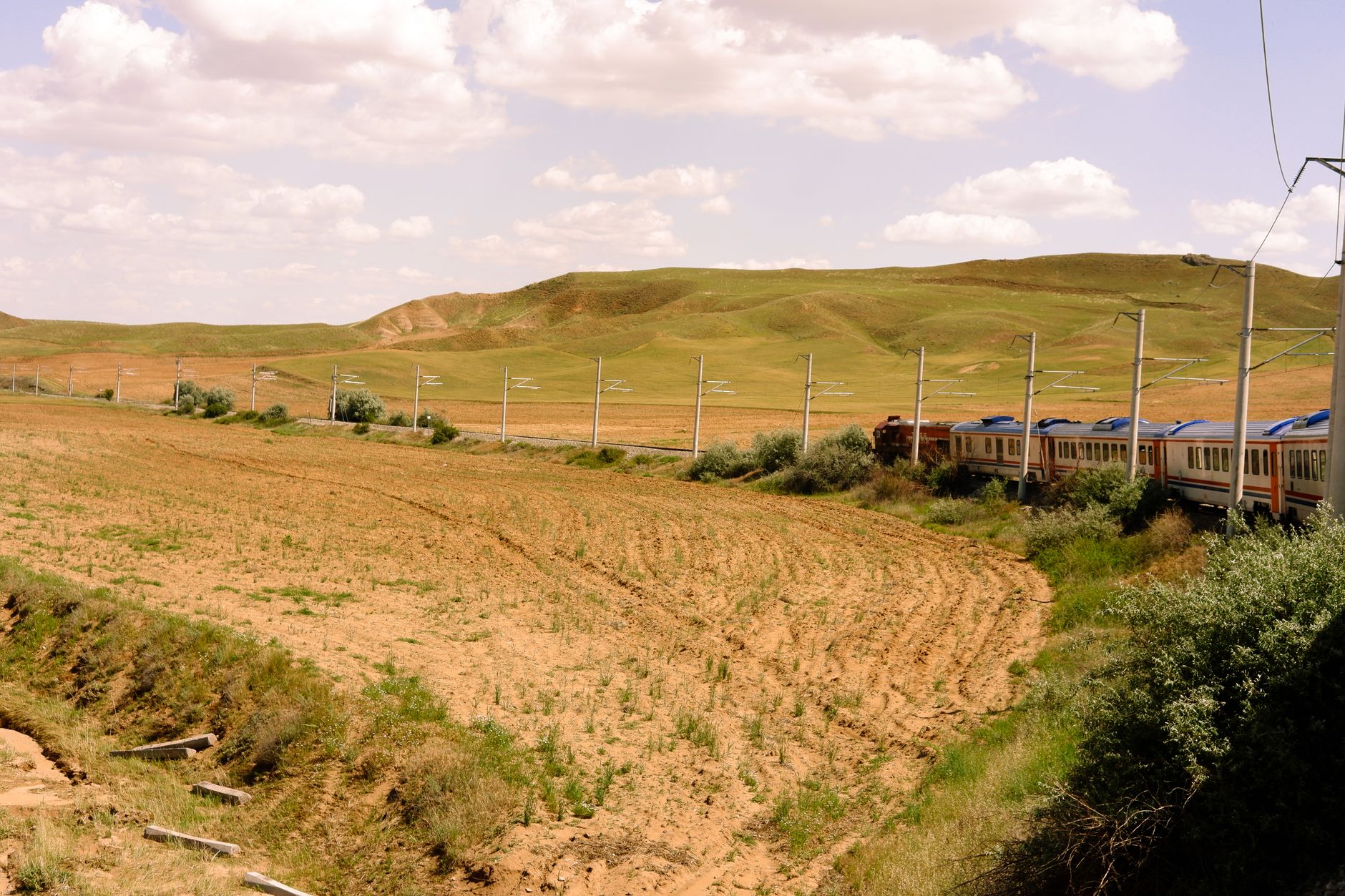
The longest and most evocative train journey on the planet is not merely a transfer from point A to point B; it is a temporal immersion in the vastness of Eurasia. Spanning nearly eight thousand kilometers of railway tracks, the Trans-Mongolian—one of the most fascinating branches of the Trans-Siberian route—connects Moscow with Beijing, cutting through endless horizons, impenetrable boreal forests, and the Gobi Desert. Far from the sterile speed of commercial aviation, this itinerary proposes a reconnection with geological time and the true scale of the continent.
Every stop on the platforms of Siberian provincial towns or border stations acts as a reminder of the complex human history that has shaped these latitudes. The carriages, heirs to a Soviet railway tradition adapted to the rigors of extreme weather, become microcosms where merchants, researchers, nomads, and wandering travelers coexist. Analyzing this steel artery involves understanding how nineteenth-century engineering managed to defy hostile geography to unite radically opposed cultural worlds.

Imperial Origins and the Geopolitics of Steel
The genesis of the great Trans-Siberian line and its Mongolian variant responded to both military strategic ambitions and the need to unify a colossal empire. At the end of the nineteenth century, the imperative to connect Saint Petersburg and Moscow with Pacific ports drove one of the greatest civil engineering undertakings in modern history. Thousands of workers, including Russian peasants, convicts, and soldiers, laid railway ties under brutal climatic conditions, overcoming permafrost, rushing rivers, and mountainous terrain.
The branch diverting the route toward Ulaanbaatar and the Chinese capital was fully consolidated in the mid-twentieth century, establishing a vital diplomatic and commercial corridor during the Soviet era. The tracks not only transported heavy goods and mineral resources but also the geopolitical vision of an expanding bloc. Today, the infrastructure survives global political shifts, adapting to the demands of sophisticated adventure tourism and the persistent need for continental freight transport.
The Geography of Track Gauge Changing
One of the most unique and technically complex moments of the journey occurs at international borders where the track gauge changes. Russia and Mongolia employ the Russian broad gauge, which is wider than the standard international gauge used in China. Upon arriving at the border between Mongolia and the People’s Republic of China, trains must undergo a meticulous mechanical process at the Erenhot facilities, where each carriage is lifted with giant hydraulic jacks to replace its bogies (wheel sets).
This procedure, which can last several hours and is executed with surgical precision during the early morning hours, illustrates the technical friction that persists between different national sovereignties. Passengers remain on board while the carriage is suspended in the air, listening to the metallic echo of wrenches and the hammering of the operators’ tools. It is an industrial ritual symbolizing the transition between two radically different cultural and economic universes.
Daily Life Aboard the Carriage
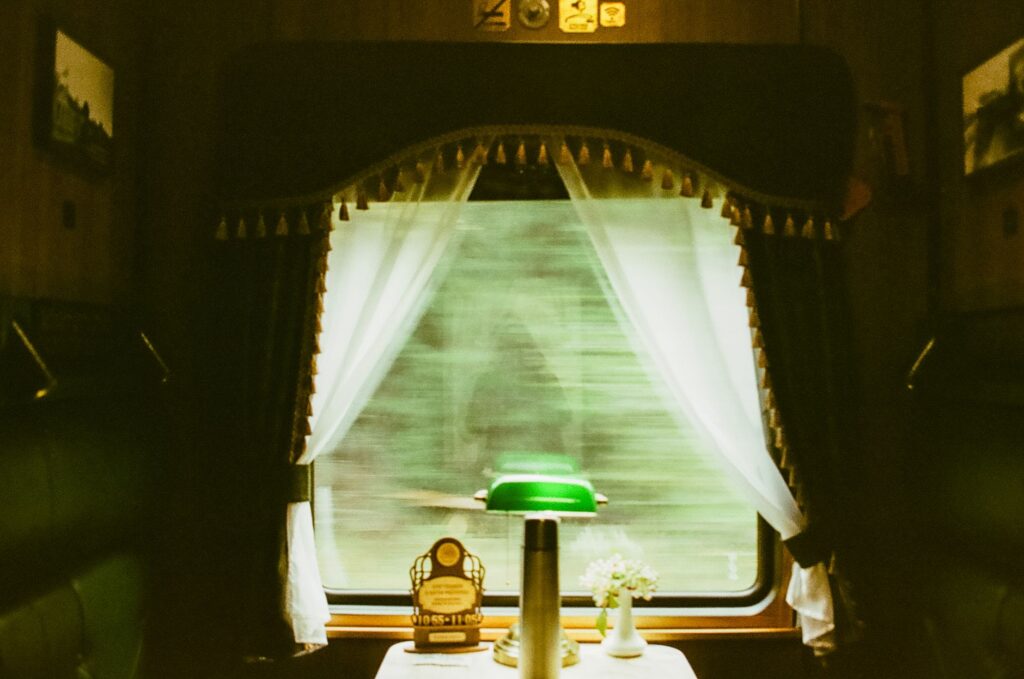
Living for six or seven days inside a second-class compartment (the classic *kupe*) forces travelers to adopt a slow and methodical rhythm. The charcoal or electric samovar located at the end of each carriage is the social heart of the train; it provides uninterrupted boiling water to prepare tea, instant soups, or oatmeal. In this floating space, hours are measured by the shifting exterior landscape and the rhythmic sound of the bogie striking rail joints.
Interactions in the corridors transcend language barriers through gestures, smiles, and the exchange of food bought on platforms during brief technical stops. Local female vendors offer boiled potatoes, smoked fish from Lake Baikal, pine nuts, and homemade dumplings. These fleeting encounters provide a direct window into the domestic economy of the rural communities bordering the railway line.
The Trans-Mongolian is not a rapid escape route, but a tangible reminder that geographical distance possesses a dignity of its own that modern velocity has stolen from us.

The Siberian Immensity and Lake Baikal
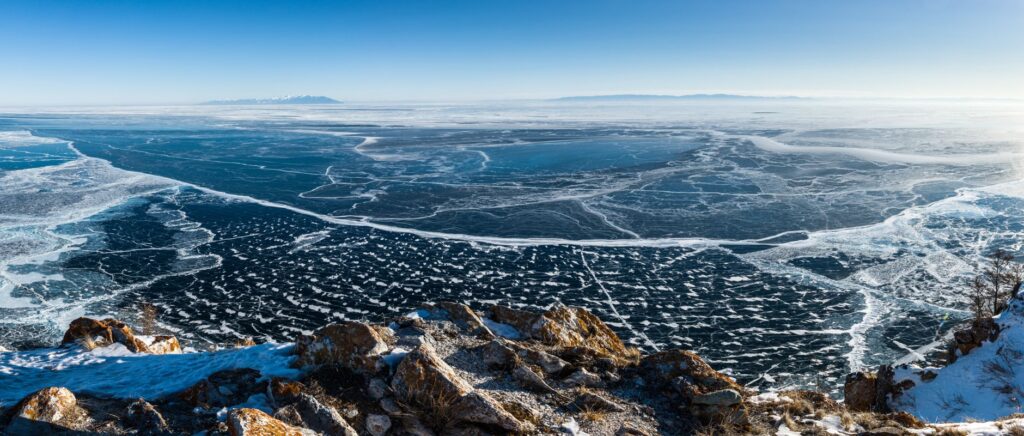
As the convoy moves eastward, the dense birch and conifer forests of the Siberian taiga seem to repeat themselves indefinitely, generating a sense of visual hypnosis. After crossing the Urals and crossing the mental frontier between Europe and Asia, the landscape opens up to reveal the deepest body of water on the planet: Lake Baikal. The tracks run for several kilometers within close range of its rocky shores, offering privileged views of a unique global ecosystem.
Stations near Baikal, such as Slyudyanka—built entirely of local white marble—demonstrate the integration of railway architecture into a protected natural environment. Passengers take advantage of the twenty-minute stops to breathe the fresh air infused with the scent of pine and fresh water, acquiring the legendary smoked omul fish from locals waiting patiently beside the carriages.
Arrival in Ulaanbaatar and the Infinite Steppe
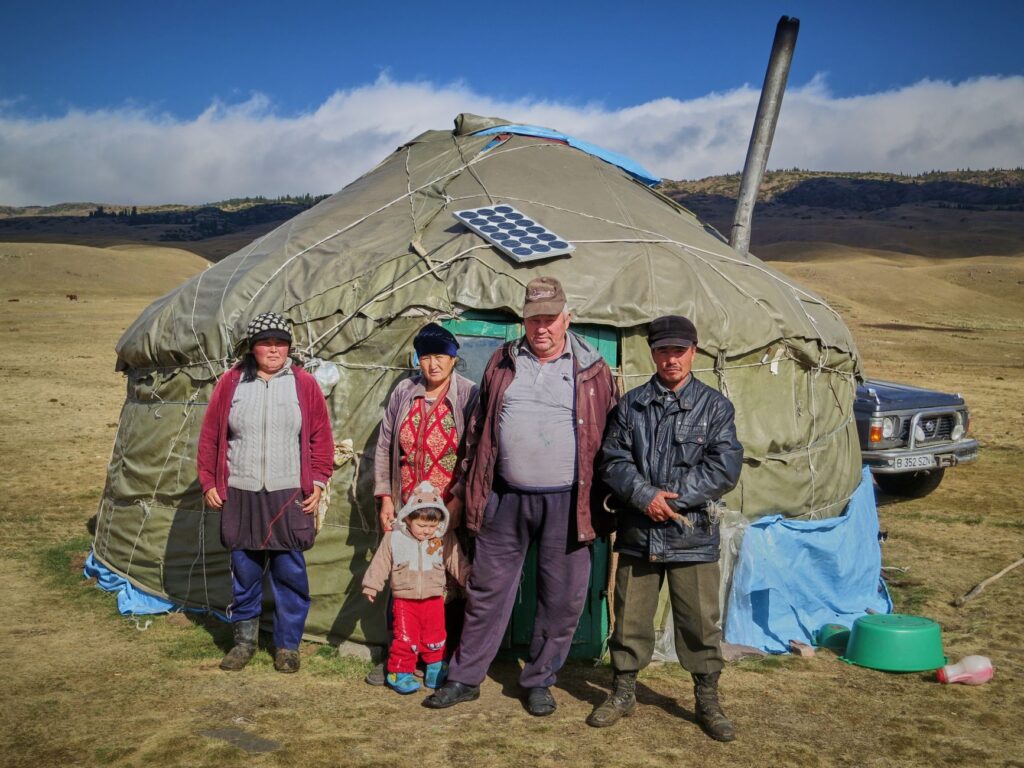
Upon crossing the Mongolian border, the taiga abruptly yields its place to the green, rolling steppe where herds of horses, sheep, and Bactrian camels graze. The white felt gers (yurts) of nomadic families scatter like white dots across a vegetal tapestry extending to the horizon without visual obstacles. In this section of the journey, the rhythm of the train seems to synchronize with the majestic slowness of rural Mongolian life.
Ulaanbaatar appears as a striking contrast of Soviet-era high-rise towers, restored Buddhist monasteries, and peripheral neighborhoods of traditional felt housing. The stop in Mongolia’s capital is usually longer, allowing travelers to explore local markets to examine cashmere textiles, wood carvings, and artifacts linked to the legacy of Genghis Khan.
Crossing the Gobi Desert and Arrival in Beijing
The final major leg of the journey introduces passengers to the mineral aridity of the Gobi Desert. Landscape hues shift from intense ochres to saline whites and fine sand dunes bordering Mongolia’s southern border. Occasional dust storms stain the sky with a diffuse amber tone, transforming the horizon into an impressionistic painting where the train appears to be the only straight line drawn by humanity.
After clearing border controls and the complex bogie-changing process, the route winds downward toward the plains of northern China, crossing the Great Wall near Badaling before culminating in Beijing’s imposing central station. The contrast between the absolute solitude of the steppe and the metropolitan bustle of the Chinese capital seals one of the most transformative travel experiences in existence.
Practical Information for Planning the Route
Planning a trip on the Trans-Mongolian requires rigorous advance preparation due to the complexity of the necessary visas (Russia, Mongolia, and China), which must be processed in the country of origin months ahead. The best time to undertake this journey spans from May to September, when temperatures are moderate and daylight hours maximize landscape contemplation.
It is essential to provision cash for sections where credit cards do not function, as well as to bring an appropriate selection of layered clothing, since the heating systems of Soviet trains tend to be extremely intense. Although dining cars offer hot meals, carrying personal provisions of nuts, tea, and cereals ensures autonomy during days of continuous travel.
Epilogue on the Value of Slow Travel
In an era obsessed with immediacy and the optimization of vacation time, the Trans-Mongolian express vindicates the value of prolonged displacement as an object of enjoyment in its own right. Crossing entire continents at the steady rhythm of iron wheels allows travelers to assimilate cultural, geographical, and human transitions in a way that no transcontinental flight can ever match.
The true luxury in contemporary travel does not reside in the speed of arrival, but in the depth of inner transformation that occurs during the journey.