

Introduction to the Fluvial Crossroads of the Wachau
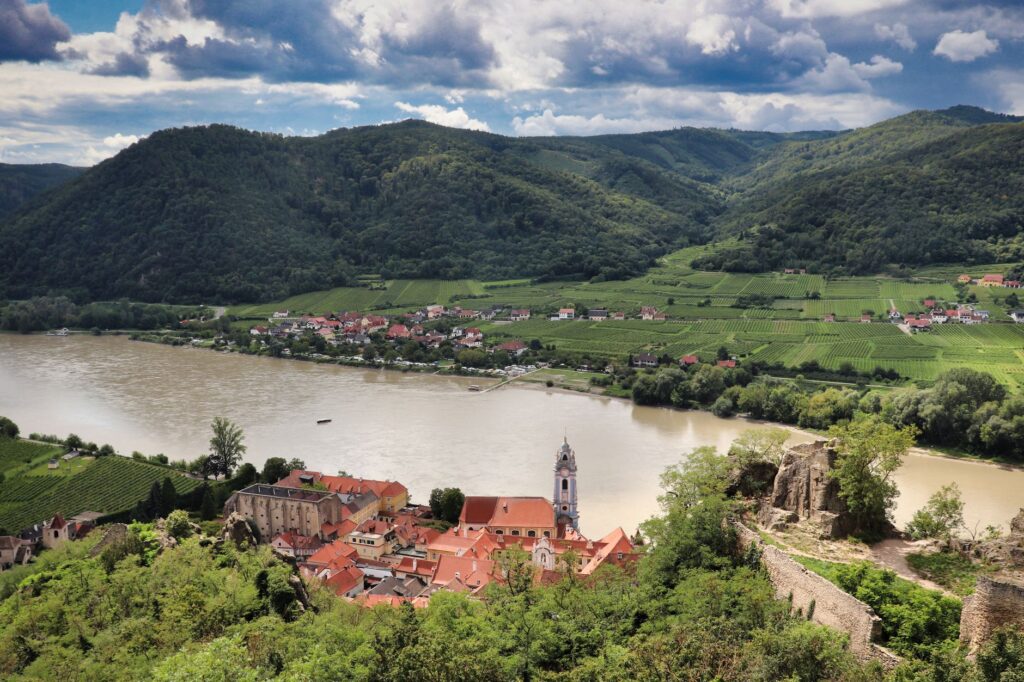
For millennia, the Danube River has served as the primary artery of Central Europe—a corridor of civilizations, commerce, and pilgrimage that today confronts one of the most complex challenges in its contemporary history: balancing massive tourist traffic with ecological preservation and the viability of its riparian communities. In the stretch known as the Wachau, a 36-kilometer protected cultural landscape between Melk and Krems an der Donau, the pressure of summer tourism and traditional commercial transport threatened the fragile balance of its dry-stone terraces, centuries-old vineyards, and picturesque medieval villages. The institutional and civic response to this dilemma has not been the closure of borders, but a profound re-engineering of its public and river mobility model.
Far from grandiose infrastructure projects, the transformation of the Wachau rests upon the millimeter precision of the local scale. Here, sustainable mobility goes beyond replacing combustion engines with electric batteries; it involves rethinking how residents commute daily for work, how visitors experience the territory without leaving a harmful footprint, and how the transport of local goods—from prized Riesling and Grüner Veltliner grapes to protected-origin apricots—can be integrated into an efficient, environmentally friendly multimodal network. This report examines the technical, human, and economic framework that makes this transition possible in the historic heart of Austria.
The Renaissance of Low-Emission River Navigation
For decades, water transport on the Danube relied almost exclusively on massive passenger vessels powered by high-output diesel engines, whose wakes and emissions disrupted fragile riparian ecosystems and generated constant acoustic disturbance along peaceful riverbanks. The gradual introduction of hybrid and 100% electric vessels has marked a radical turning point. Local shipyards and river operators have invested in modernizing the fleet of vehicle and passenger ferries connecting the north and south banks at strategic points such as Spitz, Weißenkirchen, and Dürnstein.

These new ferries combine integrated photovoltaic panels on their upper decks with lithium iron phosphate battery storage systems, complemented by permanent-magnet electric motors. During shorter crossings, which traverse the main current of the Danube in mere minutes, the vessels operate in absolute silence, completely eliminating vibrations and nitrogen oxide emissions. Energy management is optimized through kinetic energy recovery during docking maneuvers and overnight recharging at terminals connected to regional certified hydroelectric energy grids.
Intermodal Integration Between River and Land
The success of sustainable mobility in the Wachau lies in its absolute rejection of isolated solutions. A clean ferry system lacks effectiveness if travelers disembark only to encounter private car congestion. Therefore, the government of Lower Austria, in collaboration with the region’s municipalities, has deployed the Wachau Mobilität initiative, a comprehensive plan that synchronizes the schedules of river ferries with zero-emission regional buses and rail services along the Donauuferbahn line.
Intermodal stations located at the main piers now feature charging points for electric bicycles, secure parking for residents, and real-time information panels displaying occupancy rates on hiking and cycling routes. This systemic approach ensures that the commuting trips of local inhabitants—who need to cross the river daily for work or educational reasons—do not compete with tourist flows, but instead benefit from a more robust, punctual, and cleaner infrastructure.
Charging Infrastructure and Riparian Energy Challenges
Electrifying a river and bus fleet in an area of high landscape value presents considerable technical challenges. Installing high-power fast-charging stations along the Danube banks required careful visual and environmental impact studies to avoid altering the traditional architecture of river ports and flood defenses. Engineers chose to underground most transformer substations and use modular designs that blend discreetly into historic stone buildings.
Furthermore, the local electrical grid had to adapt to support simultaneous peak demand, especially during harvest season rush hours and peak summer tourism months. To mitigate strain on the general grid, stationary energy storage units have been installed at key points such as Krems, storing surplus daytime solar energy and guaranteeing a stable, clean supply for overnight recharging of ferries and municipal buses.
Socioeconomic Impact on Local Communities
The transition toward a sustainable transport model in the Wachau is not merely an exercise in applied ecology; it is an economic and cultural survival strategy for communities that depend on the authenticity of their environment. Historically, mass car tourism threatened to saturate the narrow secondary roads winding through vineyards, clogging historic centers and deteriorating the quality of life for permanent residents.

By prioritizing soft mobility, clean river transport, and rail access, the region has successfully redistributed visitor flows more equitably across the year and the territory. Small wine producers, family-run taverns (locally known as Heurigen), and hoteliers report higher satisfaction among travelers, who stay longer in the region thanks to comfortable, predictable transport options that eliminate the constant search for parking. Road traffic noise reduction has also enhanced the appeal of wellness and contemplative nature tourism.
The Role of Cycle Tourism and Riverside Path Networks
The Danube Cycle Path (Donauradweg), winding along both banks through the Wachau, forms the backbone of non-motorized mobility in the region. Rather than widening roadways for motor vehicles, local authorities have heavily invested in maintenance, low-impact solar lighting, and smart signage along this cycling route, turning it into a safe corridor connecting every village in the valley.

Combining the cycle path with solar ferries allows cyclists to design flexible circular routes: pedaling west along the north bank, crossing the river on a silent ferry, and returning along the south bank to enjoy completely different perspectives of the terraced viticultural landscape. This active tourism model has energized small local businesses that rent cargo bikes and offer on-route repair services, fostering a circular economy deeply rooted in the territory.
Governance and Citizen Participation
One of the most notable aspects of the transformation process in the Wachau has been the high degree of citizen participation in decision-making. Through community forums and mobility roundtables, farmers, ferry captains, tourism entrepreneurs, and residents have directly participated in designing transport routes and locating new charging infrastructure.
This participatory governance has helped resolve local tensions before they escalated into open conflicts, such as debates over restricting heavy vehicle traffic in Dürnstein’s narrow lanes. The consensus achieved demonstrates that sustainability in protected heritage destinations cannot be imposed exclusively from regional offices, but requires an ongoing civic pact recognizing both the economic needs of inhabitants and the shared responsibility of bequeathing an intact landscape to future generations.

Practical Information for the Mindful Traveler
For those interested in exploring the Wachau while applying the principles of sustainable mobility, advance planning is essential. The best times to visit the region without crowds while enjoying maximum public transport efficiency are spring (during apricot blossom season in April) and autumn (during the grape harvest in September and October).
- Getting There: Access by train via the regional line connecting Vienna to Krems an der Donau or Melk is recommended, with synchronized regional buses and local ferries departing directly from these stations.
- Internal Travel: Utilize the combined Wachau Ticket, which includes unlimited use of regional buses and solar river ferries throughout your stay.
- Accommodation and Services: Choose establishments adhering to Lower Austria’s eco-certification and prefer wineries and restaurants utilizing farm-to-table local products.
- Local Rules: Strictly adhere to vineyard trail guidelines and use peripheral park-and-ride facilities outside historic villages to keep urban centers free of private vehicles.
Conclusion and Lessons for Other Cultural Landscapes
The Wachau case demonstrates that transport sustainability is not an exclusive privilege of ultramodern megacities, but an achievable goal for traditional cultural landscapes and high-sensitivity heritage rural regions. By integrating solar and electric propulsion technology into historic river ferries and synchronizing them with clean terrestrial networks, this Austrian valley has successfully decoupled tourism growth from environmental degradation.
The fundamental lesson the Wachau offers the world is that true transport modernization lies in rigorous respect for the human scale and active protection of the landscape. When the local community, institutions, and visitors converge in a shared purpose of preservation and silent mobility, the river ceases to be a barrier or mere thoroughfare, becoming instead the living thread of a sustainable, enduring future.


