
The Emerald Sanctuary of the North Pacific
On the western edge of Canada, where the Coast Mountains plunge into the frigid waters of the Pacific, lies the Great Bear Rainforest. Covering approximately 6.4 million hectares, this territory represents the largest intact temperate rainforest remaining on the planet. Unlike tropical jungles, this ecosystem is defined by moderate temperatures, constant humidity, and a biomass that, in many areas, exceeds that of the Amazon. However, its significance lies not just in its scale, but in the complexity of a food web where land and sea are not separate entities, but a single, pulsing organism.
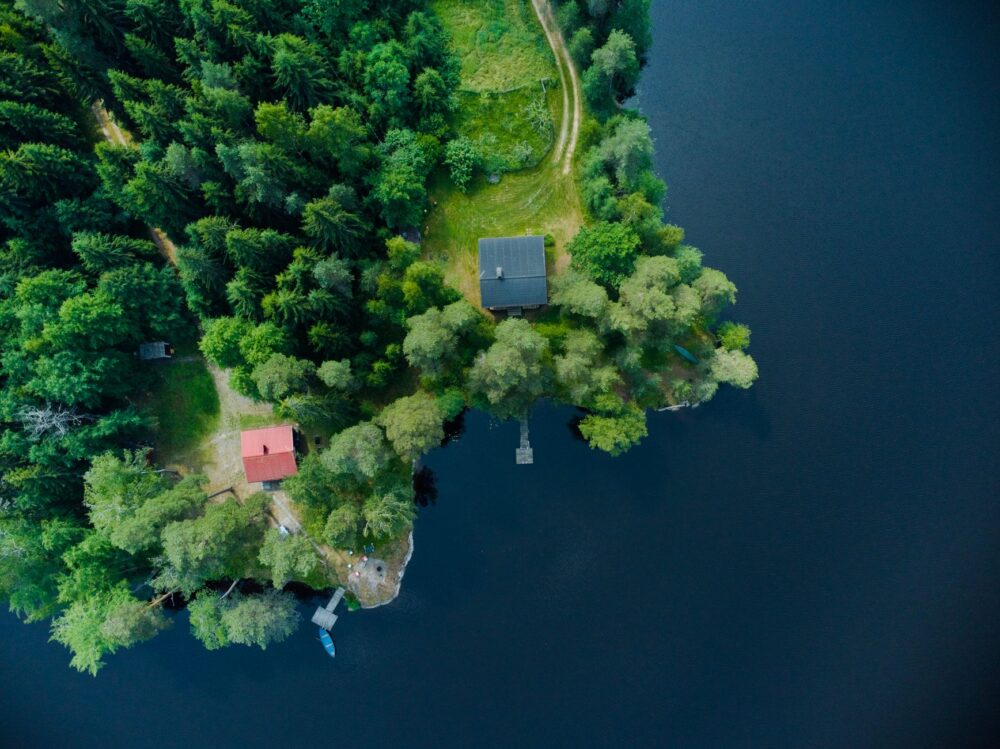
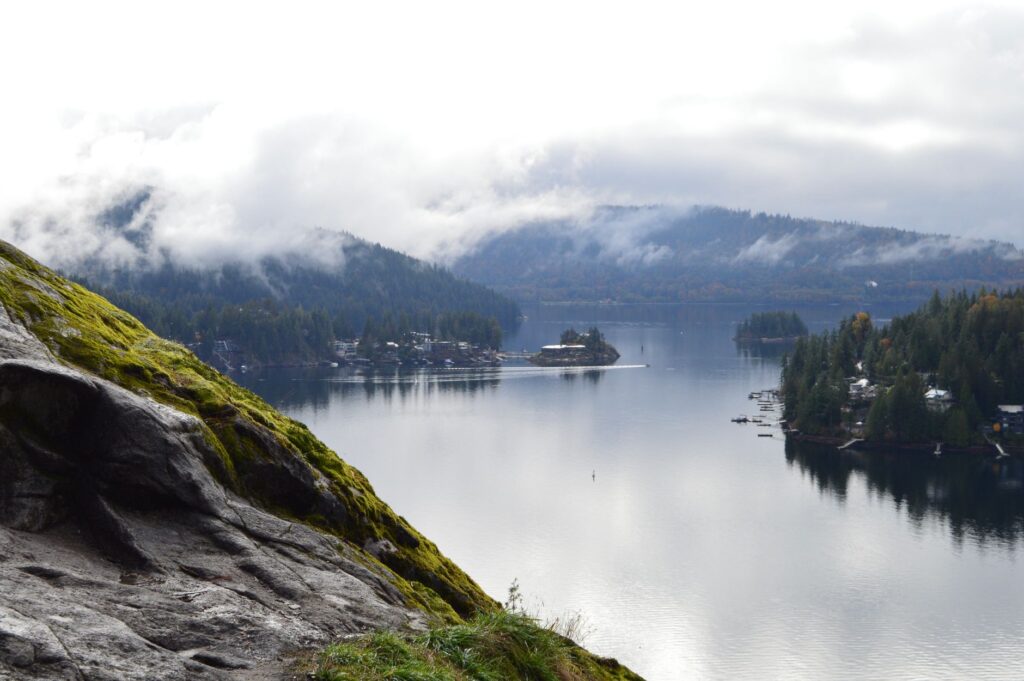
The region’s geography is dominated by a labyrinth of deep fjords, densely forested islands, and estuaries where glacial freshwater meets oceanic salinity. This environment has fostered unique biological adaptations, serving as home to species found nowhere else on Earth. The Great Bear Rainforest is essentially an evolutionary laboratory where time seems to have slowed down, protected by a natural barrier of relentless weather and a topography that has kept extractive industries at bay for decades.
The Spirit Bear: The White Ghost of the Forest
The most iconic inhabitant of this ecosystem is the Spirit Bear or Kermode bear (Ursus americanus kermodei). It is neither a stray polar bear nor an albino individual, but a subspecies of the American black bear that carries a recessive gene responsible for its white or cream-colored fur. To the Kitasoo/Xai’xais people, this animal is sacred; according to tradition, the Creator made one in every ten bears white to remind people of the time when the earth was covered in ice.
From a biological perspective, the persistence of this gene is a fascinating phenomenon. Genetic studies suggest that the white coat offers a specific evolutionary advantage: during the day, salmon have more difficulty spotting a white predator against the bright sky than a black one, increasing the Spirit Bear’s hunting success rate by 30% compared to its darker relatives. This delicate genetic balance depends on habitat integrity, as forest fragmentation could lead to the loss of this unique variant through genetic drift.
«The presence of the Spirit Bear is not an accident of nature, but a testament to the health of an ecosystem that has remained intact thanks to the millennial stewardship of those who inhabit it.»
The Nitrogen Cycle: Salmon as a Vital Engine
The true engine of the Great Bear Rainforest is not the sun, but the Pacific salmon. Every autumn, millions of salmon from five different species return from the depths of the ocean to the rivers where they were born to spawn and die. This phenomenon, known as the salmon run, represents a massive transfer of nutrients from the sea to the heart of the forest. Bears, wolves, and eagles rely on this annual feast to build up the fat reserves necessary to survive the winter.
The role of bears is crucial in this process. By catching salmon and carrying them into the forest to eat the most fat-rich parts (such as the brain and roe), the bears leave fish remains on the forest floor. These remains, along with their droppings, act as high-potency fertilizer. It has been shown that up to 80% of the nitrogen in giant trees, such as the Western Red Cedar and Sitka Spruce, comes directly from the ocean, transported by salmon and distributed by bears. Without the salmon, the forest would simply not reach its monumental dimensions.
Sea Wolves: Adaptation on the Intertidal Frontier
Another of the region’s great biological mysteries is the coastal wolves or sea wolves. Unlike their inland relatives, these wolves have adapted their morphology and behavior to life on the coast. They are exceptional swimmers, capable of traveling miles between islands in search of food. Their diet is unique in the canine world: up to 90% of their sustenance comes from the sea, feeding on barnacles, herring eggs, seals, and, of course, salmon.
Tracking these wolves has revealed a social structure adapted to the fragmented geography of the fjords. They are smaller than mountain wolves and possess shorter, denser fur. Their existence underscores the porosity of ecological boundaries in British Columbia; here, the wolf is both a terrestrial predator and a functional marine mammal, a missing link in the traditional understanding of carnivore ecology.
The Sovereignty of First Nations
The protection of the Great Bear Rainforest is not only an environmental victory but a milestone in Indigenous rights. The Great Bear Rainforest Agreement, ratified in 2016, is a global model for conservation that recognizes the authority of First Nations (Heiltsuk, Kitasoo/Xai’xais, Nuxalk, and Gitga’at, among others) over their ancestral territories. Under this framework, 85% of the forest is permanently protected from commercial logging, while the remaining 15% is managed under strict sustainable harvesting standards.
This model has allowed for the creation of the «Guardians» network—community members who patrol the territory, monitor wildlife populations, and ensure that visitors adhere to environmental regulations. The region’s economy has transitioned from a reliance on timber to one based on high-value, low-impact ecotourism, where culture and conservation are inseparable.
«We do not protect the forest for the world to watch from afar, but so that it remains the functional home of our cultures and the species that define us.»
Geography of Fjords and Mists
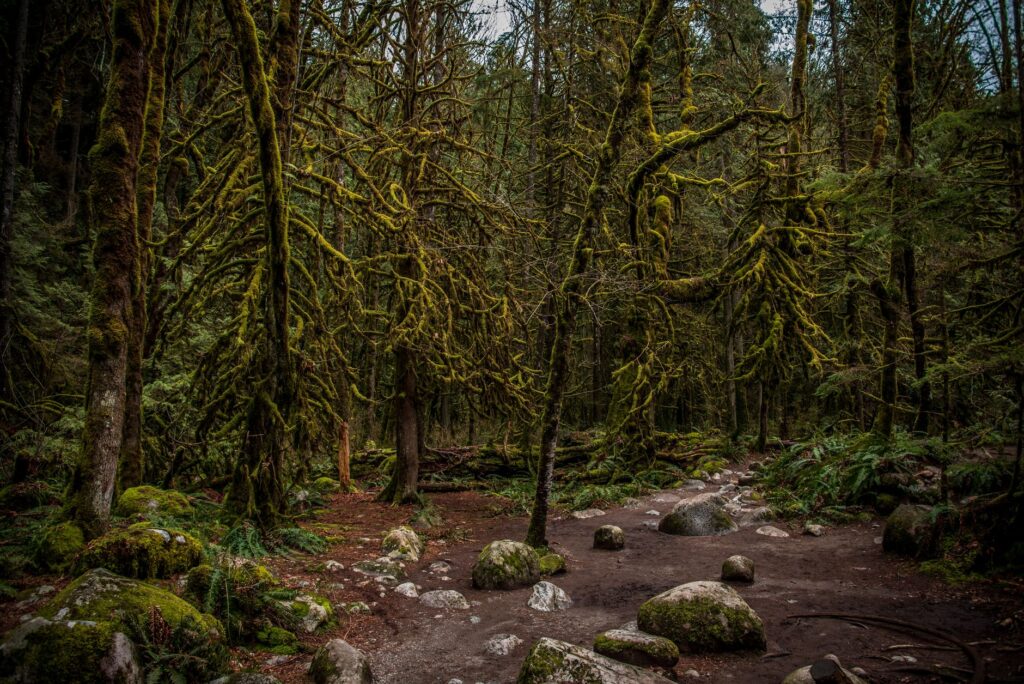
The geological structure of the central coast is the result of millennia of glacial activity. The fjords, which reach up to 100 kilometers inland, create sheltered microclimates where vegetation can thrive without direct erosion from oceanic winds. Trees here can live for over a thousand years; it is not uncommon to find Red Cedar specimens with diameters exceeding four meters. These giants not only store carbon but support entire ecosystems in their canopies, including mosses, ferns, and even small ponds inhabited by amphibians.
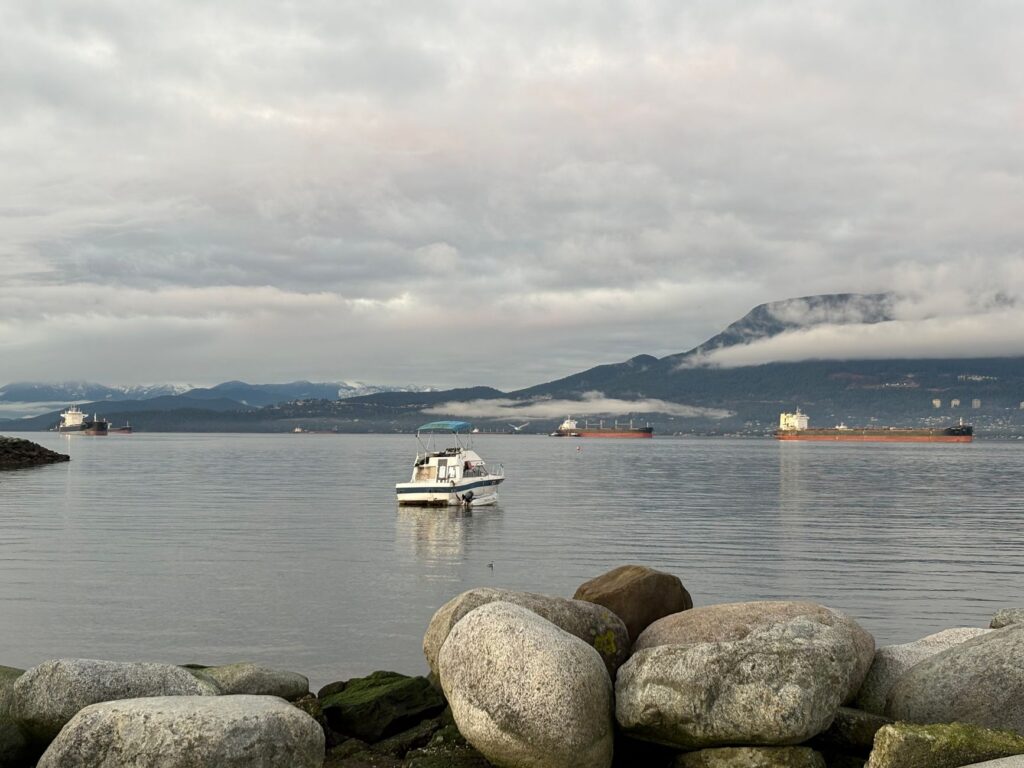
Fog is a constant presence. Known technically as horizontal precipitation, the mist trapped in the branches of trees provides a significant amount of water to the system, even in the driest months. This perpetual moisture allows the forest to maintain its electric green color and almost impenetrable density, creating a vital thermal refuge for wildlife during unusually warm summers.
Climate Challenges and Resilience
Despite its legal protection, the Great Bear Rainforest faces external threats, primarily climate change. The warming of Pacific waters directly affects salmon populations, whose survival depends on cold temperatures and stable oxygen levels. A decrease in salmon returns has an immediate domino effect: less fat for bears before hibernation, lower reproductive success for wolves, and a reduction in tree growth due to a lack of marine nutrients.
Ocean acidification also threatens the mollusks and crustaceans that form the base of the intertidal diet. However, the ecosystem’s resilience is high due to its vast biodiversity. Current conservation efforts focus on restoring spawning habitats in rivers and limiting offshore commercial fishing to ensure that enough salmon reach the forested headwaters.
Guide for the Conscious Traveler
Visiting the Great Bear Rainforest requires meticulous planning and a commitment to sustainability. There are no roads connecting this region to the rest of Canada; access is exclusively by sea or floatplane. The main hubs are small communities like Bella Bella or Klemtu.
- Best Time to Visit: Late August to October, coinciding with the salmon run and peak bear and wolf activity.
- Transportation: Floatplanes from Vancouver or Port Hardy are the most common way to arrive. Once there, navigating on small expedition vessels is the best way to explore the fjords.
- Observation Ethics: It is imperative to hire local guides certified by First Nations. Bear viewing is conducted from platforms or boats to minimize animal stress.
- Gear: High-quality waterproof technical clothing is indispensable. The weather can change drastically in minutes.
- Permits: Some areas require specific permits managed by local tribal councils.
The Great Bear Rainforest is not a mass-market destination, but a pilgrimage site for those seeking to understand the deep interconnection of life. At the end of the day, when the sun sets behind the islands and the silence is broken only by the blow of a humpback whale in the channel, the visitor realizes that this is not just a landscape, but a testament to what the world can be when nature and humanity choose to coexist under terms of mutual respect.