The Origins of the Emission-Free Refuge
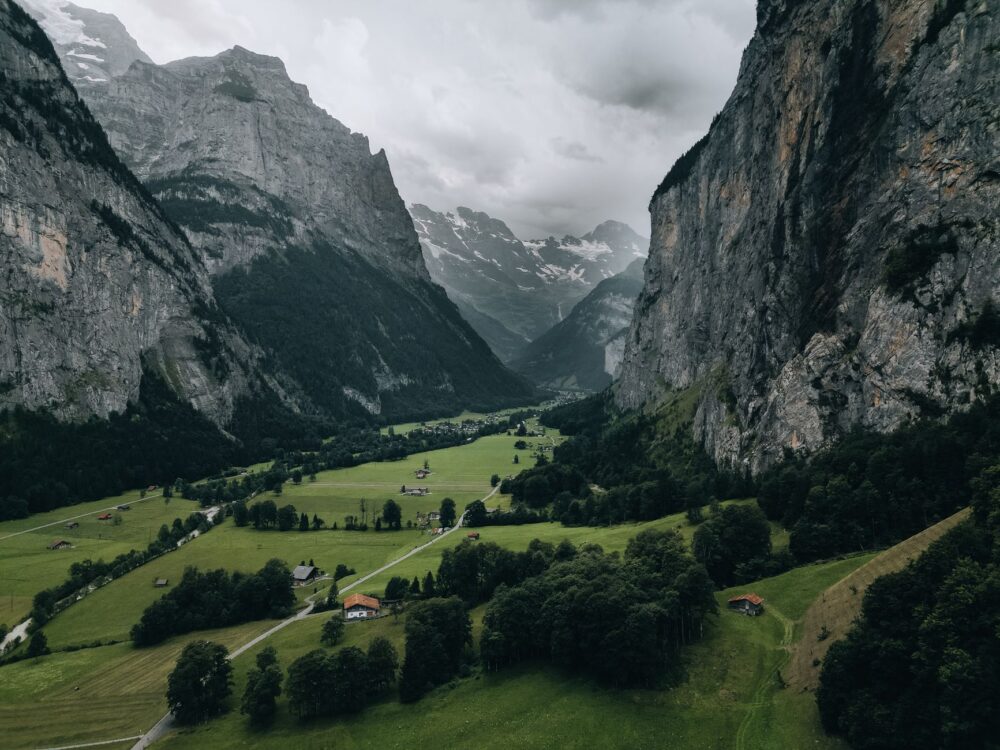
In the heart of the Valais Alps, beneath the imposing pyramidal silhouette of the Matterhorn, Zermatt has established itself over decades as a global benchmark in low-impact mobility management. Unlike other tourist enclaves that have adopted ecological regulations gradually or reactively, this Swiss community made a radical decision through a public vote in 1961: to absolutely ban the circulation of internal combustion engine vehicles within its urban perimeter. This resolution, rooted in the preservation of air quality and valley tranquility, laid the foundations for a public and private transport system unique in its category. Today, navigating the narrow cobbled streets of the town does not mean dodging cars, but coexisting with a complex and silent network of lightweight electric vehicles operating around the clock.
The historical challenge for Zermatt was never simply to ban road traffic, but to guarantee seamless connectivity for its residents and visitors without compromising the fragile surrounding glacial ecosystems. From the intermodal station of Täsch, located five kilometers to the north at a lower altitude, road access is definitively interrupted for tourists’ private vehicles. From that point onward, the transport system pivots toward a high-capacity railway solution operated by the Matterhorn Gotthard Bahn. High-frequency shuttle trains connect Täsch with the heart of Zermatt in a journey of barely twelve minutes, absorbing a massive volume of travelers who would otherwise saturate the valley’s road infrastructure. This modal transfer model demonstrates that vehicular restriction must be accompanied by robust and technologically advanced rail alternatives.
The transition toward this model—not without logistical complexities—has required a constant effort of technological updating by local authorities and private operators. The electric vehicles operating in Zermatt, ranging from characteristic hotel taxis to municipal delivery vans, are subject to strict regulations regarding weight, dimensions, and acoustic emissions. The municipal administration rigorously supervises the authorized fleet, comprising several hundred units utilizing state-of-the-art lithium-ion batteries and regenerative braking systems. This attention to detail ensures that alpine simplicity actually rests upon highly regulated and efficient transport engineering, capable of responding to both resident needs and international tourism fluctuations.
The Railway Spine and the Cog Railway Challenge
Zermatt’s transport system extends far beyond the strictly urban sphere, projecting toward the summits via monumental engineering infrastructure. The Gornergrat Bahn, inaugurated in 1898, holds the title of Europe’s first open-air electrified cog railway. This historic train is not merely a top-tier tourist attraction, but a vital mobility artery transporting mountaineers, hikers, and residents daily toward the Gornergrat ridge at over three thousand meters of altitude. The continuous modernization of its fleet has incorporated regenerative braking systems capable of returning energy to the local electrical grid during prolonged descents, turning the alpine topography itself into a clean energy generation source.
Simultaneously, the Matterhorn Glacier Paradise cable car complex represents worldwide vanguardism in high-mountain cable mobility. This system includes the highest tri-cable gondola in the world, connecting the Trockener Steg station with the Klein Matterhorn. The planning of these infrastructures has been guided by rigorous environmental impact assessments, prioritizing bedrock foundations to minimize permafrost disruption and reducing visual footprints in the protected landscape to a bare minimum. Intermodality between valley trains and high-altitude cableways is managed through digitally synchronized schedules, allowing users to travel seamlessly from valley floor to high peaks without auxiliary fossil-fueled transport.

The energy management of this vast vertical and horizontal transport network draws entirely from local renewable sources, principally hydroelectric power generated in Valais canton reservoirs. Local engineers have developed smart distribution networks balancing the energy demand of cog railways with hotel and residential consumption, preventing grid overloads during peak tourist influxes. This holistic approach proves that sustainable alpine transport is not limited to eliminating fossil fuels from vehicles, but integrating the entire energy chain into a closed-loop system of high efficiency and verifiable low environmental impact.
Community Mobility and the Valley’s Daily Pulse
Beyond global tourism metrics, daily life in Zermatt relies on a capillary network of community mobility designed to meet the needs of a permanent population slightly exceeding five thousand inhabitants. Municipal sanitation, freight distribution, and emergency medical services operate with adapted fleets of compact electric vehicles capable of navigating historic alleyways without obstructing pedestrian traffic. This harmonious coexistence between residents and visitors is sustained by strict codes of conduct and absolute pedestrian prioritization throughout the urban fabric, a factor markedly elevating quality of life and drastically reducing acoustic noise compared to other European ski resorts.
blockquote
True alpine sustainability does not stem from absolute prohibition, but from collective capacity to design transport infrastructure where nature and engineering dialogue in absolute synchrony.
blockquote
The integration of seasonal workers and local residents into this mobility system is facilitated by discounted shuttle train fares and subsidized annual passes provided by the municipality and hotel associations. This policy prevents the social exclusion frequently accompanying gentrification processes in high-end mountain destinations. Furthermore, local merchant associations coordinate a centralized goods logistics system: heavy products are received at the peripheral distribution station and transferred downtown via consolidated electric vehicles, avoiding interior route congestion caused by uncoordinated individual deliveries.
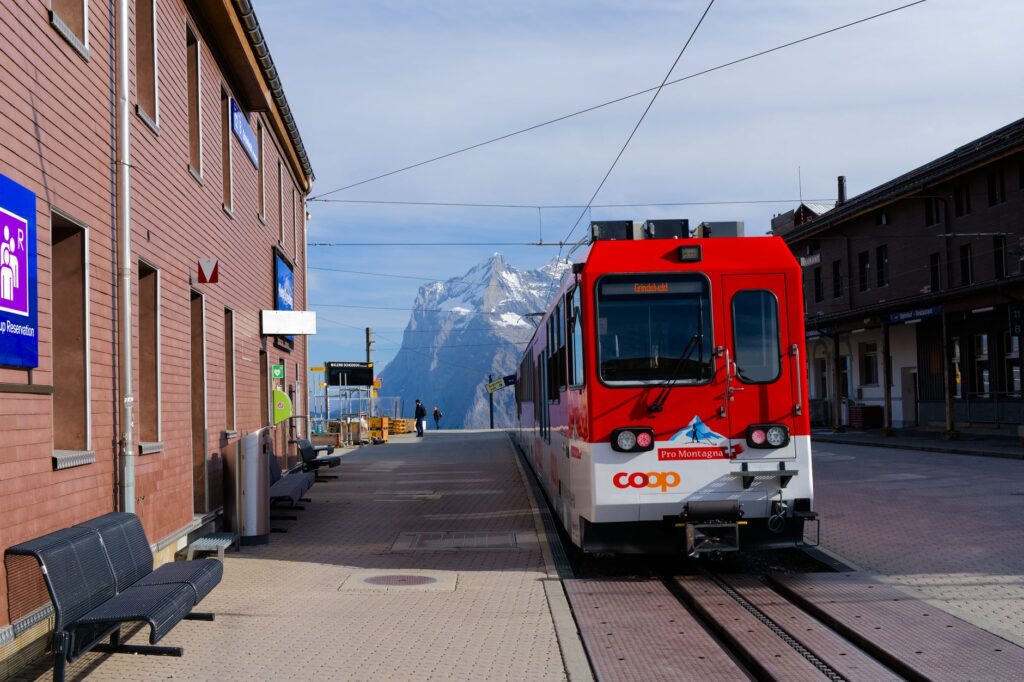
Community commitment also manifests in environmental education and citizen participation in urban planning and transport decisions. Municipal assemblies periodically debate modifications to electric vehicle concessions and plans for expanding summer hiking and mountain biking routes. This degree of local governance ensures that mobility policies respond to real territorial needs rather than purely speculative international tourism market demands, consolidating a resilient development model deeply rooted in alpine identity.
Transfer Infrastructures and the Täsch Model
The success of Zermatt’s vehicular exclusion policy is inseparable from the operational efficiency of Täsch, the neighboring municipality acting as the valley’s gateway and primary modal interchange hub. Located in a geographically more accessible zone, Täsch houses a multi-level parking facility with capacity for thousands of private vehicles, equipped with fast EV charging stations and direct links to the railway terminal. This infrastructure prevents traffic collapse and emission congestion from shifting to higher elevations of the fragile alpine ecosystem, centralizing logistical impact at a peripheral point equipped with advanced wastewater treatment and waste management systems.
Daily operations at the Täsch terminal demand millimeter-level coordination between rail operators and parking services. Passengers arriving by private vehicle transition to shuttle trains in under five minutes via mechanical walkways and integrated ticketing systems. Additionally, rapid unloading zones are provided for long-distance buses operating under strict emission regulations, ensuring organized visitor flows do not saturate the system’s transfer capacity. This decentralized design constitutes a masterclass in territorial planning applicable to other ecologically vulnerable natural enclaves worldwide.
Investment in the continuous expansion and modernization of Täsch is funded through cross-subsidies derived from traffic management and parking fees, reinvesting economic benefits generated by tourism into continuous public transport improvements. This green self-financing mechanism guarantees long-term system viability without relying exclusively on extraordinary government grants. Periodic environmental impact studies demonstrate that traffic concentration in Täsch has significantly reduced particulate deposition on neighboring glaciers, scientifically validating this modal segregation model.
The Human Fabric and Sector Labor Transition
Zermatt’s transport transformation has deeply redefined the professional profile and working conditions of sector employees. Former combustion-vehicle drivers have had to retrain as specialized operators in high-end electric fleet driving and maintenance, acquiring technical competencies in battery management, power electronics, and precision mechanics. This transition has been accompanied by vocational training programs jointly driven by cantonal government and local transport guilds, ensuring technological modernization leaves no local worker behind.

blockquote
Behind every silent vehicle traversing Zermatt’s streets lies a community that chose to place valley health above the convenience of the combustion engine.
blockquote
The role of women in alpine transport and logistics has experienced notable growth over the past decade, breaking traditional roles associated with heavy machinery operation and mountain transport. With fleet digitalization and geolocation-based management systems, the profession of logistics operator in Zermatt now requires a high degree of technical skill and organizational capacity. Local transport cooperatives prioritize hiring resident personnel, fostering job stability and reducing employee turnover in a sector traditionally marked by extreme seasonality.
This people-centered approach extends equally to visitors with reduced mobility. Zermatt has adapted all shuttle trains, community electric buses, and underground funiculars to guarantee universal accessibility, eliminating architectural barriers at stations and platforms. Local tourism operators collaborate closely with disability associations to periodically audit route accessibility, demonstrating that environmental sustainability and social inclusion must advance hand in hand in any truly advanced mobility project.
Mitigation Practices and Climate Change Resilience
Accelerated glacier retreat in the Valais Alps poses titanic challenges for transport infrastructure and civil engineering in Zermatt. Gornergrat railway tracks and high-mountain cable car foundations are exposed to permafrost destabilization, compelling engineers to implement advanced real-time geotechnical monitoring systems. Fiber-optic sensors installed along railway alignments detect minimal ground displacement, permitting preventive intervention before structural incidents occur. These climate change adaptation measures are indispensable for ensuring the safety of millions of annual passengers in an increasingly unpredictable geographical environment.

Parallel to geological monitoring, the municipality has intensified energy efficiency programs across all transport facilities. Terminal stations at Gornergrat and Klein Matterhorn incorporate high-resistance solar panels integrated into facades and roofs, optimized to capture radiation reflected by snow during winter months. This decentralized photovoltaic generation complements the primary hydroelectric supply and reduces reliance on high-voltage transmission lines crossing fragile high-mountain valleys. The local administration’s declared goal is achieving absolute emission neutrality across the entire transport chain and municipal services before the end of the current decade.
Scientific research plays a crucial role in this permanent transition process. Zermatt actively collaborates with federal technology institutes and Swiss universities in testing smart mobility pilot projects, trying out extreme-temperature-resistant battery prototypes and green hydrogen propulsion systems for steep inclines where battery electrification encounters technical limits. This commitment to scientific innovation cements the municipality not only as a tourist destination of excellence, but as a living laboratory of international reference for high-mountain mobility futures.
Practical guide
Planning a trip to Zermatt requires a careful understanding of its unique sustainable transport ecosystem, as conventional car travel ends well before reaching the village.
How to get there
Rail travel is the most efficient and sustainable entry method. International high-speed trains connect Zurich, Geneva, and Milan directly to Visp or Brig, where passengers transfer to the Matterhorn Gotthard Bahn regional trains heading straight to Zermatt. For those traveling by private vehicle, driving must terminate at the Täsch terminal facility, located 5 kilometers down-valley.
The Täsch parking and shuttle system
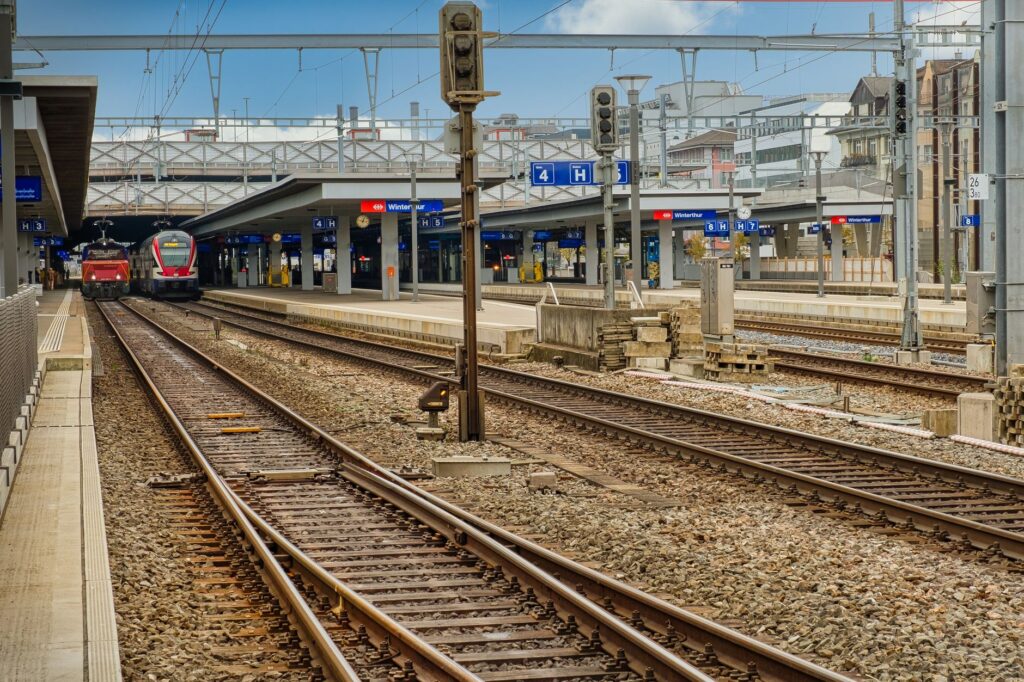
The Täsch terminal features a multi-story parking garage with over 2,000 spaces, EV charging stations, and direct indoor access to the shuttle trains. Shuttle trains depart every 20 minutes, taking precisely 12 minutes to reach Zermatt station. Luggage can be checked through from major Swiss railway stations directly to your Zermatt hotel via rail baggage services.
Getting around the village
Once inside Zermatt, all local transit is emission-free. The village is compact and entirely pedestrian-friendly. For luggage transfer or longer distances, authorized electric taxis and hotel carts operate continuously. Public electro-buses connect the residential neighborhoods and valley ski lifts on fixed schedules.
High-altitude transport
The Gornergrat rack railway and the Matterhorn Glacier Paradise cable car network connect the village to the surrounding peaks. Tickets should be booked in advance online, particularly during peak winter and summer seasons, to secure preferred time slots and reduce queuing times at terminal stations.
Best times to visit
To experience Zermatt with lower visitor density and optimal conditions for sustainable soft mobility, consider traveling during the shoulder seasons of late spring (May to June) or early autumn (September to October), when regional transport networks operate smoothly without peak holiday congestion.
Epilogue: The Reflection of the Matterhorn in Silent Consciousness
When the last electric train descends toward the Täsch valley and skier bustle dissolves into alpine night silence, Zermatt recovers its primordial essence. Beneath the imposing and eternal presence of the Matterhorn, the community proves that inhabiting and transiting a territory of extreme ecological fragility without surrendering to modernity’s pulse is entirely possible. This is no nostalgic stage set, but a rigorous social and technical construction sustained by inhabitants’ daily efforts and an unwavering commitment to landscape preservation. In this Valais corner, every silent journey is an affirmation of respect toward the future—a constant reminder that the most valuable voyage is the one leaving the sustaining world intact.