Insular Geography as a Permanent Challenge
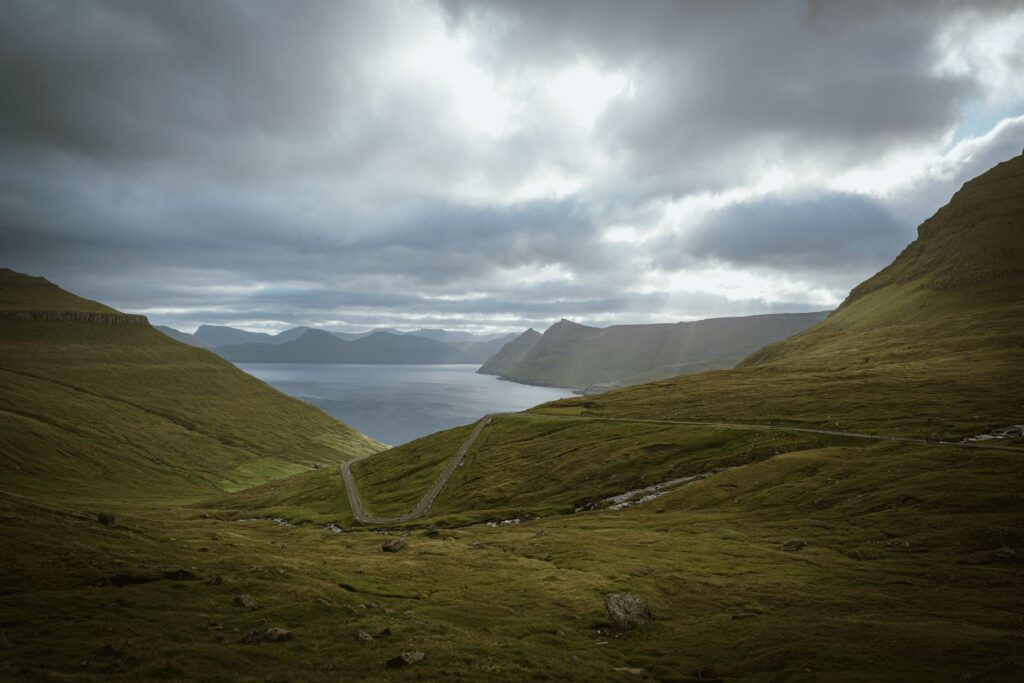
The Faroe Islands archipelago, situated in the North Atlantic between Scotland, Iceland, and Norway, represents one of the planet’s most demanding environments for transport infrastructure development. Its eighteen volcanic islands, sculpted by glacial erosion and battered by gale-force winds and unpredictable marine currents, have historically demanded colossal efforts from inhabitants to maintain connectivity. Far from yielding to isolation, local communities have spent recent decades building an extraordinarily sophisticated mobility system that now stands at the vanguard of Europe’s ecological transition.
The imperative need to balance the daily lives of a dispersed population with the growing influx of travelers seeking pristine landscapes has forced local authorities to completely rethink transport flows. The fundamental premise is not runaway growth, but resilience and absolute respect for a fragile ecosystem. In this context, sustainable mobility in the Faroes is no longer an environmentalist declaration of intent, but an operational urgency strictly linked to the economic and social survival of the most remote settlements.
Subsea Engineering: Smart Tunnels and Safety
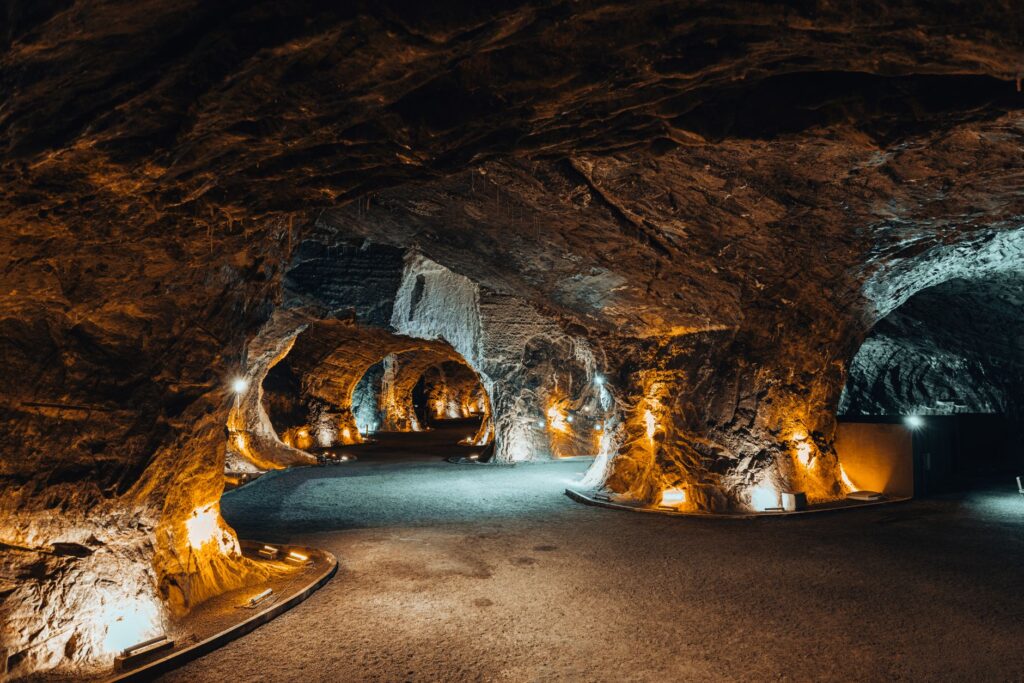
One of the most notable milestones in the Faroese transport transformation is its network of subsea and terrestrial tunnels, locally known as tunlar. These infrastructures not only drastically reduce travel times between islands that previously depended exclusively on ferries subject to fickle weather conditions, but they also incorporate cutting-edge energy management technologies. The most paradigmatic example is the Eysturoy tunnel, inaugurated with its famous subsea roundabout illuminated by light installations, which connects the two main islands of the archipelago, cutting travel times from over an hour to mere minutes.
To guarantee the sustainability of these major engineering works, the state-owned company in charge of their management has implemented automated low-consumption LED lighting systems and adaptive ventilation driven by air quality sensors. Energy efficiency in the Faroese underground demonstrates that road development can minimize its carbon footprint if integrated from the design stage with renewable energy sources, predominantly wind and hydroelectric, which already supply a majority share of insular electricity consumption.
The Metamorphosis of the Ferry Fleet
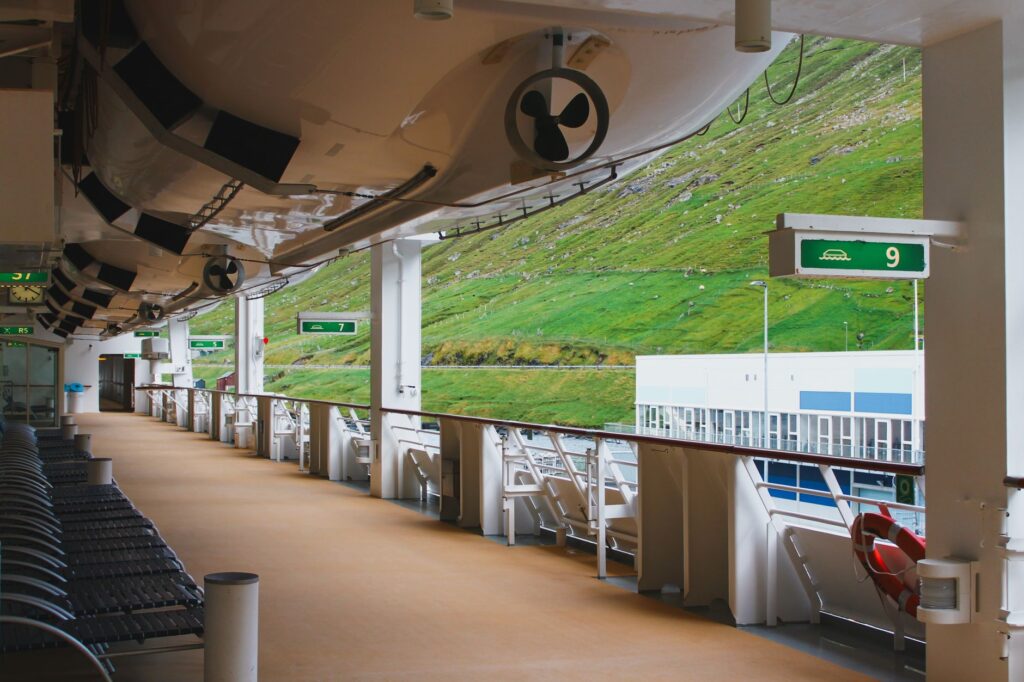
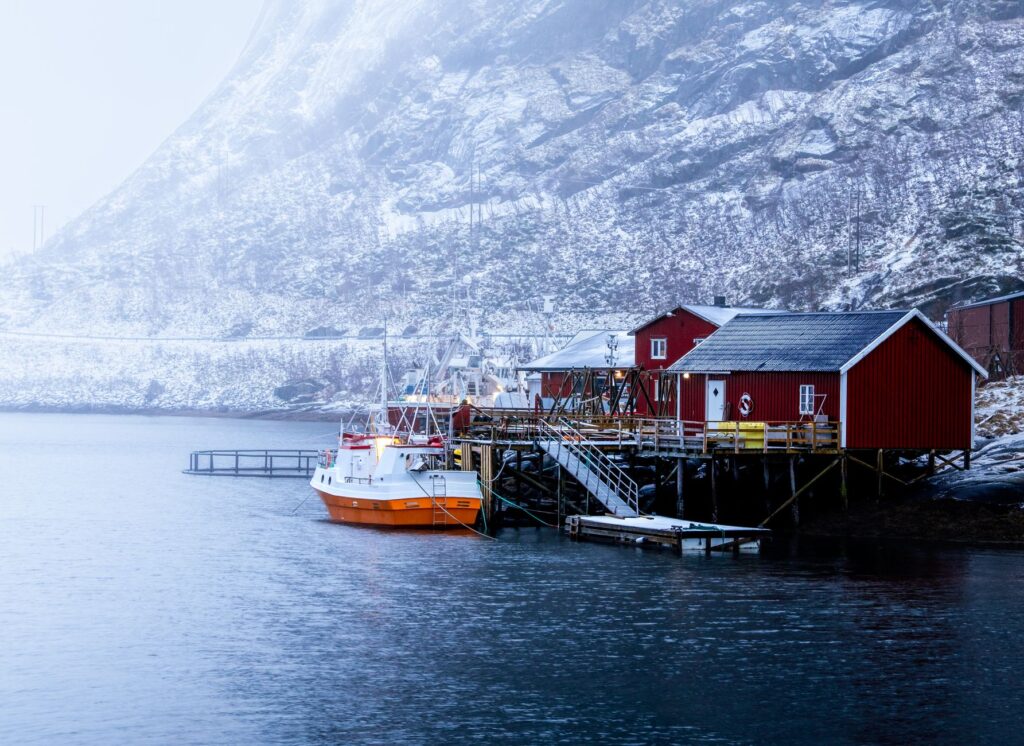
Despite the expansion of the tunnel network, ferries remain the true circulatory system of the archipelago. Connecting peripheral islands like Mykines, famous for its puffin colonies, or Sandoy requires vessels capable of operating in extreme maritime conditions without compromising the marine environment. The national shipping company Strandfaraskip Landsins has undertaken an ambitious fleet renewal plan by progressively incorporating hybrid and diesel-electric vessels designed to drastically reduce nitrogen oxide and carbon dioxide emissions.
These new ferries incorporate high-capacity battery banks that allow ships to perform port approach maneuvers and dock stays in fully electric mode, eliminating pollutant emissions and noise pollution in fragile coastal communities. The partial electrification of high-seas navigation in complex Atlantic waters marks a turning point for insular maritime transport globally, proving that the energy transition is viable even in the most demanding seas.
Integrated Public Mobility and the Unified Ticket
Faroese territorial cohesion depends not only on ships and tunnels, but on a network of bright red public buses that reach even the most secluded valleys of Streymoy or the steep slopes of Kunoy. In recent years, the autonomous government has unified all bus and ferry timetables and fares under a single digital platform, allowing residents and visitors to plan multimodal journeys with absolute precision and at heavily subsidized rates.
This subsidized public transport policy serves a dual strategic purpose. On one hand, it guarantees that inhabitants of the most isolated villages have guaranteed access at free or low cost to health, educational, and employment services in urban centers like Tórshavn. On the other hand, it effectively discourages mass private car rentals by tourists, channeling travel toward more efficient collective modes and reducing congestion on the archipelago’s narrow scenic roads.
Balancing Conservation and Tourism Pressure
The exponential increase in international tourism to the Faroe Islands has placed transport management before a critical dilemma. Emblematic sites like Lake Leitisvatn, which appears to float above the ocean, or the natural amphitheater of Trælanípa receive seasonal inflows that test the carrying capacity of trails and access infrastructure. The strategy adopted by the public sector has involved establishing operational restrictions at points of highest ecological vulnerability.
For instance, access to the island of Mykines during the seabird nesting season is regulated through strict passenger quotas on ferries, forcing tour operators to coordinate each seat in advance. This synchronization between maritime transport capacity and environmental conservation prevents overcrowding and ensures that the traveler’s experience maintains a respectful, unhurried profile, moving away from mass tourism flows.
Community Initiatives and Soft Mobility
Beyond major governmental infrastructure, local communities are driving soft mobility initiatives that encourage the unhurried discovery of the Faroese landscape. Across several islands, municipalities have restored old pastoral hiking routes and set up charging points for electric bicycles aimed at both residents and hikers. These actions seek to restore the human scale of travel in a territory where the natural rhythm has always been dictated by tides and weather.
Likewise, local councils encourage electric vehicle sharing among residents of small villages, a practical solution to reduce the private car fleet in a region where per capita car ownership is traditionally high due to geographic dispersion. These grassroots community initiatives reinforce the social fabric and demonstrate that the transition toward clean mobility often originates from the direct commitment of citizens to their environment.
Financial and Logistical Challenges in the North Atlantic
Maintaining such a complex public transport and infrastructure network in a territory of barely fifty-four thousand inhabitants represents a colossal budgetary challenge for the Faroese autonomous government. Maintenance costs for subsea tunnels, the modernization of local shipyards to support new hybrid ferries, and ongoing subsidies for deficit lines require rigorous fiscal planning and long-term financing agreements.
Despite these economic limitations, the insular administration has firmly committed to linking regional development funds to strict environmental sustainability criteria. The premise is clear: every krone invested in transport must simultaneously contribute to emission reduction and the improvement of territorial social equity, preventing geographical remoteness from translating into economic penalty for citizens choosing to live outside the capital.
Practical Information for the Conscious Traveler
Planning a sustainable trip to the Faroe Islands requires embracing several essential operational guidelines to minimize ecological impact. It is crucial to always check the official public transport platform (ssl.fo) to verify updated ferry and bus schedules, as North Atlantic weather conditions can alter service without prior notice. Acquiring the multi-day multi-purpose transport card, which includes unlimited access to most urban and interurban bus networks and regular passenger ferry lines, is strongly recommended.
For road travel, renting electric or hybrid vehicles must be arranged months in advance due to limited fast-charging infrastructure outside Tórshavn and Klaksvík. It is imperative to strictly obey driving regulations, yield the right of way in single-lane tunnels at marked passing places, and never leave paved roads or marked trails, thereby protecting the fragile Arctic tundra and community pastures from erosion.
Final Reflections on the Future of Insular Mobility
The transport model being built by the Faroe Islands offers a valuable lesson for other insular and mountainous territories facing the dichotomy between economic development and environmental preservation. By successfully combining advanced underground engineering, the green modernization of its naval fleet, and a firm commitment to integrated public transport, the archipelago proves that maintaining high-quality connectivity without sacrificing the ecological integrity of the landscape is entirely possible.
The Faroese experience reminds us that true travel sustainability is not about stopping movement, but about transforming how we move. In a world desperately seeking formulas to decarbonize tourism and regional mobility, the tenacious effort of these Atlantic islands illuminates a possible, rigorous, and profoundly respectful path within the natural limits of our planet.