
Crossing Australia from south to north is not merely a geographical displacement; it is an incursion into the void, a dialogue with the planet’s oldest geology, and a lesson in human persistence. The Ghan, the train linking Adelaide to Darwin, covers 2,979 kilometers of territory that, for centuries, was considered an impassable barrier. What is today one of the world’s most luxurious rail experiences began as an odyssey of survival, where steam and iron faced flash floods and the searing heat of the Red Centre.
This editorial report breaks down the technical and human complexity of a line that serves as the spine of a continent. From the coastal plains of the south to the humid tropics of the north, The Ghan is a testament to adaptive engineering that has learned to coexist with extreme isolation. Through its windows, the landscape does not change abruptly but transmutes slowly, in a gradient of colors ranging from the vineyard greens of South Australia to the deep rust of the Simpson Desert, ending in the emerald exuberance of the Northern Territory.
The Myth’s Origin: From Cameleers to Steel
The history of The Ghan is, in essence, the history of the cameleers who arrived in Australia in the mid-19th century. These men, primarily from Afghanistan and present-day Pakistan, were responsible for transporting supplies into the unexplored interior. Without their camels, capable of surviving weeks without water, the construction of the transcontinental telegraph line and, later, the railway, would have been impossible. The train’s name is an abbreviation of The Afghan Express, a tribute to those pioneers who mastered the desert long before diesel locomotives.
The first section of the track opened in 1878, but the original project took decades to complete. For years, the line ended at Alice Springs, leaving the rest of the journey to the mercy of dirt tracks that became impassable during the monsoon. It wasn’t until 2004 that the link to Darwin was finally completed, closing a historical gap and allowing, for the first time, an uninterrupted rail connection between the Indian Ocean and the Timor Sea.
Those early journeys were tests of endurance. Steam locomotives struggled with sand infiltrating their mechanisms and termites devouring wooden sleepers. Today, technology has replaced precariousness with precision, but the spirit of that untamed frontier remains intact in every kilometer of track that ventures into the Outback.
«The Ghan is not just transportation; it is the steel stitching that holds together the two shores of an island continent that would otherwise live with its back to its own heart.»
The Continent’s Backbone: Engineering in the Void
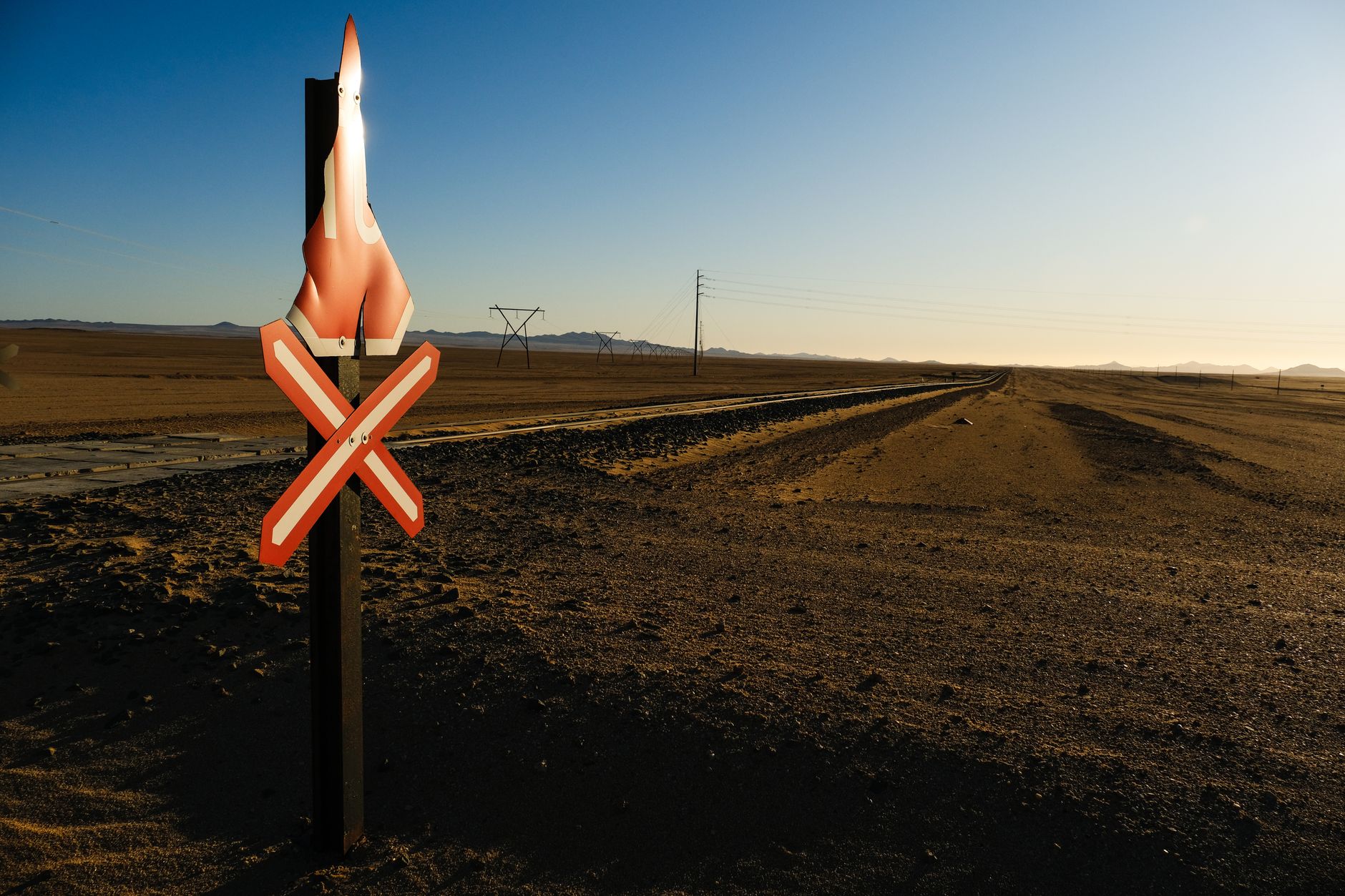
Maintaining a nearly three-thousand-kilometer rail line in one of the most hostile environments on Earth requires surgical logistics. The Ghan’s primary enemy is not distance, but temperature and water. In central Australia, temperatures can swing forty degrees in a single day, causing steel to expand and contract. To prevent derailment, continuously welded rails are used, resting on concrete sleepers designed to dissipate heat and resist the rare but violent desert floods.
The current alignment, known as the Standard Gauge Line, was built in the late 1970s and early 1980s to replace the old route, which was constantly destroyed by flooding ephemeral rivers. The new engineering sought higher, more stable ground, moving away from dry creek beds that, after a storm, turned into torrents capable of sweeping away entire carriages. This rerouting was a milestone in Australian civil engineering, prioritizing structural resilience over proximity to historical settlements.
Furthermore, track maintenance is conducted remotely and through ground patrols covering stretches where mobile coverage is non-existent. Every bridge and culvert is monitored to detect changes in ground integrity. In this geographical vacuum, any mechanical failure becomes a major logistical challenge, forcing rescue teams to travel hundreds of kilometers across red dirt tracks.
Changing Skin: From Southern Green to Central Ochre
The journey begins in Adelaide, a city of colonial layout surrounded by vineyards and rolling hills. Leaving the Parklands terminal, the train crosses the Adelaide Plains and heads north, flanking the Flinders Ranges. In these initial hours, travelers observe intensive agriculture giving way to vast cattle stations of astronomical proportions, where livestock vanishes into expanses larger than some European countries.
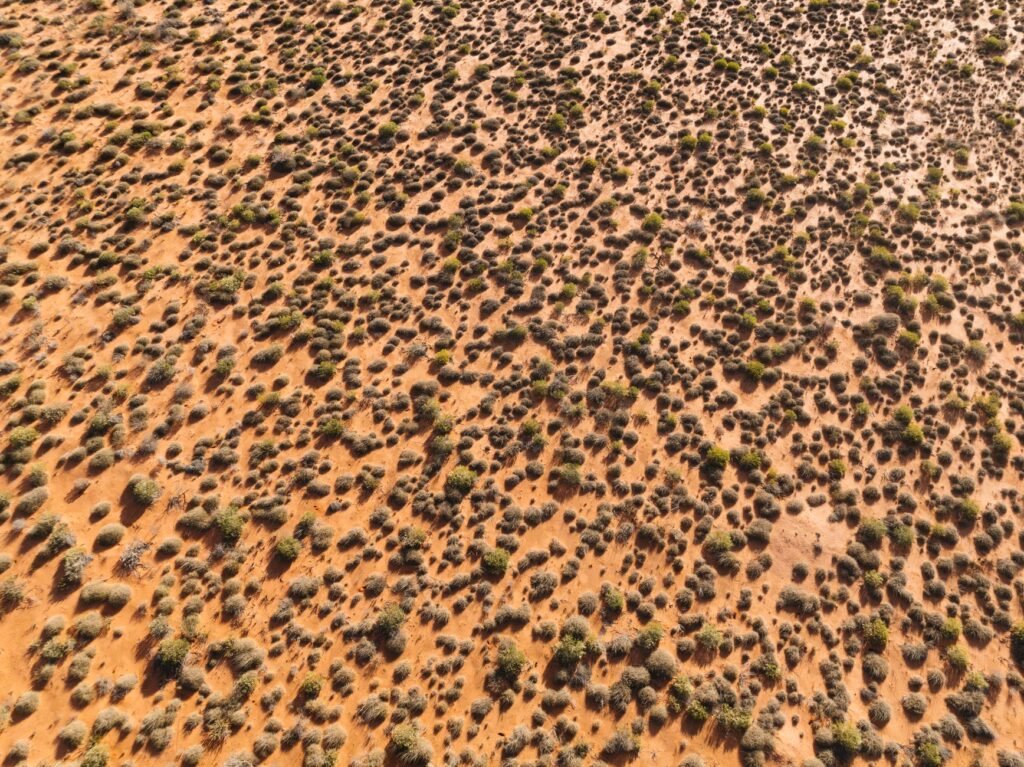
As the sun progresses, the landscape undergoes a chromatic metamorphosis. The green disappears, replaced by spinifex, a xerophytic plant dotting the sandy soil. It is here that the iron in the earth oxidizes upon contact with the air, tinting the world a deep red that seems surreal. This is the realm of the Lake Eyre Basin, a vast depression where water rarely reaches, leaving behind white salt crusts that shimmer under the midday sun.
The sense of isolation grows. There are no parallel roads, no visible power lines. Only the double ribbon of steel cutting the horizon. It is in this stretch that passengers grasp the true scale of Oceania: a land where silence is absolute and human presence is merely an anecdote in a geological timeline spanning millions of years.
Logistics in Motion: The Challenge of a Hotel on Rails
Operating a train that can reach 1.2 kilometers in length is a feat of coordination. The Ghan functions as a self-contained city in motion. With over thirty carriages during peak season, the train must carry everything needed to feed and house hundreds of people for three days and two nights. There are no stops for grocery restocking; everything is loaded in Adelaide and Darwin with surgical precision.
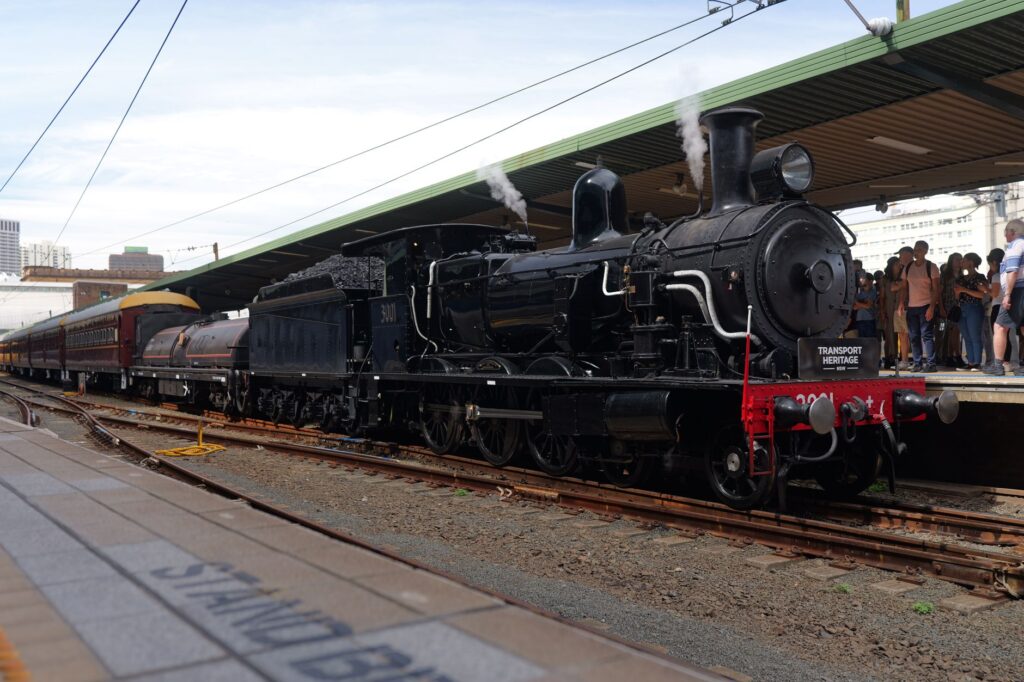
The onboard kitchen is an example of efficiency in confined spaces. Chefs work with local products—such as barramundi, kangaroo meat, or southern plains lamb—which must be prepared while the train moves at an average speed of 85 km/h, peaking at 115 km/h. Potable water supply is another critical factor; the train features high-capacity tanks managed through filtration and recirculation systems to minimize waste in a route where water is the scarcest resource.
Onboard staff, from locomotive engineers to cabin attendants, work in rotating shifts. Safety is the absolute priority, with satellite communication systems keeping the train permanently connected to the control center in Adelaide. In the event of a medical emergency, the train can coordinate with the Royal Flying Doctor Service, the airborne medical service that is the only health support in these latitudes.
Alice Springs and the Navel of the World
Arriving in Alice Springs marks the midpoint of the journey and the geographical heart of the country. This city, born from a telegraph repeater station, is now a vital logistical hub for Indigenous communities and cattle stations in the Northern Territory. For The Ghan, it is a mandatory technical stop where braking systems are inspected and cabin crew changes occur.
From here, the landscape becomes more rugged. The MacDonnell Ranges rise like the spines of ancient rock, revealing geological strata that have remained unchanged for eons. It is sacred territory for the Arrernte people, who have inhabited these lands for over 50,000 years. The railway scrupulously respects sites of cultural importance, a delicate balance between industrial progress and the preservation of ancestral heritage.
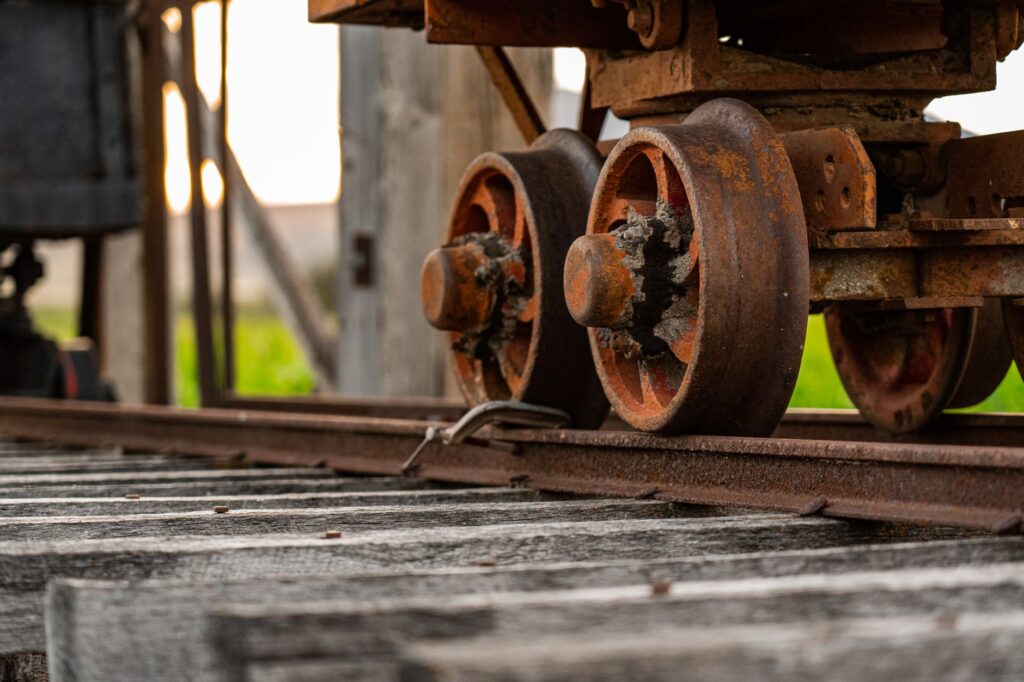
In Alice Springs, the air is dry, and the sky possesses a clarity that allows stars to be seen with overwhelming sharpness. At nightfall, the train resumes its northward march, entering the Tropic of Capricorn. The rhythmic clatter over rail joints becomes the soundtrack to a night where the desert turns silver under the moonlight.
«In the center of the map, where maps are usually empty, the train finds an invisible vitality: that of a culture that reads the land as we read books.»
The Roar of the Top End: Katherine and the Arrival in the Tropics
As the train pushes north, the climate changes drastically. The air becomes heavy and humid. Low desert shrubs give way to paperbark trees and giant termite mounds rising like mud cathedrals alongside the tracks. We are entering the Top End, Australia’s tropical region where seasons are not divided into four, but two: the dry and the wet.
The stop in Katherine is essential for understanding the north’s water network. The Katherine River has carved deep gorges into the sandstone, creating a canyon system vital to the region’s biodiversity. Here, rail logistics intersect with fluvial ones; supplies arriving by train are distributed to remote communities that depend on rivers for survival during the wet season, when roads are flooded.
The final stretch toward Darwin is an explosion of life. The landscape is now a low-lying jungle dotted with wetlands inhabited by saltwater crocodiles. Engineering here faces the challenge of humidity-driven corrosion and rapid vegetation growth, which must be constantly cleared from the track vicinity to prevent fires or blockages.
The Land’s Heritage: Indigenous Perspectives from the Carriage
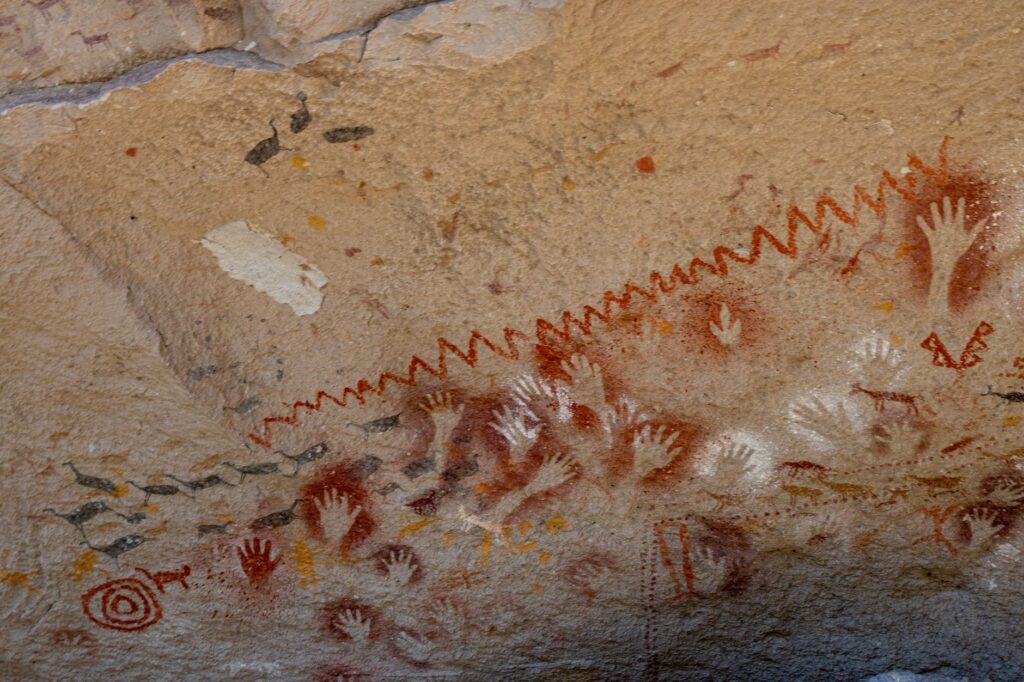
An aspect often overlooked in major railway reports is the infrastructure’s relationship with the traditional owners of the land. The Ghan traverses territories belonging to numerous Aboriginal nations. Unlike old colonial constructions, modern railway management includes land-use agreements and employment programs for local communities.
From the train, one can observe controlled burning techniques that Indigenous people have practiced for millennia to regenerate the soil and prevent catastrophic bushfires. It is an integration of knowledge: the train’s cutting-edge technology coexists with landscape management tens of thousands of years old. This perspective adds a layer of depth to the journey, transforming the trip into a lesson in applied ecology and cultural respect.
The journey ends in Darwin, a city looking toward Asia that serves as a departure port for Australian exports. Descending from the train, the traveler feels the weight of the continent just crossed. The Ghan has not just transported bodies; it has connected worlds that, were it not for this thread of steel, would remain isolated by the immensity of red dust.
Practical guide
- Route and Duration: The full journey between Adelaide and Darwin takes 54 hours (three days and two nights). There is an option to travel in the opposite direction or make intermediate stops in Alice Springs or Katherine.
- Ideal Season: The best time to travel is during the northern dry season (May to August). Temperatures are milder in the center, and you avoid the extreme heat and potential monsoon-related disruptions in Darwin.
- Service Classes: The train primarily offers two service levels: Gold Service (cabins with private bathrooms and full board) and Platinum Service (more spacious cabins with panoramic windows and personalized service).
- Luggage and Logistics: Due to limited cabin space, it is recommended to carry a small bag with essentials for the two nights and check in heavy luggage, which is stored in a specific van and is not accessible during the journey.
- Included Excursions: The ticket usually includes excursions in Alice Springs (optional scenic flights over Uluru) and Katherine (cruises through Nitmiluk Gorges). Pre-booking is highly recommended.
- Connectivity: It is important to remember that internet access and mobile coverage are non-existent for most of the journey through the Outback. The train offers limited Wi-Fi in the lounge carriages.
At the end of the crossing, as the sun sets behind the Darwin horizon, tinting the Timor Sea violet, a sense of silent triumph remains. Crossing this territory is a reminder that, despite our technology, we remain guests of a nature that imposes its own rules. The Ghan is the bridge that allows us to peer into that abyss of beauty and antiquity without disturbing its eternal rest. It is, ultimately, a journey inward, both into the map and into oneself, where time seems to stand still to the constant rhythm of steel on red earth.