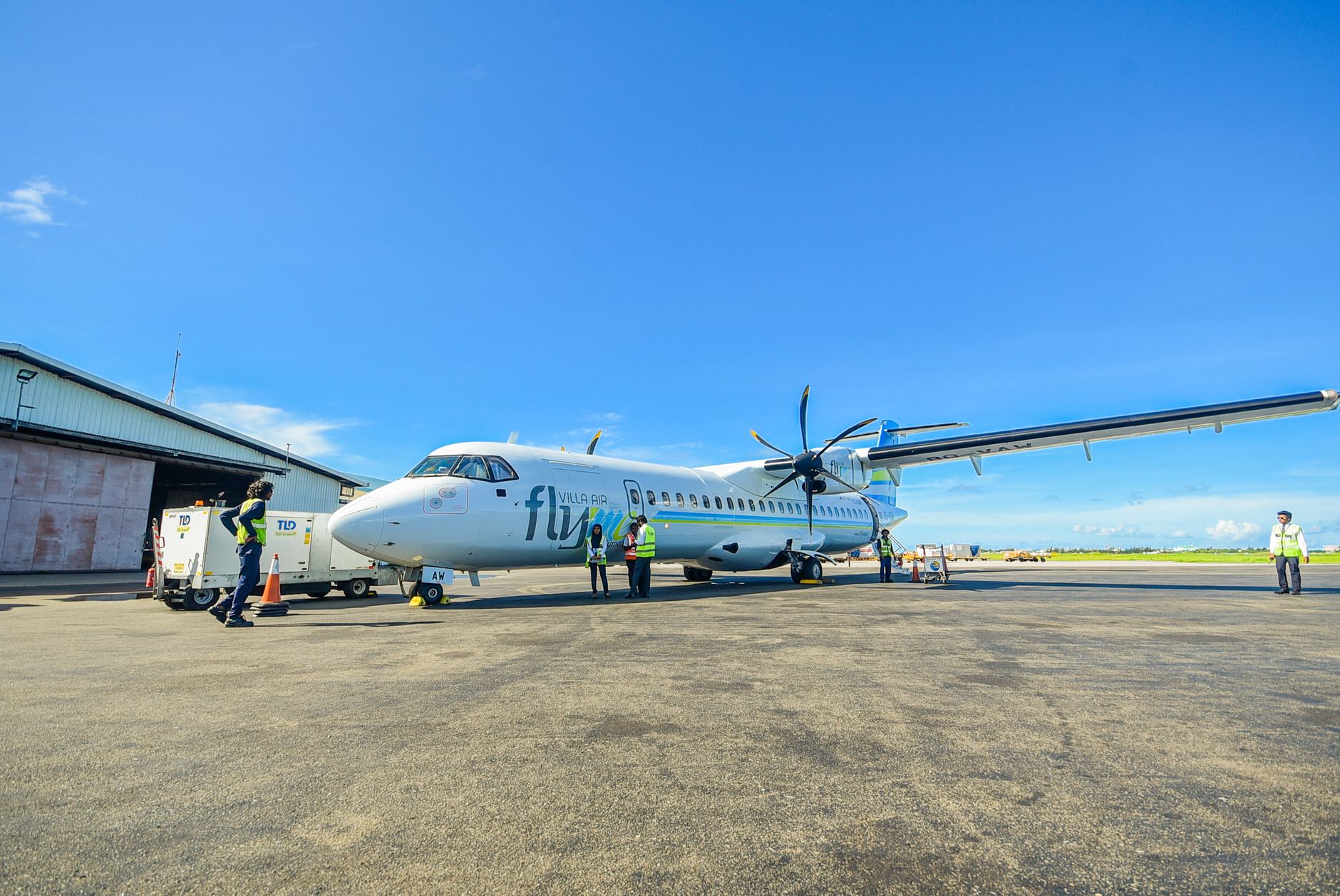

Introduction to Vanuatu’s Insular Geography
The Republic of Vanuatu stretches across a Y-shaped archipelago in the southwestern Pacific, comprising over eighty volcanic and coral islands. This territorial fragmentation turns air transport not into a luxury, but into the foundational connective tissue sustaining healthcare, education, and local commerce. Paved roads are scarce and concentrated almost exclusively around the two main urban hubs: Port Vila on Efate Island, and Luganville on Espiritu Santo. Across the rest of the islands, mobility depends on a network of remote airstrips where civil engineering yields to operational audacity and precise reading of the natural environment.
Unlike major international hubs where automation and standardization dictate every second of aircraft turnaround, aviation in Vanuatu operates under a paradigm of constant adaptation. Here, bush pilots and local carriers like Air Vanuatu face unpaved airstrips, crushed coral surfaces, steep gradients, and tropical weather as volatile as it is unpredictable. This report examines the complex logistical and human machinery required to keep a vital air transport system operational in one of the world’s most demanding geographical settings.
The Infrastructure of Peripheral Airfields
The design and maintenance of airstrips in Vanuatu’s outer islands reflect a philosophy of minimal resources and maximum functionality. Most of these aerodromes lack control towers, night-lighting systems, or advanced instrumental aids such as the ILS. Landings are conducted exclusively under Visual Flight Rules (VFR), demanding memorized knowledge of local topography by flight crews. Runway surfaces typically consist of compacted turf or crushed coral, materials requiring constant drainage to prevent monsoonal downpours from turning the strip into an impassable mud bath.

Supervision of these facilities often falls to local communities, responsible for clearing surrounding vegetation, alerting crews to animals in the approach path, and reporting terrain conditions via high-frequency radio communication. This symbiosis between aeronautical technology and traditional Melanesian life is a hallmark of transport infrastructure across the archipelago. However, climate change and coastal erosion place growing pressure on these fragile strips, many situated mere meters from the high-tide line, periodically forcing shifts in alignment or elevation.
The Utility Fleet: Aircraft Tailored for the Pacific
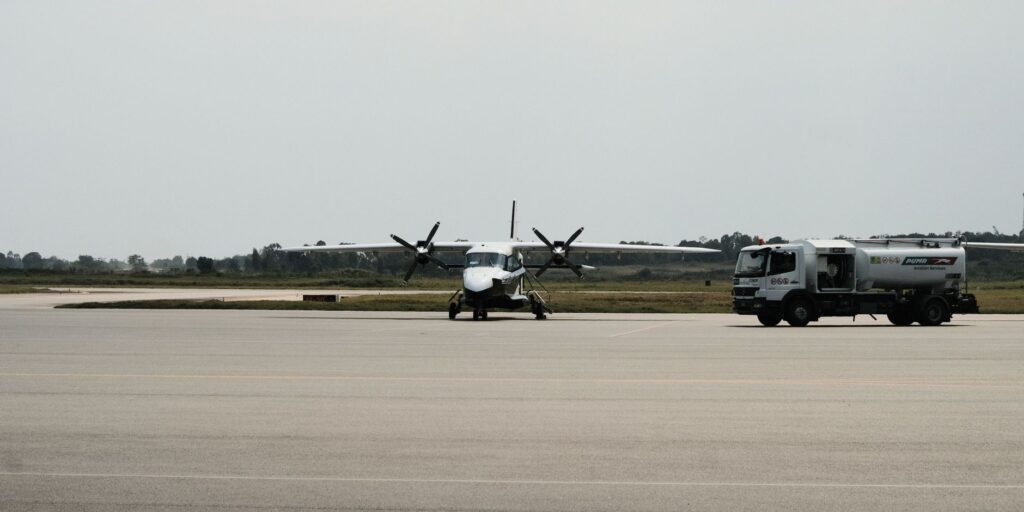
Operating on airstrips shorter than six hundred meters, surrounded by volcanic hills or situated on plateaus swept by crosswinds, demands a highly specific type of aircraft. The backbone of this network comprises light twin-turboprops and single-engine utility high-wing planes, such as the Britten-Norman Islander or the De Havilland Canada Twin Otter. These machines stand out for their structural ruggedness, short-takeoff capabilities, and mechanical simplicity, which facilitates repairs in remote bases using limited tools.
The cockpits of these aircraft reflect a hybrid technological transition. Although digital avionics have gradually been introduced to comply with international safety regulations, backup analog instruments remain essential given the lack of radar coverage and the environmental corrosion caused by marine salinity. Payload management is another critical daily challenge: aircraft carry a heterogeneous mix of passengers, urgent medical supplies, postal mail, generator spare parts, and fresh produce, forcing operators to calculate weights and centers of gravity with absolute precision prior to every takeoff.
Extreme Weather and the Dictatorship of the Trade Winds
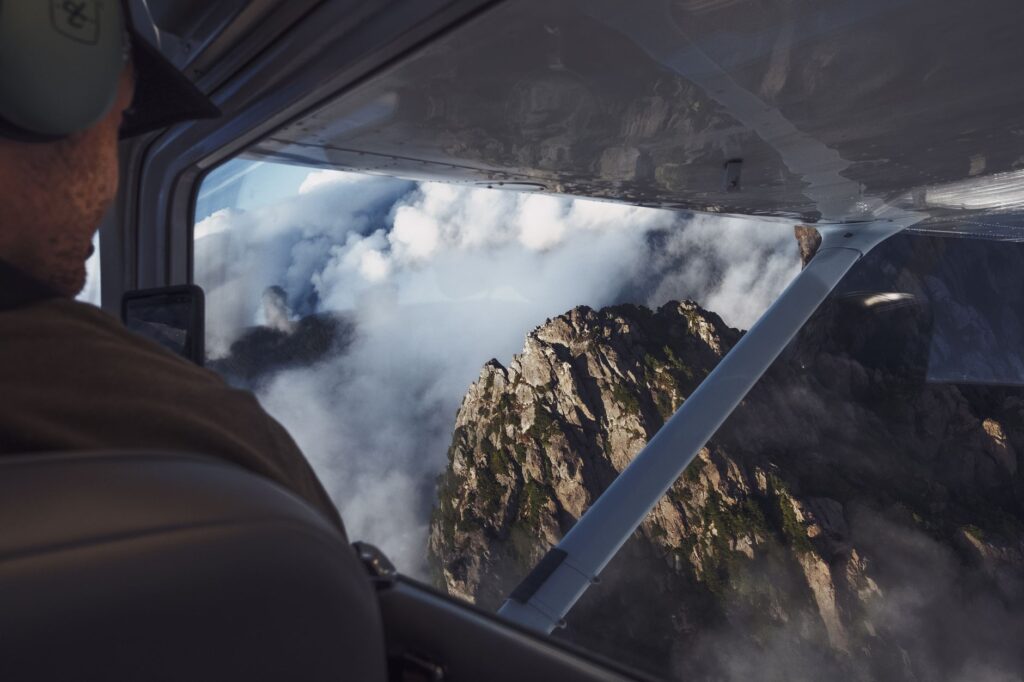
The wind and precipitation regime in Vanuatu is governed by the convergence of southeast trade winds and the South Pacific Convergence Zone (SPCZ). For flight crews, this translates into permanent meteorological vigilance. Rapidly developing convective storms can reduce visibility to zero within minutes, completely obscuring volcanic peaks and turning a routine flight into an exercise of extreme visual-instrumental skill. The absence of ground-based weather radars across most islands forces commanders to rely on their own visual reading of the sky and verbal reports issued by ground residents.
Beyond thunderstorms, tropical cyclones represent a recurring seasonal threat capable of paralyzing the air transport network for days or weeks. During these emergencies, light aviation assumes a critical humanitarian role, serving as the sole means to assess structural damage in isolated islands, drop emergency packages, and evacuate the severely injured to referral hospitals in Port Vila or Luganville. The operational resilience of these small airlines is tested every cyclone season, proving that the most valuable infrastructure is not concrete runways, but the technical competence and judgment of their professionals.
The Human Factor: Bush Pilots and Local Operators
Behind every successful flight plan in Vanuatu lies a breed of aviators whose training differs substantially from commercial airline pilots. Commanders operating these routes must possess solid training in dead reckoning, severe crosswind landings, and decentralized decision-making. In many cases, they simultaneously act as dispatchers, ramp agents, and spokespersons for the local communities that host the aerodrome as a primary link to the outside world.
The relationship between airlines and island communities is symmetrical and mutually dependent. Communities protect the facilities and provide local meteorological intelligence in exchange for the guarantee that public service flights will maintain supply lines and medical evacuations. This human dimension imbues daily operations with a warmth and pragmatism unusual in modern aviation, where bureaucracy and distance between management and field operations are often vast.
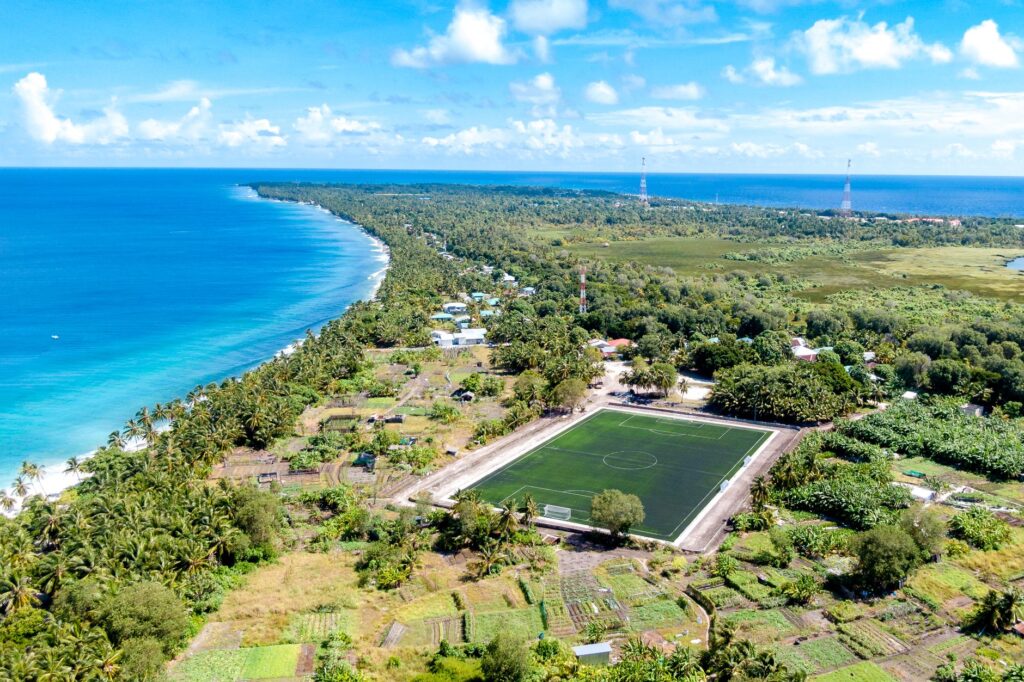
The true measure of transport infrastructure in Vanuatu is not calculated in tons of poured asphalt, but in the capacity of a small turboprop to land on a grass strip in the rain and connect two island realities separated by the ocean.
The Invisible Economy of the Island Ticket
Sustainably financing an air transport network in a territory with such low and dispersed population density presents a permanent financial challenge. Routes to peripheral islands are rarely profitable under strictly commercial criteria. To guarantee their continuity, governments and international bodies frequently implement cross-subsidy schemes and public service obligations (PSOs), complemented by fares charged on high-demand tourist routes between Port Vila and primary vacation enclaves.
For the traveler and resident, ticket prices reflect the complex fixed-cost structure of keeping aircraft operational in a remote island environment, where every liter of aviation fuel (Jet-A1 or Avgas) must be imported by sea and stored under strict quality controls. Despite these economic limitations, the gradual digitization of booking systems has optimized available seat occupancy, enabling more transparent and accessible management for both locals and specialized adventure travelers seeking to explore the archipelago’s pristine interior.
Practical guide
Planning a trip or research journey across Vanuatu’s regional aviation network requires understanding a set of strict operational guidelines to avoid logistical setbacks.
Advance Booking and Flexibility: Seats on inter-island flights are extremely limited due to small aircraft capacities. Booking months in advance is essential, alongside maintaining a flexibility margin of at least 48 hours in itineraries to accommodate potential weather cancellations.
Luggage Restrictions: Due to critical weight and balance limits on utility aircraft, baggage allowances are strictly restricted to 10 or 15 kilos per passenger, including carry-on. Large hard-shell suitcases are prohibited; soft duffels or backpacks must be used.
Local Airport Fees: Several peripheral airstrips require maintenance fees to be paid in cash (in Vatu) directly on the tarmac before boarding. Carrying sufficient local cash currency is mandatory, as smaller islands lack ATMs and card terminals.
Communications and Autonomy: Mobile phone coverage is limited outside provincial capitals. Bringing satellite communication devices for emergencies is recommended, alongside preparing for unexpected schedule disruptions caused by sudden shifts in trade winds or tropical rainfall.
Epilogue: The Fragile Bridge Between Islands and Clouds
As global aviation moves toward massive automation and high-efficiency widebodies, Vanuatu’s remote corners recall the essential, artisanal value of utility flight. In this Melanesian archipelago, an airplane is not merely a rapid mode of transport, but an umbilical cord uniting communities separated by oceanic abysses and volcanic barriers. The survival of this aerial labyrinth depends on a delicate balance between crew expertise, the resilience of grass strips, and the steadfast commitment to maintaining an indispensable public service in the heart of the South Pacific.
Observing a Twin Otter take off from a strip of green coral, with surf crashing meters from the tail assembly, encapsulates the essence of mobility in Vanuatu: an act of technical bravery and sober operational elegance that daily defies the limits of insular geography.