Between Waves, Jungle, and Asphalt: Three Weeks Across Indonesia’s Untamed Horizon from Lombok to Sumbawa
An overland motorbike and surf journey across West Nusa Tenggara, where mass tourism gives way to volcanic valleys, pristine reef breaks, and traditional island communities.
Leaving behind the crowded eastern coast of Bali and crossing the Lombok Strait marks a profound shift in the rhythm of Southeast Asian travel. The familiar tapestry of congested temple towns and non-stop traffic gradually dissolves into deep oceanic blues, sharp volcanic outlines piercing the sky, and winding coastal roads where asphalt is shared with herds of water buffalo. Embarking on a three-week journey across Lombok and Sumbawa with a couple of backpacks and a surfboard strapped to a scooter is more than a geographic movement; it is an immersion into the rugged heart of maritime Indonesia, a realm where daily life continues to move to the rhythm of tides and seasonal winds.
The province of West Nusa Tenggara stands as a compelling ecological and cultural crossroads. Heading east, dense tropical greenery blends into drier savannahs, acacia woodlands, and sheer limestone cliffs sculpted by the endless swell of the Indian Ocean. This overland trek invites travelers to slow down, read the marine forecasts, and embrace the fact that maps are merely suggestions when navigating between fishing outposts, seaweed farms, and inland jungles shadowed by massive stratovolcanoes.
«Crossing the strait means stepping back in time: where Lombok’s modern pavement fades, Sumbawa’s vast and quiet frontier begins.»
The Wallace Line: Nature’s Gateway to Eastern Indonesia
The boundary dividing these islands is far more than a political line; it represents one of the most significant biogeographical divides on Earth. It was in these deep maritime channels that British naturalist Alfred Russel Wallace plotted the boundary separating Asian flora and fauna from that of Australasia. Crossing the Lombok Strait aboard a regional ferry means traversing a deep oceanic trench that has acted as an impassable physical barrier for land species over millions of years.
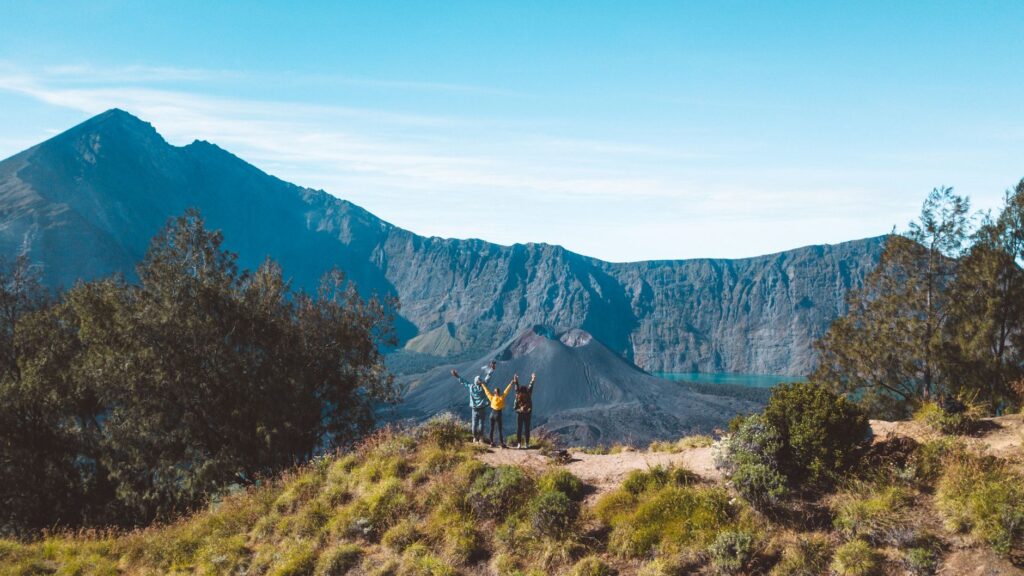
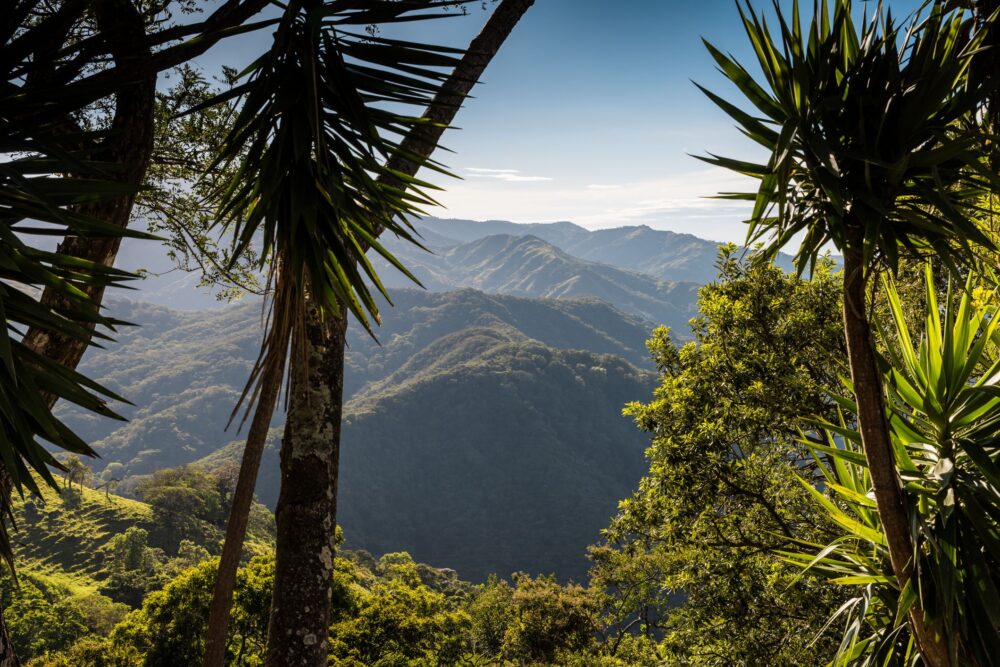
This ecological transition is felt immediately upon arrival. The sounds of the forest alter, the sunlight takes on a sharper clarity, and the landscape becomes dramatically steeper. Lombok rises sharply from the sea, anchored by Mount Rinjani—Indonesia’s second-highest volcano—whose summit reaches 3,726 meters into the clouds. This towering peak dictates the island’s weather patterns, fertilizes its soils, and serves as a sacred geographic marker visible across much of the northern horizon.
South Lombok: The Energy of Kuta and Hidden Coastal Bays
Over the past decade, Southern Lombok has emerged as a vibrant hub for independent travelers, surfers, and remote workers seeking an alternative to Bali. The coastal town of Kuta Lombok—not to be confused with its urban counterpart in Bali—serves as the primary springboard for exploration. Despite the introduction of specialty cafes and boutique eco-lodges, the area maintains a distinctly rural character where free-roaming livestock stroll down main streets and fishermen mend their nets along the shoreline at dusk.
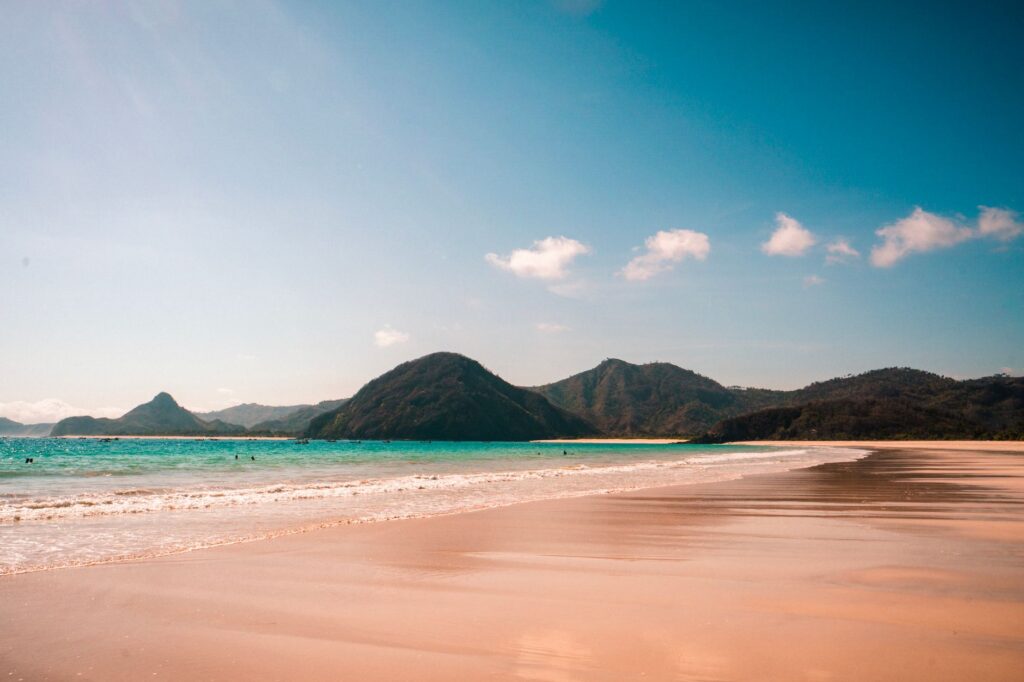
Riding a motorbike east or west from Kuta unveils a jagged coastline carved into sheltered coves, turquoise lagoons, and white-sand beaches. World-class surf breaks such as Desert Point on the southwestern tip, alongside accessible spots like Tanjung Aan, Selong Belanak, and Gerupuk, cater to a wide range of skill levels. The defining feature throughout is an unfiltered connection with nature, where dramatic headlands drop directly into coral reefs teeming with marine life.
Beyond sports, this coastline offers a glimpse into traditional coastal livelihoods. In quiet bays like Ekas, local families rely heavily on sustainable aquaculture and seaweed farming. Wooden outrigger boats, known locally as perahu, dot the calm waters at sunrise, painting a scene of coastal life that has remained unchanged for generations.
In the Shadow of Rinjani: Rainforest Trails and Northern Valleys
Ascending northward away from the dry southern coast brings a dramatic shift in environment as the roads climb the fertile slopes of Mount Rinjani. While climbing to the volcano’s crater rim and the emerald waters of Lake Segara Anak is a world-renowned adventure trek, the lower foothills around Senaru and Sembalun provide equally stunning terrain for overland explorers.
Thick rainforest canopies hide impressive waterfalls such as Sendang Gile and Tiu Kelep. The trek to Tiu Kelep involves wading through cool mountain streams and walking beneath towering jungle foliage inhabited by black macaques and tropical birds. The crisp, cool air of the highlands provides welcome relief from the heat of the coast.
Further east, the Sembalun Valley unfolds like a green amphitheater bounded by sheer volcanic walls. Here, high-altitude farming thrives, producing strawberries, vegetables, and rice across a vibrant mosaic of fields. This region offers an intimate look at rural island life, where daily routines remain closely tied to agriculture and community traditions.
Crossing the Alas Strait: Entering Untamed Sumbawa
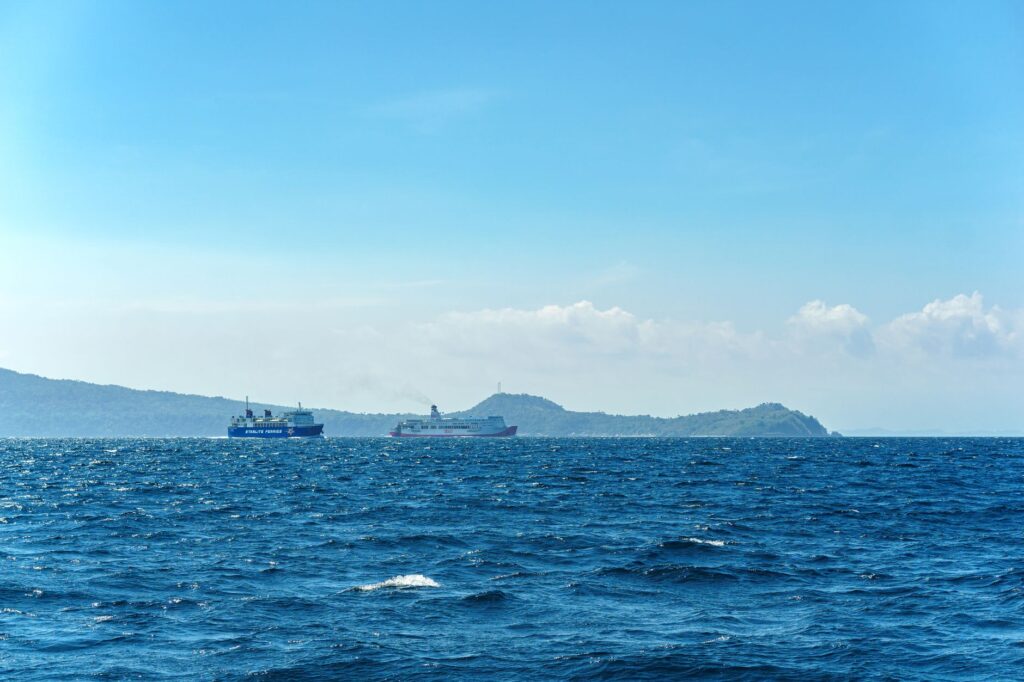
Reaching the port of Labuhan Lombok on the island’s eastern coast marks the end of the first leg of the journey. From here, public ferries cross the Alas Strait around the clock, connecting to Poto Tano on Sumbawa’s western shore. The two-hour crossing is a serene journey past tiny uninhabited islets and coral cays resting in calm waters.
Sumbawa welcomes travelers with a completely different scale and pace. If Lombok is a quieter, greener neighbor to Bali, Sumbawa is true frontier territory. Three times the size of Lombok but with a fraction of its population, Sumbawa is defined by rugged terrain, winding mountain passes, and a feeling of genuine isolation that immediately captures the imagination of independent adventurers.
«In Sumbawa, time is measured by the rise and fall of tides and empty stretches of coastal highway; it is a landscape where travel recovers its rawest spirit.»
West Sumbawa: Maluk and the Realm of Empty Waves
The road heading south from Poto Tano into West Sumbawa winds through sun-baked hills and deserted coastal stretches. The small town of Maluk and nearby Sekongkang have long held legendary status among international surfers due to the high quality of heavy reef breaks like Supersuck and Yo-Yo’s.
Infrastructure in this part of the island remains delightfully minimal. Accommodations consist mostly of simple guesthouses run by local families or pioneering expats who settled here decades ago. The beaches, framed by rolling green hills, often remain completely empty throughout the day, offering sweeping vistas of untamed coastal wilderness.
Motorbike travel along these roads calls for attentive riding. Unfenced cattle and water buffalo frequently rest on the sun-warmed asphalt around blind curves, and coastal winds can be strong. This distance from mainstream tourism routes is precisely what gives the region its undeniable magic.
Hu’u and Lakey Peak: The Surfing Sanctuary of Cempi Bay
Reaching the heart of Sumbawa’s surf culture requires driving further east and south to the Hu’u peninsula, home to the world-famous Lakey Peak. Located in Cempi Bay, this spot is celebrated for the remarkable symmetry of its reef break, which produces consistent lefts and rights over an offshore coral bed.
Lakey Peak has fostered a unique, laid-back coastal community over the years. A strip of simple wooden warungs and beachfront lodges faces the reef, allowing visitors to watch surfers handle power-packed waves from morning until nightfall. Despite its fame within the surf world, the area retains an unpretentious, frontier feel far removed from commercial resort hubs.
Sunsets over Cempi Bay are extraordinary. As the sun drops behind distant volcanic ridges, the sky turns brilliant shades of amber and violet, while the receding tide exposes wide coral flats where local villagers harvest marine life at low tide.
Culture and Heritage: Sasak and Samawa Traditions
Beyond its striking landscapes, traveling overland from Lombok to Sumbawa provides rich insight into the cultural diversity of the Indonesian archipelago. Lombok is predominantly inhabited by the Sasak people, whose intricate handwoven textiles, traditional architecture, and spicy cuisine—such as the famous Ayam Taliwang—reflect a deep connection to their land and an Islamic faith interwoven with local customs.
Visiting traditional hamlets such as Sade or Ende offers a glimpse into native building techniques, featuring thatched elephant-grass roofs and woven bamboo walls. It is important to approach these visits thoughtfully, favoring community-led initiatives that support local families directly while respecting their daily privacy.
Sumbawa, meanwhile, is culturally split between the Samawa speakers in the west and the Mbojo in the east. Historically ruled by independent sultanates, the people of Sumbawa are known for their warm hospitality, deep horse-riding traditions—including traditional youth horse racing known as Main Jangga—and a lifestyle closely tied to both forestry and farming.
Practical Logistics for an Independent Trip
Planning a three-week overland trip across these islands requires practical preparation and respect for local conditions:
Transport & Riding: Renting a reliable 125cc or 150cc scooter equipped with surf racks is the most flexible option. An International Driving Permit, a high-quality helmet, and confidence riding on uneven or gravel-covered roads are essential.
Ferry Links: Public ferries between Labuhan Lombok and Poto Tano operate 24 hours a day with frequent departures. You can ride your scooter directly onto the ship after purchasing a ticket at the port terminal.
Health & Safety: Secure comprehensive travel insurance covering medical evacuation and adventure activities. Healthcare facilities in rural Sumbawa are basic. Carry a basic first-aid kit, biodegradable reef-safe sunscreen, and insect repellent.
Cultural Etiquette: Both Lombok and Sumbawa are conservative, predominantly Muslim regions. Dress modestly when traveling through villages, towns, and public spaces outside of beach areas by keeping shoulders and knees covered.
Environmental Responsibility: Plastic waste management is a challenge across rural island regions. Carry a reusable water bottle with a filter and refuse single-use plastics wherever possible to protect delicate ecosystems.
Epilogue: The Rewards of the Open Road
Completing a three-week journey from Lombok to Sumbawa leaves travelers with a profound appreciation for a side of Indonesia that remains raw, vibrant, and deeply welcoming. The synthesis of powerful natural elements—volcanic peaks, ocean swells, and dense tropical forests—with the gentle rhythms of village life creates an unforgettable travel experience.
In an era where travel can sometimes feel overly packaged and predictable, the quiet roads of West Nusa Tenggara offer a refreshing reminder of the joy of exploration. Returning with sun-bleached gear, salt-crusted boots, and memories of open horizons is the ultimate reward for those who choose to venture beyond the beaten path.