The Yellow Train Route of the Pyrenees: A Chronicle of Slow Travel Along Europe’s Backbone
An exhaustive journey aboard the legendary Yellow Train of the Pyrenees, unraveling its century-old history, high-mountain engineering, and essential practical keys for exploring southern France on historic rails.
Introduction to the Pyrenean Horizon and Slow Travel
The territory of the French Eastern Pyrenees conceals one of the most daring and poetic civil engineering feats on the European continent. Popularly known as the Yellow Train, or Le Train Jaune in its original designation, this meter-gauge railway has meandered for over a century through dizzying ravines, high-altitude plateaus, and valleys carved by time. In an era dominated by haste and airport hyperconnectivity, this railway route stands as a bulwark of slow travel, a deliberate invitation to lower the pace and contemplate the landscape as a living document of geography and history.
Along its more than sixty kilometers of track between Villefranche-de-Conflent and Latour-de-Carol, the yellow and red convoy not only transports passengers but also preserves the memory of mountain communities that depended on its rails to break secular isolation. Understanding this route requires looking beyond the superficial tourist snapshot; it demands delving into the technical challenges overcome by early 20th-century engineers and the socio-economic impact brought by the arrival of electricity to these steep peaks.
Historical Origins and the Titanic Task of Uniting Valleys
The genesis of the Yellow Train dates back to the late 19th century, when the French government and local authorities in the Cerdagne region foresaw the urgent need to connect isolated agricultural and livestock enclaves with the national railway network. Isolation during harsh Pyrenean winters paralyzed the local economy, and existing roads proved inadequate and impassable for heavy transport. Construction officially began in 1903, a titanic project that mobilized thousands of laborers, popularly known as terrassers, many originating from Aragon and Catalonia, who excavated rock with dynamite and pickaxes under extreme weather conditions.
The layout presented a massive challenge due to the abrupt topography of the terrain. Overcoming elevation gains exceeding one thousand meters in just a few kilometers required designing an innovative electric traction system for the era, based on a third rail supplying continuous power to the motors. Inaugurated in sections between 1909 and 1910, and definitively completed in 1927, the railway proved that technology could integrate into the landscape without destroying it. Each bored tunnel and every viaduct built with local stone constituted a landmark of European industrial architecture that remains virtually intact today.
High-Mountain Engineering and Monumental Architecture
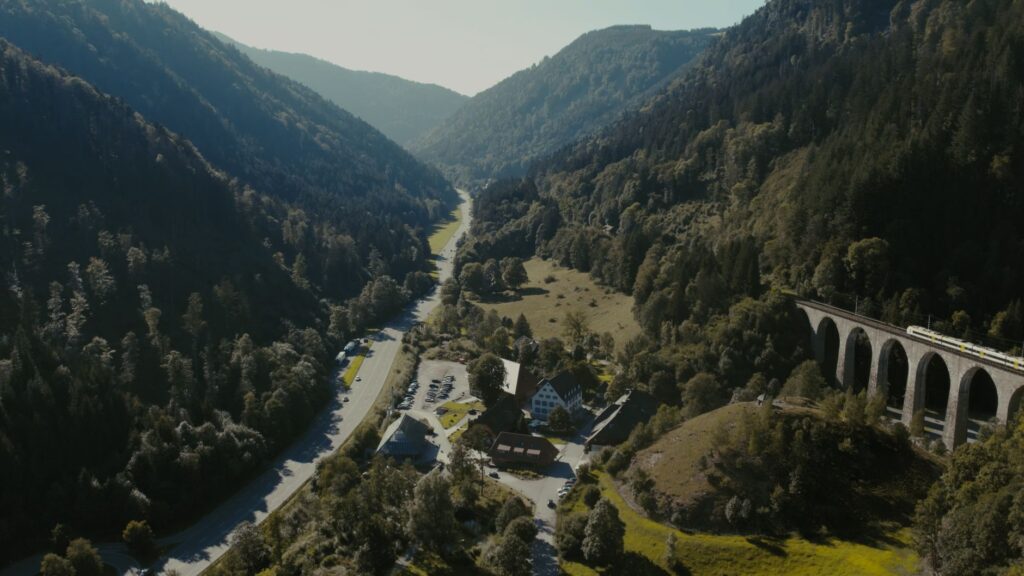
The most fascinating element of the journey lies in its monumental architecture, where engineering and art merge. The route features over sixty tunnels and dozens of bridges and viaducts defying empty space. Among them stands the impressive Séjourné Bridge, a two-story viaduct with a main arch over eighty meters high that crosses the Tet River with Renaissance elegance. A few kilometers further, the Gisclard Bridge, the highest railway suspension bridge in France, demonstrates the technical audacity of its creators by allowing the train to curve over a sheer abyss.
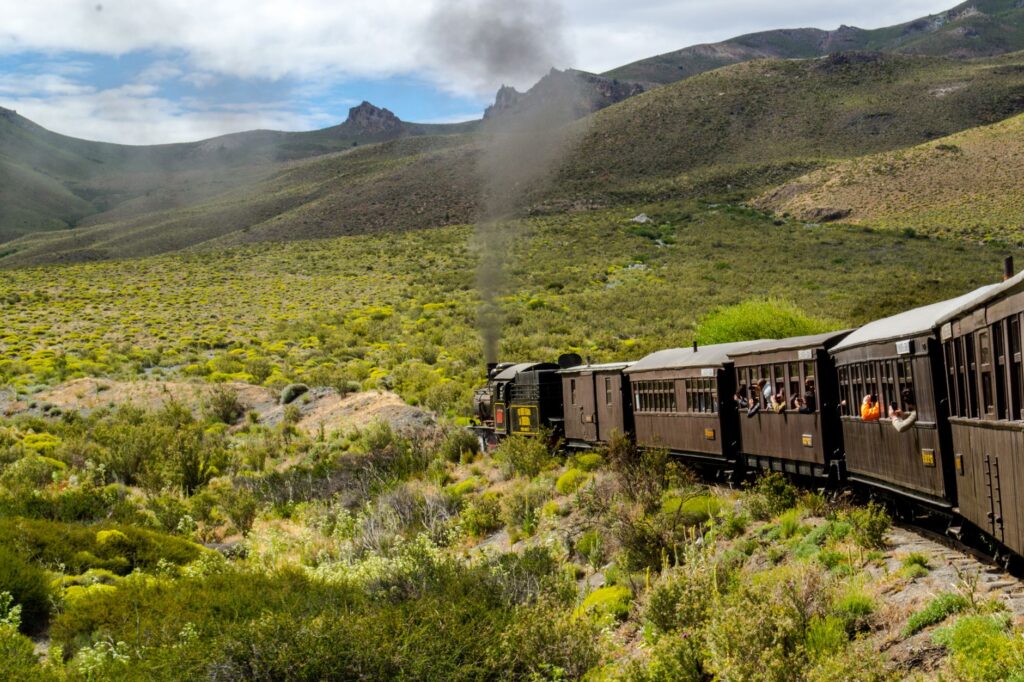
Unlike modern hermetically sealed trains, the Yellow Train retains open-air carriages in its summer section, allowing travelers to feel the fresh mountain breeze and perceive the scent of Scots pine and damp rock. The tracks follow tight curves with radii of barely one hundred meters, forcing the formation to advance at a moderate average speed, rarely exceeding thirty kilometers per hour. This deliberate slowness is not an operational defect, but an aesthetic virtue turning every journey into a lesson in dynamic geology.
The Yellow Train is not merely a means of transport; it is a rolling archive of stone and electricity defying the vertical geography of the Pyrenees with the patience of old artisans.
The management of electrical power also represented a revolution. Energy comes from the Lanoux dam, situated in the high mountains, harnessing natural hydraulic force to feed direct current motors. This pioneering clean generation system anticipated by nearly a century current debates on sustainable mobility and energy transition in Alpine and Pyrenean public transport.
The Geographical Pulse: From Medieval Fortress to Lofty Plateau
The journey formally begins at the fortified station of Villefranche-de-Conflent, a walled municipality designed by Vauban and declared a UNESCO World Heritage Site. Here, reddish stone walls and medieval alleys contrast with the bright yellow of the carriages waiting on the track. As the train sets off, the valley floor rapidly narrows, and chestnut-covered slopes yield to the limestone gorges of the Conflent.
As the convoy gains altitude, the landscape undergoes a radical metamorphosis. Deciduous forests cede prominence to fir trees and high-mountain pastures. The train passes historic stations such as Fontpedrouse and crosses the imposing Les Cabanasses bridge before reaching the sun-drenched Cerdagne plateau. In this stretch, the horizon opens wide, revealing snow-capped peaks defining the natural border between France and the Iberian Peninsula, a territory of communal pastures and granite stone villages preserving traditional architecture.
Life at the Stations and the Social Fabric of the Track
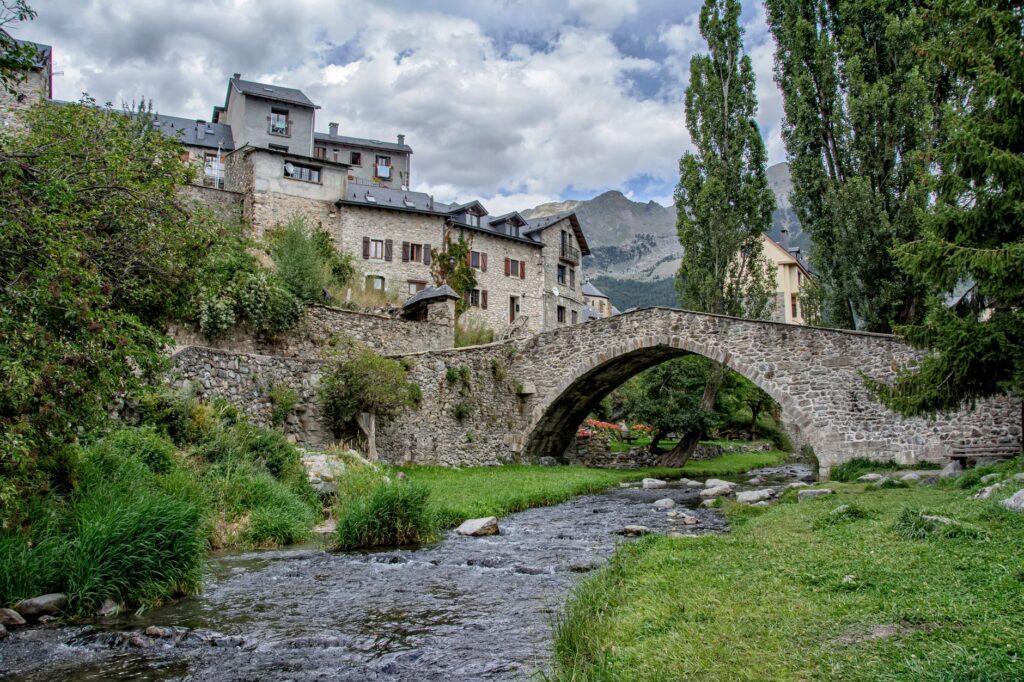
The stations of the Yellow Train constitute small microcosms of rural hospitality. Far from the coldness of large metropolitan terminals, enclaves like Mont-Louis or Bolquère-Eyne —the highest conventional gauge railway station in France, situated over 1,500 meters above sea level— function as community meeting points. Local station masters and conductors maintain a close relationship with regular residents who use the service to travel to markets, visit medical centers, or study in neighboring towns.
This social rootedness distinguishes the Yellow Train from mere railway theme parks. During winter months, when mountain road snowstorms block asphalt and render it impassable, the train continues running inexorably, equipped with snowplow wedges on its front. For local inhabitants, the line is a vital lifeline of survival; for the visitor, a unique opportunity to witness the daily life of the French high mountains without artifice or commercial filters.
Protected Ecosystems and Biodiversity Along the Route
The railway corridor crosses areas of high ecological value, mostly integrated within the Catalan Pyrenees Regional Natural Park. The variable altitude of the route —from 427 meters at the departure point to 1,593 meters at the culminating milestone— generates exceptional habitat diversity. During spring and summer months, track embankments and alpine meadows bloom with an infinite variety of wildflowers, from wild lilies to yellow gentians.
Patient wildlife observers can spot birds of prey such as golden eagles or griffon vultures gliding over rocky cliffs from the windows. Denser wooded areas house populations of chamois and roe deer, while crystal-clear mountain streams crossed by viaducts harbor native brown trout. Respect for this fragile ecosystem has compelled railway authorities to implement strict maintenance controls avoiding aggressive chemical weed-clearing products, prioritizing mechanical and manual methods.
Practical Guide for the Traveler: Planning, Frequencies, and Seasonality
Planning a trip on the Yellow Train requires understanding that punctuality and operations depend closely on weather conditions and maintenance tasks for a century-old infrastructure. The line operates year-round, although frequencies and train compositions vary notably between summer and winter seasons.
Frequencies and Schedules: During summer months, service expands with up to four daily runs in each direction to absorb tourist demand. In winter, service drops to two or three daily frequencies, focused on covering the mobility needs of local residents and skiers.
Seat Reservations: Advanced numbered seat reservations are not available for individual segments under most standard fares. Arriving at the Villefranche-de-Conflent station at least forty-five minutes in advance is strongly recommended to secure a seat, especially in open-air carriages during sunny weekends.
Railway Connections: The line connects efficiently with SNCF TER regional trains at Villefranche-de-Conflent from Perpignan, and at Latour-de-Carol with Rodalies de Catalunya trains (Line R3) coming from Barcelona and SNCF networks heading toward Toulouse.
Luggage and Clothing: Due to abrupt altitude changes and open carriage exposure, thermal conditions can vary drastically during a single trip. Bringing windproof warm clothing and sun protection is essential, even in midsummer.
The true compass for the traveler aboard the Yellow Train lies in accepting that the ticket does not purchase speed, but the privilege of inhabiting time while the landscape unfolds with sovereign slowness.
Conclusion: The Enduring Value of Leisurely Travel
In contemporary tourism, where efficiency and immediacy dictate the rules of engagement, the Pyrenean Yellow Train represents a courageous historical anomaly. It promises neither adrenaline nor technological shortcuts, but an intimate and respectful communion with Alpine and Pyrenean geography. Each ratchet of wheels upon rails, each sharp curve over the Tet river abyss, and each friendly wave from local residents at high-altitude stations remind us that travel is, in its purest essence, the art of transforming distance into understanding and slowness into enduring memory.
ATLAS LUME · ANTES DE VIAJAR
Una lectura que continúa en el destino
DocumentaciónComprueba visados, requisitos sanitarios y vigencia de documentos en fuentes oficiales.
ReservasConfirma el precio final, impuestos y condiciones directamente con el proveedor.
Viaje responsableRespeta las comunidades, el patrimonio y los ecosistemas locales.