The Geography of Everyday Awe
There are moments in the institutional life of a mass tourism destination when cold statistics transform into human faces, proper names, and carry-on luggage. The Iguazu Falls, that colossal formation of rushing water, basalt, and subtropical rainforest situated at the northernmost tip of Misiones province, are hardly immune to the tyranny of large numbers. Millions of visitors cross their metal walkways year after year, hold their breath in front of the Devil’s Throat, and return home with memory cards saturated with humidity and impossible greens. Yet, within the daily fabric of the national park administration and local tourism operators, the arrival of a specific visitor marks a round figure that disrupts the site’s rhythm for a few hours: the one-millionth tourist.
On this occasion, the invisible lottery of the tourism calendar crowned a family originating from Mar del Plata. Hailing from the traditional seaside resort city on the Buenos Aires Atlantic coast, these travelers crossed half the country—over a thousand five hundred kilometers of highways, changing landscapes, and climatic transitions—to encounter the most imposing scenery of Argentina’s littoral. What began as a family vacation planned with the tight budget of the Argentine middle class transformed overnight into a media event featuring official receptions, institutional gifts, and photographic flashes under the scorching sun of the red earth.
From the Atlantic Coast to the Deep North
The geographical and cultural contrast separating Mar del Plata from Puerto Iguazú acts as a mirror of the vast diversity harbored within Argentine territory. Leaving behind the maritime breeze of the South Atlantic, the buildings of the boardwalk, and the sea lions of the harbor to plunge into the humid heat of the Misiones jungle demands a predisposition toward wonder that transcends mere summer rest. The Mar del Plata family arrived at Iguazu National Park bearing the typical expectations of those seeking to escape urban routine and step into one of the most biodiverse green lungs on the planet.
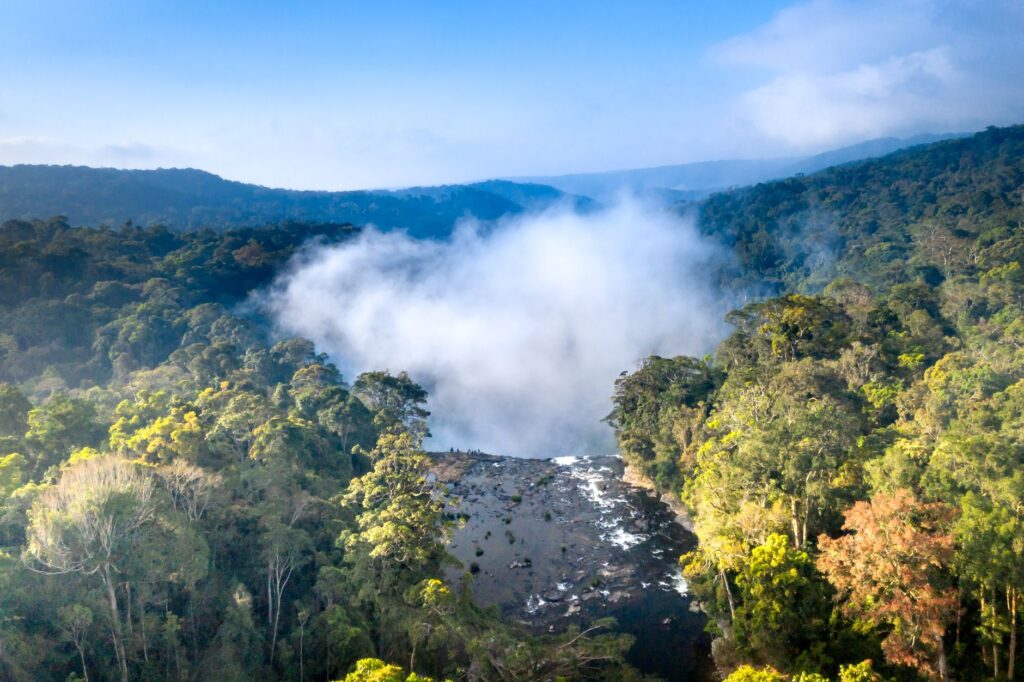
The journey, undertaken via national highways that wind through the humid pampa, the Mesopotamian littoral, and the immense Misiones yerba mate plantations, constitutes an initiatory journey in its own right. In the weeks prior to their arrival, household finances had been at the center of logistical decisions, opting for accessible accommodations and independently managed services. Nothing foreshadowed that the turnstiles at the main entrance would register the exact number triggering the celebration protocol prepared by park authorities and local hotel and gastronomic representatives.
The Protocol of the Tourism Milestone
When the family cleared the security and ticketing checkpoints at the protected area, sensors and personnel from the Iguazu Municipal Tourism Board (Iturem) momentarily halted the flow of visitors. What followed was an institutional choreography already rehearsed in previous years but always charged with spontaneity. Park rangers, tour guides, and provincial directors gathered to surround the astonished travelers from Mar del Plata, who tried to comprehend the commotion unfolding around them.
«We never imagined that a family trip planned with so much effort could end this way,» the protagonists confessed before regional press microphones, still visibly under the effect of surprise. The symbolic delivery of commemorative plaques, discounted excursions, and extended stays at local resorts sought not merely to reward the visitors, but to capitalize communication-wise on a crucial moment for the reactivation and stability of tourist flow in the destination.

X-Ray of a Natural Giant
Behind the festive anecdote lies a complex machinery that daily manages the impact of thousands of people on a fragile ecosystem. Iguazu National Park protects not only the celebrated waterfalls but also a vital portion of the Paraná rainforest ecoregion, home to endangered species such as the jaguar, the toucan, and an immense variety of endemic flora. Maintaining the balance between mass public access and environmental conservation constitutes the permanent challenge of public administration.
The walkways snaking above the branches of the Iguazu River are designed with strict engineering criteria to withstand flood surges and the constant transit of domestic and international tourists. Each visitor who enters contributes, through their admission fee, the resources necessary for park infrastructure maintenance, the salaries of park ranger corps, and scientific research programs monitoring the health of the jungle.
Domestic Tourism as a Structural Pillar
The one-millionth visitor milestone, usually reached before the completion of the full annual cycle, highlights the resilience of domestic tourism in Argentina. Despite macroeconomic fluctuations, declining purchasing power, and the logistical complexities of traversing a continental country, Argentines continue choosing Iguazú as one of their favorite destinations for vacations and extended getaways.

For the economy of Puerto Iguazú—a city living almost entirely from the hospitality industry, gastronomy, and guided services—each tourist represents the link in a productive chain employing thousands of local families. The arrival of the Mar del Plata family thus functioned as a symbolic validation of the daily labor of Misionerian workers who sustain the quality of the tourism experience three hundred and sixty-five days a year.
Voices and Testimonies of the Red Earth
Local tour operators view these milestones with a mix of commercial pragmatism and genuine regional pride. For a waterfall guide, walking the trails alongside visitors stepping into the jungle for the first time is an irreplaceable pedagogical opportunity. It is not merely a matter of showing the height of the leaps or the ferocity of the Devil’s Throat, but of conveying the historical and ecological dimension of a territory shared with neighboring Brazil.
«The domestic visitor usually arrives with a very strong emotional load toward the place, because they study it in school since childhood,» explains a veteran local guide. That prior construction, fueled by school narratives and classic postcards, instantly breaks down and rebuilds itself before the overwhelming physical presence of water and vegetation—a sensory shock that no textbook can faithfully replicate.

Infrastructure, Accessibility, and Contemporary Challenges
Welcoming over a million people annually demands constant upgrading of public and private services in the region. In recent years, Iguazu National Park has substantially improved its accessibility for people with reduced mobility, adapting ecological trains, ramps, and walkways to ensure that contemplating nature remains a democratic and universal right.
Likewise, air connectivity with the Iguazu Cataratas International Airport has shortened distances with the country’s main urban centers, allowing a Mar del Plata family to choose, depending on their resources, between land travel or a direct domestic flight that reduces transit times and optimizes their stay in Misiones province.
Practical Guide for the Traveler
Planning a visit to the Iguazu Falls requires keeping in mind several essential logistical recommendations to avoid setbacks and optimize the experience within the protected area:
- Tickets and Anticipation: It is highly recommended to purchase national park admission tickets online via the official platform to avoid lines at the entrance ticket booths.
- Strategic Hours: Entering first thing in the morning (opening time) allows visitors to tour the upper and lower trails with fewer crowds and more favorable temperatures.
- Attire and Footwear: Wearing comfortable, closed, and non-slip footwear is indispensable, alongside lightweight clothing, sunscreen, and insect repellent due to high humidity and mosquito presence.
- Equipment Protection: Mist generated by the waterfalls can damage electronic devices; carrying waterproof cases for cameras and mobile phones is strongly advised.
- Internal Gastronomy: Several food courts operate within the park, though visitors are also permitted to enter with light snacks and water to refill at designated drinking fountains.
The Long-Term Impact of a Fleeting Milestone
Celebrations surrounding the one-millionth visitor last barely a few hours; photographers pack up, authorities return to their offices, and the honored family continues their journey toward the viewpoints. Nevertheless, the event leaves an indelible mark on the destination’s collective memory and the personal biographies of those who lived the event. For the family from Mar del Plata, the trip ceased to be a simple summer vacation, becoming a personal milestone they will recount for years during family dinners.
On a broader level, the news resonates across national media as a reminder that deep Argentina continues to pulse through internal tourism. The Iguazu Falls remain that untamable magnet where water, jungle, and people meet to reaffirm a common identity, reminding us that despite distances and economic hardships, wonder before nature remains a shared and inalienable territory.
Source: 0223.com.ar (https://news.google.com/rss/articles/CBMizAFBVV95cUxQRW9BVWFGYlpMOXdLOVY5cHBoZHMtbzF4azNrcGszUEt1RnJTdzhwNUNzRTVBSGFvOXA4WHhKYVhVbFp2SlJnQWhCWFdmT2JRbkJNQ2pET0tpTXEyLWdoY0dVYk5ZV0RTc1VQbXFmWE5KdmhIdUMwbGxKQ203MTVLQUgydEpNYXE1Z0o4WlrYTNwZXdEaVNPVkRVampwMkxPQllEemM3OTNvUDA3aFpONnNUdkptaGFkV3NNeHJhWFJvYmg5S2RtSGVxTC0?oc=5)