Introduction to the Great Legacy of Steam in the Himalayas
In the northernmost reaches of the Indian state of West Bengal, where the dusty plains of the subcontinent break abruptly against the southern foothills of the Himalayas, runs one of the most audacious and poetic feats of railway engineering ever conceived. The Darjeeling Himalayan Railway (DHR), popularly known as the toy train, is not merely a means of transport designed to overcome mountain elevation gains; it is a historical artifact in constant motion, a living testimony to late 19th-century British imperial daring, and a vital cultural and economic corridor that continues to sustain the daily life of entire communities hanging between mist and abyss.
Inaugurated progressively between 1881 and 1888, this narrow-gauge system with a track width of just two feet (610 millimeters) was designed to span a horizontal distance of approximately eighty-eight kilometers while simultaneously overcoming an altitudinal disparity ranging from a mere one hundred meters above sea level at the terminal station of New Jalpaiguri to the majestic two thousand two hundred meters of the summit in Darjeeling. At a time when the steam engine represented the absolute vanguard of industrial modernity, projecting a railway layout capable of scaling near-vertical slopes without resorting to the costly and complex infrastructure of heavy tunneling demanded topographic solutions as ingenious as they were risky, completely redefining the relationship between humanity, extreme orography, and mechanical speed.
Historical Context and the Need for a Route to the Clouds
To understand the profound motivations that drove the construction of this railway line, one must look back to the British colonial era. During the scorching summer months in Calcutta, then the capital of British India, temperatures and ambient humidity reached levels unbearable for imperial administrators and officials. Seeking a climatic refuge to alleviate the ravages of tropical heat and associated illnesses, the British established a sanatorium and mountain administrative center in Darjeeling. However, initial access depended exclusively on slow ox-carts, horses, and human porters moving along winding bridle paths that required several days of exhausting travel.
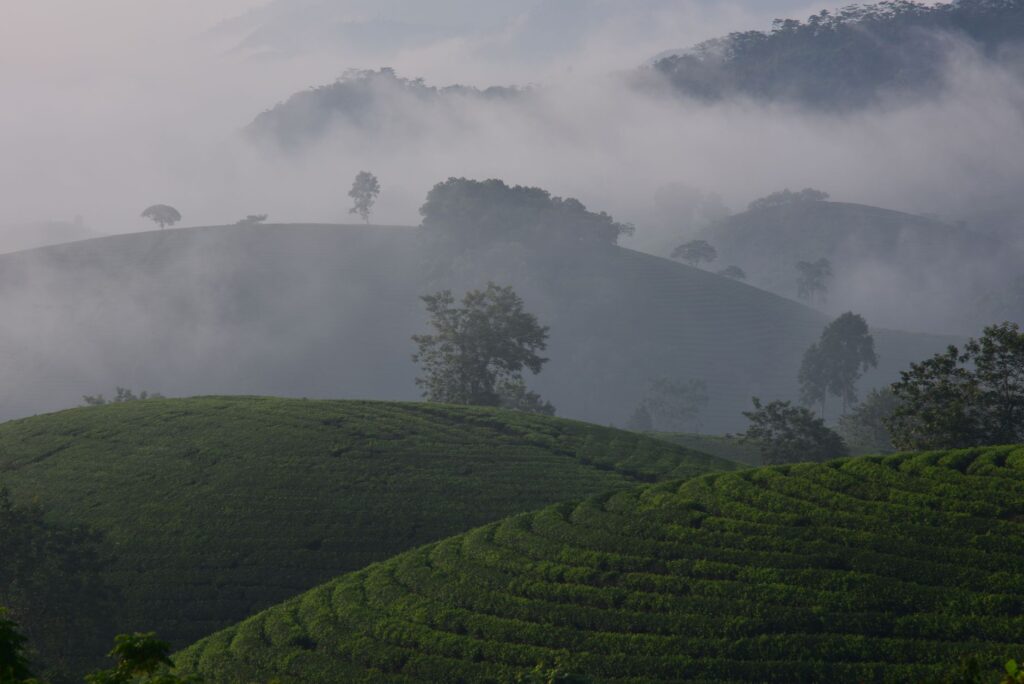
The urgency of optimizing the transport of troops, officials, mail, and goods—fundamentally the celebrated Darjeeling tea, whose production was beginning to take off commercially—prompted the colonial government to seek an efficient mechanical alternative. It was engineer Franklin Prestage, agent for the Eastern Bengal Railway company, who foresaw the feasibility of constructing a narrow-gauge branch line that would largely leverage the layout of the existing military road (Hill Cart Road). His initial technical proposal was met with skepticism by high government circles, but the promise of permanently connecting the mountain plateau with the lowland railway network ultimately secured the necessary permits, initiating an epic construction project involving thousands of local laborers under extremely adverse climatic and geological conditions.
Topographic Ingenuity: Loops, Zigzags, and the Physics of Steam
The greatest challenge faced by the railway builders was not a shortage of financial resources, but the relentless topography of the Himalayas. Lacking the heavy tunneling technology that would characterize subsequent major Alpine projects in Europe, engineers had to devise ways to gain altitude gradually over unstable slopes prone to landslides during the monsoon seasons. The adopted solution relied on maximizing the natural adhesion of steel wheels on rails, complemented by geometric designs truly revolutionary for the era.
Among the most famous structural elements of this layout are the renowned loops and reverses (zigzags or direction reversals). The most emblematic of all is the Batasia Loop, located a few kilometers from Darjeeling. At this point, the track describes a complete circle upon itself, gaining altitude helically while skirting a land depression and offering the passenger a 360-degree panoramic perspective stretching from cultivated valleys to the snow-capped peaks of Kanchenjunga. When the train lacked sufficient space to draw tight curves, engineers designed zigzag sections where the locomotive alternately pushes and pulls the carriages on opposing slopes, forcing the driver to perform complex reversal maneuvers that remain one of the greatest technical attractions for rail enthusiasts worldwide.
Rolling Stock and the Persistence of Classic Locomotives
Throughout its more than 140 years of existence, the Darjeeling Himalayan Railway has managed to preserve a technological authenticity almost unheard of in the contemporary transport landscape. While diesel traction has been introduced complementarily in recent decades to ensure the punctuality of certain daily passenger and light freight services, the undisputed soul of the line remains its veteran B-Class steam locomotives, originally manufactured by the Scottish firm North British Locomotive Company and other British workshops in the late 19th and early 20th centuries.
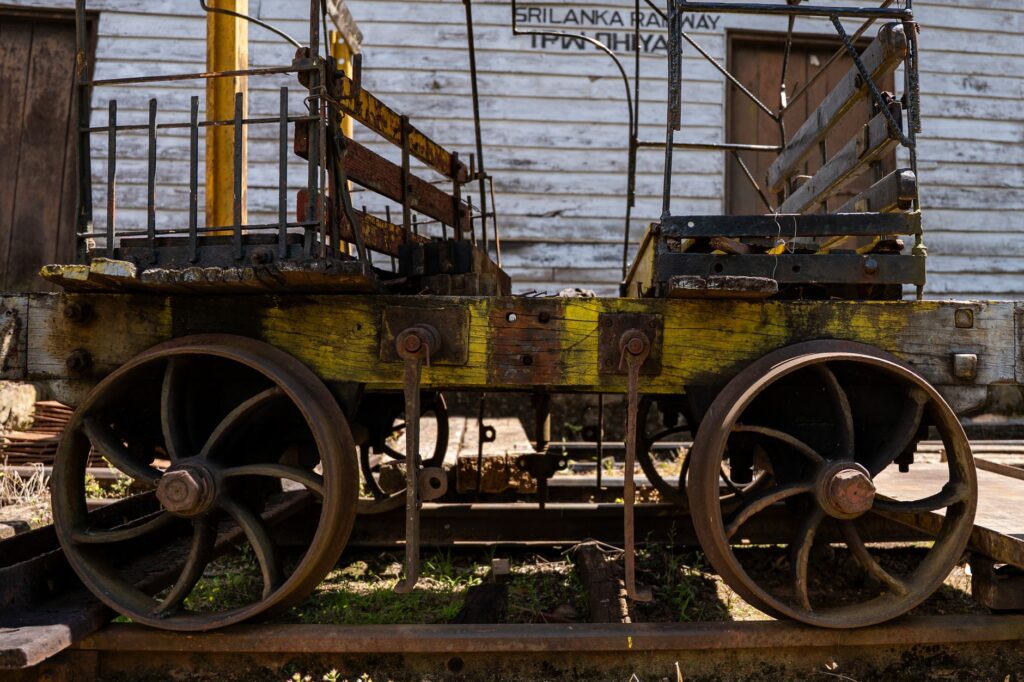
These small articulated machines, equipped with vertical boilers and side water tanks, were specifically designed to develop extraordinary traction effort on remarkably steep gradients, reaching an inclination of up to five percent in certain sections. The maintenance of these mechanical relics currently represents a genuine logistical and artisanal challenge. The railway workshops located in the intermediate station of Tindharia function as an industrial sanctuary where local turners, boilermakers, and mechanics continue to custom-manufacture replacement parts no longer produced industrially anywhere else on the planet, guaranteeing the operational survival of a technological heritage declared a UNESCO World Heritage Site in 1999.
Socioeconomic Impact and Connectivity in Mountain Communities
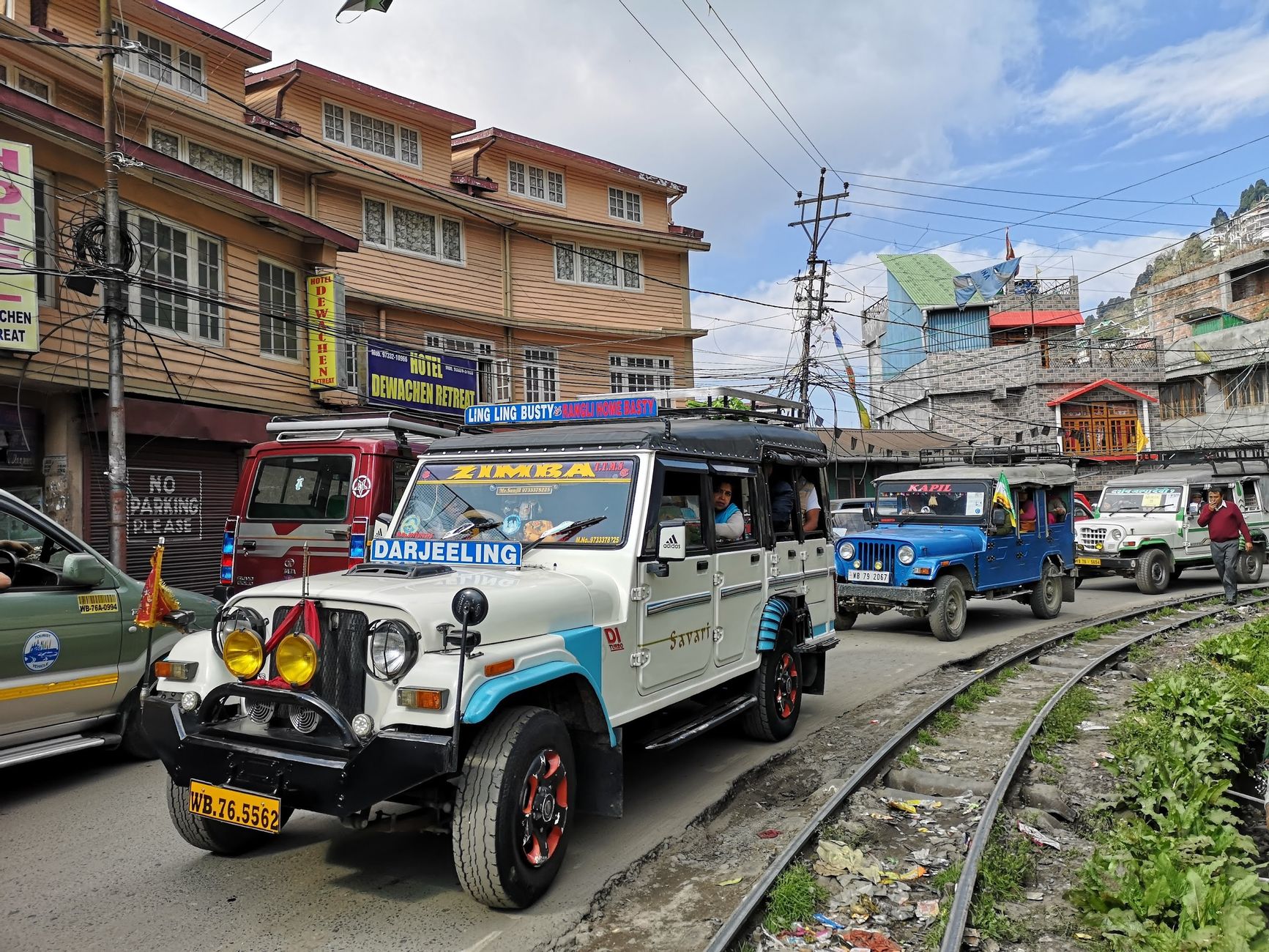
Reducing the Darjeeling Himalayan Railway to a mere seasonal tourist attraction would constitute a serious error of historical and economic perspective. For the inhabitants of the numerous villages perched along the mountain slope—such as Kurseong, Sonada, or Ghoom—this steel corridor has historically represented their umbilical cord to the food markets, educational centers, and hospitals located in the Siliguri plain.
Before the widespread modernization of roads in the 21st century, the train constituted the only safe and mass transit method to supply the local population with fuel, non-perishable food, and construction materials during the months when intense monsoon rains blocked or destroyed entire stretches of the main highway. Today, although motor freight transport has gained ground, the train continues to play an irreplaceable social role. Everyday carriages serve as an intergenerational meeting point where local farmers, students, and merchants share space with international travelers, consolidating a local economy based on tea marketing, high-altitude horticulture, and cultural tourism seeking alternatives respectful of the natural and heritage environment.
The heritage value of the railway lies not exclusively in the antiquity of its locomotives, but in its uninterrupted capacity to weave human bonds across a geographical abyss that otherwise would remain fractured.
Contemporary Challenges: Climate Change, Conservation, and Tourism
Despite its undeniable historical romanticism, the future of the Darjeeling railway faces severe structural and environmental threats derived from accelerated climate change and anthropogenic pressure on the fragile Himalayan ecosystem. Extreme rainfall recorded during recent monsoon seasons has caused massive landslides that erode embankments and destroy track sections, forcing temporary suspension of services that can last for months and severely affecting the economy of local operators.
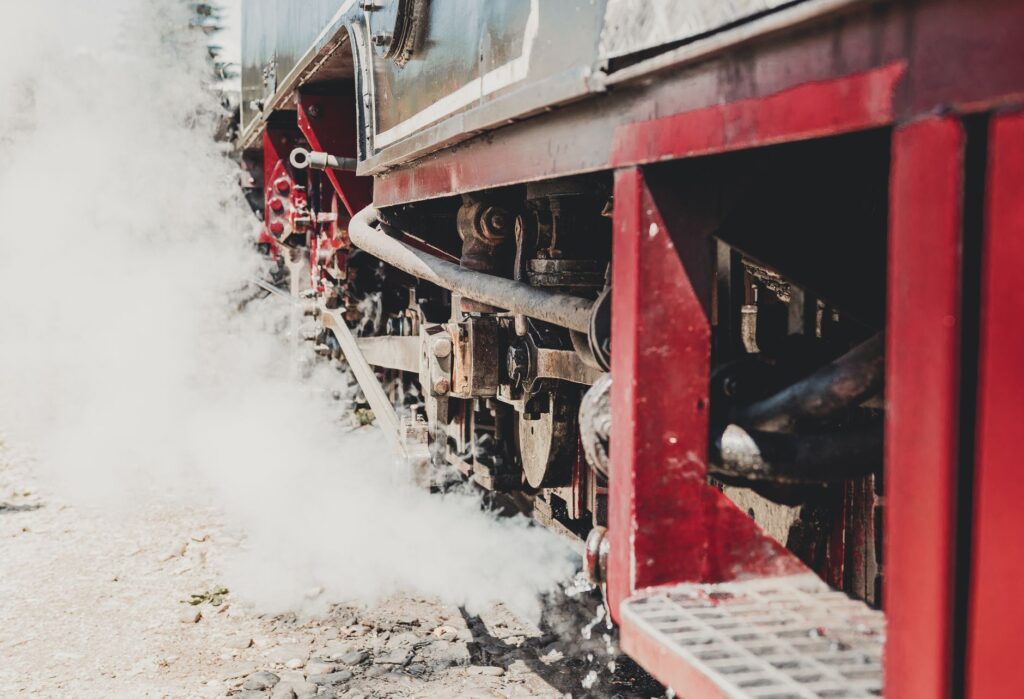
Similarly, tourism flow management represents a delicate balance between the economic profitability necessary for infrastructure maintenance and the preservation of the authentic travel experience. Railway conservation organizations, in collaboration with Indian Railways, have promoted comprehensive restoration plans prioritizing slope stability through bioengineering techniques, modernization of signaling systems at urban level-crossings, and strict regulation of emissions and coal consumption in historical locomotives, seeking to mitigate environmental impact without sacrificing the visual and acoustic essence that captivates visitors.

Practical Planning Guide for the Contemporary Traveler
Organizing a journey aboard the Darjeeling Himalayan Railway requires rigorous logistical planning, given that operating conditions can be altered by unforeseen weather events or track maintenance work. Below are the essential guidelines for a successful journey:
- Starting Point and Main Access: The gateway to the region’s railway network is New Jalpaiguri (NJP) station, excellently connected by long-distance trains from Kolkata, Delhi, and Guwahati. From NJP, you can take the full long-distance service or travel by road to intermediate stations like Kurseong to avoid slower sections if time is limited.
- Available Service Types: Travelers can choose between the full daily service (regular passenger trains covering the entire route between New Jalpaiguri and Darjeeling, subject to potential prolonged delays) or the popular short tourist services known as Joy Rides, operating several times daily in a closed loop between Darjeeling and Ghoom station, ideal for those with tight schedules.
- Ticket Booking Systems: Seats for steam trains and tourist services experience high seasonal demand. It is strictly necessary to book weeks or months in advance through the official online booking portal of Indian Railways (IRCTC) or via accredited local agencies.
- Recommended Time of Year: Optimal periods for the journey include the spring months (March to May) and the post-monsoon autumn (October to December), when the atmosphere clears, allowing clear views of the snow-capped Himalayan peaks. Intense monsoon months (June to September) should be avoided due to the high probability of track disruptions from landslides.
- Equipment and Health: Due to the considerable altitude variation—ranging from the tropical heat of the plain to the cool mountain air above two thousand meters—it is essential to travel with layered warm clothing, comfortable footwear, and preventive medication for possible motion sickness on winding sections, in addition to verifying required visa documentation to enter India.
Conclusion: The Relevance of a Rail Icon
The Darjeeling Himalayan Railway transcends the category of a simple tourist attraction to establish itself as a masterpiece of human integration with the territory. In an era dominated by the impersonal speed of high-speed rail and mass air travel, this modest steam train invites us to slow down our rhythm, to understand geography through mechanical effort, and to appreciate the collective endeavor that made it possible to tame the planet’s most abrupt slopes. Its persistence in the 21st century proves that the true wealth of travel lies not exclusively in the final destination, but in the ability to admire the changing landscape from the window of a carriage moving, slowly but inexorably, toward the sky.
Traveling along the Darjeeling layout means accepting a truce with modern haste, allowing steam and stone to restore the human scale of the horizon.