The Architecture of Extreme Slopes
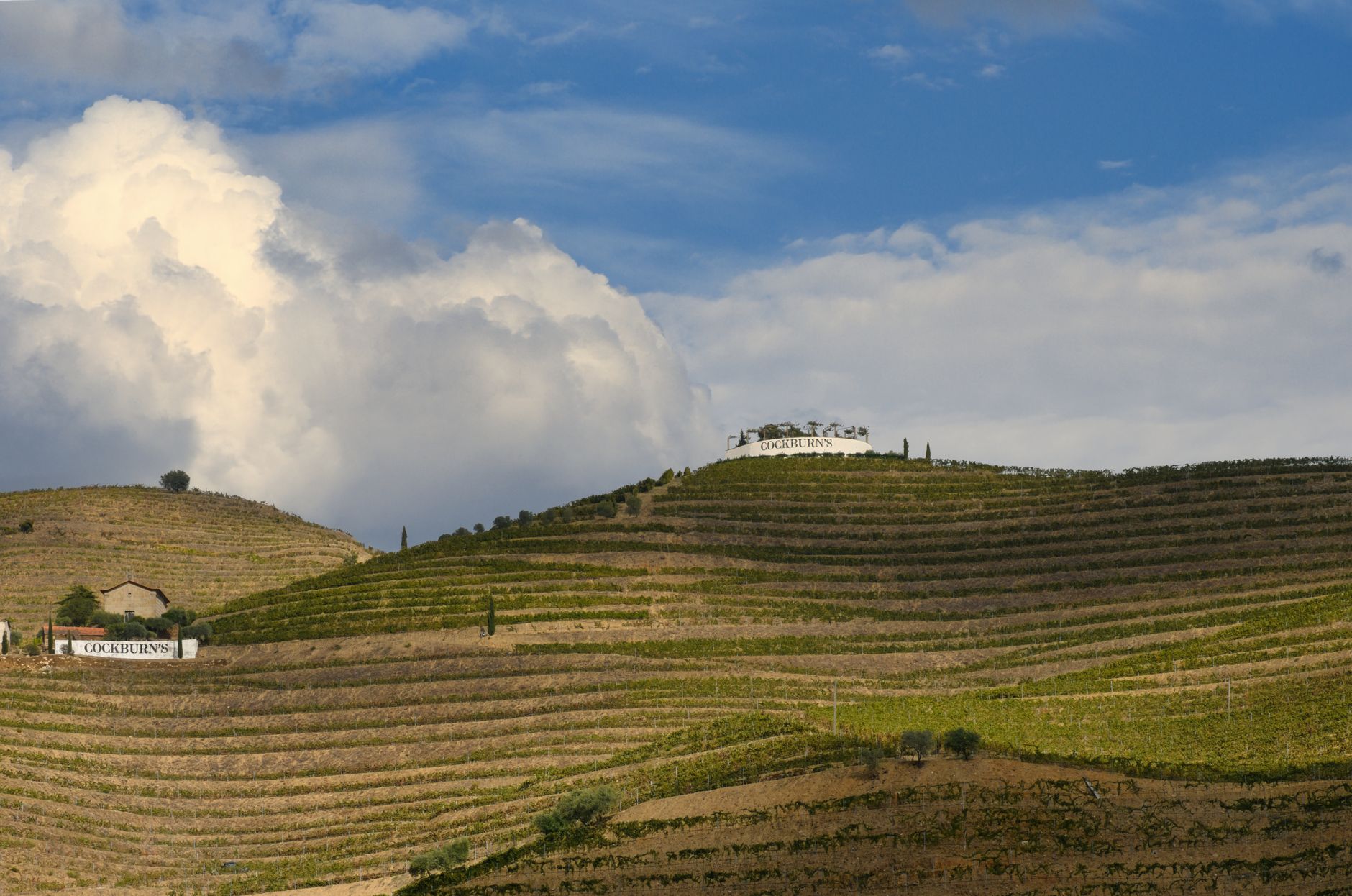
The territory of the Alto Douro Vinhateiro is not a natural landscape, but rather a monumental work sculpted through centuries of pickaxes, dynamite, and sweat. Located in northern Portugal, this deep valley carved between schist mountains represents one of the most formidable agricultural challenges on the planet. Here, the Douro River winds like a docile silver serpent beneath a leaden summer sky and a freezing winter dampness. The slopes plunge toward the riverbed with gradients exceeding sixty percent in many areas, forcing winegrowers to invent an artificial geography of stepped terraces known locally as socalcos.
This geometry of dry stone supports small earth platforms where indigenous grape varieties such as Touriga Nacional, Tinta Roriz, and Tinta Barroca sink their deep roots in search of moisture trapped within the rock’s core. The dark, brittle schist soil acts as a natural thermal plate: it absorbs scorching daytime heat during long summer days and slowly radiates it back to the grapes through the night. It is this radical thermal contrast that endows the fruit with a unique tannic concentration and vibrant acidity, preventing the wine from feeling heavy on the palate.
The Pulse of Manual Harvesting
When September arrives, the Douro terraces abandon their summer silence to become a bustling human anthill. Unlike other wine regions around the world where mechanical harvesters have replaced human labour, on the steep slopes of this valley mechanization is physically impossible. Harvesters, burdened with heavy wicker baskets strapped to their backs, must ascend and descend dizzying paths and unprotected stone staircases. Every cluster is cut by hand using traditional shears, selecting only those berries that have achieved exact phenolic ripeness under the interior Atlantic sun.
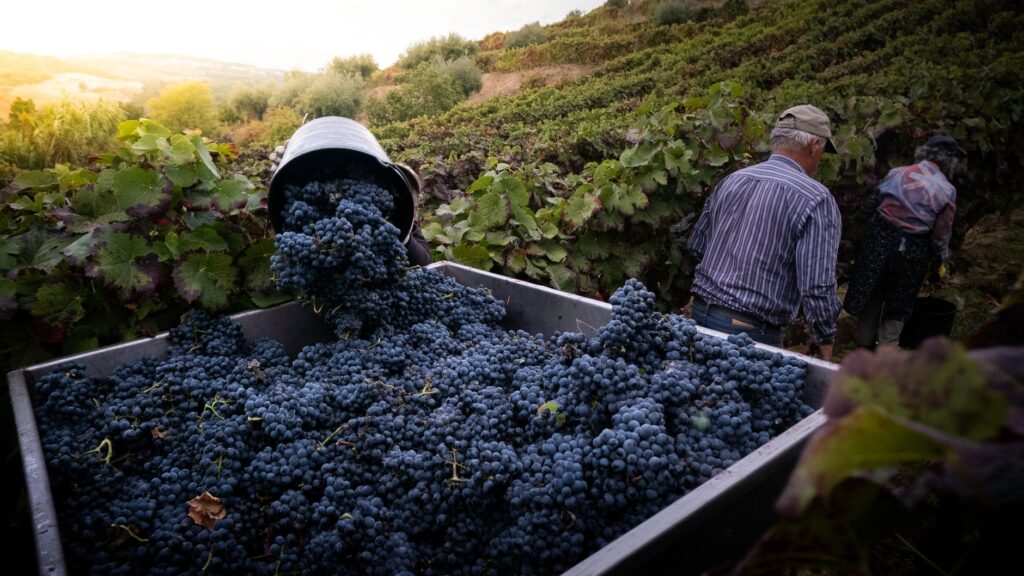
This reliance on human labour is not a matter of aesthetic romanticism, but an imperative necessity to ensure the integrity of the grape. Clusters must not break before reaching the fermentation vats, as any premature oxidation would ruin the delicate aromatic balance of the must. During these marathon shifts, men and women share a titanic physical effort, guided by accumulated generational knowledge that reads the climate by observing bird behavior and the direction of winds descending from the Castilian plateau.
The Ancestral Liturgy of the Granite Lagar
Once the harvest descends from the heights via off-road trucks or barges down the river, one of the most fascinating rituals in global oenology begins: the foot-treading of grapes in traditional granite lagares. Far from modern stainless-steel vats with digital temperature control, historic wineries located in municipalities such as Pinhão and Peso da Régua keep these large rectangular stone basins operational for the magic of extraction.
During the evening, following a communal dinner where simple broth and crusty bread compete in rustic charm, dozens of workers remove their shoes, wash their feet rigorously, and step into the lagar in tight rows. With arms locked shoulder to shoulder to maintain balance, the treaders begin a slow, rhythmic advance from one side of the tank to the other. This coordinated movement, known as corte, breaks the grape skins uniformly, releasing colour, tannins, and primary aromas without crushing the seeds, which would otherwise transmit unwanted bitterness to the wine.

Treading grapes in granite lagares is not a mere folkloric attraction, but the most respectful and efficient mechanical method ever conceived to extract the complex soul of steep-slope fruit.
The rhythm of the march inside the lagar is traditionally set by an accordionist or folk songs that help maintain cadence throughout the four to five hours of the initial maceration phase. The workers’ body heat and constant friction trigger spontaneous fermentation driven by indigenous yeasts present on the grape bloom. This intimate contact among human, stone, and fruit is directly responsible for the velvety texture characteristic of the finest Vintage Ports.
The Secret of Brandy and Interruption
The transformation of Port wine features a critical moment that sets it apart from any other fermented beverage in the world: the beneficio or fortification. At a precise point during alcoholic fermentation, when the grape’s natural sugar has partially converted into alcohol while still retaining a luscious sweetness, winemakers add a neutral, high-proof grape spirit. This addition instantly halts yeast activity, preserving natural residual sugars and raising the final alcohol content to around twenty degrees.
This process, perfected during the 18th and 19th centuries by British and Irish merchants settled in Oporto to ensure the wine could withstand long sea voyages to northern Europe, requires surgical precision. Too much brandy ruins the fruit; too little allows fermentation to continue, unbalancing the sweet and liqueur-like profile of the product. This is the moment when the wine ceases to be a simple fruit ferment and becomes a structured Port, capable of aging for decades or even centuries in the dim quiet of the cellars.

The Journey of the Cask and the Refuge of Gaia
Once stabilized in the Douro Valley, the liquid embarks on a historic journey toward the Atlantic coast. In the past, this transport took place aboard legendary rabelo boats, flat-bottomed vessels specifically designed to navigate the rapids, currents, and treacherous rocks of a river now tamed by hydroelectric dams. Today, tanker trucks leisurely transport the wine to century-old lodges located in Vila Nova de Gaia, on the southern bank of the Douro opposite the city of Porto.
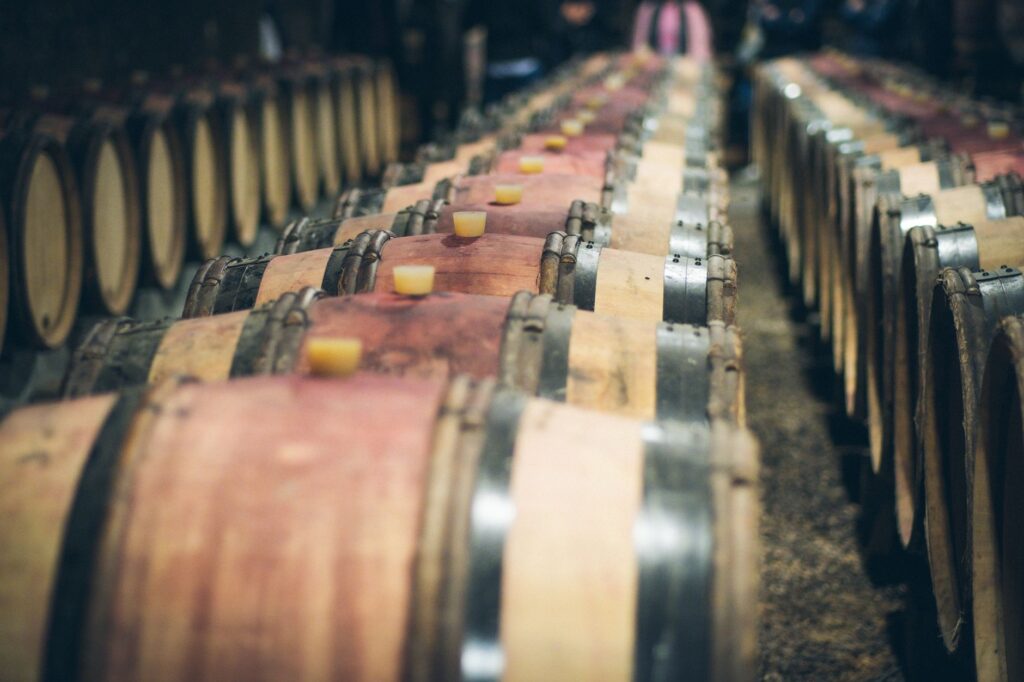
In these dark, silent warehouses enveloped in a perpetual aroma of damp oak and ancient dust, the wines rest in large wooden vats or smaller casks known as pipes. The cool, humid microclimate of Vila Nova de Gaia, heavily influenced by the proximity of the Atlantic Ocean, allows for slow and deliberate evolution. Here, professional tasters conduct periodic blind tastings to determine the destiny of each batch: whether they will continue oxidative maturation to become aged Tawnies, or preserve their fruit freshness in bottles to evolve into Ruby or Vintage Ports.
The Human Geography of the Quintas
Visiting the Upper Douro means stepping into a human ecosystem where quintas—the large wine estates dotting the valley’s slopes—act as self-sufficient micro-villages. Places like Quinta do Bonfim, Quinta do Vallado, or Quinta das Carvalhas preserve manor houses built from traditional masonry, surrounded by Mediterranean gardens and private chapels that bear witness to the deep religiosity and territorial roots of their former owners. In these domains, community life revolves around the agricultural calendar.
Local workers, many of them belonging to families tied to the same land for generations, combine vineyard care with the cultivation of small vegetable gardens and olive groves that yield vibrant, intense oils. The daily gastronomy of these quintas reflects the harshness of the environment: hearty bread and garlic soups, kid goat slowly stewed in iron pots with red wine and aromatic herbs, and pressed goat cheeses cured in natural caves. All washed down, naturally, with a dry regional white wine served well chilled as an aperitif beneath the shade of the porches.
The Challenges of Climate Change in Schist Terrain
Today, the Upper Douro faces the greatest challenge in its millennial history: global warming. Extreme heatwaves during the summer months cause severe water stress in older vines and artificially accelerate grape ripening, threatening to destabilize the acidity levels that grant longevity to Port wine. Local winemakers and researchers are responding to this crisis by recovering secondary grape varieties showing higher thermal resistance and replanting vineyards at higher altitudes and northern orientations within the valley, where solar radiation is less aggressive.

At the same time, ancestral soil management techniques are being rescued, such as using natural cover crops to retain scarce winter rainfall moisture and prevent erosion of the fragile schist. These measures demonstrate that sustainability in the Douro is not a contemporary trend, but a millennial survival strategy based on rigorous observation of the natural environment and absolute respect for the rhythms of the earth.
The true greatness of Port wine lies in its ability to converse with climatic adversity and transform barren stone into a liquid of infinite complexity.
Practical Information for the Oenological Traveler
Planning a trip to the Upper Douro requires time, patience, and a suitable vehicle to navigate winding mountain roads. The best time to visit the region coincides with the harvest season, between September and October, although spring offers an unforgettable visual spectacle with blooming almond trees and the intense green of new vines. The ideal starting point is the town of Peso da Régua, accessible by train from Porto via one of Europe’s most scenic railway lines, running parallel to the riverbed throughout the entire journey.
For lodging, numerous historic quintas have converted part of their facilities into high-end boutique hotels where guests can enjoy breakfast facing the terraces and participate in masterclasses led by resident winemakers. Advance reservations are essential for visiting major wineries both in the valley and in Vila Nova de Gaia, and hiring specialized local guides is recommended to understand the complex architecture of the territory. As for dining, local restaurants in Pinhão and Lamego offer honest produce-driven cuisine where wood-oven roasted kid goat and traditional egg-yolk conventual sweets are absolute musts.