
Introduction to the World Capital of Pasta
Naples is not merely a city; it is a collective state of mind where durum wheat semolina and mountain spring water transform into one of the most profound cultural expressions of the Mediterranean. Far from the automated industrial production lines that dominate global supermarkets, artisanal workshops in the historic quarters preserve a silent and demanding liturgy. Here, dry pasta is not a simple side dish, but the result of a millimetric balance between volcanic soil geology, the selection of ancestral wheat varieties, and the patience of hands that have spent generations kneading the future of Campania.
The traveller who ventures into alleyways such as Via dei Tribunali or the labyrinths of the Quartieri Spagnoli immediately perceives an unmistakable aroma: a dense mixture of toasted starch, marine humidity, and the warmth of stone ovens. This report delves into the bowels of Neapolitan workshops and food markets to document how a craft threatened by global standardization resists, analysing the scientific and anthropological keys that elevate a humble dish to the category of everyday haute cuisine.
The Geography of Durum Wheat and Volcanic Soil
To understand the unique texture of Neapolitan pasta, it is essential to look toward the interior of the region and the cereal plains of southern Italy. The durum wheat used in the finest artisanal workshops is not just any raw material; it comes from native varieties cultivated under rigorous crop rotation criteria in soils rich in volcanic minerals and clay. This land, marked by the imposing presence of Vesuvius, grants the grain an exceptionally high protein content and a gluten concentration of great elasticity.
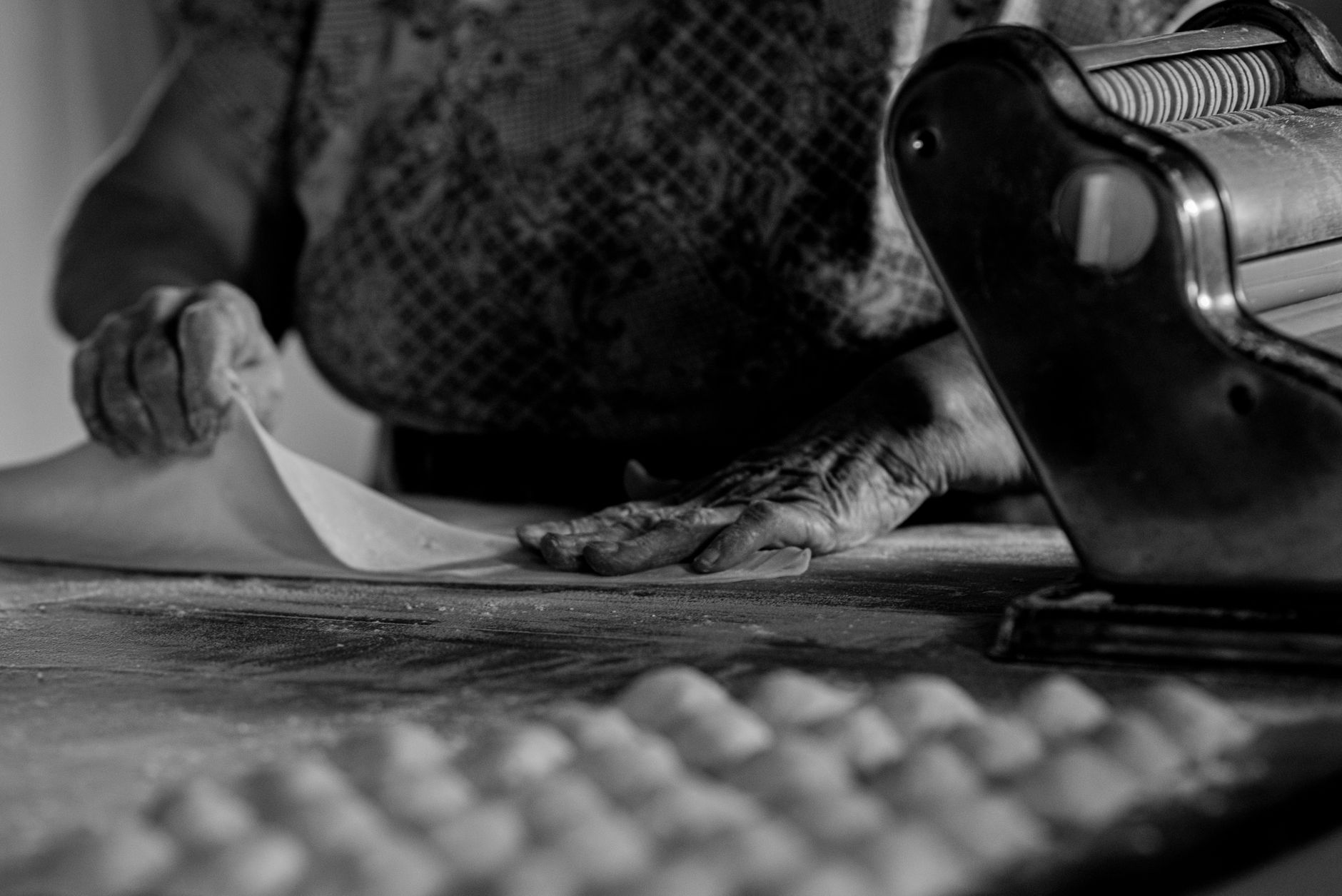
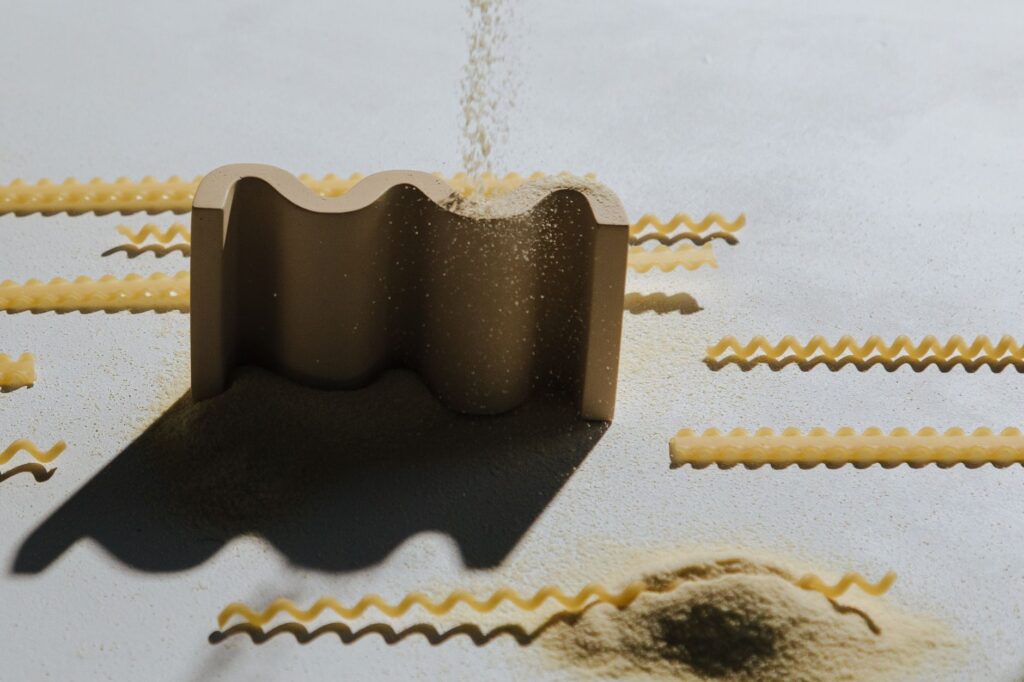
Unlike the soft wheat used in northern European baking, durum wheat requires specific milling that preserves the germ and bran in balanced proportions. Traditional millers insist that semolina must retain a rough touch, similar to fine beach sand. It is precisely this roughness that later allows the sauce to adhere inextricably to the surface of the piece, a fundamental physical principle that distinguishes culinary craftsmanship from mass industrial production.
The Water of Discord: Mineralization and Purity
There is an old debate among Neapolitan master pasta makers and those from other Italian regions regarding the role water plays in the final result of the product. The Neapolitan tradition firmly maintains that water originating from the underground springs of Mount Partenio and the aquifers of Campania possesses an ideal medium mineralization to hydrate durum wheat semolina without altering its molecular structure.
This water, characterized by a balanced presence of bicarbonates and calcium, interacts with gluten during the slow mechanical kneading phase, creating a dense and resistant protein network. In traditional workshops, controlling water temperature is an empirical science: too cold, and the starch will not fuse correctly; too hot, and premature pre-cooking will ruin the piece’s porosity. Artisans monitor this process with manual thermometers and decades of experience accumulated in family memory.
The Miracle of Bronze Dies
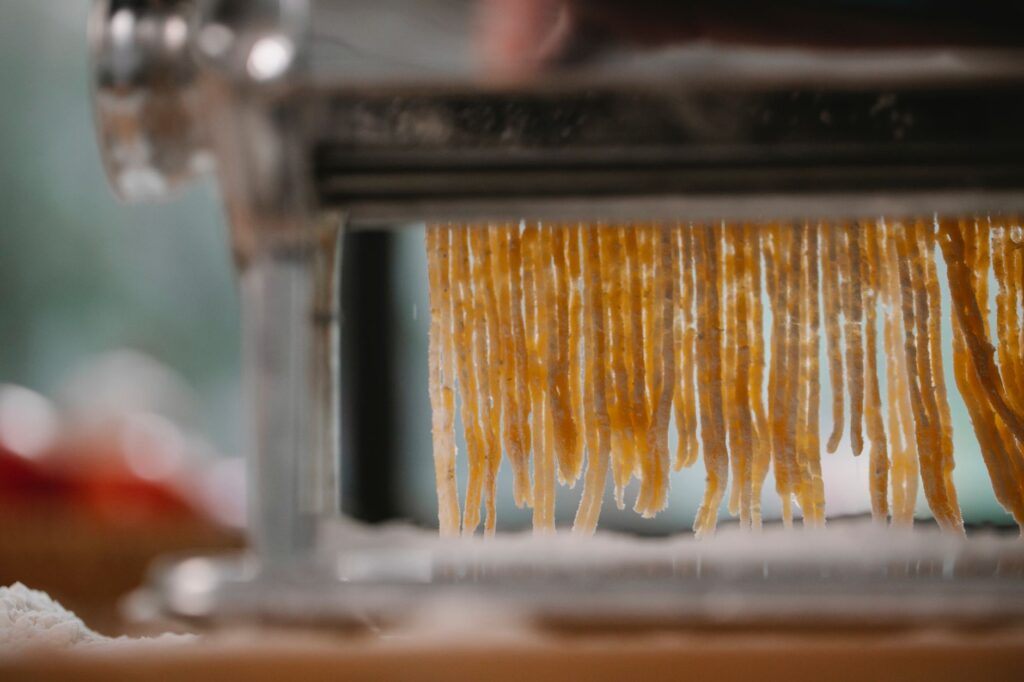
The technical heart of any artisanal pasta workshop lies in the die, the perforated mold through which the dough is pressed to give it its final shape. For more than a century, Neapolitan artisans have relied exclusively on solid bronze molds, locally known as fil di ferro or trafile in bronzo. This technical detail marks an unfathomable abyss compared to the Teflon molds used by modern industry.
When the pasta is extruded through the rough bronze, the product’s surface emerges marked with micro-grooves and an opaque, powdery texture. This microscopic porosity acts as a natural sponge during cooking and the absorption of the condiment’s juices. The use of bronze also requires much higher hydraulic pressure and constant wear on machinery, an economic tribute that true artisans gladly pay to guarantee the sensory excellence of the final product.
Pasta is not manufactured; it is cultivated, pampered, and sculpted with the patience of those who know that time is the most expensive invisible ingredient in the world.
The Forgotten Art of Static Drying
If extrusion defines the shape, the drying process determines the soul of pasta. In the past, the streets of Naples and the coastal towns of Torre Annunziata were crowded with long wooden racks where spaghetti and ziti were hung in the sun and sea breeze. Today, for reasons of food safety and quality control, the process takes place in static drying chambers, but the fundamental principles remain the same: slowness and extremely low temperatures.
While modern industry dries pasta in large industrial tunnels at temperatures exceeding ninety degrees Celsius in just three or four hours, artisanal workshops respect cycles ranging from twenty-four to seventy-two hours, always keeping the temperature below forty-five degrees. This gentle drying preserves essential amino acids, grain vitamins, and the natural ivory colour intact, preventing the starch from suffering burns that would destroy the authentic taste of the wheat.
Food Markets: The Temple of Fresh and Dry Produce
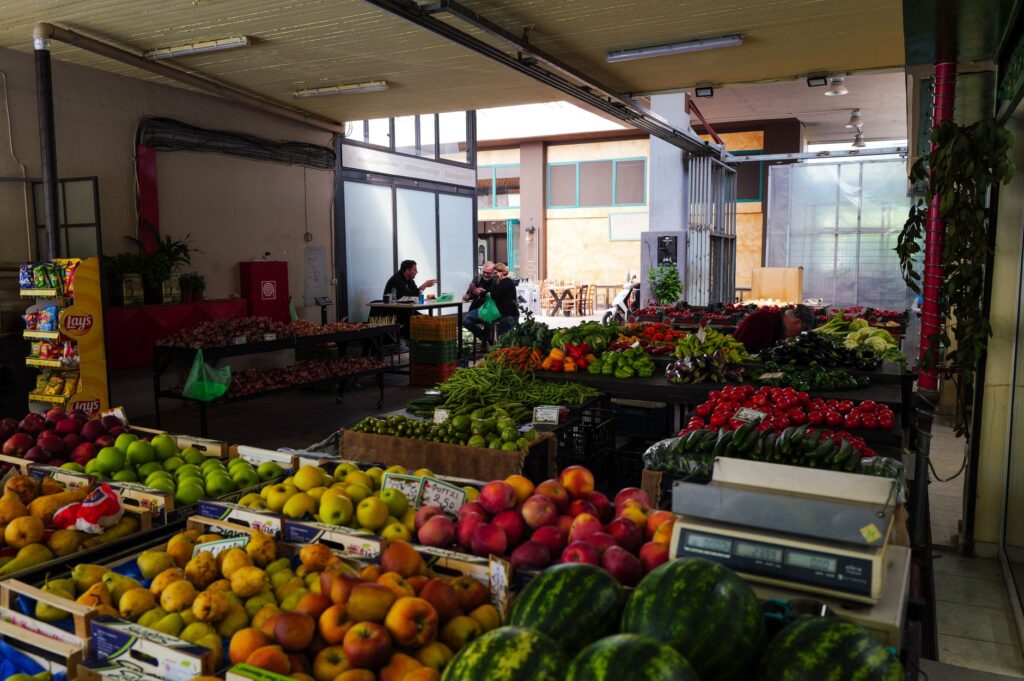
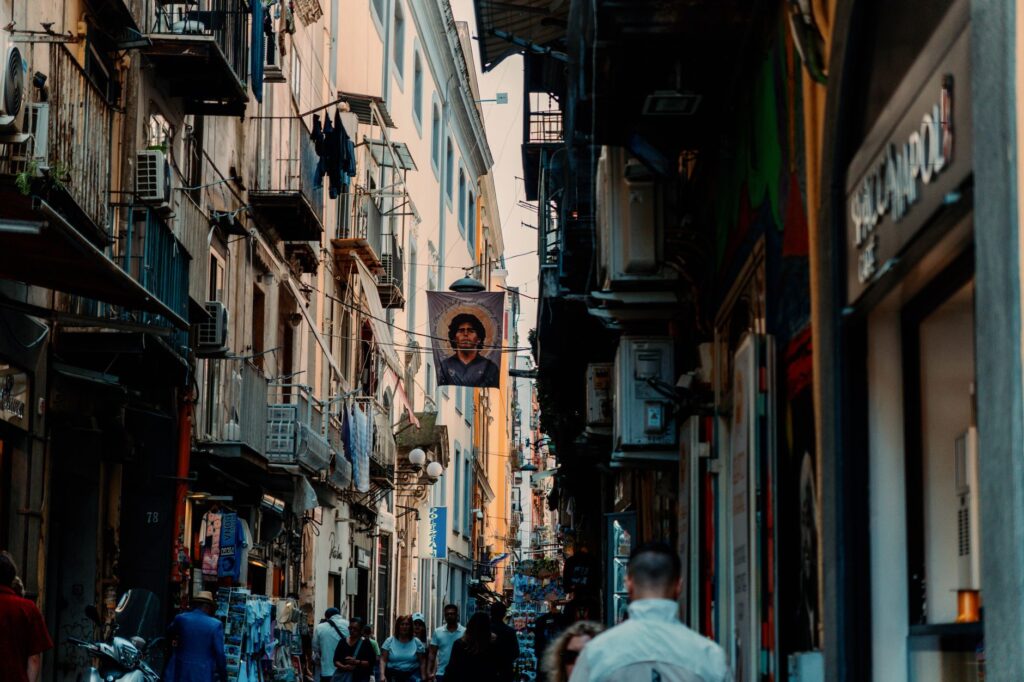
The journey through the culture of pasta in Naples would be incomplete without visiting its traditional markets, true anthropological amphitheaters where dry produce meets fresh ingredients from the garden and the sea. Mercato di Pignasecca and Mercato di Porta Nolana are two essential enclaves to understand the daily liturgy of the Neapolitan citizen.
Among stalls of fresh fish caught in the gulf, seasonal tomatoes grown on volcanic slopes, and bunches of intensely aromatic basil, vendors converse with customers about the virtues of each pasta shape. Here one learns that a plate of spaghetti alla Nerano demands a square-section format, while a Neapolitan ragù simmered slowly for eight hours claims the resounding presence of hand-cut ziti. These markets are not mere points of sale, but the living archive where recipes are passed down from mothers to children.
The Science of Cooking in Historic Restaurants
The culmination of this long process occurs in the kitchens of the city’s traditional restaurants, where cooking is treated with the rigor of a scientific ritual. In emblematic establishments of the historic centre, chefs reject any modern shortcut and operate under strict rules: plenty of boiling water, coarse sea salt added at the exact moment the water reaches a boil, and the absolute prohibition of covering the pot.
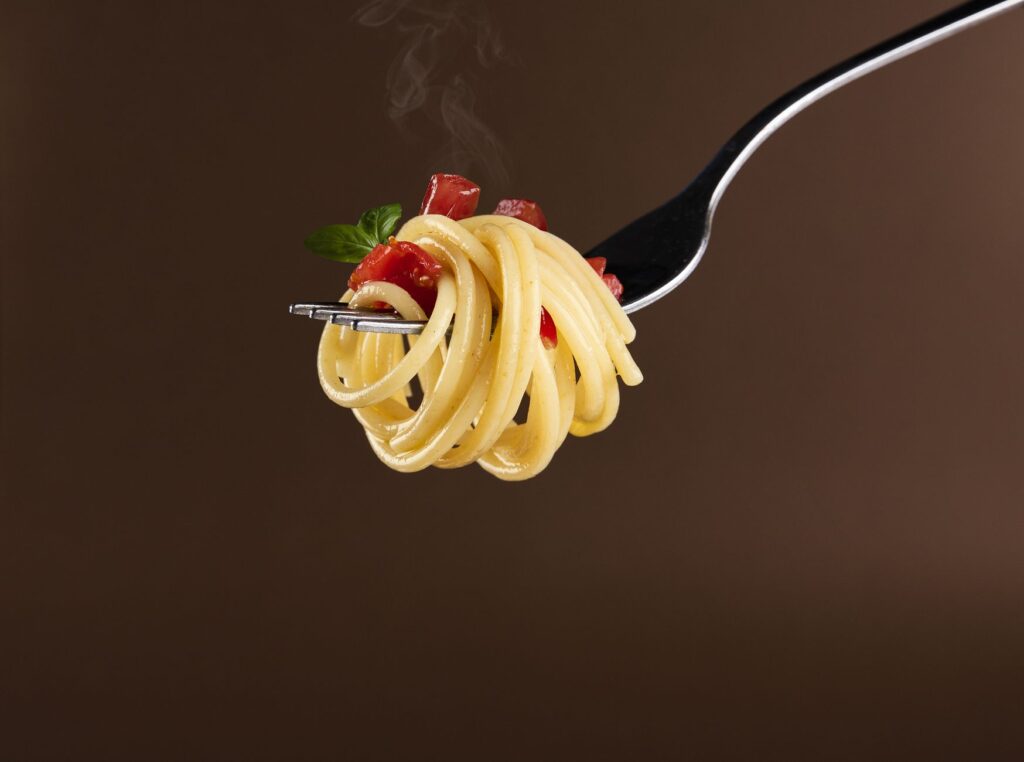
The cooking point is measured to the second, always seeking the coveted al dente state, where the core of the piece maintains a firm resistance when bitten, ensuring optimal digestibility thanks to the controlled gelatinization of the starch. The final phase, known in Italian as mantecatura, consists of emulsifying the starch released by the pasta with a little cooking water, extra virgin olive oil, and pecorino or Parmigiano cheese, creating a smooth cream that coats each strand without the need for artificial additives.
Practical Information for the Traveller and Gastronome
Planning a wine and food travel itinerary focused on Naples’ artisanal pasta requires avoiding conventional tourist routes and diving into authentic workshops. The best time to visit the region is during spring and autumn, when the climate allows exploring markets and workshops on foot without oppressive summer temperatures.
To visit historic workshops located in the neighbouring towns of Gragnano—considered the world cradle of quality dry pasta—it is essential to book weeks in advance, as most are family-run businesses with limited production that open their doors exclusively to researchers, journalists, and small groups of enthusiasts. As for accommodation, choosing small boutique hotels in the historic centre allows walking access to food markets and traditional trattorias where the true culinary essence of Campania is breathed.
True contemporary gastronomic luxury does not lie in the exoticism of distant ingredients, but in the ability to preserve authenticity and the honest effort of local trades.
Visual Closing: The Geometry of Everyday Food
At dusk, when market bustle subsides and amber lights begin to reflect on the damp cobblestones of via San Gregorio Armeno, Naples reveals its true timeless nature. In the shop windows of small grocers, rows of artisanal pasta packages, wrapped in kraft paper and tied with hemp string, line up like small works of domestic architecture. They represent the silent victory of tradition over haste, memory made food, and the irrefutable proof that, in a world obsessed with speed, slowness remains the most revolutionary ingredient in human cuisine.