The Plains Where Time Stands Still and Ferments
The Alentejo landscape unfolds before the traveler’s eyes like a sea of cork oaks, holm oaks, and infinite horizons where the Iberian Peninsula seems to expand to breathe at a different rhythm. In this vast southern quadrant of Portugal, food and wine are not mere consumer goods, but the direct result of a millennia-old adaptation to an extreme environment, lashed by scorching summers and winters of stony sobriety. Here, the pantry has historically been built upon the necessity of endurance, utilizing the resources offered by the earth with a parsimony bordering on ascetic elegance. Today, this seemingly immutable landscape embraces one of the most fascinating movements of heritage recovery in contemporary European gastronomy.
To understand the magnitude of what happens in the tables and cellars of this region, it is imperative to delve into its geology and oral memory. Local populations have preserved techniques dating back to the Roman occupation, a thread connecting today’s farmer directly to the potters of the past. In towns like Vila de Frades, considered the undisputed capital of talavera wine, clay is not merely a building material, but a living actor in the transformation of grape must. The absence of modern intervention—without commercial yeasts, without industrial temperature control, and without chemical additives—turns each vessel into a microcosm where terroir expresses itself with disarming frankness.
The Silent Liturgy of Clay: The Ancient Art of Talha
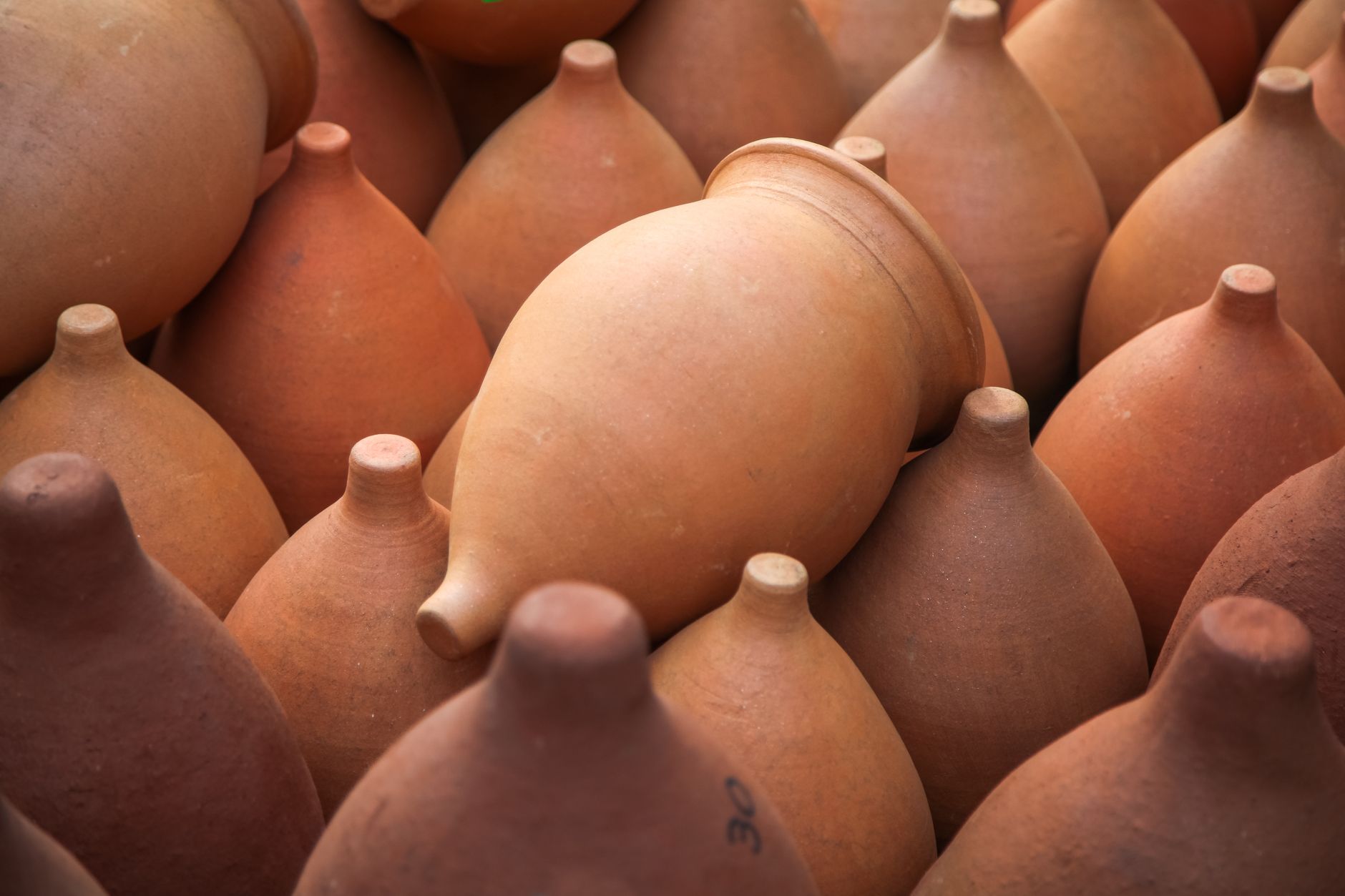
Entering a traditional Alentejo cellar, known locally as an adega de talha, requires shedding the prejudices of mechanized enology. These spaces, often located in modest whitewashed buildings, maintain a reverential silence broken only by the muffled sound of fermenting must inside large clay vessels. The talhas, true monuments of porous ceramics that can exceed two meters in height, are handcrafted by a handful of master artisans who keep a dying trade alive. Each vessel is unique, scarred by the irregularities of the fire and the hands that shaped it centuries ago.
The winemaking process in talha is a lesson in elementary physics and agricultural respect. After harvest, always done manually during the coolest hours of dawn, grapes are foot-trodden in stone lagares with whole bunches, including stems. This must, laden with skins and seeds, goes directly into the talha, where spontaneous fermentation begins, driven by native yeasts present on the skins and the clay walls. As solids rise to form a cap, winemakers perform traditional manual punching down or remontados with wooden paddles to maintain liquid contact. The result is a wine of unmistakable texture, with subtle oxidation and minerality reflecting the region’s clay and schist soils.
Talha wine does not seek technical perfection or global standardization; it is a liquid document narrating the exact history of a year, a parcel, and hands that refuse to forget their roots.
The Pantry of Scarcity: The Everyday Miracle of Alentejo Soups
If talha wine constitutes the liquid soul of this territory, cauldron and spoon cuisine represents its most visceral substrate. Traditional Alentejo gastronomy was born in the dehesas, where shepherds, laborers, and cork-strippers had to make do with basic ingredients to endure long workdays under the sun. Hard wheat bread, dense and with a compact crumb, is the absolute pillar supporting the entire local culinary structure. Far from being a mere accompaniment, stale bread transforms into the undisputed protagonist of iconic preparations such as açorda alentejana and migas à alentejana.
The açorda is, in its apparent simplicity, a pinnacle of global resourcefulness cooking. Generous amounts of fresh garlic, abundant cilantro, coarse salt, and a generous drizzle of extra virgin olive oil from the Galega variety—characterized by its sweet fruitiness—are crushed in a wooden mortar. Boiling water is poured directly over thin bread slices resting in this aromatic paste, crowning the dish with a poached egg whose yolk is broken at the last moment for creaminess. This ritual demonstrates how Alentejo cuisine extracts maximum expressive intensity from humble elements, prioritizing the potency of fresh herbs and the undisputed quality of plant fat.
From Wild Mountain to Table: Game, Wild Herbs, and Acorn-Fed Pork
As one ventures into private estates and protected areas of the Serra de São Mamede, the culinary offering evolves toward game and foraging products varying strictly by seasonal cycles. Iberian pork, raised in absolute freedom under centennial oak groves, acquires unique nuances here thanks to a diet based exclusively on acorns during the montanera season. Meats are cured in the cold mountain air or cooked with lard and paprika, yielding exceptional charcuterie such as Portalegre paiho or chouriço seasoned with garlic and white wine.
Alongside meat products, the Alentejo wilderness offers a botanical catalog that new-wave chefs are revaluing with scientific rigor. Wild asparagus, cardoon thistles, oyster mushrooms, and a wide variety of endemic aromatic plants enter restaurant kitchens practicing militant agrarianism. This is not theatrical avant-garde cuisine, but a contemporary reinterpretation scrupulously respecting traditional cooking times. The use of clay extends to cooking vessels over live fire, where hare, partridge, and lamb stews marinated in talha wine achieve profound gustatory melancholy.
The New Rural Vanguard: Chefs Turning to Clay to Reinvent the Future
In recent years, Alentejo has experienced a gastronomic renaissance driven by a new generation of cooks and winemakers choosing to bet on the territory rather than replicating global urban models. These professionals, trained in some cases in top international kitchens, have returned to their hometowns to prove high cuisine can and must anchor itself in local memory. Restaurants housed in restored old mills, secularized convents, and stately farmhouses now offer a refined, rigorous reading of historical recipes, collaborating closely with small local producers practicing regenerative agriculture.
This transition has not been without tension, but the model’s success lies in its unshakeable authenticity. Tasting menus at these establishments do not seek surprise through chemical artifice, but through the radical purity of seasonal produce. A simple dry-farmed tomato, dressed with early-harvest extra virgin olive oil and paired with fresh grazing goat cheese, becomes a sensory experience as complex as any high-tech creation. The complicity between the winemaker rescuing a forgotten talha and the chef recovering a grandmother’s recipe is the true engine of this economic and cultural miracle.
Practical Information for the Gastronomic Traveler in Alentejo
Planning an oenological and gastronomic trip through Alentejo requires understanding that distances in this region are wide and that the slow pace of its inhabitants must be adopted by visitors. The best time to tour the territory includes autumn months (September and October), coinciding with traditional harvest, and spring (April to June), when the countryside covers in a green, flowery patina facilitating wild herb foraging. Renting a vehicle is essential to access small family wineries scattered among Évora, Beja, and Portalegre.
Most adegas de talha are artisanal family projects operating outside commercial wine tourism standards. Consequently, it is a strict rule to book visits in advance and show sincere interest in traditional processes. Regarding accommodation, historic pousadas and rehabilitated rural estates offer immersive stays where local cuisine is served in central courtyards. Booking tables in traditional taverns across towns like Évora, Estremoz, and Borba is strongly recommended, where cauldron cooking remains daily routine rather than tourist attraction.
The Horizon of Clay: A Legacy Defying Homogenization
Facing the unstoppable tide of culinary globalization, which tends to uniformize flavors and detach foods from their origins, Alentejo stands as a bastion of cultural resistance. The survival of its talha wines and survival recipes is not an exercise in museum nostalgia, but a declaration of principles on real sustainability. When diners sit at an Alentejo table tasting clay-fermented broth or rye bread soup with wild herbs, they consume living history and a model of respectful environmental relationship.
This territory proves the future of culinary excellence does not necessarily lie in technological complexity, but in the depth of connection with the land. The golden plains of Alentejo, with their silence, relentless sun, and millenary clay, continue teaching the world that true wealth consists of listening to what the environment grants without forcing its limits. A journey to these lands is, ultimately, a reconnection with the essential foundations of human food culture.
Preserving the memory of clay and cauldron is not looking backward with melancholy, but ensuring future generations continue savoring the incorruptible truth of the earth.