Introduction to the Territory of Ancestral Sweets
There are geographies where the air perpetually smells of roasting, of cane sugar melted in copper cauldrons, and of the noble fat of freshly cracked Marcona almonds. The southern coastline of the Valencian Community and its interior regions harbor one of the most complex and deeply rooted confectionery traditions in the Mediterranean basin. Far from the summer tourist hustle of the coast, the daily pulse of this territory beats within food markets and centuries-old workshops where time seems measured by the cycles of the nut harvest and the arrival of the first autumnal chills.
Alicante’s Central Market, a modernist cathedral of iron and light inaugurated in the first half of the twentieth century over ancient defensive walls, is not merely a food provisioning point. It is the great agora where the produce of the Vega Baja orchard, daily catches from the fishermen’s guild, and, most notably, the legacy of the Alicante mountains converge. Here, the stalls dedicated to dried fruits and traditional confectionery safeguard a gastronomic heritage whose roots stretch back to the Andalusian era, when the combination of rosemary honey and crushed almonds ceased to be a mere preserved ration and transformed into the pinnacle of high pastry.
The Architecture of Iron and Earth Produce
Walking through the subterranean and upper naves of the Central Market demands a deliberate, unhurried gaze. Beneath the main vault, natural light filters through geometric mounds of almonds with skins, peeled kernels ready for grinding, and compact blocks of hard and soft turrón that defy the seasonality of the calendar. The vendors, true oral archivists of local memory, patiently explain to buyers the substantial difference between the Marcona almond—characterized by a rounded shape, high fat content, and buttery texture—and secondary varieties like the Planeta or Largueta. This botanical and edaphic distinction forms the undisputed foundation upon which the excellence of the final product rests.

In stalls dedicated to local produce, the arrangement of merchandise reflects an almost liturgical aesthetic. There are no unnecessary artifices; quality is communicated through the toasted ivory color of the nut, the amber glow of pure bee honey harvested in the region’s natural parks, and the sobriety of packaging that has barely changed in a century. The regular clientele, largely composed of residents from the historic neighborhoods of Santa Cruz and the Center, seeks direct traceability and expert guidance from the artisan, establishing a mutual trust that impersonal mass retail can never replicate.
The Journey Inland: Jijona and the Turrón Valleys
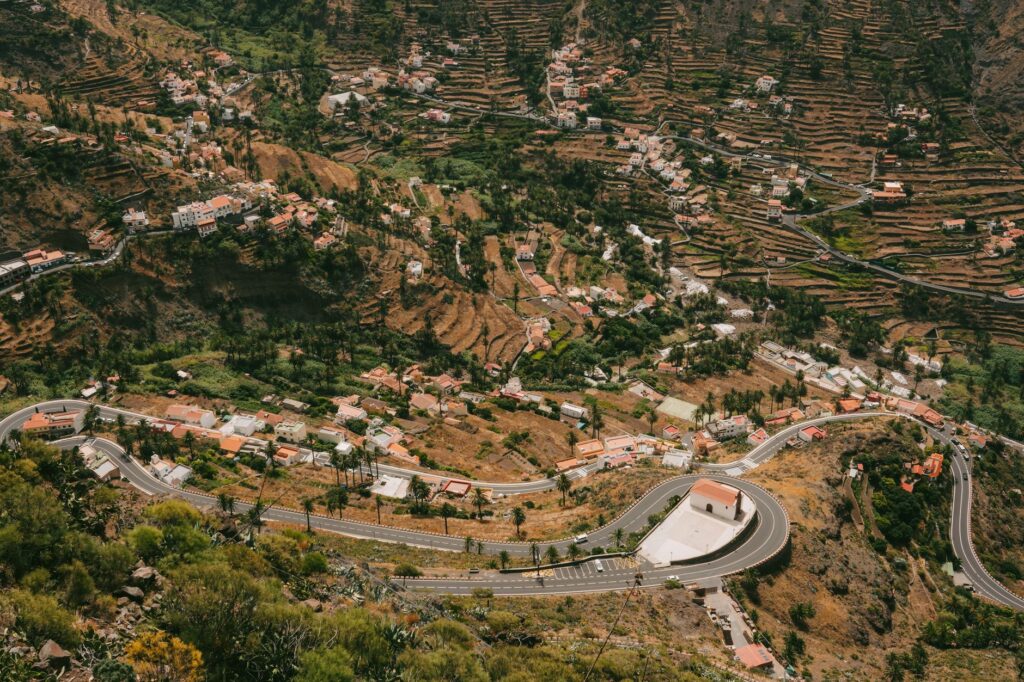
To fully grasp the magnitude of this gastronomic culture, it is essential to leave the coastal strip and ascend the winding road leading to the highlands of Jijona and Busot. The landscape changes drastically: citrus groves and irrigated orchards give way to terraced slopes of centuries-old olive trees and, above all, extensive fields of almond trees covering the calcareous hillsides of the Carrasqueta and El Maigmó ranges. It is this mid-mountain environment, marked by sharp daily temperature fluctuations, that endows the local almond with its unmistakable organoleptic properties.
In this interior territory, old water mills situated along the Canyoles riverbed were converted centuries ago into family-run workshops. Inside, the silence of the valley contrasts with the steady rhythm of the *boixets*—mechanical or manual paddles used to stir the paste inside copper cauldrons—and the dense aroma emanating from slow boilings. The production of turrón tolerates neither haste nor industrial shortcuts; it demands millimeter precision in fire temperatures and considerable physical strength when whitening the mass on marble tables.
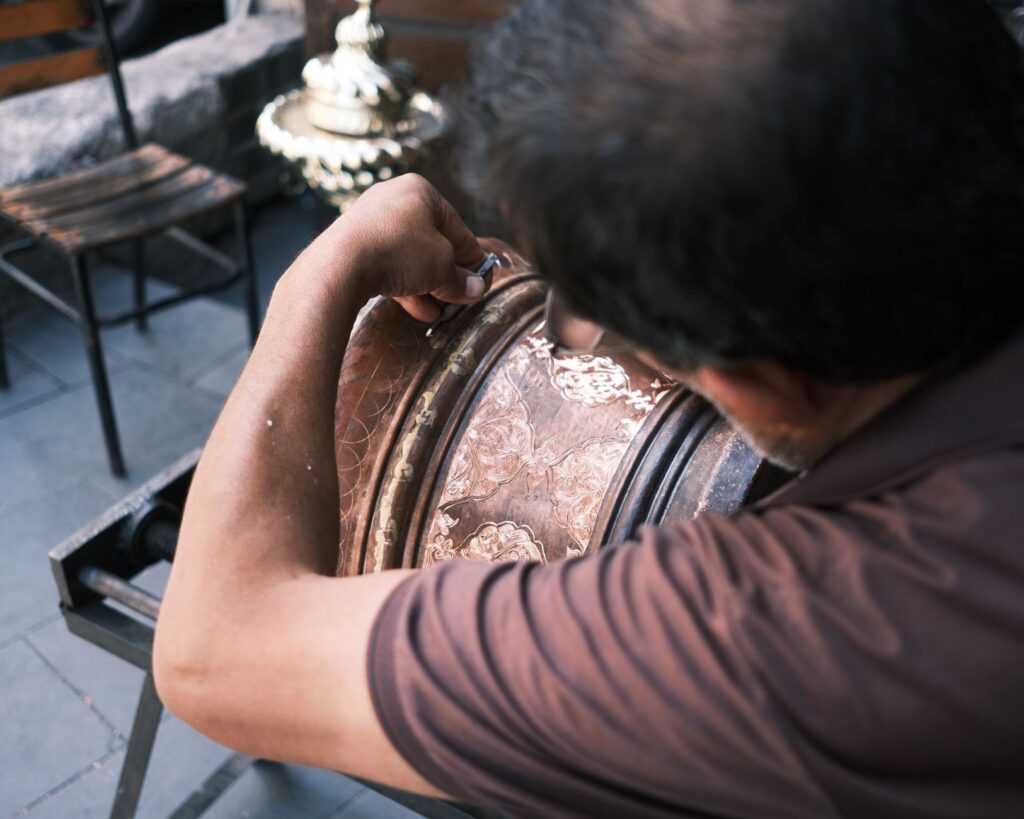
Turrón is not merely a Christmas sweet exported to international display cases; it is the edible crystallization of an arid yet generous landscape where man learned to tame time through the fat of the almond and the sweetness of honey.
The Chemistry and Technique of the Boixet
The process of transforming the almond into Jijona turrón—the soft, fudge-like variety—or Alicante turrón—the hard, crunchy version protected by a translucent wafer—constitutes a marvel of traditional culinary chemistry. Everything begins with the rigorous selection of the fruit, which, after being blanched and gently peeled, is roasted in rotating metal drums until achieving an exact point of dryness without bitterness. Simultaneously, in copper peroles, pure honey is cooked with whipped egg whites, generating a stable, foamy emulsion that acts as a binding agent.
The critical phase of production lies in achieving the right boiling stage and incorporating the toasted almond. In the case of Alicante turrón, the whole nut is mixed with caramelized honey and quickly poured into molds before the mass solidifies entirely. For Jijona turrón, the procedure extends over hours: the hot paste is transferred to the *boixets*, where it is mechanically crushed and refined until achieving a homogeneous emulsion where the natural oils of the almond fully integrate with honey and sugar. This refining technique remains a trade secret passed down strictly from generation to generation.
The Role of Satellite Markets in the Province
Although Alicante’s Central Market acts as the metropolitan flagship, the province features a network of municipal markets where this sweet and dry-produce culture unfolds with distinct nuances. The Alcoy food market, nestled in a deep industrial gorge, stands out for its interior pastry offerings tied to the Moor and Christian festivities, where meat pastries coexist with mantecados and almond specialties. Meanwhile, the Villena market brings the imprint of the Manchegan plateau and its proximity to cereal fields and high-mountain apiculture.
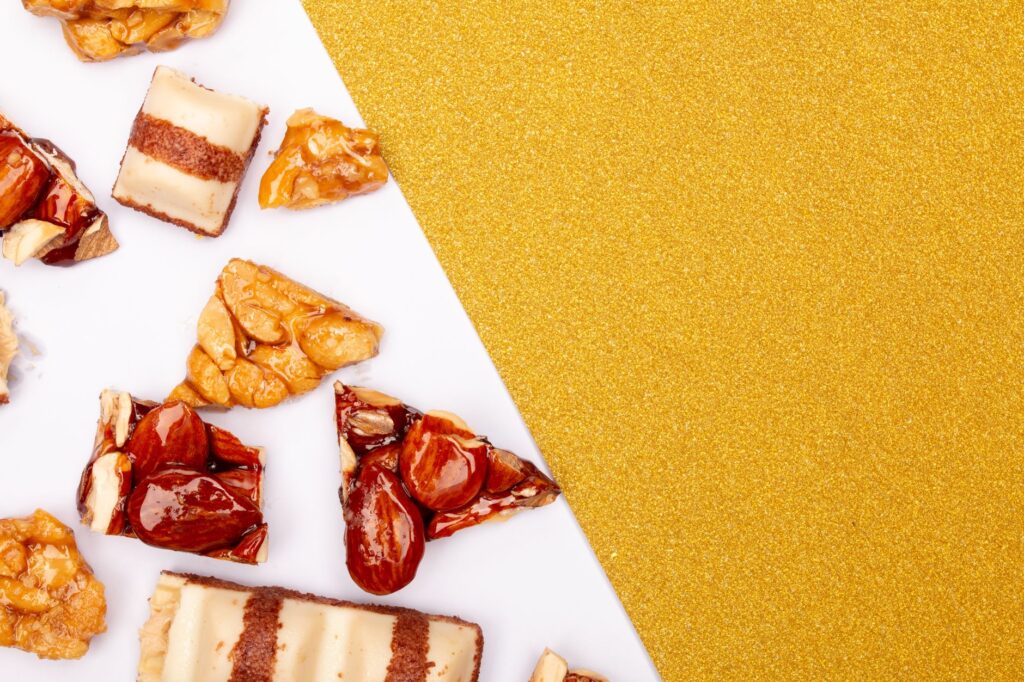
These commercial spaces act as social and economic thermometers for their respective communities. Within them, one observes how food craftsmanship resists the homogenization of large retail spaces. Small family stalls keep their counters open thanks to a loyal clientele that values the botanical origin of ingredients, the absence of artificial preservatives, and scrupulous respect for the original proportions dictated by nineteenth-century manuscript recipes.
Innovation and Vanguard on Centuries-Old Foundations
Far from remaining anchored in immobility, contemporary pastry chefs and turrón makers in the region have learned to converse with haute cuisine without renouncing their traditional foundations. In recent years, internationally renowned pastry chefs have collaborated closely with Jijona workshops to deconstruct turrón and apply it to unprecedented textures: fine emulsion ice creams, fluid pralines for haute chocolaterie, light foams, and even savory reductions designed to accompany game meats from the Alicante mountains.
This openness toward gastronomic vanguard has not meant a break with the past, but rather a validation of its versatility. The use of Marcona almonds and rosemary honey now extends to oily fish emulsions, seasonal salad vinaigrettes, and sourdough bakery bases. Young master confectioners understand that authentic culinary modernity does not consist of inventing exotic flavors detached from the territory, but rather of deepening the understanding of indigenous ingredients through absolute mastery of technique and food science.

The true haute cuisine of this territory does not lie in laboratory artifices, but in an artisan’s ability to repeat the exact same manual gesture for forty years and consistently produce a flawless result.
Practical Information for the Traveler and Gastronome
Planning a rigorous itinerary through Alicante’s Central Market and the interior valleys requires keeping in mind several fundamental operational guidelines to ensure an authentic experience respectful of local rhythms.
Location and Hours of the Central Market: Situated on Avenida de Alfonso el Sabio, it opens Monday through Saturday from 7:00 AM to 2:30 PM. The early morning hours are ideal for observing fresh produce at its peak and conversing with vendors without crowds.
Access to Jijona Workshops: The town is located about 30 kilometers north of Alicante via the A-7 highway and the CV-800 road. Most historic confectioneries and turrón museums operate on weekday business hours, though booking guided tours of active production zones in advance is highly recommended during the months leading up to the Christmas campaign.
Responsible Purchasing Criteria: When acquiring artisan turrón or bulk almonds, always look for the Protected Geographical Indications (PGI) Turrón de Jijona and Alicante, as well as quality seals guaranteeing the exclusive use of indigenous almonds over mass imports from other latitudes.
Accommodation and Dining: To complete the journey, interior villages like Busot, Torremanzanas, or Jijona offer small rural guesthouses linked to local agriculture, where visitors can enjoy traditional menus based on mountain broths, game charcuterie, and spoon desserts made with honey and almond.
Visual Close and Memory of Flavor
Leaving Alicante’s Central Market with the lingering aroma of toasted almonds clinging to memory, one understands that a people’s true wealth lies in its capacity to preserve slowness against contemporary haste. The aisles of this temple of provisions, much like the silent workshops perched on the interior mountain ranges, demonstrate that the most enduring gastronomy is one sustained upon three unwavering pillars: absolute respect for the land, rigorous transmission of the craft, and the intimate conviction that flavor is, above all, a form of shared knowledge.