Introduction to Isolation and Extreme Geography
The Atacama Desert, widely regarded as the most arid place on the planet in northern Chile, is not merely a landscape of lunar vistas and pristine skies ideal for astronomical observation. It is, above all, a vast and complex theatre of logistical operations where geography dictates severe laws for human mobility and freight transport. At over two thousand meters above sea level, amidst salt flats and gravity-defying mountain ranges, the survival of both the mining industry and local communities depends on a rail and road network as resilient as it is invisible to mainstream tourism.
For more than a century, mineral extraction has defined the purpose of the tracks crisscrossing Chile’s northern territory. From saltpeter to lithium and copper, every ton extracted from the earth demands a transport system capable of withstanding brutal thermal amplitudes, saline corrosion, and an absolute lack of fresh water. Understanding the functioning of this network is not merely a technical exercise, but an anthropological approach to how humanity has managed to weave threads of steel and asphalt into one of the harshest environments on Earth.
The Historical Genesis of the Mining Railway
The history of mobility in northern Chile is intrinsically linked to the sodium nitrate boom during the late 19th and early 20th centuries. The former nitrate mining camps, now preserved as melancholic UNESCO World Heritage sites such as Humberstone and Santa Laura, were born through the expansion of the railway. Pioneer steam locomotives had to carve their way through the endless pampa to connect inland deposits with Pacific shipping ports like Iquique and Antofagasta.

This railway legacy laid the groundwork for today’s transport infrastructure. Although much passenger rail service declined with the rise of paved highways and automotive transport in the mid-20th century, the railway skeleton never truly vanished. It was adapted, modified, and modernized by mining corporations needing to move massive cargo loads consistently, transforming the tracks into the economic backbone of the Antofagasta and Atacama regions.
Engineering and Technical Challenges at Altitude
Operating heavy freight trains at altitudes exceeding 3,000 meters above sea level presents formidable physical challenges. As elevation increases, atmospheric pressure drops, reducing combustion efficiency in the diesel engines of locomotives. Railway operators in Atacama must deploy specialized engine configurations, adapted turbochargers, and oversized cooling systems to prevent overheating on steep gradients under the relentless desert sun.

Furthermore, the infrastructure battles corrosion caused by salt flat salinity and intense ultraviolet radiation. Ties and rails suffer extreme thermal expansion between day and night, forcing maintenance teams to perform meticulous, constant inspections. Track geometry, featuring sharp curves and abrupt grade changes, demands exceptional technical mastery from engineers, who must command dynamic braking on prolonged descents to prevent catastrophic derailments.
The Lithium Corridor: From Salt Flats to Seaports
In the twenty-first century, the undisputed protagonist of Atacama transport is lithium. The Atacama Salt Flat hosts one of the world’s largest reserves of this white metal, essential for the global energy transition and the manufacture of electric vehicle batteries. Transporting lithium carbonate and hydroxide from processing plants located in the heart of the salt flat to northern shipping ports is an operation requiring millimetric logistical precision.
Although a significant share of this commodity moves via high-tonnage trucks along Route 23-CH, integration with rail branches remains vital to guarantee large-scale sustainability and efficiency. Trains link intermediate storage hubs with the port terminals of Antofagasta and Mejillones, optimizing operating costs and reducing the carbon footprint of an industry that paradoxically fuels the global green revolution.

The apparent stillness of the Atacama Desert conceals an incessant flow of metals and energy; over steel rails weathered by time, the saltpeter past and technological future converge beneath a single relentless sky.
Human Mobility and Isolation in Local Communities
While heavy freight dominates major industrial itineraries, passenger transport in northern Chile has undergone a profound transformation. Historical passenger train routes connecting isolated towns have ceded ground to intercity buses and private all-terrain vehicles. Nevertheless, for Atacameño and Chango indigenous communities, road connectivity remains an essential lifeline.
Villages like San Pedro de Atacama, Toconao, and Socaire rely on well-maintained road networks for basic goods, medical services, and the development of sustainable tourism. Digital and physical connectivity in these high-altitude oases is no longer a luxury, but a fundamental human right to prevent the depopulation of ancestral territories that have resisted aridity for millennia.
The Strategic Role of the Ports of Antofagasta and Mejillones
No analysis of Atacama’s transport network would be complete without examining its maritime terminals. The ports of Antofagasta and Mejillones act as safety valves for international trade, linking mining trains and trucks with South Pacific and Asian shipping lanes. These ports have undergone profound modernization in their cargo transfer systems to minimize environmental impact and maximize container and bulk carrier turnaround times.
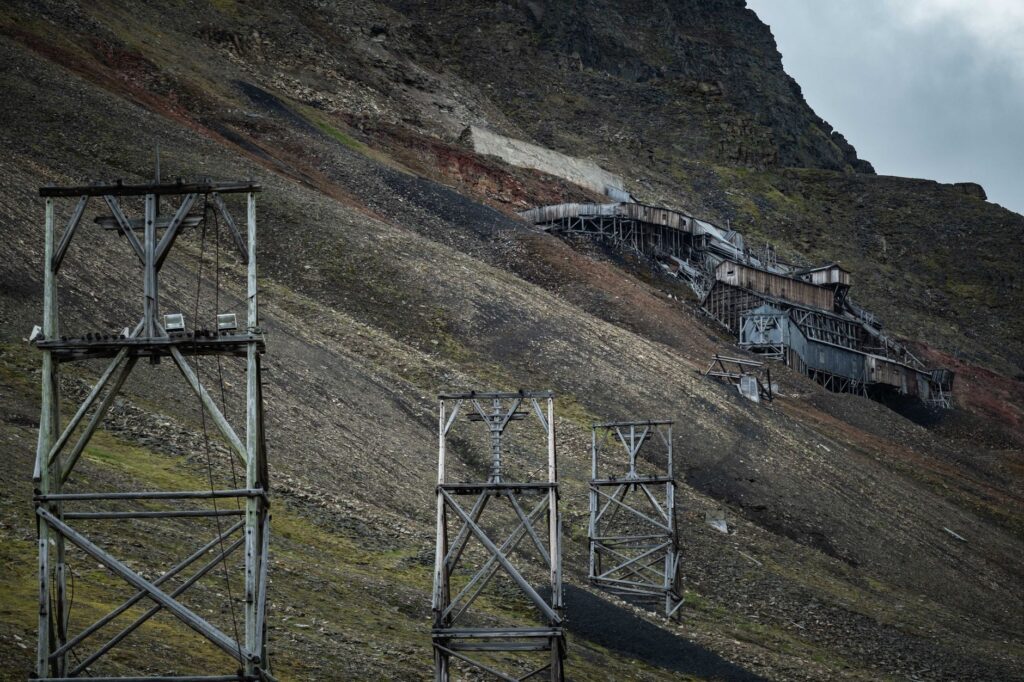
Synchronization between freight train arrivals and vessel schedules requires highly digitized logistics control centers. A delay on the rail line caused by adverse weather conditions in the mountains can destabilize the entire international supply chain, demonstrating the vulnerability and interdependence of this critical infrastructure.
Sustainability and Energy Transition in Desert Transport
The future of transport in the Atacama Desert faces the imperative of decarbonization. While rail is inherently more efficient than road transport, the Chilean mining industry is actively exploring the use of locomotives powered by green hydrogen and synthetic fuels. Given the region’s massive solar energy potential, electrifying primary routes via local photovoltaic farms is shifting from a chimera to a strategic medium-term objective.

Reducing greenhouse gas emissions within the copper and lithium supply chains is a growing demand from international markets, particularly in Europe and North America. Railway operating companies in northern Chile are investing in cleaner fleets and regenerative energy management systems during downhill braking, proving that even in the most extreme environments, innovating toward sustainability is possible.
Practical Information for Travelers and Transport Researchers
For engineers, geographers, or travelers interested in studying Atacama’s transport infrastructure on-site, rigorous planning is essential. The primary operational base is the city of Antofagasta, well-connected by air to Santiago. From there, renting a four-wheel-drive (4WD) vehicle is strictly necessary to navigate routes parallel to the railway tracks and visit mining complexes and salt flats.
- Climate and Gear: Temperatures fluctuate drastically between 30 °C during the day and sub-zero values at night. Layered technical clothing, high-spectrum sun protection, and abundant water are mandatory.
- Permits and Safety: A large portion of railway lines and industrial areas are private property owned by mining concessionaires. Trespassing on rights-of-way without express authorization is prohibited.
- Altitude Sickness: Spending at least 48 hours in coastal cities like Antofagasta before ascending to areas above 3,000 meters is recommended to prevent altitude sickness (soroche).
- Connectivity: Mobile phone signals are non-existent across vast stretches of the pampa and mountains; satellite communication devices are strongly recommended for study expeditions.
Studying Atacama’s arteries reveals that the true wealth of this land lies not only in its metals, but in the human daring capable of keeping movement alive at the edge of the world.
Conclusion: The Steel Horizon in the Vastness
The transport system in the Atacama Desert represents a silent triumph of engineering over geographical hostility. Through rails defying altitude and roads cutting across endless horizons, this network secures a nation’s economic sustenance while fueling the global energy transition. Far from being a mere merchandise channel, this logistical corridor stands as living testimony to human perseverance, where every freight train crossing the pampa reaffirms that even in the driest place on Earth, the pulse of movement never stops.