For over a century, the Western Ghats—the formidable mountain range locally known as the Sahyadri mountains—stood as an impassable wall between the strategic ports of southwestern India and the sprawling financial hub of Mumbai. While British-era railway lines painstakingly skirted the inland Deccan plateau or halted abruptly before the granite escarpments and dense rainforests, the coastal Konkan strip remained isolated, reliant on sluggish sea ferries and hazardous mountain roads vulnerable to catastrophic landslides. Taming this coastal corridor with a continuous railway line was considered, for generations, a civil engineering impossibility due to the steep terrain, raging rivers, and a torrential monsoon regime that dumps over three thousand millimeters of rain in barely four months.
Today, the Konkan Railway is not merely one of South Asia’s greatest modern engineering achievements, but the logistical backbone for passenger and freight transportation along the subcontinent’s western seaboard. Conceived and constructed in the 1990s under the vision of legendary engineer Elattuvalapil Sreedharan, this 741-kilometer rail artery dramatically slashed travel distances between the megacities of Maharashtra, the coastal plains of Goa, and the industrial centers of Karnataka and Kerala. Navigating this network reveals a sophisticated operational dance combining high-speed transit, real-time geological monitoring systems, and unprecedented resilience against the untamed forces of nature.
The Geological Challenge of the Western Ghats: The Konkan Gap
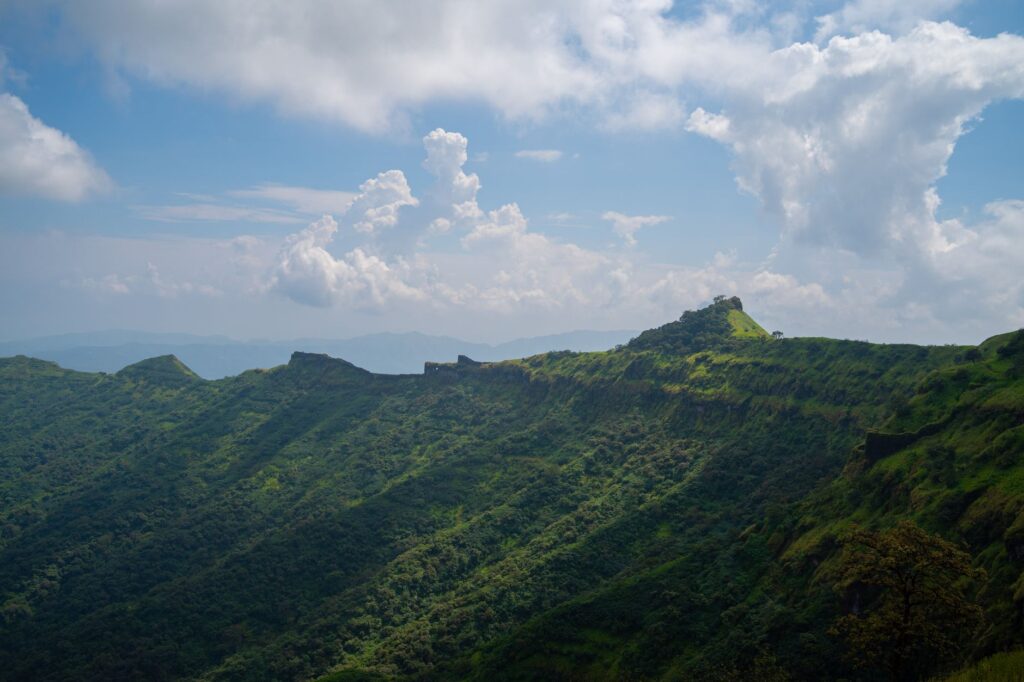
The terrain traversed by the Konkan Railway is a complex geological puzzle composed of dense basalt, highly unstable laterite clays, and deep ravines carved by fast-flowing rivers descending from the inland plateau to the Arabian Sea. During the colonial era, British railway engineers surveyed the route multiple times between 1894 and 1928. However, successive official reports concluded that the exorbitant financial costs and the anticipated loss of human life during tunneling operations in unstable soils rendered the project unviable.
The lack of a railway bottlenecked the economic evolution of the coastal strip for most of the twentieth century. Transporting prized agricultural commodities such as Alphonso mangoes, cashews, and spices—as well as the movement of labor toward the Mumbai metropolitan region—relied on a fragile road network. When the Konkan Railway Corporation Limited (KRCL) was formed in 1990 as a public enterprise under the Indian Ministry of Railways, it was tasked with constructing the line through an innovative Build-Operate-Transfer (BOT) model, facing a topography that demanded unprecedented engineering solutions within the nation.
«The Konkan line was not merely constructed across the landscape; it was built through an ongoing dialogue with one of the planet’s most unstable and dynamic geologies.»
Sreedharan’s Engineering Saga: 741 Kilometers of Infrastructure Breakthroughs
Under the leadership of E. Sreedharan, famously known as India’s ‘Metro Man’, construction was divided into coordinated sectors managed from four primary project headquarters: Roha, Ratnagiri, Panaji, and Karwar. The project required driving 91 tunnels totaling a combined length of over 84 kilometers. Chief among them was the Karbude Tunnel, which at 6.5 kilometers held the record for years as India’s longest railway tunnel, piercing through volcanic rock formations and high-pressure underground aquifers that required specialized mechanical tunnel boring machines and ground-freezing methods.
In addition to the extensive underground network, the Konkan Railway necessitated the construction of 2,000 bridges, including 179 major structures crossing broad river estuaries and deep mountain gorges. To maintain a smooth maximum ruling gradient of 1 in 150 (0.67%), allowing heavy freight trains to traverse the terrain without banking locomotives, engineers designed viaducts of extraordinary structural scale. The entire line was completed in a record time of eight years, opening for full commercial operations in January 1998 and setting a benchmark for global transport infrastructure projects.
The Panval Viaduct and Zuari River Bridge: Landmarks of Structural Engineering
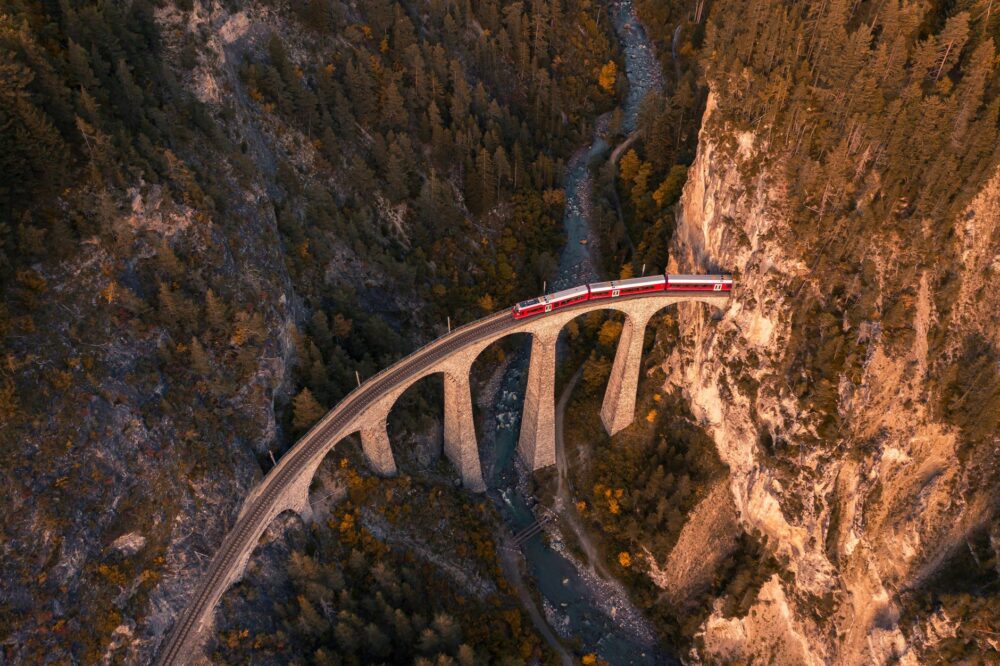
Among the countless civil engineering feats along the line, the Panval Nadi Viaduct stands out as a triumph of structural design. Soaring 64 meters above the valley floor near Ratnagiri, it was at the time of its completion the tallest railway viaduct in Asia. Constructed using the incremental launching method for the prestressed concrete girders, the structure rests on colossal hollow piers engineered to withstand seismic forces and the fierce monsoon winds that regularly sweep through the valley.
Further south in the state of Goa, the line crosses the expansive Zuari River over a bridge spanning more than one kilometer, supported by deep pile foundations sunk into the muddy riverbed. The aggressive marine atmosphere and fluctuating water flow demanded specialized anti-corrosive coatings and continuous ultrasonic testing of the steel structure. Crossing these bridges provides passengers with a sense of floating high above the intricate tapestry of lush coconut groves, estuaries, and dense tropical foliage that characterizes the coastal landscape.
Confronting the Monsoon: Safety Protocols and Weather Resilience
The greatest daily operational challenge facing the Konkan Railway is not its geometry, but the monsoon. Between June and October, the region experiences torrential downpours that saturate the laterite soil, causing rockfalls and slope failures above the tracks. In the line’s early years, severe derailments caused by unpredictable landslides prompted KRCL to pioneer the Monsoon Operational Protocol, now recognized globally as a model for railway risk management in high-precipitation zones.
During the monsoon season, maximum train speeds are reduced from 110 km/h to 75 km/h or 90 km/h depending on the service tier. The corporation deploys over a thousand track patrolmen who inspect every kilometer of the line on foot day and night. High-tensile steel netting covers vulnerable cliff faces, electronic inclinometers monitor unstable slopes, and automated rockfall hazard sensors are tied directly into the signaling network. Additionally, shotcrete applications and deep drainage boreholes relieve hydrostatic pressure in the tunnels, ensuring operational continuity under extreme weather conditions.

The Ro-Ro Innovation: Intermodal Efficiency and Logistics Revolution
Beyond passenger mobility, the Konkan Railway revolutionized heavy freight logistics in India by introducing the Roll-on/Roll-off (Ro-Ro) service in 1999. This system enables fully loaded heavy commercial trucks to drive directly onto flat rake railcars at the outskirts of Mumbai (Kolad) and be transported to the outskirts of Mangalore (Surathkal), covering a distance of over 700 kilometers in approximately 20 hours.
The Ro-Ro system bypasses the congested and dangerous national highways (NH-66 and NH-48), sharply reducing diesel consumption, carbon emissions, and highway wear. Truck drivers travel in dedicated passenger coaches attached to the freight train, allowing them to rest while their vehicles travel by rail, ensuring swift delivery of perishable goods and industrial cargo. This intermodal concept has become a template for logistical modernization across other rail corridors in South Asia.
«The Konkan network’s Ro-Ro service demonstrated that true intermodality is not just about moving shipping containers, but about taking heavy highway freight off congested roads and placing it on rails.»
From Mumbai’s Gates to Tropical Kerala: A Visual and Human Journey
Journeying aboard the trains of the Konkan line offers an ever-shifting panorama of South Asian life and landscape. Departing from Mumbai’s historic terminals such as Chhatrapati Shivaji Maharaj Terminus (CSMT) or Panvel, the train transitions rapidly from dense suburban sprawl to the mountain forests of Maharashtra. Picturesque stations like Chiplun and Ratnagiri serve as critical agricultural hubs for the region’s famous produce.

As the tracks continue southward into Goa, station architecture adopts distinct Portuguese colonial influences, while the rails skirt past flooded paddy fields and rivers carrying iron-ore barges. Entering Karnataka through the coastal port town of Karwar, and advancing toward Udupi and Mangalore, the landscape turns into a tropical canopy of coconut palms and coastal shrines against the backdrop of the Arabian Sea, offering travelers an intimate perspective on the cultural tapestry of peninsular India.
Practical Traveler’s Guide: Services, Rolling Stock, and Route Planning
Navigating the Konkan Railway efficiently requires an understanding of the diverse passenger train categories operating along the route. Options range from superfast express services and overnight sleeper trains to modern high-speed day liners.
- Key Train Services: Premier trains include the flagship Konkan Kanya Express and the Mandovi Express connecting Mumbai with Madgaon (Goa), alongside the semi-high-speed Vande Bharat Express, which features distributed power traction for rapid acceleration through the mountain gradients.
- Class Selection: For panoramic viewing, book Vistadome coaches available on services like the Jan Shatabdi Express, featuring glass roofs and large observation windows. For overnight travel, First AC (1A) or Two-Tier AC (2A) offer climate-controlled comfort across long stretches.
- Crucial Railway Hubs: Roha marks the northern interchange point; Madgaon (Goa) serves as the central catering and operational node; and Thokur/Surathkal defines the southern boundary where the line meets the Southern Railway zone.
- Ticketing and Timetables: Advance reservations via the official IRCTC portal are essential, as demand spikes dramatically during festivals like Ganesh Chaturthi. Always check the official Monsoon Timetable between June and October, as schedules are adjusted for safety precautions.
Electrification, Track Doubling, and Future Prospects
In April 2022, the Konkan Railway achieved a landmark operational goal: the 100% electrification of its entire 741-kilometer main line using 25 kV AC overhead catenary systems. This milestone eliminated reliance on heavy diesel locomotives, dramatically lowering operating costs and reducing greenhouse gas emissions by thousands of tons annually. Electric traction has also enhanced train performance on steep mountain grades.

The current strategic priority for the network is track doubling. Originally constructed as a single-track line with passing loops at stations, rising passenger demand and freight density have pushed capacity limits. Ongoing track doubling projects across key bottleneck sections will significantly expand line capacity, paving the way for higher frequencies and next-generation high-speed passenger operations connecting northern and southern commercial centers.
The Enduring Legacy of a Lifeline Rail Corridors
The saga of the Konkan Railway illustrates how transformative transportation infrastructure can redefine the destiny of an entire region. By overcoming natural barriers that isolated coastal communities for centuries, the railway did not merely spur economic growth, tourism, and resource distribution; it proved that rigorous engineering and environmental adaptability can operate in sustainable alignment.
Riding this line today—whether watching a Ro-Ro freight train glide silently across the Panval Viaduct or watching morning mist rise off the Western Ghats rainforests from a train window—is an encounter with human ingenuity amidst formidable nature. The Konkan Railway remains an enduring testament to how geographic boundaries can be bridged to foster enduring regional unity and economic progress.