
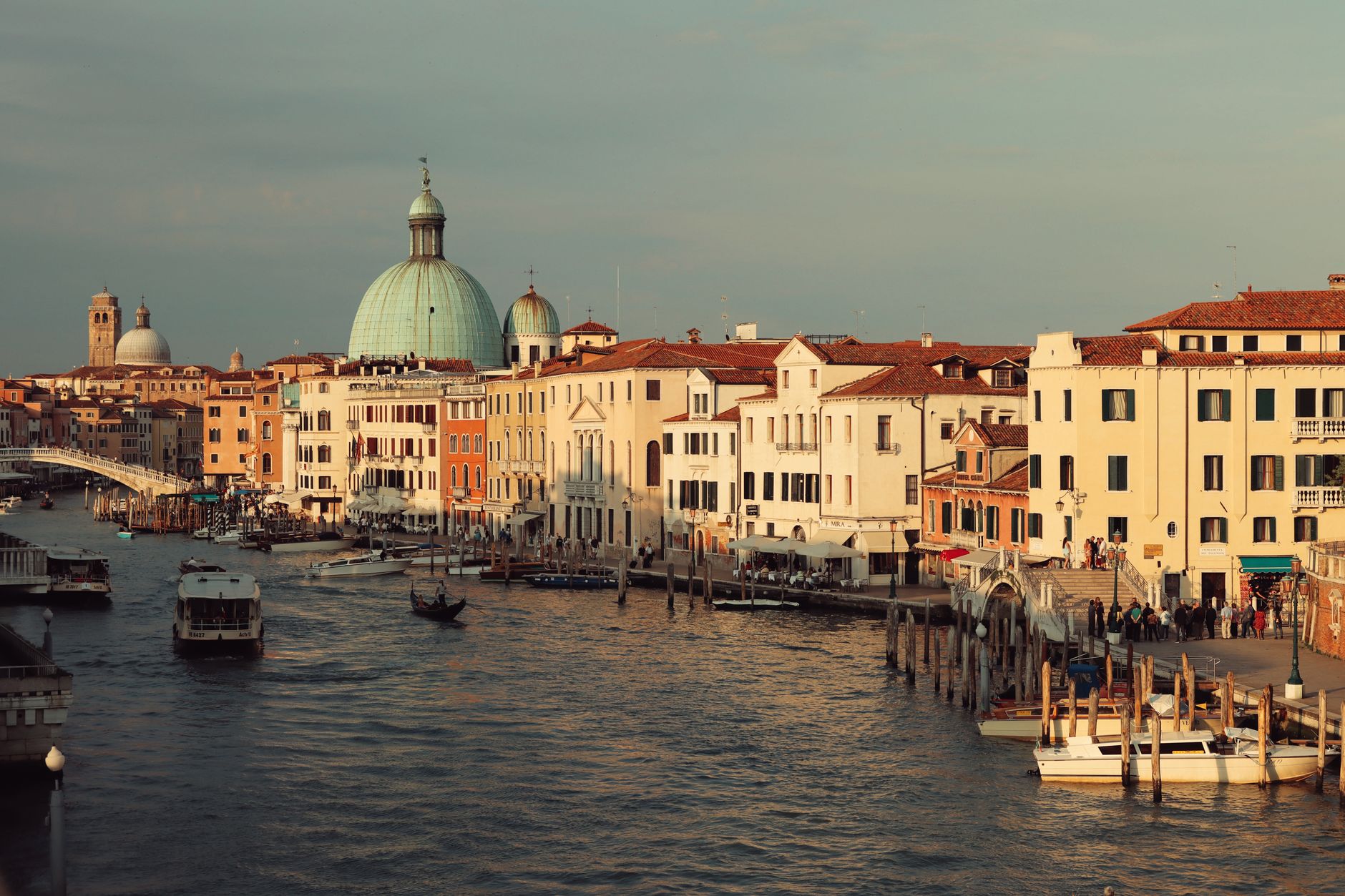

Venice, the mythical city of canals and floating palaces, faces a silent yet devastating paradox. For centuries, its foundations of larch and oak piles, buried beneath the mud of the Adriatic, have resisted the passage of time thanks to the complete absence of oxygen. However, the true enemy of the Serenissima does not emerge from the deep, but from the surface. The constant movement of diesel-powered motorboats generates a phenomenon known locally as moto ondoso: a relentless, artificial wake that strikes the brick walls of the canals, eroding mortar and destabilizing the foundations of centuries-old buildings. In this delicate ecosystem, the transition toward a sustainable, low-impact water mobility is not merely an ecological choice; it is, quite literally, a matter of architectural and cultural survival.
The Scourge of Moto Ondoso and the Urgency of Change
To understand the urgency of electrification in Venice, one must comprehend the physics of its canals. Unlike natural waves in the open sea, the wake generated by internal combustion engines in narrow canals becomes trapped, bouncing from one wall to another and multiplying its erosive power. This constant pounding washes away the sediment protecting the wooden piles, leaving the structure vulnerable to microbiological attack and mechanical wear. Furthermore, soot and acidic emissions from traditional diesel engines accelerate the degradation of Istrian stone and marble on Gothic and Renaissance facades.
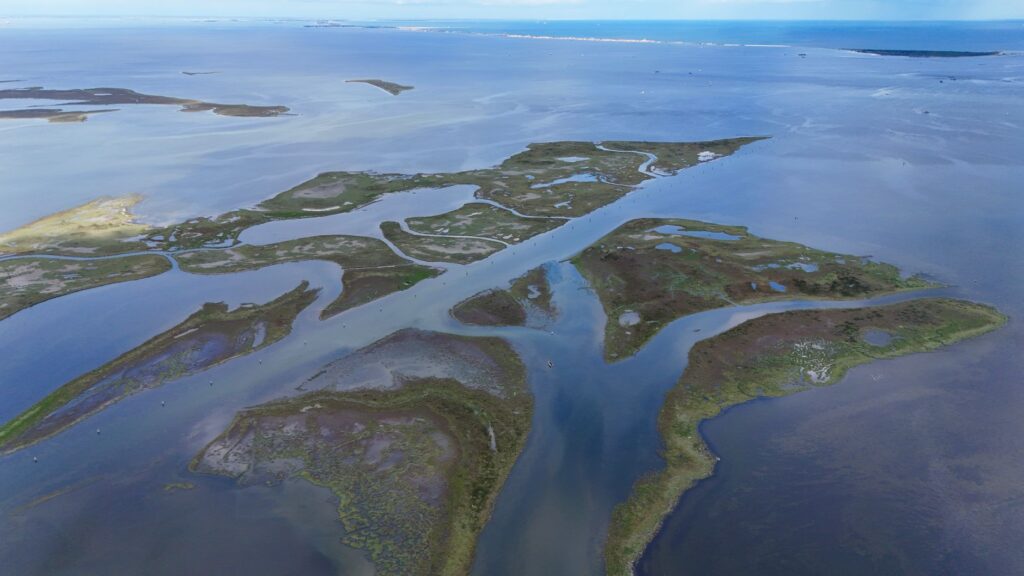
The scientific community and local conservationists have warned for decades that the current transport model is unsustainable. The public transport fleet, composed of the iconic vaporettos, along with thousands of water taxis (motoscafi) and delivery boats, burns millions of liters of fuel annually in a closed and highly fragile geographic area. Underwater noise pollution, caused by the constant roar of conventional propellers, also disrupts the lagoon’s rich biodiversity, affecting fish and bird species that inhabit the salt marshes or barene. In response, Venice has initiated one of the most complex and fascinating technological overhauls in modern naval engineering.
«The energy transition in Venice’s canals is not just about carbon neutrality; it is an indispensable structural conservation tool to ensure the city continues to exist on water.»
Electrifying the Floating Giants: Hybrid and Electric Vaporettos
The heart of Venetian public transport is managed by the public company ACTV. Its vaporettos—heavy steel vessels designed to transport hundreds of passengers simultaneously—are the equivalent of metropolitan buses in any major city. Electrifying these giants presents formidable technical challenges, primarily due to battery weight and the need to maintain uninterrupted service for more than twenty hours a day. The solution has begun to materialize through a strategy of hybridization and segmented electrification.
On routes crossing the Grand Canal, such as the iconic Line 1, hybrid diesel-electric propulsion systems of the latest generation are being progressively introduced. These vessels operate in pure electric mode, with zero emissions and near-absolute silence, while navigating the narrowest and most vulnerable inner canals. Upon entering the open waters of the San Marco basin or heading toward the Lido, the internal combustion engines—optimized to run at maximum efficiency and minimum emissions—kick in to recharge the onboard lithium batteries. This hybrid approach reduces fuel consumption by more than thirty percent and completely eliminates the low-frequency vibrations that damage historic docks.

Electric Hydrofoils: The Lift Revolution on the Water
While hybrid vaporettos form the backbone of mass transit, the introduction of electric hydrofoil technology represents a quantum leap in reducing moto ondoso. Inspired by aerospace engineering, these vessels use submerged wing profiles that, upon reaching a certain speed, lift the boat’s hull completely above the water’s surface. By not dragging the hull through the water, hydrodynamic drag is drastically reduced, cutting energy consumption by up to eighty percent compared to a conventional boat.
Pioneering models like the Candela P-12, an all-electric hydrofoil passenger vessel, are undergoing rigorous trials in the lagoon. By literally flying over the water, these vessels generate a nearly imperceptible wake, only a few centimeters high. This means they can travel at significantly higher speeds than current lagoon limits without causing damage to the shores or the foundations of the palaces. The combination of direct-drive electric motors and computer-controlled digital stabilization systems ensures a smooth, silent, and completely clean journey, redefining the experience of water travel.
The Invisible Infrastructure: Charging Posts and the E-Concept Network
One of the greatest obstacles to the widespread adoption of electric navigation in any port is charging infrastructure. In Venice, this challenge is multiplied exponentially due to strict architectural and aesthetic regulations. It is impossible to install modern industrial charging stations next to Baroque facades or 17th-century stone bridges. The solution has required high-precision industrial design and deep respect for local heritage.

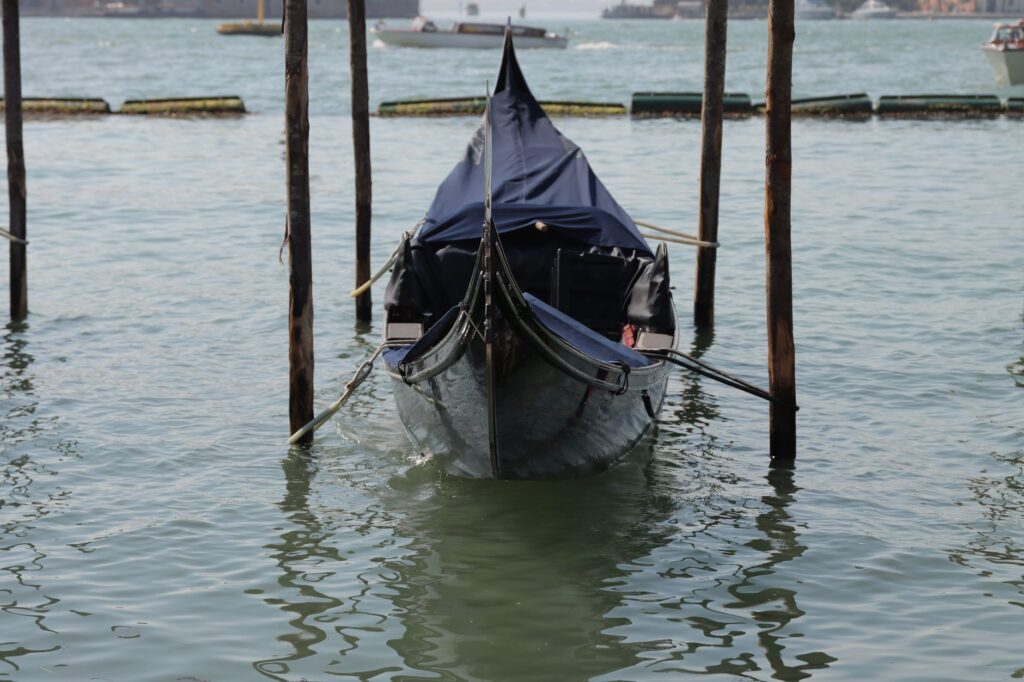
The E-Concept initiative has led the development of the so-called electric paline. The paline are the traditional oak wooden poles that line Venetian canals, historically used for mooring boats and defining navigable channels. The E-Concept project has successfully integrated high-power rapid charging systems invisibly inside these cylindrical structures, using composite materials that perfectly mimic the texture and appearance of natural wood. In this way, the charging infrastructure blends seamlessly into the historic urban landscape, allowing water taxis and delivery boats to plug into the grid during loading and unloading operations without altering the city’s visual character.
«The electric paline proves that cutting-edge technology does not need to disrupt the aesthetic harmony of a UNESCO World Heritage site to be extraordinarily functional.»
Preserving Heritage and the Traveler’s Experience
The transition toward a silent and clean lagoon radically transforms the experience for the conscious traveler. Visitors to Venice today must often look past the persistent smell of burning diesel and the deafening roar of traditional vaporetto engines echoing through the narrow waterways. Electric navigation restores Venice’s original atmosphere: a city where the dominant sound is once again the gentle lapping of water against stone, the murmurs of passersby, and the cries of seabirds.
Traveling aboard an electric vaporetto along the Grand Canal at sunset becomes an almost mystical experience. Without the constant rattle of the diesel engine, passengers can appreciate the majesty of palaces like the Ca’ d’Oro or the Palazzo Pisani Moretta in reverent silence. This technological shift fosters a higher quality of tourism, inviting visitors to slow down and attune themselves to the delicate nature of an urban ecosystem fighting for its survival.
The Technical Challenge of Salinity and Tides
Implementing electrical systems in a marine environment as aggressive as the Venetian lagoon poses extreme engineering challenges. Saltwater is a highly corrosive natural electrical conductor, requiring all electronic components, connectors, and battery banks to feature extremely high IP protection ratings and redundant hermetic sealing systems. Additionally, Venice experiences significant tidal fluctuations, popularly known as the acqua alta phenomenon.
Charging stations and onboard connections must be designed to operate with total safety even when docks are completely submerged under saltwater. Local engineers have developed magnetic induction coupling systems and automated charging arms that dynamically compensate for water level changes, ensuring that the energy flow is never interrupted and that there is no risk of short circuits or electrical hazards for operators or passengers. This technical expertise accumulated in Venice is becoming a valuable export model for other coastal and island cities worldwide looking to decarbonize their river and maritime transport systems.

A Practical Guide for the Conscious Traveler in the Lagoon
For travelers wishing to experience and actively support this ecological transition during their stay in Venice, there are specific guidelines and transport options that make a meaningful difference:
- Prioritize ACTV’s electric lines: When purchasing public transport tickets, ask about routes operated by the new hybrid and electric vaporettos, especially on internal Grand Canal routes and connections to the island of San Giorgio Maggiore.
- Use certified eco-friendly taxi services: If you opt for a private water taxi, choose consortia that feature vessels with hybrid or electric propulsion badges. An increasing number of operators offer silent transfers from Marco Polo Airport to the historic center.
- Explore the northern lagoon via low-impact transport: To visit islands like Burano, Torcello, or Mazzorbo, look for local operators using traditional vela al terzo sailboats or low-speed electric boats, minimizing impact on the fragile salt marshes of the northern lagoon.
- Respect speed and wake limits: If you rent a small, license-free electric boat to explore the lagoon on your own, strictly respect speed limits (often set at 5 km/h in inner canals) to prevent the generation of damaging wakes.
Toward a Wake-Free Future
Venice’s green metamorphosis is a reminder that advanced technology must be put at the service of preserving our shared history. The city that once dominated Mediterranean maritime trade thanks to the prowess of its Arsenale shipyards is today at the forefront of a new naval revolution—one that does not seek to conquer new territories, but to save its own from physical and environmental destruction.
As electric paline multiply and hydrofoils begin to glide across lagoon waters with the grace of wading birds, Venice proves to the world that it is possible to reconcile the mobility needs of a modern city with absolute respect for an invaluable heritage. The future of Venice lies in returning to its roots: a relationship of harmony and minimal impact with the water that surrounds and defines it, allowing future generations to continue marveling at the reflection of its palaces on a calm and completely silent lagoon.


