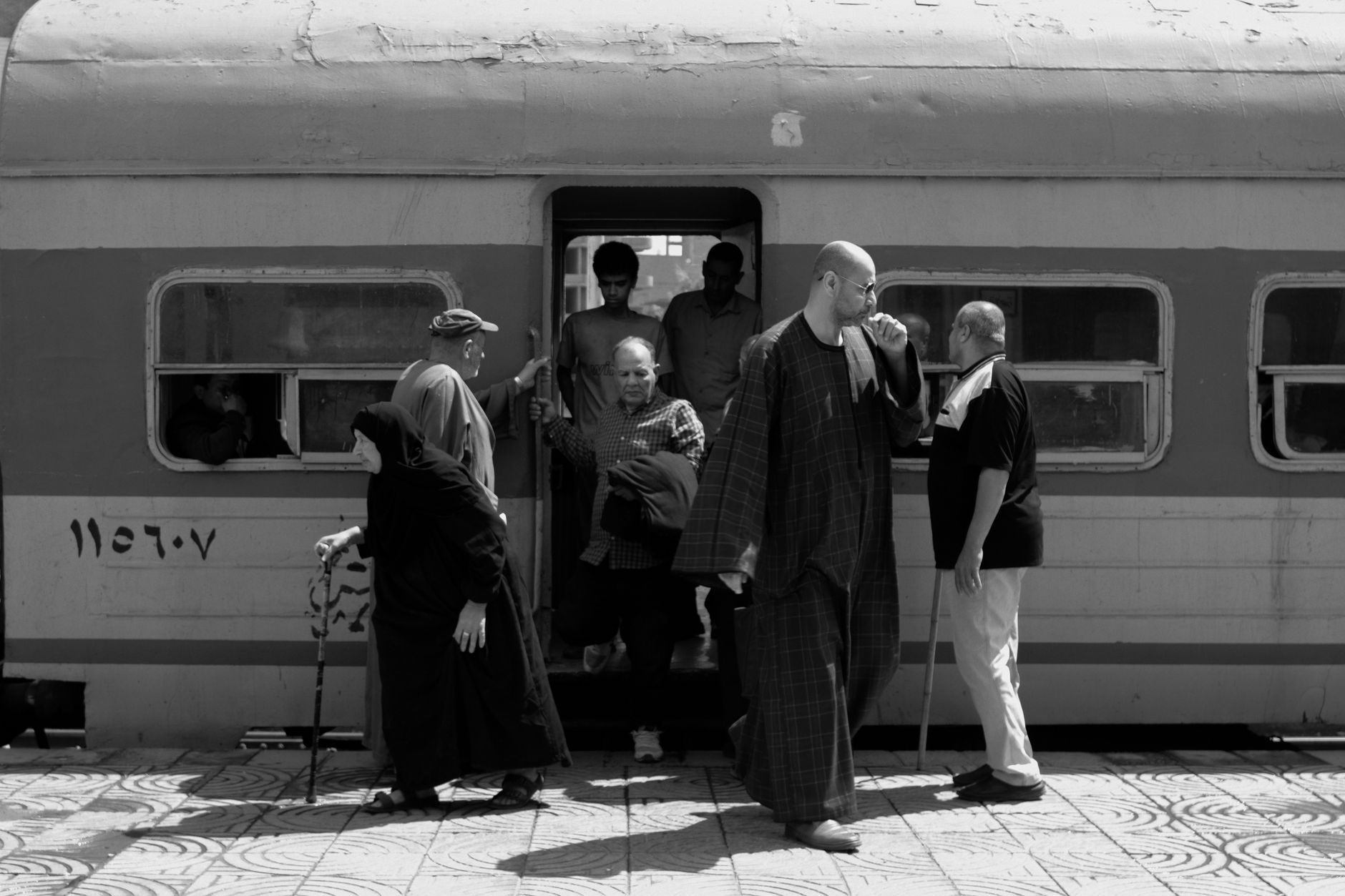
The Ancient Track Awakening Beneath Gulf Sands
The history of travel in the Middle East has traditionally been defined by the duality between the unforgiving expanse of the desert and coastal trade routes. In recent years, however, a silent yet profound transformation has begun to redraw the region’s mobility map. This is not merely about modernizing airline fleets or expanding six-lane highways, but about rediscovering a forgotten infrastructure: the railway. This rebirth is driven neither by mere nostalgic affection for steam engines and wooden carriages nor by superficial novelty, but by a clear geopolitical and tourism strategy aimed at unifying historically disconnected territories.
The revitalization project for historic sections, inspired by the legendary alignment of the Hejaz Railway, seeks to offer a terrestrial transport alternative that marries contemporary technical rigor with the contemplative pacing of the landscape. Unlike the aseptic speed of commercial flights, the train restores the notion of the journey as an essential part of the travel experience. Throughout this investigation, we will examine how regional governments and key logistics operators are transforming abandoned tracks into high-value tourism corridors capable of absorbing visitor growth without compromising the fragile ecology of arid ecosystems.
Steel Architecture in the Void: Engineering Against the Dune
Constructing and maintaining railway lines in desert environments represents one of the greatest technical challenges for contemporary civil engineering. Recurrent sandstorms, extreme thermal fluctuations exceeding fifty degrees Celsius between day and night, and the constant shifting of dunes demand complex structural solutions. The engineers responsible for these rail corridors have had to implement automated track-clearing systems using high-powered blowers and physical barriers made of native vegetation adapted to salinity, minimizing both visual and environmental impact.
Similarly, the railway stations projected along these alignments discard generic industrial aesthetics in favor of a vernacular architectural language. They utilize local stone, metal lattices that filter direct sunlight, and geothermal cooling systems that drastically reduce the carbon footprint. This technical deployment not only guarantees the operational viability of the lines year-round but transforms each terminal into a cultural threshold where travelers begin to understand the geographical keys of the territory they are about to traverse.
The Geopolitics of Rails: Cross-Border Connectivity
The railway renaissance in the Middle East does not operate in a vacuum; it responds to an ambitious vision of regional economic and tourism integration. The creation of interoperable networks among different states aims to facilitate the seamless transit of passengers, reducing bureaucratic friction at land borders. This multimodal connectivity allows travelers to design complex itineraries that intertwine ultramodern metropolises with archaeological enclaves declared World Heritage sites, all without relying exclusively on intra-regional air transport.
Bilateral agreements recently signed between transport ministries in the Arabian Peninsula and neighboring countries establish a common regulatory framework for safety and pricing. This translates into greater predictability for international tour operators, who can now package multi-day land experiences with the certainty of European standards of punctuality and comfort. The railway thus acts as a catalyst for territorial cohesion, redistributing visitor flows toward rural communities that had previously remained on the margins of the tourism boom.
The desert train is not merely a mode of transport; it is a temporal calibration tool that restores to travelers the ability to measure the immensity of space through the steady rhythm of wheels on steel.
Sustainability and Carbon Footprint in Ground Transport
One of the central arguments put forward by planners of these new rail corridors is their unmatched environmental efficiency compared to road or air alternatives. A single high-capacity convoy can move the equivalent of hundreds of private vehicles, drastically reducing greenhouse gas emissions in areas where air quality is a critical indicator of ecological well-being. Furthermore, the progressive electrification of the lines, powered in many cases by photovoltaic solar plants adjacent to the tracks, outlines a truly sustainable mobility model.
Environmental impact studies have nevertheless mandated stringent corrective measures, such as the construction of subterranean and elevated wildlife corridors to avoid fragmenting migratory routes of native species like the Arabianoryx or the sand gazelle. The preservation of these biological corridors demonstrates that infrastructure modernization can coexist with biodiversity protection, setting a regulatory benchmark that other regions of the world are beginning to study closely.
Onboard Experience: Design, Silence, and Visual Narrative
Traveling on the region’s new trains is a deeply curated sensory experience. Carriage interiors, designed by internationally renowned studios, combine local textile craftsmanship with noble materials such as treated oak and brushed aluminum panels. Advanced acoustic insulation allows journeys to unfold in near-total silence, turning panoramic windows into screens displaying the constant mutation of the landscape: from stony plains to dark volcanic mountain ranges.
The onboard culinary offering also plays a fundamental role in cultural immersion. Menus are conceived as a culinary journey through the provinces traversed by the route, utilizing locally sourced ingredients and recipes reinterpreted through contemporary fine dining criteria. This attention to detail transforms transit into an act of intrinsic cultural value, where travel time ceases to be an empty interval and becomes the core of the tourism experience.
Socioeconomic Impact on Route Communities
The tourism decentralization fostered by these railway lines is generating a direct and measurable impact on the local economies of small towns and interior oases. Former agricultural and trading settlements that suffered chronic rural exodus are now finding a diversified source of income thanks to the steady arrival of small groups of independent, culturally motivated travelers.
Small cooperatives of local guides, artisanal pottery workshops, and agritourism projects have integrated into the official booking platforms of railway operators. This ensures that a substantial portion of tourism spending remains in the destination, fostering the conservation of intangible heritage and the intergenerational transmission of traditional trades. The transport infrastructure thus acts as an engine for territorial equity and inclusive development.
Operational Challenges and Seasonal Demand Management
Despite institutional enthusiasm, operating railway networks in desert environments presents formidable logistical challenges. Seasonal demand fluctuations—with sharp peaks during winter months and severe contractions in summer due to extreme heat—demand great flexibility in frequency management and operational capacity. Operators are implementing predictive algorithms based on artificial intelligence to optimize resource allocation and adjust fares according to occupancy.
Likewise, the technical training of local staff constitutes another strategic priority. Joint programs with European and Asian academic institutions ensure knowledge transfer in critical areas such as preventive maintenance of rolling stock and emergency management in remote areas, guaranteeing the highest international standards of operational safety.
The true luxury in modern mobility is not extreme speed, but the certainty of traveling with safety, environmental respect, and an authentic connection to the traversed territory.
Practical Information for the Traveler
Planning a journey along the new Middle Eastern railway lines requires understanding several essential operational guidelines to avoid setbacks:
- Advance Bookings: Due to high demand and limited seating in panoramic carriages, securing tickets at least three months in advance through official platforms is essential.
- Documentation and Visas: Although the train ticket includes integrated transit processing at land border stations, travelers must verify passport validity and the electronic visa requirements of each country within the corridor.
- Luggage Allowance: Strict weight and dimension restrictions apply, similar to those in the aviation sector, due to the optimized design of onboard luggage racks.
- Connectivity: Most units feature complimentary satellite Wi-Fi, though brief signal interruptions may occur in deep desert stretches.
Visual Close: The Horizon of Steel and Iron
At dusk, when the last rays of sun set the crests of the dunes ablaze and dye the metal of the rails a coppery hue, the train glides with nearly imperceptible smoothness toward the next station. This tableau encapsulates the ambition of a Middle East looking toward the future without relinquishing its geographical memory. The railway track is not a scar upon the landscape, but the invisible thread sewing a vast territory back together, offering contemporary travelers an unusual, rigorous, and profoundly human way to rediscover the world.