Introduction to the Volcanic Abyss of the Maluku Archipelago
The Indonesian archipelago hosts some of the most complex and dynamic marine environments on Earth, yet few locations rival the isolation and biological wealth of the Banda Sea. Located in the heart of the Coral Triangle, this inland sea is bounded by chains of volcanic islands rising sharply from deep oceanic trenches, creating an underwater landscape of unique geological characteristics. Unlike more accessible coastal reefs, the waters of the Banda Sea are nourished by deep ocean currents that transport essential nutrients from the Pacific and Indian oceans, sustaining a trophic web of colossal proportions.
Scientific study of this region has revealed that its geographic isolation has acted as an evolutionary refuge for hundreds of species of marine fish and invertebrates. The convergence of complex tectonic plates has shaped nearly vertical coral walls plunging thousands of meters into the deep, offering an ideal habitat for both cold-water benthic organisms and large migratory pelagic species. In recent years, an increase in scientific expeditions has allowed researchers to document the health of these ecosystems with greater precision, demonstrating a degree of global warming resilience that surprises the international marine biology community.
Geology and Bathymetry: The Volcanic Origin of Abyssal Trenches
The morphology of the Banda Sea is the direct result of one of Earth’s most violent and complex tectonic interactions. Here, the Eurasian plate, the Pacific plate, and the Indo-Australian plate converge, generating a subduction system that has formed the Banda Trench, one of the deepest oceanic depressions in the world, exceeding 7,000 meters in depth. This abrupt underwater relief decisively influences water mass circulation and upwelling patterns, a physical phenomenon that drives mineral-rich water toward the surface.
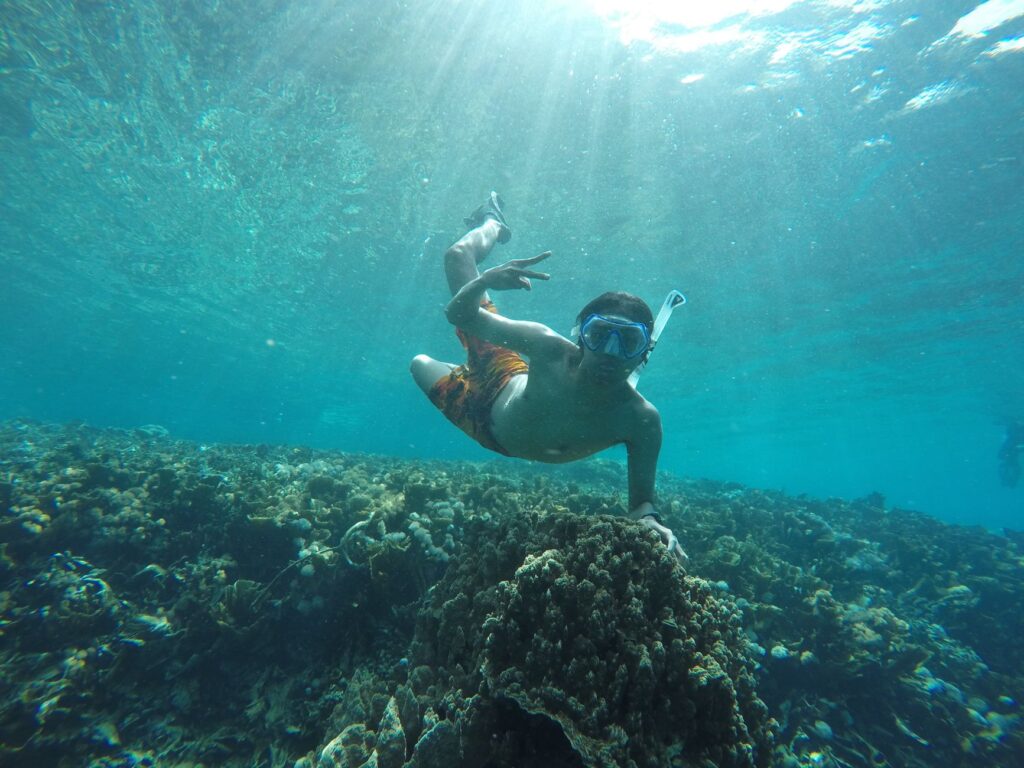
The underwater mountains and volcanic atolls emerging within this basin act as true oases amid the pelagic desert. Ocean currents collide with these submerged structures, generating controlled turbulence that retains plankton and attracts a dense concentration of marine life. The constant interaction between submarine volcanic activity and carbonate sedimentation has sculpted a highly heterogeneous marine substrate, where hard and soft corals compete for vertical space under conditions of extreme water clarity, allowing sunlight to penetrate to unusual depths.
Oceanic Dynamics and Currents: The Engine of the Coral Triangle
The massive water flow known as the Indonesian Throughflow is the engine driving the region’s biodiversity. This system transports millions of cubic meters of water per second from the Pacific Ocean to the Indian Ocean through the narrow passages of the Indonesian islands. As they traverse the deep basins of the Banda Sea, these waters experience intense mixing due to the irregular underwater topography, which oxygenates intermediate layers and maintains stable temperatures in mesophotic reefs.
This oceanic dynamics not only sustains the local food chain but also acts as a larval superhighway for species dispersal. Coral and mollusk larvae are transported over hundreds of kilometers, connecting isolated populations and ensuring genetic diversity throughout Southeast Asia. However, these same currents make navigation in the area technically complex and demand profound meteorological knowledge from the scientific crews and expedition vessels operating in open waters.
Benthic Biodiversity and Mesophotic Reefs
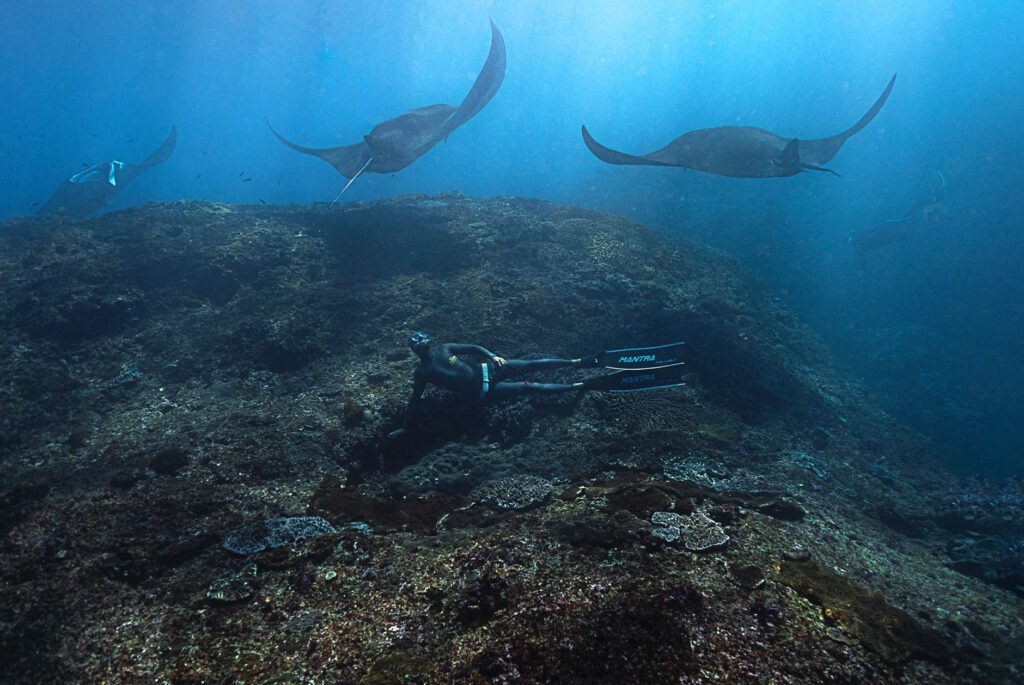
While the shallow reefs of the Banda Sea are celebrated for their color and high live coral cover, true ecological surprises are hidden in mesophotic zones, situated between 30 and 150 meters deep. In these twilight habitats, where sunlight is drastically reduced, specialized coral communities thrive, capable of synthesizing nutrients with a minimal fraction of solar radiation. Submersibles and technical diving teams have revealed the presence of giant gorgonians and endemic sponge species forming three-dimensional underwater forests.
«Exploring mesophotic reefs in the Banda Sea forces us to rethink the limits of coral resilience against surface thermal stress.» — Dr. Hendra Wijaya, Indonesian Institute of Sciences (LIPI).
Species richness in these substrates is staggering. Over 600 species of stony corals and about 1,500 species of reef fish have been cataloged in the surrounding archipelagos. Small rocky promontories serve as refuges for tiny crustaceans and nudibranchs exhibiting complex camouflage strategies, making the area a world-class destination for underwater scientific photography and marine macrobiology.
Pelagic Megafauna: Sharks, Cetaceans, and Great Migrations
The deep, open waters of the Banda Sea serve as a vital migratory corridor for numerous marine megafauna species. Due to their remoteness from major urban and industrial centers, these waters support stable populations of cetaceans, including blue whales, sperm whales, and various species of oceanic dolphins that utilize the deep trenches for hunting and resting. Sightings of large cetacean groups are frequent during monsoonal transitions, when sea surface conditions become calmer.
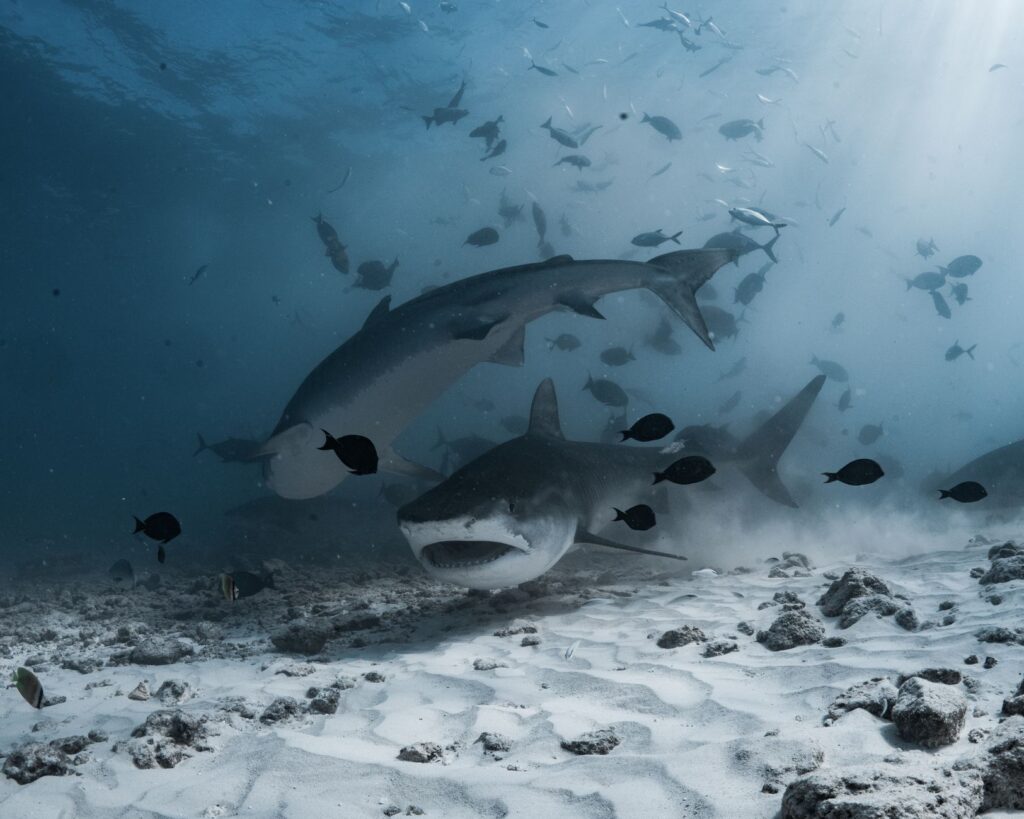
Likewise, remote seamounts act as cleaning and aggregation stations for large pelagic predators. Hammerhead sharks, thresher sharks, and yellowfin tuna regularly cross these currents in search of food. The presence of these apex predators is a key biological indicator of overall ecosystem health, demonstrating that the food web remains intact in the most isolated sectors of the marine basin, far from massive industrial fishing pressure.
Contemporary Threats: Ghost Fishing and Climate Change
Despite their apparent remoteness and inaccessibility, the Banda Sea is not immune to global and regional environmental crises. Rising sea surface temperatures, driven by climate change, have triggered sporadic episodes of coral bleaching on shallower reefs, testing the adaptive capacity of benthic communities. Although mesophotic reefs act as a potential thermal refuge thanks to cooler waters from deep currents, cumulative warming remains a latent and priority threat.
On the other hand, illegal, unreported, and unregulated (IUU) fishing pressure presents a constant challenge for conservation authorities. The occasional use of destructive practices in peripheral islands and the loss of fishing gear, known as ghost nets, cause severe physical damage to slow-growing coral structures. Local non-governmental organizations work around the clock alongside coastal communities to implement community patrols and early warning systems.

Conservation Strategies and Marine Protected Areas
To mitigate these anthropogenic pressures, the Indonesian government, in collaboration with international organizations such as Conservation International and WWF, has significantly expanded the network of Marine Protected Areas (MPAs) in the Maluku and Banda Sea region. These reserves seek to balance the strict protection of critical spawning grounds with the traditional sustainable use of marine resources by local communities, who have relied on artisanal subsistence fishing for centuries.
Establishing fishing exclusion zones around key seamounts has proven to be a highly effective measure for recovering commercial fish stocks and resident shark populations. Furthermore, citizen science programs and responsible ecotourism are integrating local dive operators into ongoing tasks of water temperature monitoring and megafauna sighting logs, creating a united front among science, administration, and the private sector.
Practical Information for Researchers, Naturalists, and Technical Divers
Planning an expedition or an advanced diving trip to the Banda Sea requires exceptional logistical rigor due to the extreme remoteness of medical and transportation infrastructure. Key aspects to coordinate a safe and environmentally respectful stay are detailed below:
- Best Time to Sail: The months between October and November, as well as March to April, offer the most stable weather conditions and highest underwater visibility, coinciding with transition periods between monsoons.
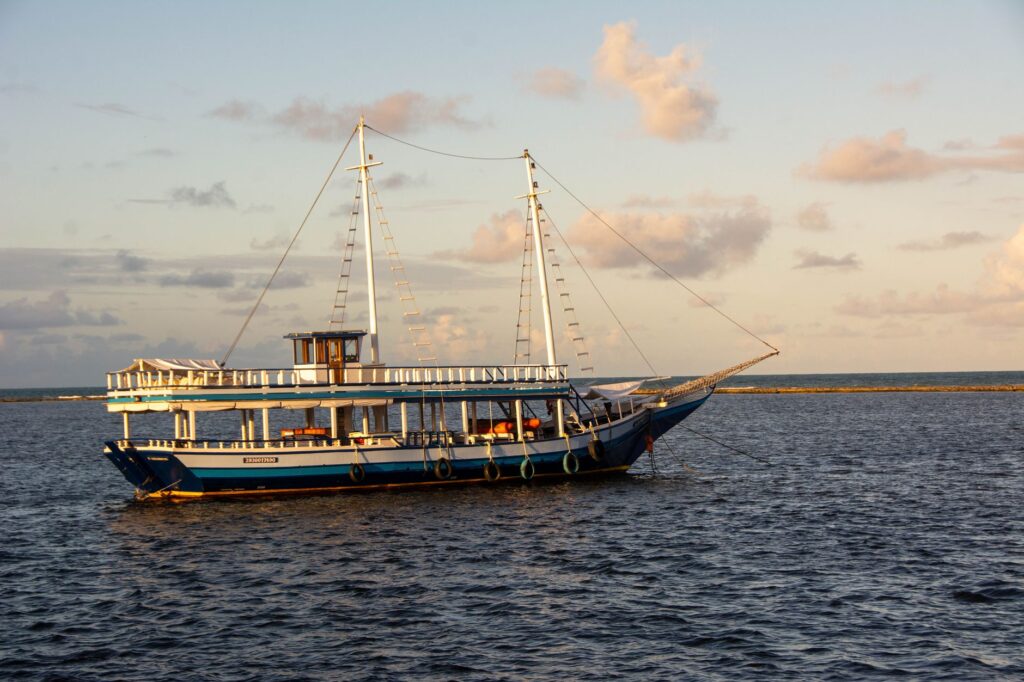
- Logistical Access: The vast majority of expeditions depart from the ports of Ambon or Sorong. These are accessed via regular flights from Jakarta or Bali. Allowing at least a two-day buffer for weather-related domestic flight delays is essential.
- Diving Requirements: Due to current strength, the depth of points of interest, and the remoteness of operational hyperbaric chambers, advanced certification, demonstrable open-water current experience, and international dive insurance covering emergency medical evacuation are mandatory.
- Environmental Code of Conduct: Wearing gloves during dives is strictly prohibited to prevent accidental contact with fragile corals, as well as any alteration or collection of biological samples without relevant scientific permits issued by Indonesian authorities.
The Future of the Banda Sea in Global Oceanic Balance
The Banda Sea represents much more than a remote destination for extreme nature enthusiasts; it is an irreplaceable natural laboratory for understanding how marine ecosystems respond to Anthropocene pressures. The unique combination of tectonic activity, deep current dynamics, and unparalleled marine biodiversity gives this basin incalculable strategic value for contemporary ocean science.
«Protecting the Banda Sea is not just about preserving a coral sanctuary; it is safeguarding Southeast Asia’s largest reservoir of marine genetic resilience for future generations.» — Commissioner of Indonesian Marine National Parks.
The future success of conservation in this inland sea will depend on the ability to maintain a delicate balance between local economic sovereignty, empirically driven scientific management, and international commitment to global emission reductions. Only through rigorous transdisciplinary cooperation can we ensure that the coral walls of the Banda Sea continue to shine in the darkness of the volcanic depths.