
Introduction to the Western World’s Northernmost Railway
In the northernmost reaches of Europe, where granite mountains plunge steeply into the dark waters of the Ofoten Fjord, steel rails trace one of the most dramatic routes on the planet. The Ofotbanen, the railway line connecting the ice-free port of Narvik in Norway with the Swedish mining plateau of Kiruna, is far more than a vital industrial corridor for the continent; it is a masterpiece of nineteenth-century engineering adapted to the extreme demands of the Arctic Circle. Across forty-three kilometers of dizzying terrain, this railway defies gravity, snow avalanches, and permafrost, offering the contemporary traveler a journey where the brutality of the landscape merges with mechanical precision.
Understanding the magnitude of this infrastructure requires looking beyond its obvious scenic appeal. Originally conceived at the turn of the twentieth century to provide a maritime outlet for the coveted iron ore extracted deep within Lapland, the Ofotbanen represented a technological triumph over a radically hostile geography. Today, in an era where low-intensity tourism and sustainable rail mobility redefine global travel priorities, this line stands as a formidable bridge between Scandinavia’s industrial history and high-mountain ecotourism in northern Norway.
Historical Context and the Geopolitics of Arctic Iron
The genesis of the Ofotbanen is deeply tied to the iron ore rush that transformed the economies of Sweden and Norway during European industrialization. The deposits in Kiruna and Gällivare harbored some of the highest-purity magnetite deposits in the world, yet they lacked a direct sea outlet that remained navigable year-round. While the Gulf of Bothnia freezes rigorously during winter months, blocking commercial maritime traffic, the warm currents of the North Atlantic Drift keep the waters of the Ofoten Fjord ice-free at Narvik.
This geographical advantage drove an ambitious and complex international treaty between the kingdoms of Sweden and Norway in 1898, stipulating the construction of a cross-border railway line traversing the formidable Scandinavian mountain range. Engineers of the era faced titanic obstacles: vertical slopes of metamorphic rock, winter temperatures frequently plunging thirty degrees below zero, and the fury of Arctic winds. Construction required the grueling effort of thousands of workers known locally as rallare, who toiled with hand tools and dynamite in conditions of absolute isolation, carving tunnels directly into the mountain’s heart.
The Technical Feat of the Alignment: From Narvik Docks to the Border
The altimetric profile of the Ofotbanen is a masterclass in civil engineering. From the terminal station at the port of Narvik, situated practically at sea level, the track ascends continuously until reaching an altitude of 520 meters at the Riksgrensen border in a mere 42 kilometers. This translates to a steady and demanding one percent grade, a monumental figure for a heavy freight railway carrying thousands of tons of ore.
To overcome this steep vertical rise without sliding into the fjord’s abyss, the route winds through a succession of tunnels excavated in living rock and viaducts suspended over colossal gorges. Approximately half of the line’s total length runs underground, an indispensable preventive measure not only to maintain the grade, but to protect the infrastructure from constant snow avalanches and rockfalls battering the region during long Arctic winters. The maintenance engineering team of Bane NOR, the Norwegian rail authority, operates with military precision to ensure this vital artery suffers no prolonged interruptions.
The Onboard Experience: A Visual Journey Between Fjords and Snowy Peaks
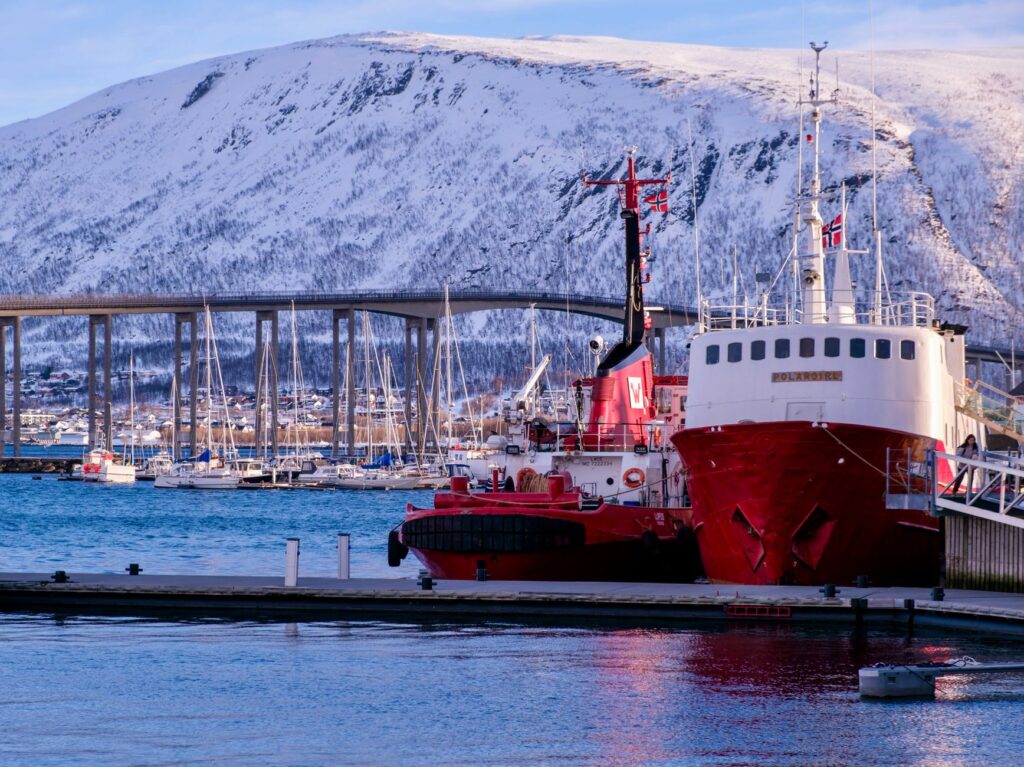
For the traveler, boarding the train at Narvik’s modest station marks the beginning of a radical sensory transformation. As the diesel convoy sets off, panoramic windows become living screens projecting overwhelming nature. In the first minutes of the journey, the train climbs the slopes of Mount Fagernesfjellet, offering an aerial, bird’s-eye perspective of the port and the vast expanse of the Ofoten Fjord, whose waters reflect the changing northern sky.
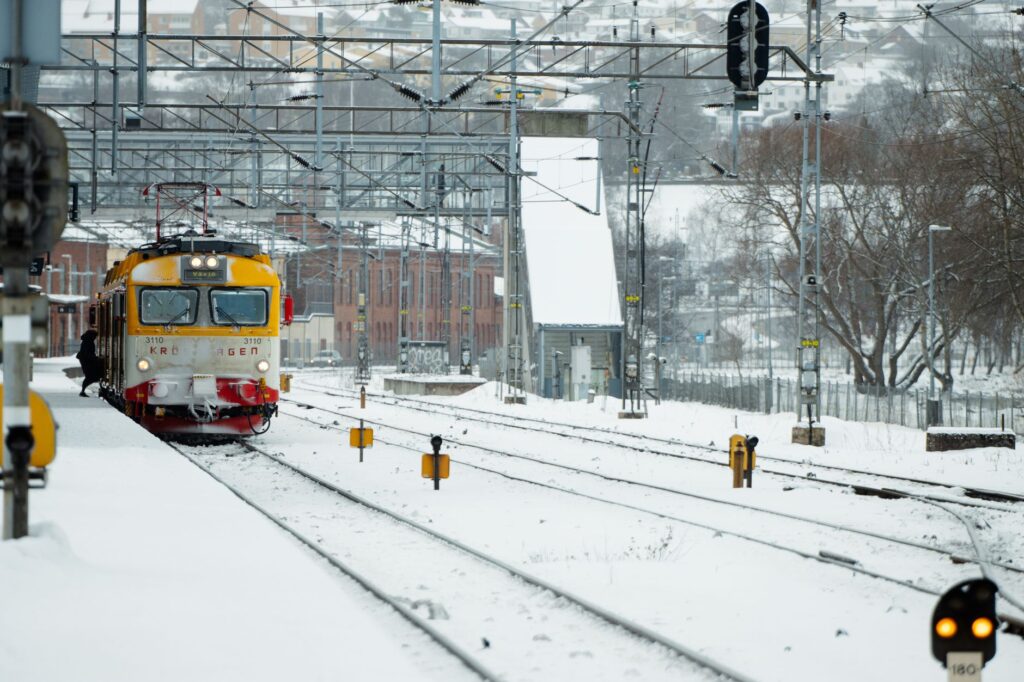
Unlike urban rail lines, the relative silence of modern carriages allows passengers to appreciate the slow yet inexorable rhythm of conquering the mountain. Intermediate stations—names charged with historical and epic resonance such as Rombak, Katterat, and Søsterbekk—evoke the legacy of worker encampments. At Rombak, the vestiges of abandoned steam locomotives and auxiliary track remnants recall the superhuman effort required to build this route early last century.
Key Stations and Enclaves Along the Route
Every stop along the Ofotbanen reveals a distinct facet of the Norwegian Arctic ecosystem and its industrial heritage:
- Narvik Stasjon: The line’s kilometer zero, a neuralgic point where passenger trains converge with massive ore convoys operated by the Swedish mining firm LKAB.
- Rombak: Located at the base of the homonymous valley, it serves as the preferred access point for hikers wishing to traverse the historic rallare trail during summer months.
- Katterat: Situated on a ledge carved into rock, it offers unmatched panoramic views over the Rombaksbotn gorge and acts as a critical technical control point for railway safety.
- Riksgrensen: The border station situated on the watershed divide with Sweden, where the rugged Norwegian alpine landscape gives way to the vast plateau of Lapland’s frozen lakes.
The Climatic Challenge: Operating Inside the Arctic Circle
Maintaining a railway line operative this far north presents logistical challenges that test the imagination of Mediterranean or temperate travelers. During the dark months of the polar night, when the Arctic darkness lasts for weeks and snowstorms reduce visibility to zero, the Ofotbanen becomes an essential lifeline for local communities and cross-border freight transport.
Railway operators deploy powerful locomotives equipped with front snowplow blades and heating systems integrated into switch points to prevent ice from paralyzing infrastructure. Furthermore, advanced radar systems and meteorological sensors distributed along the route detect imminent avalanche risks in real time, allowing traffic to be halted preventatively before any incident compromises passenger safety.
«The Ofotbanen is not merely a means of transport; it is a monument of steel and human perseverance that carved a path through the unyielding fortress of the Arctic.»
Practical Information and Travel Logistics
Planning a journey aboard the Ofotbanen requires precision and awareness of Arctic seasonal conditions. The line operates year-round, connecting directly with the Swedish railway network onward to Stockholm, though local regional services are primarily managed by Norwegian and Swedish operators.
Tickets should be purchased in advance through official channels such as Vy or SJ, especially when traveling during the peak summer tourism season or deep winter when northern lights tourism surges. Seats on the left side of the train facing uphill (from Narvik to the border) offer the clearest views over cliffs and the fjord during the first half of the trip.
Essential Planning and Safety Advice
To maximize the experience without setbacks, keeping the following logistical recommendations in mind is fundamental:
Gear: Even in summer, weather at the mountain summit and alongside fjords can change drastically within minutes; wearing waterproof and windproof layered clothing is essential.
Connections: Narvik is linked by long-distance buses and limited air connections via Harstad/Narvik Airport, Evenes, situated about 45 kilometers away by road.
Accommodation: Narvik offers functional hotel infrastructure geared primarily toward adventure tourism, winter skiing, and summer hiking.
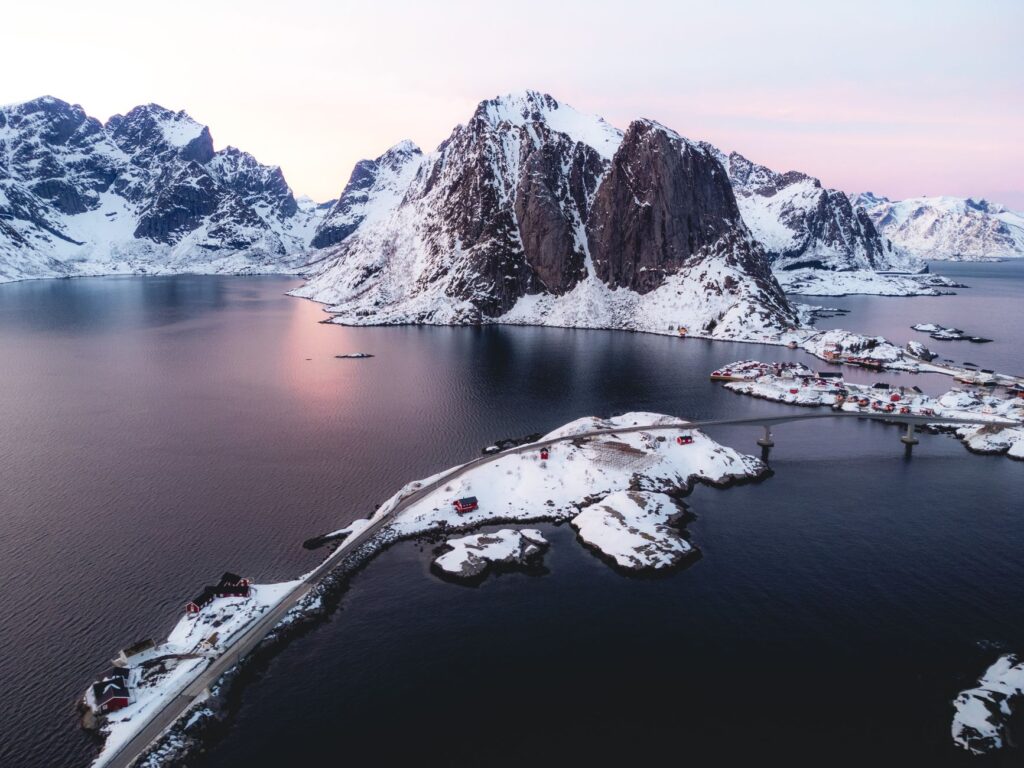
Visual Closure: The Persistence of Iron Under the Midnight Sun or Polar Night
Traveling the Ofotbanen means witnessing a unique coexistence between the unyielding force of Arctic nature and human technical tenacity. Whether under the overhead, endless light of the midnight sun in June, when wild blueberries carpet mountain slopes, or in the bluish stillness of the polar night in January, fleetingly illuminated by green aurora borealis curtains, this railway continues to fulfill its historical destiny.
Upon reaching the Swedish border or returning to Narvik’s port, the traveler understands that the true value of this route lies not solely in panoramic beauty, but in the memory of a collective effort that succeeded in bending the deep north through the relentless elegance of steel.
«When the train glides between walls of snow and granite toward the fjord’s abyss, time stands still and engineering transforms into visual poetry.»