

Introduction to the Norwegian Frontier and the Dilemma of Movement
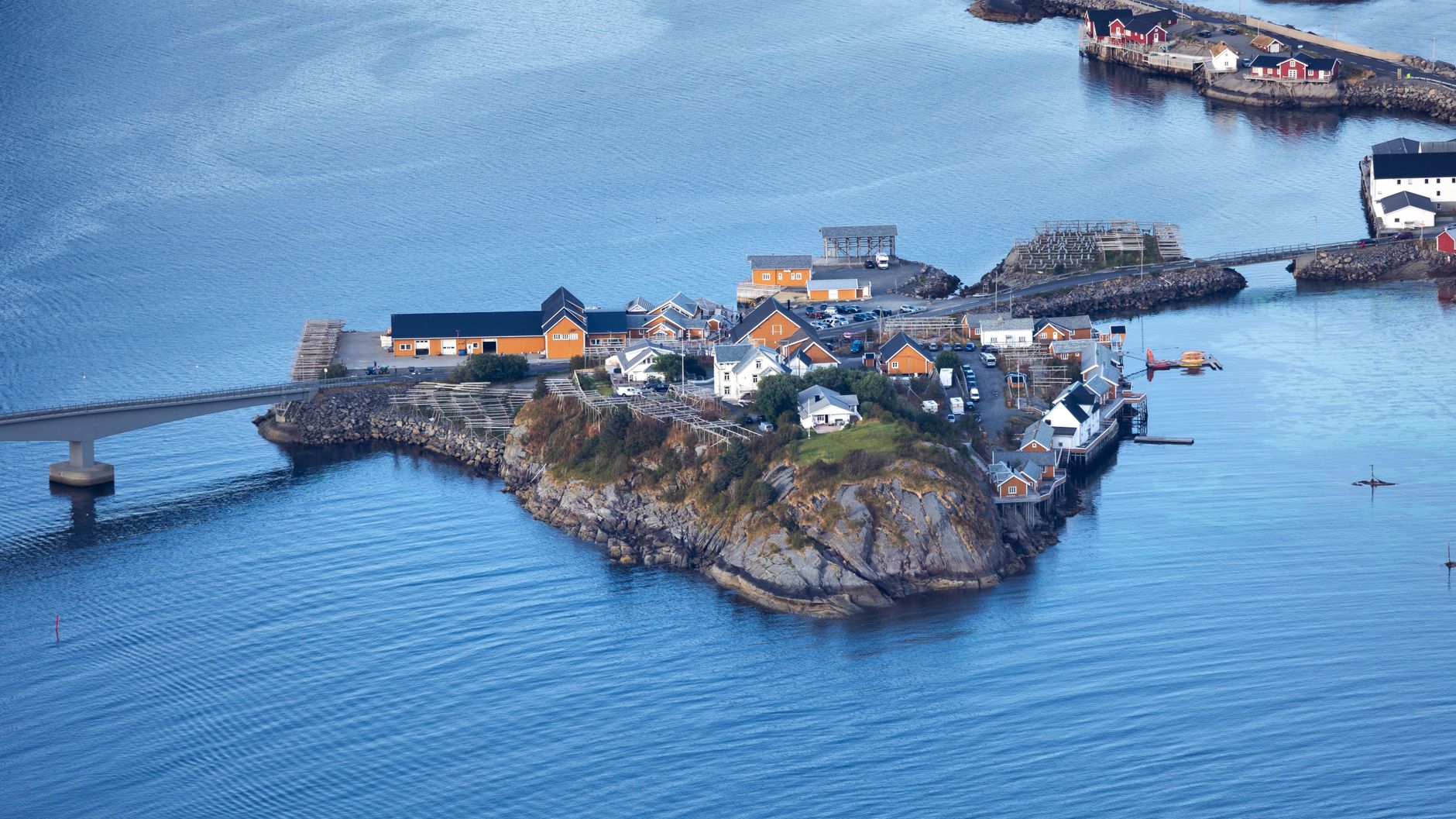
At the northwestern tip of Norway, far beyond the Arctic Circle, the Lofoten Islands rise from the Norwegian Sea like a jagged wall of sharp granitic peaks defying gravity and horizon. For centuries, this geographical frontier has depended on an intricate web of coastal navigation and narrow roads carved along the edge of dizzying cliffs. However, the exponential growth of international tourism over the past decade severely tested the archipelago’s fragile infrastructure. Traffic congestion on main corridors, overcrowded traditional ports, and rising local emissions threatened to shatter the delicate ecological and social balance sustaining local fishing communities. Facing this challenge, regional authorities, transport operators, and grassroots cooperatives launched a radical overhaul of mobility centered on electrifying the ferry fleet, integrating zero-emission buses, and establishing a community-managed framework prioritizing local livability over mass tourism.
This report examines how the Norwegian archipelago redefined the concept of territorial connectivity, proving that it is possible to reconcile the travel rights of residents and visitors with the rigorous conservation of one of Europe’s most pristine landscapes. Through a journey across the docks of Svolvær, the winding routes of Moskenes, and logistics hubs in Reine, we analyze the technical, economic, and human keys behind a paradigm shift that already inspires island regions across the globe.
The Maritime Pulse: Hybridization and Electrification of Fjord Routes
The beating heart of Lofoten has always belonged to the sea. Navigation routes connecting smaller islands to the mainland and to one another represent vital liquid highways essential for cargo freight, school transit, and passenger travel. Until recently, these crossings relied almost exclusively on heavy diesel-powered vessels, whose acoustic and atmospheric impact clashed harshly with the purity of the Arctic environment. The transition began with the introduction of hybrid and fully electric ferries capable of operating under extreme weather conditions marked by gale-force winds and unpredictable marine currents.
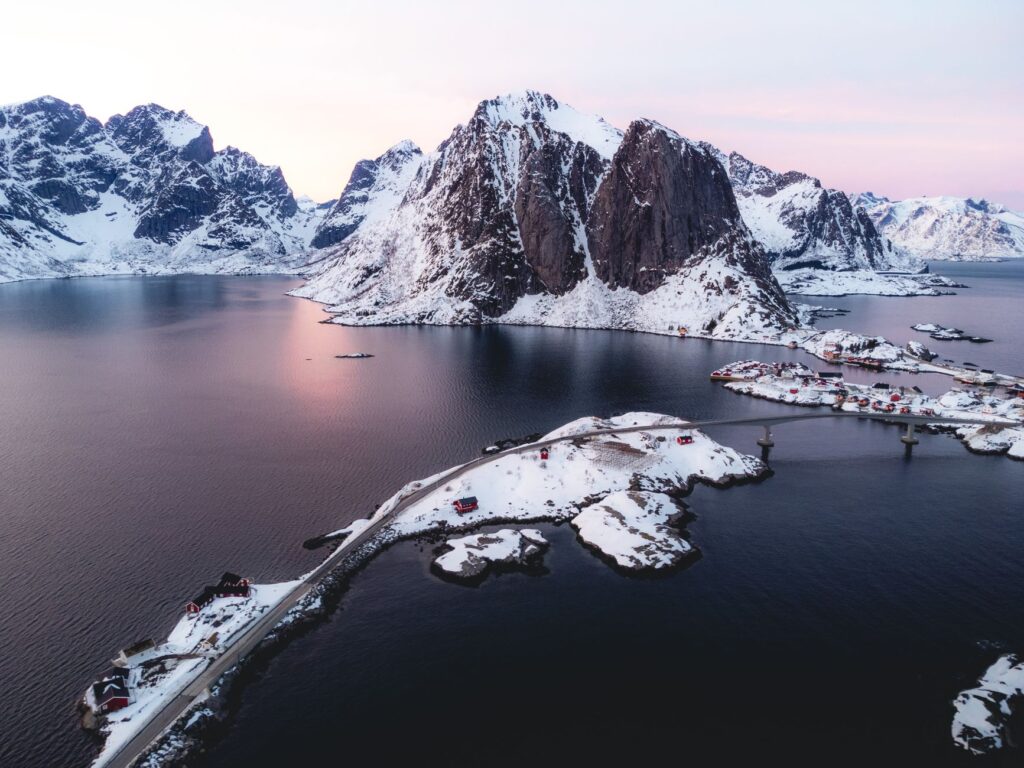
The new vessels plying the Vestfjorden incorporate high-capacity batteries recharged onshore via clean hydroelectric power during docking intervals. This technological breakthrough has drastically reduced carbon dioxide and nitrogen oxide emissions while transforming the sensory experience of travel. The absence of vibrations and the near-silent operation of the electric motors allow passengers to observe marine birdlife and towering rock walls without the interference of traditional mechanical noise. This naval modernization required monumental investment in port infrastructure, retrofitting docks with high-voltage fast-charging stations powered by a regional grid prioritizing local renewable sources.
Mountain Roads and Soft Mobility: The Terrestrial Challenge
If the sea forms the archipelago’s backbone, the legendary E10 highway acts as its central nervous system, winding through narrow tunnels, curved bridges over fjords, and unstable slopes. During the summer months, this road corridor experienced acute congestion driven by oversized motorhomes and rental cars clogging the scarce available parking spaces. To mitigate this pressure, regional government and Lofoten municipalities implemented a comprehensive soft mobility plan combining private traffic restrictions at critical bottlenecks with an expanded network of electric and hydrogen-powered shuttle buses.

These buses operate on optimized schedules coordinated with ferry arrivals and departures, creating a truly synchronized multimodal system. Additionally, dedicated cycling lanes and restored historical footpaths connecting fishing villages now allow visitors to travel short distances without relying on motor vehicles. The strategy aims to discourage private car usage through economic incentives and substantial improvements in public transit comfort, punctuality, and coverage, proving that sustainable accessibility stems from smart design rather than arbitrary restrictions.
True connectivity in a fragile environment is not measured by the speed at which a vehicle crosses a territory, but by the system’s ability to preserve the calm and integrity of the landscape that makes it unique.
The integration of unified ticketing via digital apps accessible to both residents and tourists has greatly simplified journey planning. Travelers no longer need separate tickets for different operators; a single digital pass combines ferry legs, local bus journeys, and access to shared bicycles in strategic hubs like Leknes and Å.
Community Governance and Citizen Participation
One of the most unique aspects of the Lofoten transport model is the prominent role played by local communities in decision-making. Far from being imposed from ministerial offices in Oslo, routes, schedules, and fares are crafted through collaborative roundtables involving fishing guilds, neighborhood associations, tourism operators, and municipal authorities. This decentralized governance ensures that residents’ everyday needs—such as emergency healthcare, school transport, or hauling fresh seafood—take absolute priority over seasonal tourist demand.
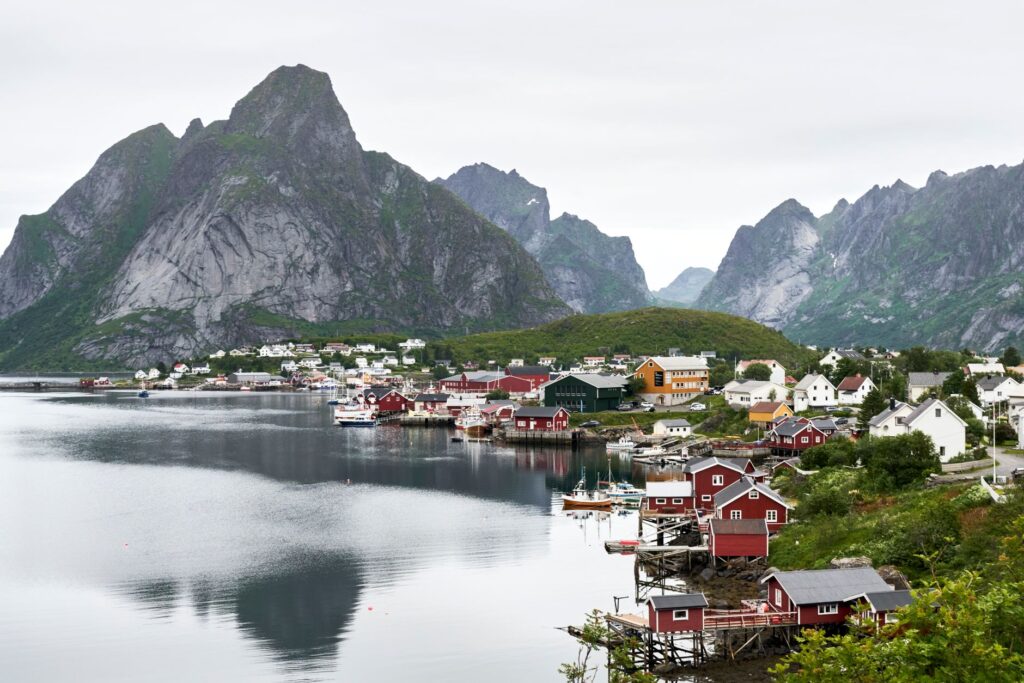
Tensions generated by tourist crowding compelled communities to rethink their future. Rather than banning visitors, they chose to regulate the territory’s carrying capacity through intelligent management of transport flows. For instance, parking lots at the trailheads of popular hikes, like Reinebringen, are linked to advance reservation systems allowing access solely via public buses or zero-emission vehicles. In this way, transport acts as a natural filter safeguarding fragile mountain ecosystems from massive erosion.
Energy Innovation and the Challenge of the Arctic Climate
Operating electrified transport fleets in the Arctic poses formidable technical challenges far exceeding those in temperate European zones. Extreme low temperatures, plunging well below freezing during the polar winter, drastically reduce the efficiency and range of lithium-ion batteries in both ferries and terrestrial buses. To overcome this hurdle, naval and mechanical engineers developed advanced thermal management systems utilizing geothermal heat pumps and waste heat recovery to keep batteries at optimal operating temperatures without draining general vehicle autonomy.
Furthermore, the insular electrical grid, though rich in hydro and wind energy, experiences seasonal fluctuations in generation capacity. To guarantee uninterrupted supply to ferry and bus fast-chargers, local storage systems using second-life electric vehicle batteries and smart microgrids balance demand in real time. This partial energy self-sufficiency reinforces the archipelago’s resilience against storms that temporarily isolate the region from the Norwegian mainland.

Economic and Social Impact on Fishing Communities
The transition toward a sustainable multimodal transport system has not only benefited the environment but has also revitalized the local economy of small fishing villages. Historically, many settlements suffered gradual depopulation due to winter isolation and precarious communications. The guarantee of regular, fast, and reliable year-round connections has allowed young families to return to the islands, knowing they have stable educational, healthcare, and employment services.
Investing in high-quality public transport in remote regions is not welfare spending, but the essential foundation to keep alive the social and economic fabric that gives identity to the territory.
Similarly, local nature tourism operators adapted their business models to align with the new mobility network. Car-free travel packages are promoted, where visitors explore the archipelago exclusively on foot, by bicycle, and using electric ferries and buses. This increased average tourist stays and distributed spending more equitably among small businesses, artisans, and family-run accommodations away from crowded hubs.
Practical Information for the Conscious Traveler
Planning a sustainable trip to the Lofoten Islands requires understanding how the integrated transport network operates. High season spans the summer months (June to August), when demand for ferry and bus seats peaks. Travelers are strongly advised to book vehicle and passenger tickets several months in advance through the official digital platforms of regional operators such as Torghatten Nord and Rejseplanen.
To move around without a private car, the most efficient entry point is flying into Evenes (EVE) or Bodø airports, from where regular bus and ferry connections operate toward Svolvær and Moskenes. During the stay, the regional mobile application facilitates the purchase of unlimited travel passes for all local bus and ferry networks. It is essential to remember that the Arctic climate is volatile; therefore, travelers should daily consult weather alerts and route status updates, as storms can temporarily alter scheduled timetables.
Conclusion: A Mirror for the World’s Island Regions
The transformation of transport in the Lofoten Islands demonstrates that sustainability and advanced connectivity are not exclusive privileges of major urban centers, but achievable goals even in the world’s most remote and vulnerable territories. By combining naval and terrestrial electrification with participatory governance and strict regulation of tourist flows, this Norwegian archipelago has found the balance between openness to the world and the preservation of its singular identity. The Lofoten model transcends mere technological upgrades; it represents a profound ethical reflection on how we must inhabit, traverse, and protect the landscapes surrounding us.


