The Uniqueness of a Territory Defying Gulf Norms
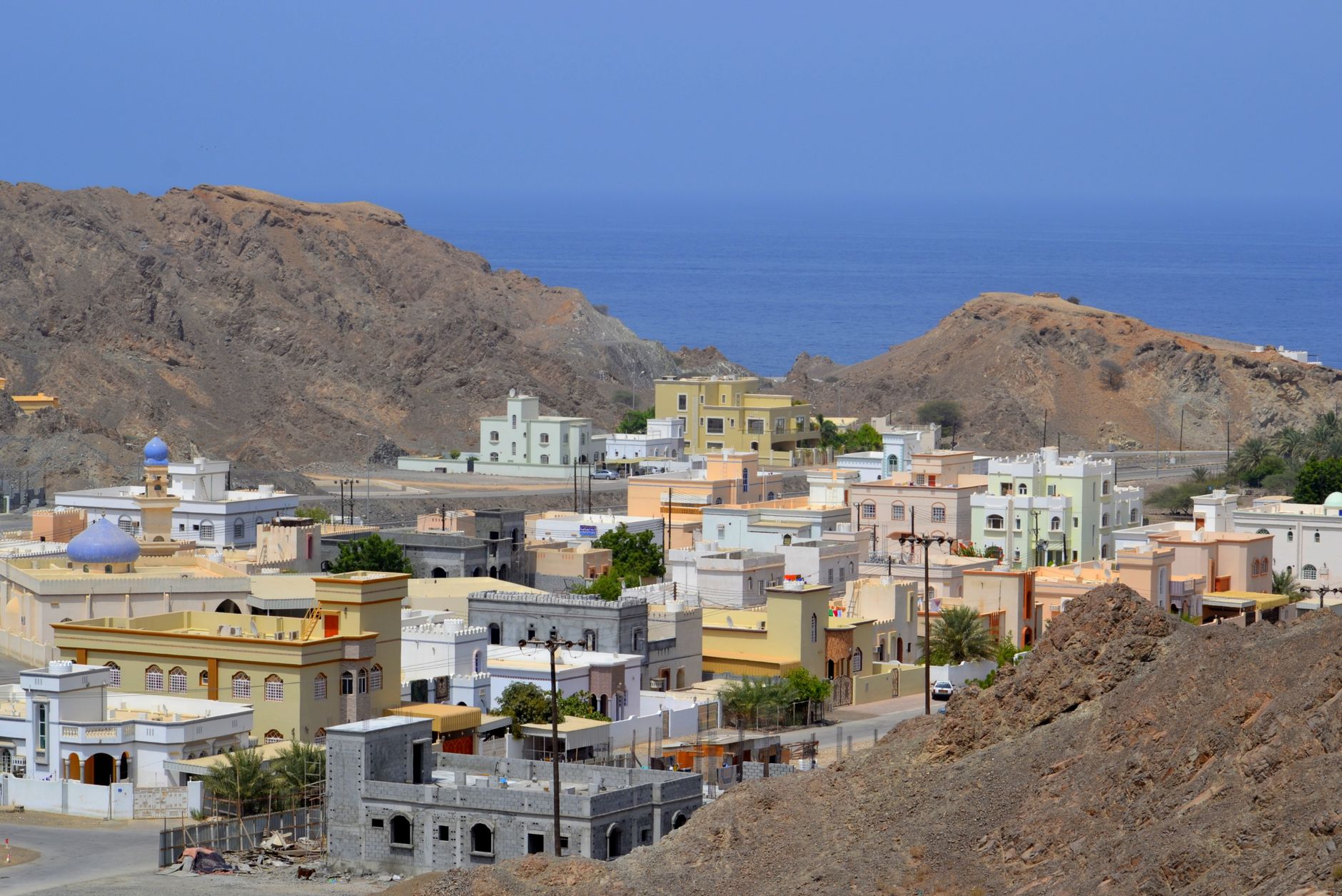
While neighboring metropolises across the Arabian Peninsula compete to erect the tallest tower, the most complex artificial island, or the flashiest theme park, the Sultanate of Oman has chosen a diametrically opposed path. The capital, Muscat, unfolds along the coast of the Gulf of Oman while maintaining a low-profile horizontal urban landscape, where municipal ordinances strictly prohibit buildings from exceeding the height of mosques or traditional three-story merchant houses. This architectural decision is not an aesthetic whim, but the fundamental pillar of a tourism strategy prioritizing low density, long-term sustainability, and cultural preservation against global standardization.
Travelers landing at Muscat International Airport immediately perceive this difference. There are no colossal billboards or concrete jungles of glass and steel. Instead, an earthy color palette dominates, where white, ocher, and beige tones integrate organically with the arid foothills of the Al Hajar Mountains. This respect for the physical environment reflects a state vision that views tourism not as a massive industry of unlimited volume, but as a delicate cultural exchange designed to protect the fragile equilibrium of both desert and coastline.
Architecture as a Cultural and Political Manifesto
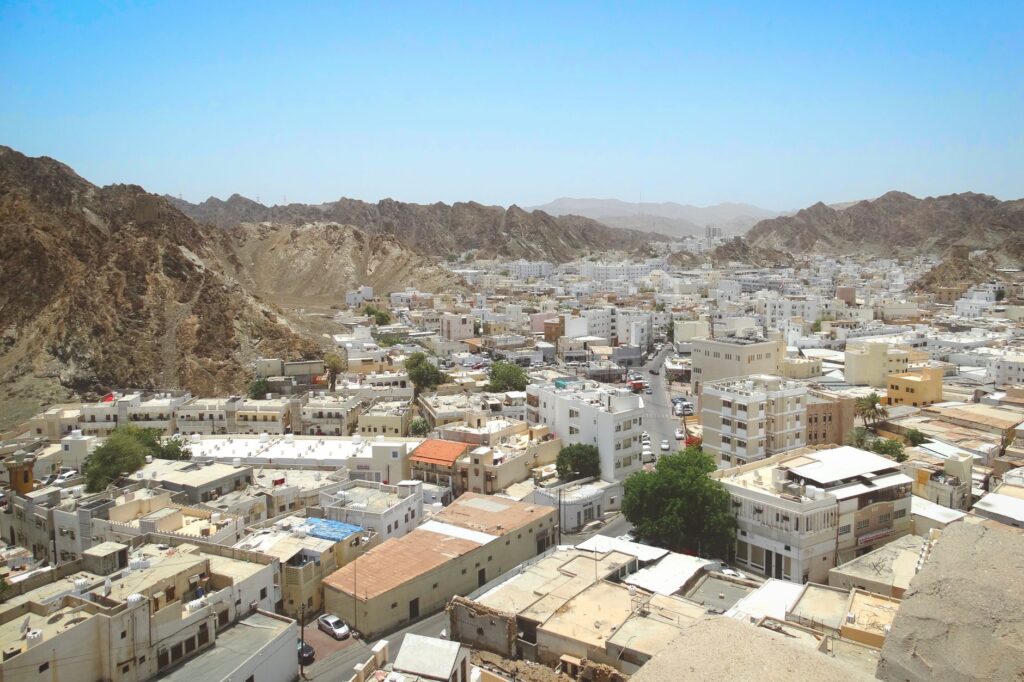
To understand the scale of this model, one must examine the urban fabric of historic districts like Mutrah and Ruwi. In Mutrah, the waterfront promenade — locally known as the Corniche — is framed by facades preserving the carved wooden balconies and latticed windows influenced by Persian and Baluchi aesthetics. Municipal authorities have invested considerable resources in restoring these structures rather than demolishing them to make way for high-rise international hotel complexes. This urban conservation policy protects tangible heritage while ensuring local economies continue flowing through small traditional businesses.
The contrast with the intensive development models elsewhere in the Gulf is stark. In Oman, luxury resort complexes are strategically placed in isolated enclaves — such as the coves of Bandar Jissah or the slopes of Jebel Akhdar — designed with low-scale architecture mimicking ancient fortified settlements. Omani territorial planning demonstrates that true contemporary luxury lies in space, silence, and respectful integration with the landscape, completely shunning the artificial bustle characterizing other regional destinations.
The Commercial Pulse: Mutrah Souq as a Social Thermometer
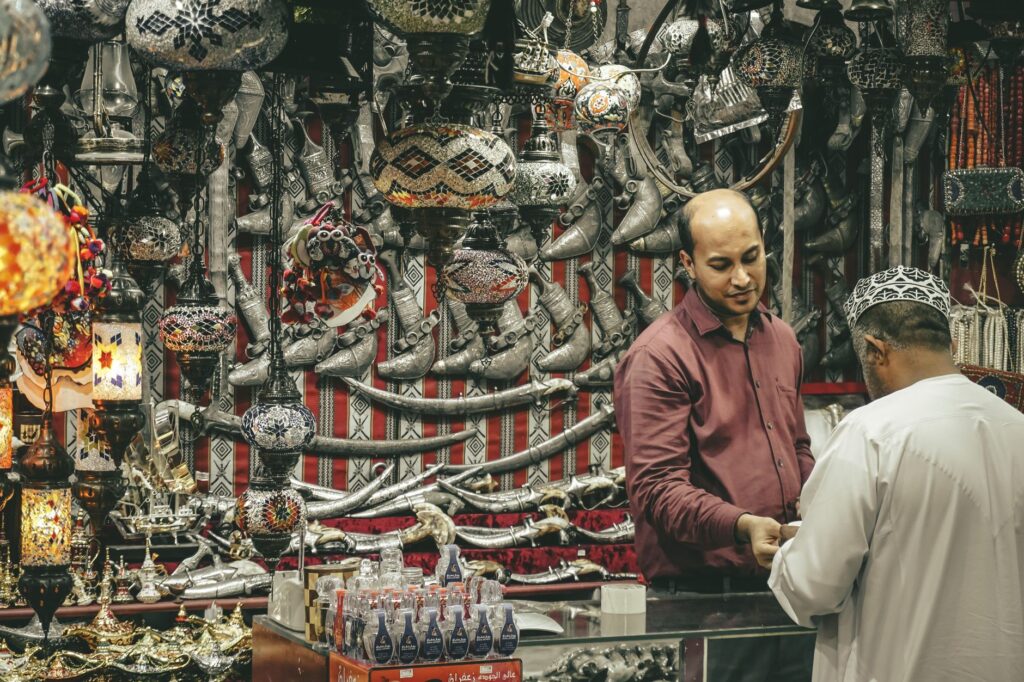
The beating heart of Muscat’s social and economic life remains Mutrah Souq, a covered labyrinth of alleys where the scent of Dhofar frankincense and spiced tea permeates the air. Unlike other Middle Eastern markets that have transformed almost entirely into showcases for Western tourists, Mutrah Souq retains a vital dual function: supplying local residents with everyday goods — ranging from traditional fabrics to silver craftsmanship shaped into distinctive khanjar daggers — and welcoming visitors with hospitality devoid of aggressive commercial pressure.
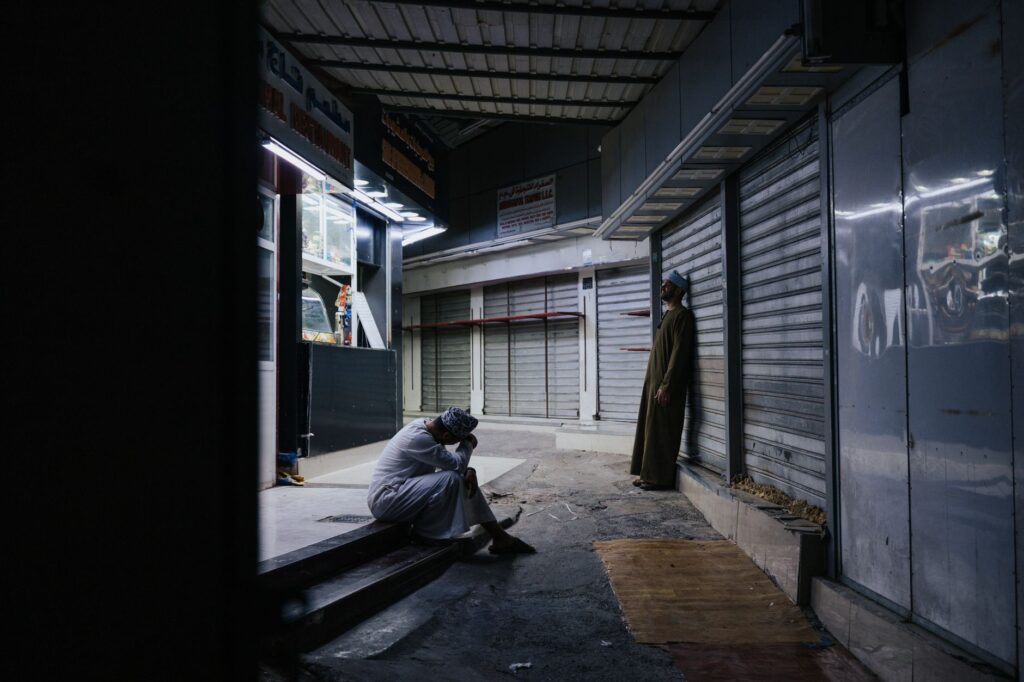
Local shopkeepers, many belonging to merchant families operating in the same spot for generations, adhere to an unwritten code of moderation. Passersby are never aggressively pursued; bargaining here forms part of a measured social ritual seeking mutual understanding before rapid transactions. This unhurried pace reflects the Omani character, shaped by centuries of maritime trade across the Indian Ocean and a moderate Islamic tradition valuing discretion and mutual respect.
Transport Infrastructure: Measured Connectivity and Sustainable Mobility
The management of visitor flows across Muscat and its surroundings relies on infrastructure designed to prevent mass congestion. The recently expanded Muscat International Airport operates with high environmental efficiency standards, handling international air traffic without overwhelming urban thoroughfares. Connections between the airport, the governmental district of Al Khuwair, and the old town run along broad, well-signposted highways, though public bus transport remains limited, requiring independent travelers to rely on rental vehicles or regulated taxi services.
To mitigate the environmental impact of road traffic, the Ministry of Heritage and Tourism has promoted marked hiking trails in surrounding mountains and strictly regulated off-road vehicle access to protected wadis, such as Wadi Shab and Wadi Bani Khalid. Regulating access to fragile natural spaces remains an indispensable tool to prevent the ecological degradation affecting other mass-marketed global destinations.
Gastronomy as a Bridge Between Sea and Desert
Muscat’s culinary landscape aligns seamlessly with its philosophy of authenticity. Far removed from the homogenization of international fast-food chains, local dining pays tribute to historical trade routes linking Oman with Zanzibar, India, and Persia. Dishes like shuwa — lamb marinated in local spices and slow-cooked for two days in an underground clay and ember oven — represent the pinnacle of ceremonial Omani cuisine.
The fish markets of Mutrah and Seeb offer a daily spectacle of marine freshness and maritime tradition, where local fishermen auction dawn catches before restaurateurs and families. Many of these venues have adopted government-backed sustainable fishing practices, ensuring that seafood reaching tables respects the biological quotas of the Arabian Sea.
Contemporary Challenges: Economic Diversification and Demographic Pressure
Despite the relative success of its low-density model, the Sultanate of Oman faces complex challenges over the coming decade. The nation’s Vision 2040 framework establishes an urgent need to reduce economic reliance on hydrocarbons, positioning tourism as a core sector for diversifying national revenue. This generates an inevitable internal tension: how to increase visitor numbers without compromising the strict environmental and cultural sustainability limits defining the country’s identity?
Authorities remain acutely aware of this risk. Opening new hotel development zones in regions like Musandam and Salalah is carefully planned through rigorous environmental impact audits and local community engagement. However, rising cruise ship arrivals at Muscat port during winter months raise valid questions about the carrying capacity of Mutrah’s historic center, where thousands of passengers disembark simultaneously in search of an authentic experience risking dilution through sudden overcrowding.
Practical Guide for the Responsible Traveler in Muscat
Planning a trip to Muscat requires understanding and respecting local norms of conduct and dress code. Essential guidelines for ensuring a respectful and seamless stay include:
- Climate and Seasonality: The optimal period to visit Muscat and northern Oman spans November through March, when daytime temperatures range between 22°C and 28°C. Summer months (June to September) experience extreme heat exceeding 40°C alongside high coastal humidity.
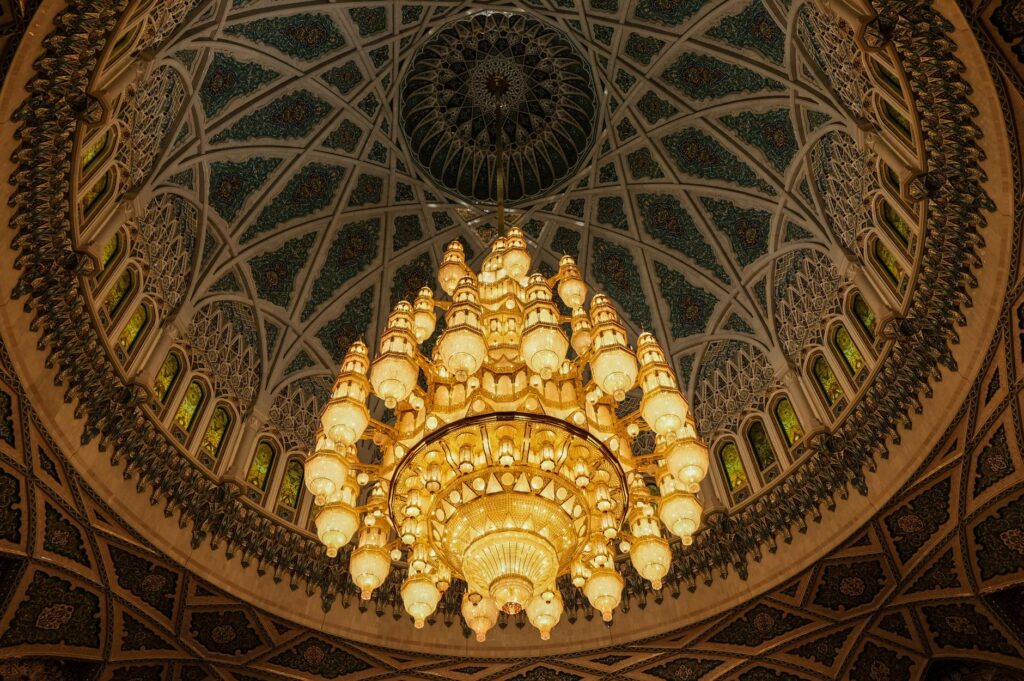
- Dress Code: Both men and women should dress modestly in public spaces, covering shoulders and knees. Inside mosques, such as the Sultan Qaboos Grand Mosque, full-length garments are mandatory, alongside a headscarf for women.
- Photography Etiquette: Photographing military installations, government buildings, and local individuals — especially women — without explicit prior consent is strictly prohibited.
- Currency and Payments: The official currency is the Omani Rial (OMR), pegged to the US Dollar. Credit cards are widely accepted in hotels, malls, and restaurants, though cash in local currency is essential for souqs and traditional small businesses.
- Getting Around: There is no urban subway network. The most efficient option for exploring beyond historic cores is car rental or authorized local transport apps.
The Horizon of a Model Resisting the Current
The case of Muscat and Oman as a whole demonstrates that tracing an alternative path in contemporary global tourism is entirely possible. Facing the vertigo of massification and unchecked urban growth that have irreversibly transformed other Gulf latitudes, the sultanate has chosen strategic patience, heritage protection, and the dignity of public space. It is a model not entirely free of contradictions or future challenges, yet it offers a valuable lesson in how moderation and respect for one’s own identity can become the most coveted assets for the discerning traveler of the twenty-first century.