The Steel Artery That Spans Eurasia
The railway system connecting the easternmost tip of Russia with the heart of the Asian continent is not merely a means of transport; it represents one of the greatest feats of civil engineering in modern history and a fundamental geopolitical backbone. Inaugurated in the late 19th century and perfected throughout the 20th century, the main route of the Trans-Siberian—along with its historic branches such as the Trans-Mongolian and the Trans-Manchurian—covers more than 9,000 uninterrupted kilometers. From the platforms of Yaroslavsky station in Moscow to the Pacific coast in Vladivostok, or branching out toward Ulaanbaatar and Beijing, this corridor crosses eight time zones, radically shifting ecosystems, topography, and population density without ever losing the unmistakable rhythm of steel wheels on the broad Russian track gauge of 1,520 millimeters.
Understanding the sheer magnitude of this journey requires analyzing the complex logistics demanded to keep a railway operational under extreme climatic conditions, with winters plunging below minus forty degrees Celsius and arid summers across the Mongolian steppes. Russian Railways (RZD) and associated operators manage a constant flow of passenger and freight convoys that function as the only truly reliable overland link connecting isolated communities in the Siberian taiga. Far from aesthetic luxury tourism, the train retains its original function as a vital public service, integrating various car classes where students, local families, merchants, and international travelers coexist.
Chronology and Geopolitics of an Imperial Dream
The genesis of the Trans-Siberian answered an imperative strategic need for the Russian Empire: to connect its densely populated European territories with remote possessions in the Far East and the Pacific Ocean. Until the imperial rescript issued by Tsar Alexander III in 1891, overland communication relied on the rudimentary Siberian Route, a journey by sledge or carriage that could take months and became completely impassable during the spring thaw (known as rasputitsa). Finance Minister Sergei Witte championed the project with unwavering determination, fully aware that Siberia’s economic development and military security against neighboring powers depended entirely on the railway.

Construction mobilized tens of thousands of laborers, military engineers, former convicts, and peasants who had to carve a path through dense taiga forests, bridge major river systems like the Ob, Yenisei, and Lena, and blast tunnels through rocky mountain terrain. Labor shortages and extreme geological conditions forced bold technical solutions, such as temporarily laying tracks across the frozen ice of Lake Baikal during the harshest winters until the complex circuit of tunnels and viaducts of the Circum-Baikal railway was completed. Throughout the 20th century, the progressive electrification of the route and track doubling transformed the 19th-century layout into a high-capacity industrial corridor capable of supporting massive freight trains carrying essential raw materials between Europe and Asia.
Operational Anatomy and Rolling Stock on the Route
Operating a train across thousands of kilometers demands meticulous logistical synchronization and highly specific technical design of the rolling stock. Modern long-distance passenger convoys are engineered to withstand extreme thermal fluctuations and guarantee energy autonomy for entire days without access to major stations. Each carriage features its own heating system powered by coal-fired boilers or centralized electrical systems, constantly monitored by the provodnik or provodnitsa—the car attendants responsible for cleanliness, order, ticket control, and passenger safety.
Technical stops along the route are scheduled with mathematical precision to allow brake inspections, potable water replenishment, coal loading, and the relief of locomotive crews, who rotate every few hours to prevent fatigue in a monotonous environment. Similarly, the electrical infrastructure combines alternating and direct current sections according to the relief’s demands, requiring dual-voltage locomotives or the replacement of engine heads at key railway junctions such as Kirov or Barabinsk. Traffic management relies on automated block signaling systems, though across vast sectors of deep Siberia, human oversight remains indispensable to ensure safety against rockfalls, snow accumulation, or thermal expansion in the rails.

The train is not merely a tool to shorten distances, but a social microcosm where time is measured in steaming cups of tea and stations that mark the pulse of an entire continent.
The Great Detour: Into the Mongolian Steppe and Beijing
For travelers who choose to leave the main trunk of the Trans-Siberian at Ulan-Ude station, the Trans-Mongolian offers one of the most fascinating geographic and cultural experiences on the planet. This branch heads south into Mongolia, a territory of endless horizons where the tracks meander through high-altitude grasslands, herds of wild horses, and nomadic white yurt settlements. The landscape transition is abrupt: travelers pass from the claustrophobic and endless coniferous taiga to the arid vastness of the Gobi Desert, where temperatures undergo brutal contrasts between day and night.
The technical operations on this section include a fundamental milestone: adapting to the Chinese track gauge upon reaching the border at Erlian. Because the Soviet Union adopted a wider track gauge (1,520 mm) than the international standard used in China (1,435 mm), international trains must undergo a meticulous bogie-replacement process. For several hours, carriages are lifted using gigantic hydraulic jacks in specialized industrial sheds while passengers remain on board or step out to watch as the wheels are detached and new wheelsets adapted to the Chinese system are installed—a living testimony to the technical barriers inherited from the Cold War.
Civil Infrastructure: Bridges, Tunnels, and the Permafrost Challenge
Maintaining a stable railway track over geological terrain as complex as Siberia’s demands extraordinary civil engineering solutions. Much of the eastern layout rests on permafrost, permanently frozen soil that experiences superficial thawing during summer months, compromising the stability of embankments and bridge foundations. To prevent tracks from warping, engineers rely on deep foundations, sophisticated drainage systems, and the elevation of ballast beds over layers of coarse gravel that insulate the ambient heat from the frozen ground.

Crossings over major Siberian rivers posed monumental challenges in the 19th century and continue to demand constant structural maintenance. The bridge over the Ob River in Novosibirsk or the impressive bridge spanning the Amur River in Khabarovsk stand as testaments to human capacity to master hostile hydrography. Likewise, tunnels excavated through the Yablonovy mountain range and near Lake Baikal required intensive use of explosives and reinforced concrete support techniques to withstand the enormous pressure of rock formations and the constant seepage of freezing water.
Life on Board: The Daily Rhythm Inside the Carriage
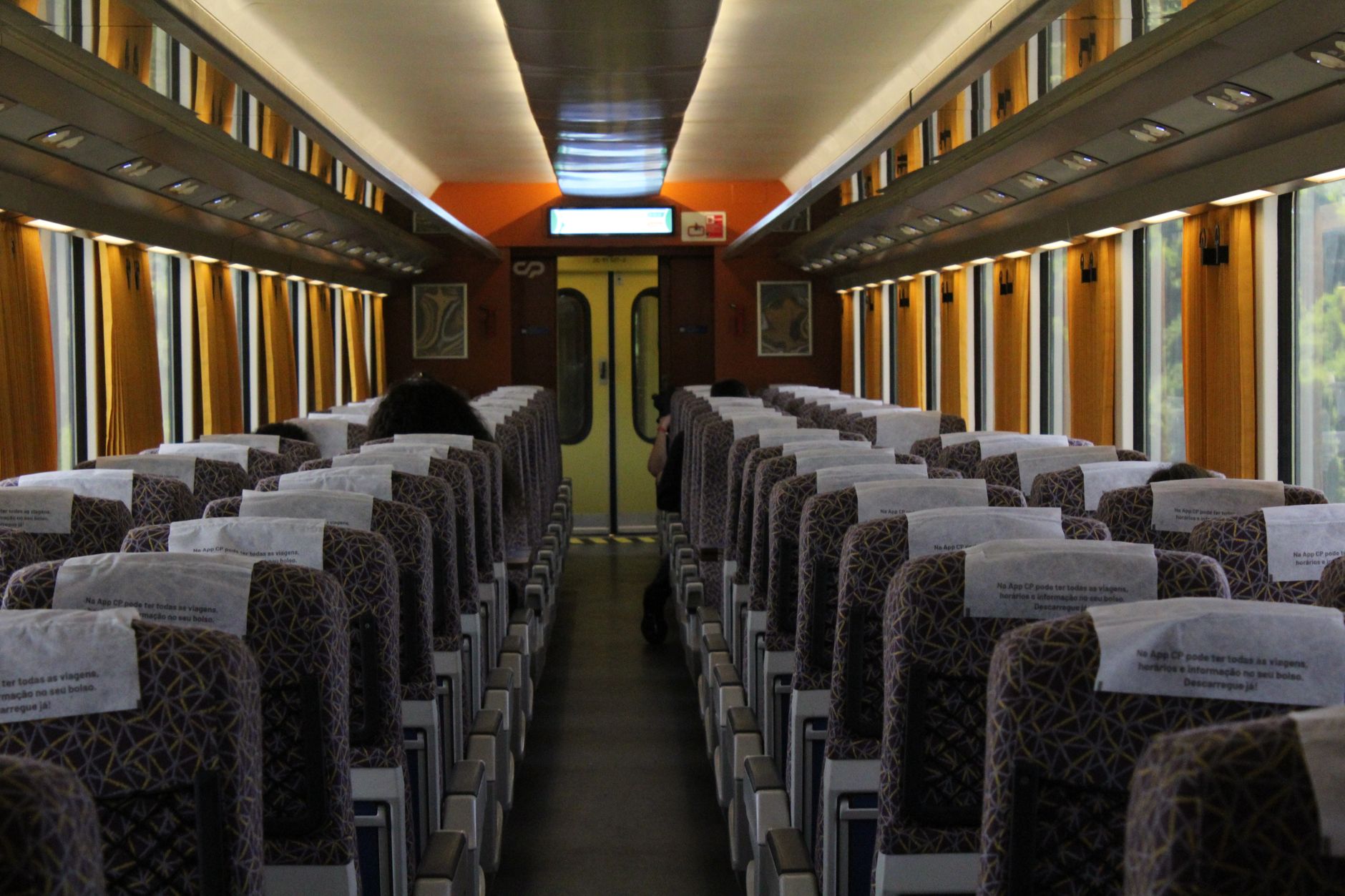
The experience of traveling for days on a long-distance train generates a unique communal dynamic that is difficult to replicate in any other modern transport mode. Carriages are traditionally divided into classes: Platskart (open berths in a shared space), Kupé (closed four-berth compartments), and Spalny Vagon (luxury two-berth compartments). In this microcosm, social differences dissolve before the shared necessity of navigating narrow corridors, shared restrooms, and the central samovar—the inexhaustible source of boiling water that functions as the social heart of the carriage for brewing tea, coffee, or instant soups.
Interactions among passengers transcend language barriers through gestures, translation technology, and generosity in sharing food purchased during brief stops on provincial platforms. At intermediate stations, colloquially known as babushkas, local vendors offer smoked Lake Baikal fish (omul), boiled potatoes, dumplings (pirozhki), and wild berries. This provisioning ritual directly connects the traveler with the local economy and the culinary tradition of the regions crossed, turning each stop into a small ethnographic window.

In the vastness of the steppe, the steady rattling of the tracks becomes an internal metronome that transforms the traveler’s impatience into a profound acceptance of slow time.
Crossing Lake Baikal: The Scenic and Technical Milestone
No section of the route generates as much visual and technical anticipation as the southern edge of Lake Baikal, the largest unfrozen freshwater reserve on Earth. Originally, trains had to be loaded onto special ice-breaker ferries during winter to cross from shore to shore—a slow and hazardous solution that prompted the construction of the Circum-Baikal line, an engineering masterpiece blasted directly into granite cliffs plunging straight down into crystal-clear waters.
Although most heavy freight traffic now runs along a more direct route through modern tunnels, the historic Circum-Baikal track remains operational for tourist and local trains, offering an unrivaled perspective on the coexistence between industrial technology and a strictly protected natural environment. Featuring dozens of short tunnels, stone viaducts, and perfectly preserved retaining walls, this section exemplifies the respectful—though technically forced—integration of railway infrastructure into an ecosystem of exceptional environmental fragility.
Practical Guide for Planning the Journey
Planning a journey of this scale requires a rigorous understanding of logistical, regulatory, and temporal aspects. Securing visas for Russia, Mongolia, and China demands advance consular processing coordinated months ahead, ensuring passport validity and the correct specification of entry and exit routes. Regarding the time of year, summer months (June to August) offer pleasant temperatures and long daylight hours, while winter (November to February) delivers pristine snow-covered Siberian landscapes and extreme thermal experiences suitable only for travelers well-equipped with technical apparel.

Tickets must be purchased through official national railway channels or authorized specialized agencies, carefully selecting the carriage class according to personal preferences for privacy and comfort. It is essential to pack basic non-perishable food supplies, a universal power adapter, comfortable and loose clothing for inside the carriage, and local currency (rubles, tugriks, and yuan) for cash purchases during short station stops where ATMs or card payments are not guaranteed.
The Future of Transcontinental Corridors
In a global context marked by the urgency of decarbonization and the search for efficient logistics alternatives to air and maritime transport, Eurasia’s great rail routes are experiencing renewed strategic interest. The capacity to move containerized freight between Asian production hubs and European markets in competitive transit times makes the Trans-Siberian corridor and its southern connections cornerstones of international economic infrastructure.
Furthermore, ongoing modernization projects—including the digitization of traffic management, enhanced passenger train comfort, and reduced transit times through bottlenecks removal—ensure this steel giant remains vibrant in the 21st century. Beyond its undeniable commercial value, the train retains its romantic and anthropological essence: a permanent iron bridge cast across geographic immensity, reminding humanity of our enduring capacity to connect distant worlds through perseverance, engineering, and the will to move forward.