


Introduction to modern defensive architecture
In the late seventeenth century, the kingdom of France under Louis XIV stood at a strategic crossroads. The monarch’s territorial ambitions constantly collided with neighboring European coalitions, demanding a radical rethinking of the country’s borders. In this turbulent context emerged the undisputed figure of Sébastien Le Prestre de Vauban, military engineer, architect, and Marshal of France. His contribution was not limited to building taller walls, but rather conceiving an integral defensive system known as the double curtain and the iron belt, a network of strongholds protecting France’s vulnerable approaches.
Today, an itinerary through these fortifications reveals how applied geometry and topographical calculation became the supreme tools of diplomacy and warfare. Inscribed collectively as a UNESCO World Heritage site in 2008, twelve of these masterpieces distributed across the French landscape offer a fascinating journey through military history, technological innovation, and the evolution of European urbanism.
The genius behind the stone: Sébastien Le Prestre de Vauban
Born in Saint-Léger-de-Foucheret in 1633, Vauban accumulated unparalleled practical experience before becoming the king’s chief engineer. He participated in over a hundred sieges and directed the construction or remodeling of nearly three hundred citadels. His vision transcended mere defensive construction; Vauban understood the territory as a chessboard where each fortress had to fulfill a precise tactical function, whether for containment, retention, or logistical support.

Unlike medieval castles, designed to resist through isolation and height, Vauban’s strongholds integrated smoothly into the surrounding landscape. He utilized wide dry moats, protruding bastions that eliminated dead angles, and sloping ramparts capable of deflecting enemy artillery.
«We must fortify to resist and spare the blood of the soldiers», Vauban argued, prioritizing defensive efficiency and logistics over noble ostentation.
This philosophy humanized, as far as possible, the harshness of early modern warfare.
Neuf-Brisach: The ideal city of the late seventeenth century
Located in the Alsace region, very close to the German border, Neuf-Brisach represents the theoretical culmination of Vauban’s military urbanism. Conceived ex nihilo following the Treaty of Ryswick in 1697, this stronghold was designed as an ideal city based on a rigorous octagonal grid, an evident tribute to Renaissance ideals of the geometric city adapted with mathematical precision to modern ballistics.
The urban layout is strictly hierarchical: the parade ground occupies the central hub, surrounded by concentric blocks and protected by a defensive system of concentric walls and dry moats. Neuf-Brisach stands as the purest testimony of utopian architecture converted into real defensive infrastructure. Visiting its streets today allows observers to appreciate how civilian life and the military garrison coexisted in a space meticulously calculated to withstand the most severe sieges.
Besançon: The citadel hanging over the Doubs river
Dominating a strategic loop of the Doubs river, the citadel of Besançon is perhaps one of Vauban’s most spectacular and best-preserved works. Taking advantage of a steep rocky promontory, the engineer transformed this geographical feature into a formidable war machine that controlled the passage between Franche-Comté and the Holy Roman Empire.
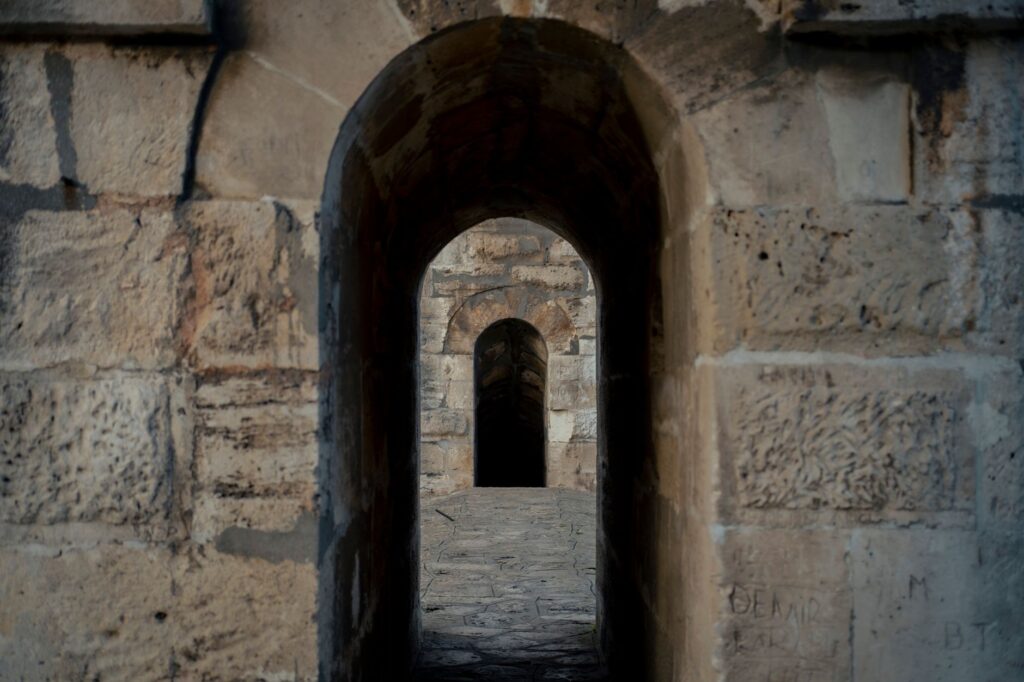
Access to the citadel is gained through monumental gates carved directly into the rock, protected by half-moons and stepped bastions. The interior enclosure housed powder magazines, barracks, a chapel, and underground cisterns that guaranteed the garrison’s autonomy for months. Currently, these former military spaces host several major museums, transforming a symbol of coercion into a vibrant cultural and natural center.
Mont-Dauphin: The Alpine bastion of the High Vosges
Nestled in an impressive mountain cirque in the High Alps, the fortress of Mont-Dauphin was designed to block any invasion from Italy through the Durance valley. Unlike other fortifications built on medieval foundations, Mont-Dauphin rose on an arid, windy plateau, utilizing local pink stone quarried from Guillestre.
The urban plan intended to house a considerable civilian and military population, though the original project was never fully completed, giving it a unique aura of an unfinished city. Wandering through its silent streets at dusk conveys the feeling of stepping back into the golden age of military engineering. Panoramic views over the surrounding Alpine peaks underscore the grandeur and strategic isolation of the enclave.

Saint-Martin-de-Ré: Atlantic insular defense
The Atlantic maritime front required solutions adapted to tides and amphibious landings. On the Île de Ré, off La Rochelle, Vauban designed a monumental citadel whose star-shaped trace dominates the port. The walls, provided with broad glacis and buttresses, were engineered to withstand both naval fire and enemy infantry.
The ramparts of Saint-Martin-de-Ré stand out for their system of locks and floodable moats, which regulated water levels according to defensive needs. This fortified port not only served a military function but also acted as a safe haven for regional fishing and merchant fleets, demonstrating the versatility of Vauban’s projects beyond strictly warlike scopes.
Villefranche-de-Conflent: Ingenuity in the Pyrenees
Tucked away in the narrow valley of the Têt river in the eastern Pyrenees, Villefranche-de-Conflent exemplifies the extreme adaptation of military architecture to a confined topographic space. Vauban fortified the existing medieval town and added Fort Liberia, perched on a steep hill over six hundred meters high, connected to the village by a monumental underground staircase of more than a thousand steps.
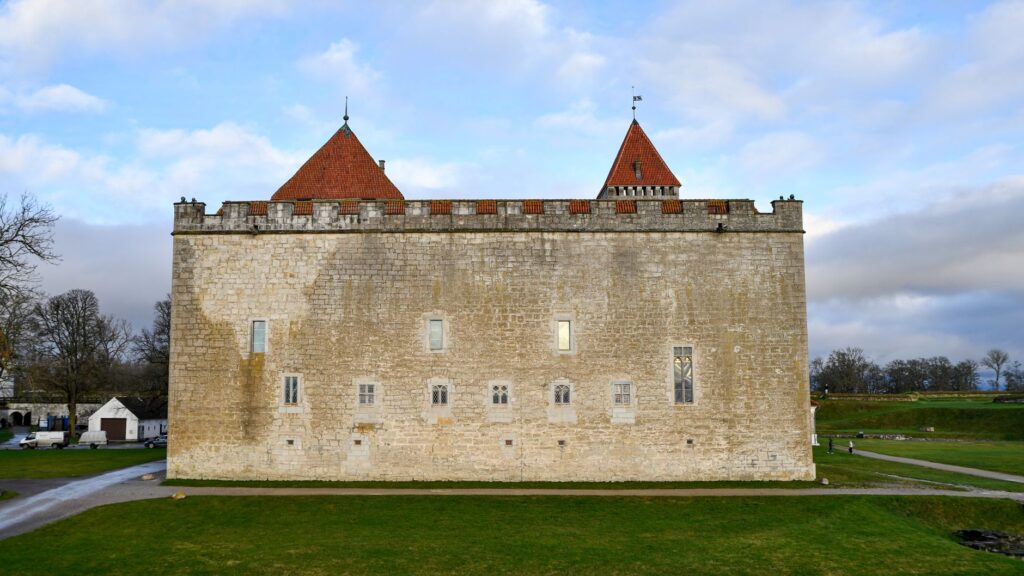
The use of local pink marble in the defensive facings contrasts with the harshness of the military structures. This complex demonstrates Vauban’s mastery in harnessing mountain slopes, turning Pyrenean gorges into virtually impassable barriers for Spanish troops during the seventeenth-century border conflicts.
Technical legacy: From theory to modern cartography
Vauban’s influence extended far beyond France’s borders and the framework of the Ancien Régime. His theoretical treatises, such as the *Method for Fortifying Places* and writings on the art of sieges, became mandatory reference manuals in military academies across Europe and America during the eighteenth and much of the nineteenth centuries.
Beyond his contributions to architecture, Vauban was a pioneer in applying statistics, political economy, and systematic cartography. His proposal for the royal tithe, a universal tax levied on all social classes without privileges, cost him royal favor late in life, cementing his profile as an enlightened intellectual ahead of his time.
«A well-governed realm fears neither truth nor well-founded criticism», he wrote in his clandestine memoirs.
Practical information for touring the Vauban network
Visiting the twelve primary fortresses of the Major Sites of Vauban network requires rigorous planning, as they are scattered across the four cardinal points of France. The most efficient means of transportation is a private vehicle, especially for accessing mountainous enclaves like Mont-Dauphin or Villefranche-de-Conflent, although cities like Besançon and Arras boast excellent high-speed rail connections.
Most sites remain open to the public year-round, though visitor center hours and guided tours of underground galleries vary according to the summer or winter season. Acquiring the integrated access pass at the main centers is recommended to optimize visits to the more complex monuments.
Travel tips and planning
- Ideal season: Spring (May and June) and autumn (September and October) offer optimal temperatures and lower tourist density in Alpine and coastal enclaves.
- Appropriate footwear: Visits to citadels and underground passages involve walking on uneven cobblestones, damp surfaces, and steep inclines.
- Accessibility: Due to the defensive nature of the monuments, many patrol paths and ramparts present natural architectural barriers for individuals with reduced mobility.
Visual close and heritage reflection
The journey through Vauban’s fortifications offers a complex reading of the European landscape, where military technology merges with territorial aesthetics. Far from being mere relics of a violent era, these structures of stone and earth represent the pinnacle of human ingenuity applied to spatial organization and civil defense. Today, transformed into spaces of memory, culture, and sustainable tourism, they invite reflection on the shifting boundary between war and peace on the European continent.


