
The renaissance of travel on classic rails
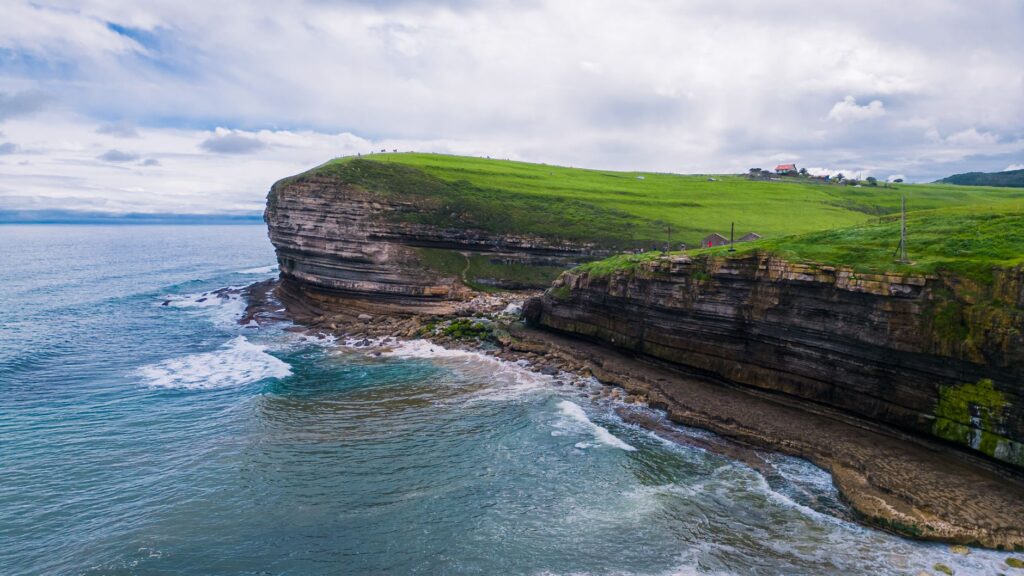
Contemporary tourism is undergoing a profound transformation, a Copernican shift that pulls travelers away from airport urgency and returns them to the earth’s natural rhythm. In this context, northern Spain offers one of the most unique mobility and contemplation experiences in Europe: the Transcantábrico. Far from being a mere means of transport, this historic convoy represents a way of inhabiting the landscape, a method of understanding Cantabrian geography through the meticulous track of steel across steep slopes between sea and mountain.
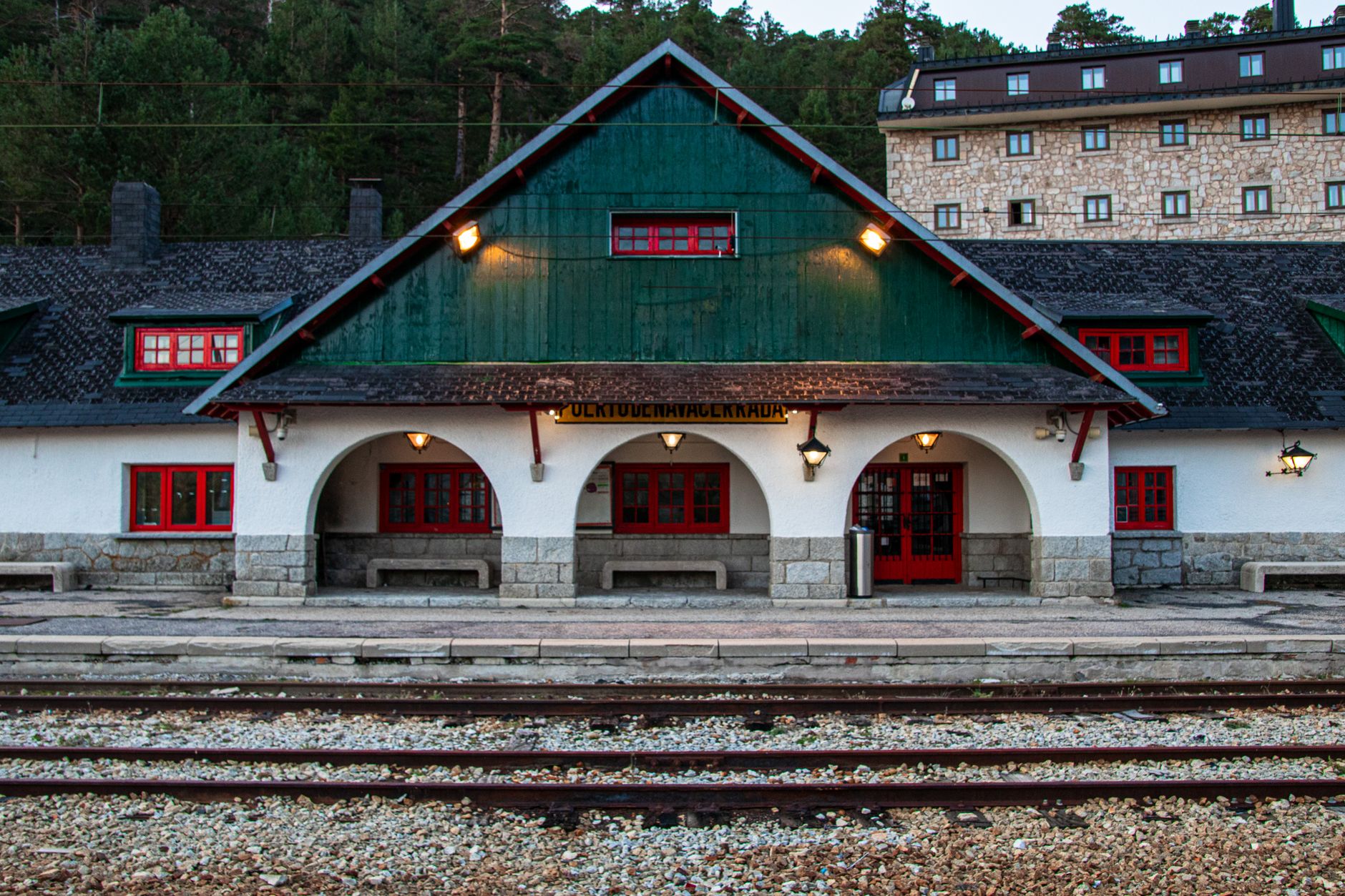
The experience of traversing the northern coast on narrow-gauge tracks provides access to remote corners inaccessible to conventional road traffic. The metric gauge railway network (formerly FEVE, now integrated into Renfe) draws a sinuous line that hugs cliffs, crosses estuaries, and penetrates valleys where time seems to have slowed its pace. It is an exercise in industrial archaeology and landscape appreciation where every kilometer reveals the complex interaction between human ingenuity and the untamed Atlantic nature.
Origins and evolution of northern narrow-gauge railways
The history of narrow-gauge railways in northern Spain is inextricably linked to the industrial development of the late 19th and early 20th centuries. The need to transport coal from the Asturian and Leonese mining basins, as well as to connect fishing ports and burgeoning Basque and Cantabrian steel industries, gave rise to a mosaic of small private railway companies. These enterprises had to contend with a deeply hostile topography, characterized by deep gorges, swift rivers, and an abrupt transition between the Cantabrian Cordillera and the sea.
Over the decades, initial fragmentation gave way to state unification of the lines, consolidating a continuous route that now vertebrates the northern coast. Transforming these purely freight and regional passenger infrastructures into a high-end tourism product marked a pioneering milestone in global railway history. Period coaches were restored, adapted to offer maximum contemporary comfort, and itineraries were designed to fuse railway heritage with the gastronomic and cultural excellence of the Basque Country, Cantabria, Asturias, and Galicia.
The classic itinerary: Geography in motion
The traditional route of the Gran Lujo Transcantábrico connects San Sebastián with Santiago de Compostela over eight days and seven nights, or vice versa. Each day is structured around a perfect duality: mornings are dedicated to cultural and natural exploration through guided excursions in private coaches, while afternoons and evenings unfold with the gentle sway of the train as it snakes toward its next overnight destination.
The journey begins in the elegant Belle Époque setting of San Sebastián, with its curved bay and universal culinary reputation. From there, the train embarks on a westward voyage passing through Bilbao, where the titanium of the Guggenheim Museum contrasts with the industrial past of the estuary. The route continues toward Cantabria, stopping in Santillana del Mar and the Altamira neocave, a sanctuary of Paleolithic rock art connecting travelers with the dawn of human expression.

The train is not merely a vehicle to move from one point to another; it is a floating platform from which to contemplate how human civilization patiently dialogues with intransigent Cantabrian geography.
Engineering and railway architecture in challenging terrain
From a technical standpoint, the northern peninsula’s narrow-gauge network constitutes a masterpiece of 19th-century civil engineering and subsequent modernization. Unlike high-speed lines, which pursue straight paths through costly viaducts and colossal tunnels, the Transcantábrico embraces contour lines. Its track gauge, noticeably narrower than the European standard (1,000 millimeters compared to the traditional 1668 millimeters of the Iberian network), was the indispensable economic and technical response to negotiate very tight turning radii and steep gradients.
Along the journey, travelers cross dozens of lattice metal bridges spanning tidal estuaries and salmon rivers, alongside numerous tunnels hand-carved into living rock during the 19th century. This minor railway architecture, integrated into the natural environment, now forms an irreplaceable part of Green Spain’s cultural heritage. Maintaining these infrastructures requires specialized and constant upkeep, where technical tradition combines with digitalized signaling and safety systems.

The interior design of Pullman lounges
The aesthetic and social heart of the Transcantábrico resides in its lounge cars, authentic rolling jewels inspired by the legendary Pullman convoy cars of the 1920s. These communal spaces comprise the Dining Car, the Pub Car, and the Panoramic Car, decorated with noble woods, artisanal marquetry, leather upholstery, and large windows designed to capture every detail of the outside world.
The suites, meanwhile, combine classical aesthetics with advanced hotel technology. Designed to guarantee absolute rest, they feature double or twin beds, private bathrooms with hydro-massage showers, independent climate control, wardrobes, desks, and acoustic insulation systems that soften the sound of rolling wheels on the track. Onboard service, provided by a professional multilingual team, revives the standards of classic hospitality, where discretion, elegance, and personalized attention are the unbreakable norm.
The Cantabrian pantry: Haute cuisine on rails
The gastronomic proposal constitutes one of the fundamental pillars of the experience. Each travel day reflects the culinary wealth of the territories traversed, turning the restaurant car into a showcase for product-driven cooking and the culinary vanguard of northern Spain.

Onboard breakfasts offer a selection of local proximity products: artisanal cheeses with protected designations of origin such as Idiazabal or Cabrales, traditional cold cuts, homemade pastries, natural juices, and sourdough breads. Lunches and dinners alternate between the train’s dining car and prestigious restaurants in the cities visited, where local chefs reinterpret seafood and inland recipes. Dishes such as marmitako, Santoña anchovies, Asturian fabada, native-breed meats, and Cantabrian fish are paired with unique wines such as txakoli, Cangas wines, or Galician whites.
Awakening in Asturias and the transition toward Galicia
At the halfway point, the train penetrates the Principality of Asturias, a territory where the mountains seem to plunge directly into the Cantabrian Sea. Stops in Llanes, Ribadesella, and the optional ascent to Lake Covadonga and the Sanctuary nestled in the Picos de Europa offer a deep immersion in Asturian mythology and nature.
Traveling on narrow-gauge tracks demands abandoning modern haste; here time is not measured in saved minutes, but in the depth of accumulated memory as each landscape slowly parades past the window.
After leaving Asturian lands, the convoy crosses the provincial border into Galicia, the spiritual goal of the journey. The Rías Altas and the Costa da Morte welcome travelers with granite architecture, centuries-old granaries, and an Atlantic atmosphere of mists and legends. The final stop of the itinerary in Santiago de Compostela crowns a journey where the train’s unhurried pulse contrasts with the secular bustle of pilgrims reaching the Plaza del Obradoiro.
Planning and sustainability of rail travel
From the perspective of sustainable mobility, the luxury train stands out as a low environmental impact alternative compared to air transport or massive private car use on long-distance routes. The energy optimization of modern locomotives pulling these historic convoys, combined with the inherent efficiency of guided transport, drastically reduces the carbon footprint per passenger.
Planning this journey requires advance booking, as capacities are extremely limited—usually around thirty passengers per departure—to guarantee exclusive and personalized service. The operating season extends from spring to late autumn, coinciding with the most favorable weather conditions for enjoying outdoor landscapes. Verifying official departure calendars through authorized Renfe Viajeros channels is essential, as is securing connecting flights or train reservations to San Sebastián or Santiago.
Essential practical information for the traveler
- Duration of the classic itinerary: 8 days and 7 nights continuous onboard the train and in partner accommodations.
- Capacity and accommodation: Capacity limited to a maximum of 28-32 passengers accommodated in luxury suites with private bathrooms.
- Operating season: May to October, with alternate weekly departures in east-west and west-east directions.
- Included in the rate: Suite accommodation, all breakfasts, lunches, and dinners onboard or in select restaurants, guided excursions with monument entrance fees, escort bus, and porter service.
- Luggage recommendations: Comfortable clothing and footwear for walking excursions, alongside elegant yet casual attire for onboard dinners.
Epilogue on the permanence of slow travel
The Transcantábrico demonstrates that slowness can be a supreme luxury in a world dominated by hyperconnectivity and immediacy. By traversing the old rails of the Cantabrian coast, travelers not only discover the scenic and cultural richness of northern Spain but recover their capacity for wonder. It is an invitation to look out the window, converse unhurriedly in the panoramic lounge, and understand that the true meaning of travel lies in the shared journey and the unhurried contemplation of the world.