Introduction to the Eurasian Railway Myth
The Trans-Siberian railway is not merely a rail line connecting distant geographical points; it is one of humanity’s greatest engineering epics and a geopolitical corridor that has transformed the vast continental mass of Eurasia since the late 19th century. Initially conceived under the mandate of the tsars and driven by key figures such as Minister Sergei Witte, this system of iron roads linked Moscow with the Pacific Ocean, opening the door to the immense resources and territories of Siberia and the Russian Far East. Spanning over nine thousand kilometers, travelers who venture along this route face an experience that transcends conventional tourism, transforming into a deep immersion in the geographical vastness, contemporary history, and cultural diversity of a territory encompassing multiple time zones.
Today, planning a journey along this network requires exceptional logistical rigor. Global geopolitical shifts, visa restrictions, and the evolution of railway infrastructure demand that contemporary travelers abandon any trace of improvisation. Far from the romanticized image of nineteenth-century carriages where passengers conversed endlessly while drinking tea from a samovar, modern trains combine the functionality of Russian and Chinese services with the operational challenges of crossing complex international borders. This report rigorously addresses the technical, historical, and practical aspects essential for understanding and planning one of the most complex and fascinating journeys on the planet.
Imperial Genesis and Titanic Construction
The construction of the Trans-Siberian, officially initiated in Vladivostok in 1891 under the supervision of the then heir to the throne and future Tsar Nicholas II, represented an unprecedented titanic effort. Russian engineers had to overcome extreme weather conditions, swampy terrains known as taiga, and a chronic shortage of labor and materials. To accelerate construction, the project was divided into several simultaneous sections: the Ussuri line, the Central Siberian section, and the difficult stretch around Lake Baikal, where solid rock demanded the blasting of numerous tunnels and the construction of complex viaducts over deep gorges.

The economic and demographic impact of this infrastructure was immediate. Millions of peasant settlers utilized the so-called colonization trains to move toward the fertile lands of southern Siberia and northern Kazakhstan, permanently altering the demographic balance of the region. Likewise, the railway allowed Russia to project its military and commercial power toward the Pacific, connecting Moscow with strategic ports. However, the original route presented a significant geographical drawback: it traversed Chinese territory (via the Chinese Eastern Railway in Manchuria). To resolve this and keep the line entirely within Russian soil, the Amur line was subsequently built, definitively completed before the outbreak of the First World War and the 1917 Revolution.
The Three Great Routes: Trans-Siberian, Trans-Mongolian, and Trans-Manchurian
When discussing the Trans-Siberian, the term is usually used as an umbrella to describe three main routes that share the common trunk line from Moscow to the East Siberian region, but diverge toward different final destinations:
- The Classical Trans-Siberian (Moscow – Vladivostok): This is the original 9,289-kilometer route running entirely through the territory of the Russian Federation, crossing eight time zones and ending at the strategic Pacific port.
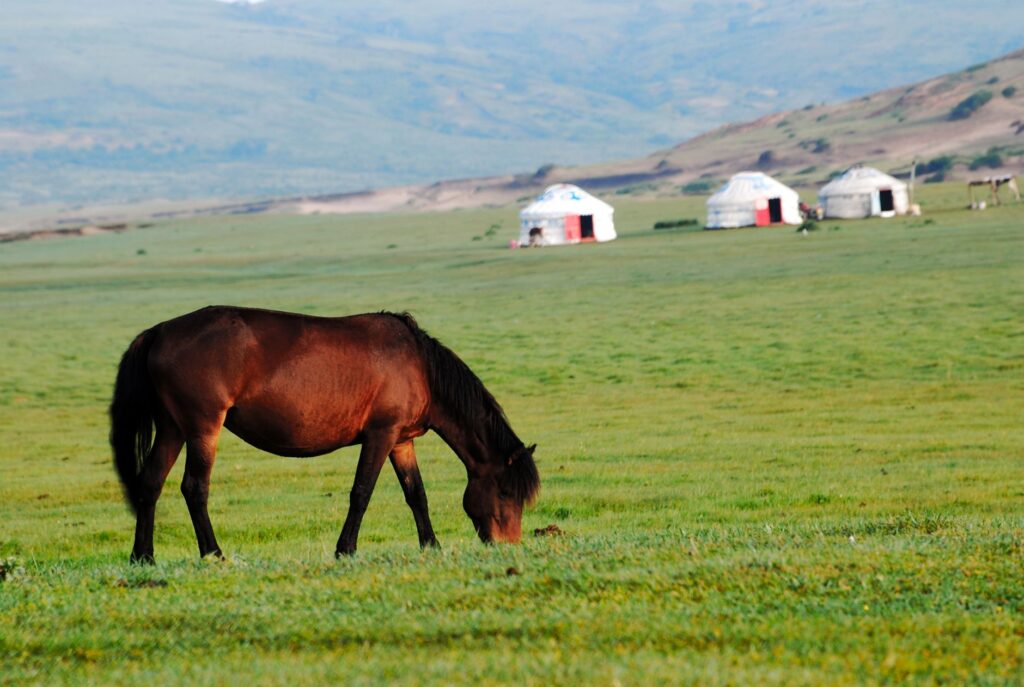
- The Trans-Mongolian (Moscow – Ulaanbaatar – Beijing): It diverges at Ulan-Ude station, east of Lake Baikal, heading south through Mongolia, crossing the Gobi Desert, and culminating in the capital of the People’s Republic of China.
- The Trans-Manchurian (Moscow – Harbin – Beijing): It separates from the main line at Tarskaya, east of Lake Baikal, crossing directly into Manchuria (northeastern China) before descending toward Beijing.
Each of these variants offers a markedly different landscape and cultural experience. While the classical route to Vladivostok stands out for the forest vastness of the taiga, the crossing of the Urals, and the imposing presence of Lake Baikal, the variants to Beijing introduce travelers to radically different geopolitical and cultural dynamics as they enter the nomadic steppes of Mongolia or the industrial and dynastic centers of China.
The railway is not merely a mode of transport in Eurasia; it is the backbone uniting civilizations and geographies that would otherwise remain isolated in their vastness.
The Logistics of the Journey: Trains, Classes, and Life On Board
The experience aboard long-distance trains in Russia and Central Asia follows a highly defined hierarchical structure that travelers must thoroughly understand. Trains are generally divided between regular scheduled convoys operated by national railways and private luxury tourist trains. For independent travelers, regular line trains represent the most authentic and economically viable option.
Accommodation categories on board are primarily divided into three classes:
- Spalny Vagon (SV or 1st Class): Private compartments with two berths. It offers maximum comfort and privacy, although availability is limited and the cost is significantly higher.
- Kupé (2nd Class): Closed compartments with four berths (two upper and two lower). This is the most balanced option for international travelers and families, allowing a reasonable level of privacy.
- Platskart (3rd Class): Open-plan carriages with berths distributed along the central corridor without dividing doors. It is the epicenter of the train’s social life, where locals share food, tea, and long conversations, albeit with less privacy and storage space.
Life on board is governed by a leisurely and predictable rhythm. Each carriage is attended by two assistants (the provodnik or provodnitsa), responsible for maintaining cleanliness, controlling the temperature via coal stoves or modern systems, and continuously supplying hot water from the central boiler (the tiatan). Stops at intermediate stations, lasting anywhere from two minutes to over an hour, are crucial moments to stretch legs and purchase fresh local products—such as smoked fish, berries, or dumplings—from local vendors stationed on the platforms.
Lake Baikal: The Spiritual and Geographical Heart of the Route
Approximately halfway along the classical route lies Lake Baikal, the oldest and deepest freshwater body on the planet, containing about twenty percent of the world’s unfrozen freshwater reserve. Strategic stops in cities like Irkutsk—known as the ‘Paris of Siberia’ due to its carved wooden architecture and its past as a place of exile for Decembrist intellectuals and artists—serve as the gateway to this unique ecosystem.
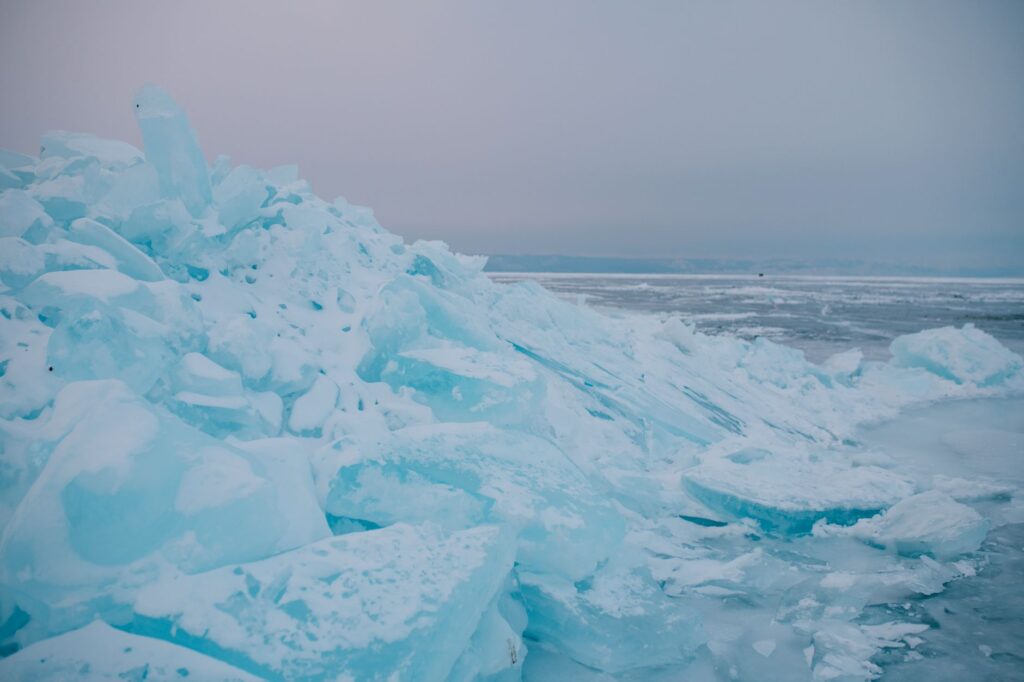
The shores of Baikal, especially in locations like Listvyanka or on Olkhon Island, offer a radically different perspective of deep Siberia. Here, the culture of the Buryat peoples, with shamanic roots, coexists with Russian fishing communities. The lake’s biodiversity is exceptional, hosting endemic species such as the freshwater seal (the nerpa) and the omul fish, which forms the cornerstone of local gastronomy. Ferry crossings during the summer months or traveling over the ice sheet in the dead of winter showcase the region’s extreme climatic duality.
Technical Planning: Visas, Borders, and Seasonality
Embarking on a journey of this magnitude requires rigorous bureaucratic planning. Depending on the traveler’s nationality and the exact itinerary chosen (Russia, Mongolia, and China), visa requirements can be complex and demand official letters of invitation, confirmed hotel reservations leg by leg, and strict consular processing deadlines. It is essential to verify current bilateral agreements and border transit requirements, as customs and passport controls at the borders of Naushki (between Russia and Mongolia) or Zabaikalsk are thorough and can delay the convoy for several hours.

Seasonality is another critical factor that entirely determines the nature of the experience. Summer (June to August) offers moderate temperatures and extended daylight, but coincides with peak tourism season, raising ticket prices and requiring reservations months in advance. In contrast, the Siberian winter (November to March), with temperatures frequently dropping below minus thirty degrees Celsius, offers breathtaking snowy landscapes, fewer international travelers, and an authentic perspective on the resilience of local communities.
Essential Practical Information for the Independent Traveler
- Tickets and Reservations: Tickets for Russian and Asian railways usually go on sale between 45 and 90 days in advance. It is recommended to use official online booking platforms or accredited agencies to avoid excessive intermediary markups.
- Connectivity and Currencies: Mobile internet access is acceptable in major cities and key stations, but nonexistent across vast stretches of the taiga. Carrying sufficient cash in local currency (rubles, Mongolian tugriks, and Chinese yuan) is essential for small purchases at remote stations where credit cards are not accepted.
- Onboard Equipment: Comfortable, easy-to-remove footwear (such as slippers), lightweight layered clothing due to heavy heating in carriages during winter, and non-perishable food provisions complement the basic dining car menus.
- Health and Medical Kit: Obtaining travel insurance with international repatriation coverage and emergency medical assistance is vital, as healthcare in rural Siberian areas may be limited to low-complexity centers.
The true value of the Trans-Siberian journey does not lie in the speed with which the destination is reached, but in the capacity to assimilate the monumental scale of space and time.
Conclusion: Contemporary Travel in the Age of High Speed
In a world dominated by the immediacy of commercial aviation and an obsession with speed, Eurasia’s great rail routes represent a courageous exercise in resistance and contemplation. Traveling thousands of kilometers on steel rails allows one to understand geography not as a barrier to be flown over in a few hours, but as a continuous physical, human, and cultural reality that demands respect and time. The Trans-Siberian, in its various iterations, remains the ultimate proof that travel, in its purest form, is a process of internal and external transformation that rewards the patient traveler with an unmatched understanding of the world’s vastness.