
Introduction to the Great Rail Myth
The whistle of a locomotive at Yaroslavsky Station in Moscow is not merely the start of a trip; it is the gateway to one of the most imposing geographical and human experiences available to the contemporary traveler. The Trans-Mongolian line, a historic branch that splits from the main Trans-Siberian route to plunge into the heart of Central Asia and descend into China, represents a masterpiece of nineteenth-century engineering and an irreplaceable cultural conduit. Stretching nearly eight thousand kilometers to Beijing, this train does not merely defy continental distances; it connects seemingly irreconcilable universes: the vast Siberian taiga, the mystical immensity of the Gobi Desert, and the ancient pulse of the Chinese empire.
Traveling along this steel artery requires a particular mental disposition. The leisurely pace of the convoy, moving at a steady and measured speed, imposes a truce against the hyperconnectivity of the modern world. Here, time is measured in sunsets that set the birch horizons ablaze and in the rhythmic clatter of wheels over track joints. This is not a simple displacement, but a prolonged immersion in the colossal scale of Eurasia, where each stop reveals subtle transitions in the faces, languages, architectures, and traditions of the communities that have grown sheltered by the rails.
Logistical Planning and the Art of the Route
Embarking on the Trans-Mongolian journey requires meticulous technical and administrative preparation. Unlike a conventional trip, this itinerary crosses heavily regulated international borders, implying advance management of visas for the Russian Federation, Mongolia, and the People’s Republic of China. Consular regulations change frequently, making it essential to verify entry requirements and transit policies at the respective embassies before issuing any tickets.

On the railway front, the route is not operated as a single continuous tourist train, but as a network composed of regular passenger trains operated by the national rail companies of Russia (RZD), Mongolia (MTZ), and China (CR). Experienced travelers typically divide the journey into strategic segments. The most common technical stops to break the monotony of the trip and absorb the territory include Yekaterinburg in the Urals; Irkutsk by Lake Baikal; Ulaanbaatar, the Mongolian capital; and Datong before reaching the final apotheosis in Beijing. This fragmentation not only eases physical fatigue but allows for a more genuine contact with the social reality of each region.
From the Muscovite Metropolis to the Ural Border
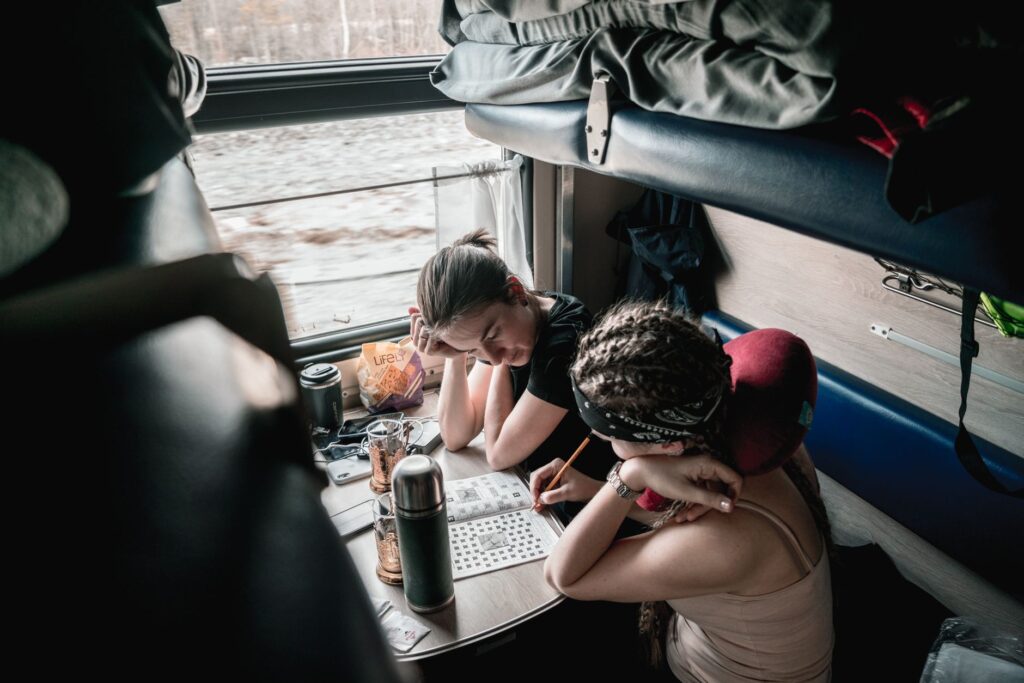
Departure from Moscow marks the abandonment of urban Europe. As the train snakes eastward, the dense network of suburbs rapidly gives way to the monotonous yet hypnotic landscapes of European Russia. Coniferous forests, locally known as taiga, dominate the scenery for days on end. In this first stretch, life on board organizes itself around the unwritten rules of the carriage, where the figure of the provodnitsa—the carriage attendant—exercises absolute yet benevolent authority, maintaining order, cleanliness, and a constant supply of hot water from the traditional samovar.
Passing through Yekaterinburg, situated on the eastern slopes of the Ural Mountains, symbolizes the invisible crossing between continents. It is here that the traveler officially leaves Europe behind to step into Asia. The city, marked by a complex industrial history and tragic 20th-century episodes, offers a first urban contrast with Moscow, standing out for its constructivist architecture and proximity to monuments marking the continental divide. From this point onward, stations begin to space out, and stop names acquire increasingly remote and evocative sonorities.
The Sacred Mirror: Lake Baikal and Deep Siberia
Few enclaves along the route generate as much anticipation as Lake Baikal. Known as the «Eye of Siberia» or the largest unfrozen freshwater reservoir on the planet, this inland sea dazzles with its pristine transparency and endemic biodiversity. Upon arriving in Irkutsk, the urban gateway to Baikal, the atmosphere takes on a different nuance. Traditional Siberian wooden houses, adorned with intricate lace carved into their eaves, bear witness to a past of exile and cultural resilience.
Lake Baikal is not merely a monumental geographical feature; it is a presence that permeates the air with unusual clarity and a silence that reverberates deep within the taiga.
On the shores of the lake, the town of Listvyanka or Olkhon Island allows visitors to grasp the spiritual magnitude that Baikal exerts over the Buryat people, whose roots run deep in shamanism. The lake’s waters, home to unique species like the freshwater seal or nerpa, shift colors according to the daylight, oscillating between cobalt blue and steel gray. Travelers who choose to disembark at this station often take the opportunity to tour the historic Circum-Baikal section, a masterpiece of railway engineering carved directly into the rocky cliffs bordering the southern shore.

The Steppe Transition: Toward the Heart of Mongolia
Leaving the vast Siberian expanse behind, the train undertakes its southern descent, crossing the border into Mongolia. The landscape undergoes a radical transformation: dense forests recede to make way for the endless steppe, an undulating plain where the sky seems to occupy three-quarters of the world. Here, modern civilization assumes an almost imperceptible profile, represented by scattered livestock settlements and the circular silhouettes of traditional white yurts or gers.
Ulaanbaatar, the Mongolian capital, emerges in this setting as a metropolis of dynamic contrasts. Tibetan Buddhist monasteries, such as Gandantegchinlen, coexist on its streets with Soviet-era residential towers and modern glass skyscrapers. For the Trans-Mongolian traveler, Mongolia offers a fundamental pause to delve into the nomadic lifestyle, visit Terelj National Park, or contemplate the immensity of the south, where the earth merges with fossil vestiges of the Gobi Desert. Local gastronomy, based on fermented dairy products and lamb, reflects extreme adaptation to a rigorous climate.
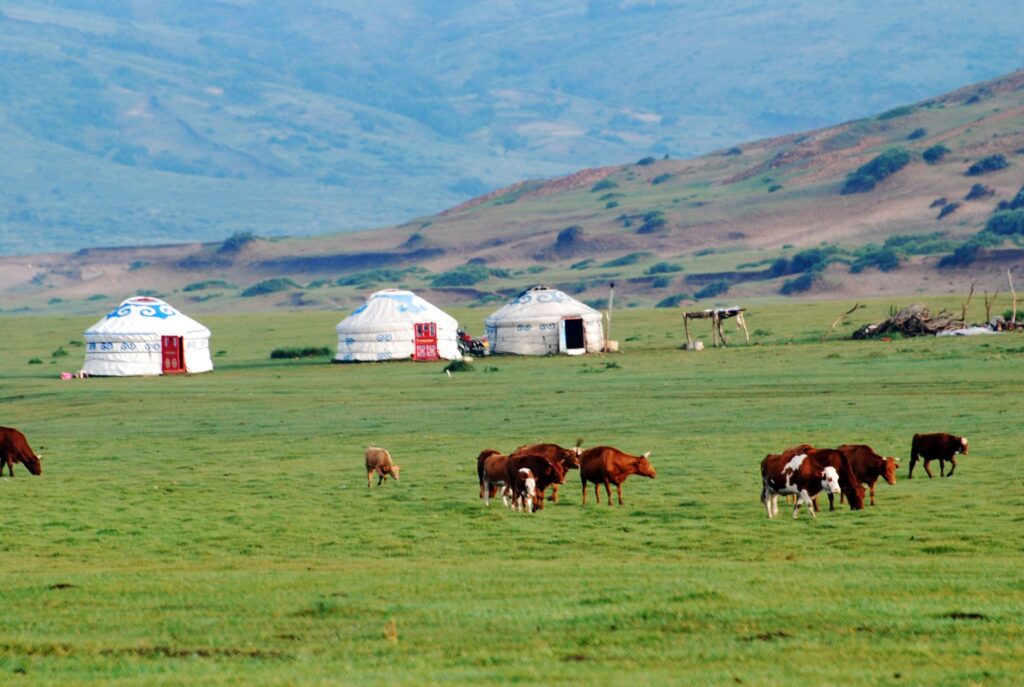
The Gobi Desert and the Border with the Asian Giant
The final leg of the journey leads from the Mongolian plateau to the Chinese border at the city of Erenhot. At this technical junction occurs one of the most fascinating rituals of global rail travel: the bogie change. Because the track gauge in China differs from that used in Russia and Mongolia, the train carriages are lifted by massive hydraulic jacks while passengers remain inside, swapping the wheel assemblies to allow continued travel onto the Chinese railway system.
Once the border maneuver is complete, the train plunges into the Inner Mongolian autonomous region, crossing the windy sands and plateaus of the Gobi Desert. The chromatic scale shifts once more: the ochres, golds, and reddish tones of the desert dominate the visual panorama. Chinese industrial cities and logistical centers begin to multiply, announcing the proximity of the final destination. Stops in this section provide a glimpse into the integration between the historical heritage of the Silk Road and the hyper-modernity of contemporary Chinese transport infrastructures.
Beijing: The End of the Road in the Forbidden City
Arrival at Beijing Central Station marks the cessation of a colossal voyage. Having crossed borders, time zones, and disparate ecosystems, the traveler finds themselves immersed in the overwhelming vitality of the Chinese capital. The contrast between the monotonous placidity of the steppe and the bustle of Beijing’s hutongs is absolute. The city offers a monumental close worthy of the route, featuring universal architectural jewels such as the Forbidden City, the Temple of Heaven, and, a short distance away, the restored and rugged sections of the Great Wall.
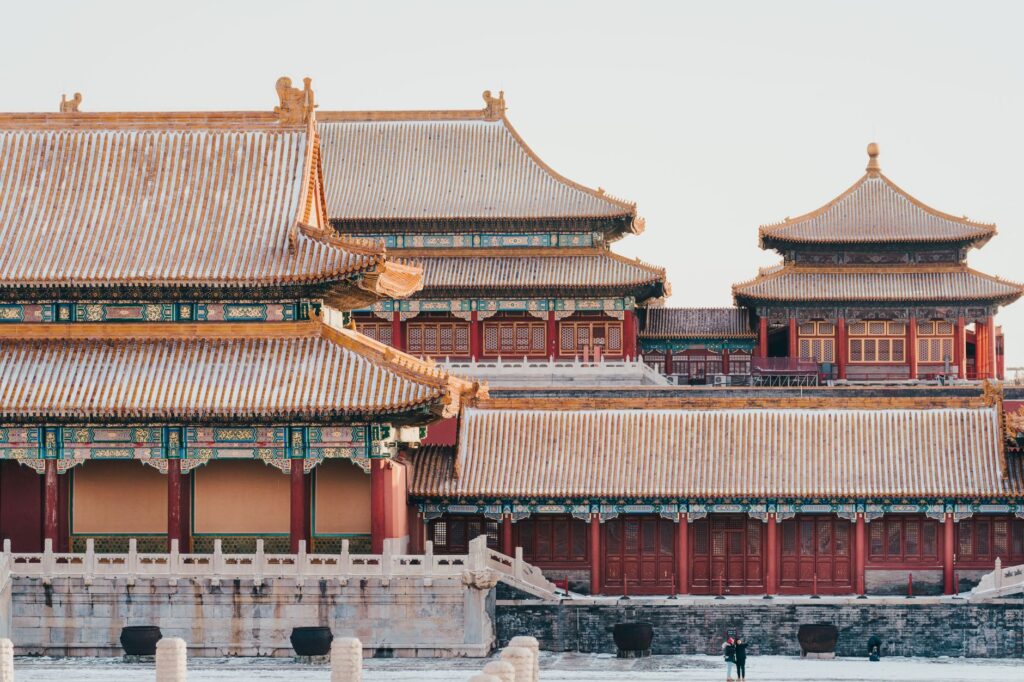
Conquering the Trans-Mongolian in its entirety is an acceptance of humility before the monumental proportions of the Asian continent and the persistence of human ties.
This final stretch invites reflection. The experiences accumulated along the rails—from long conversations with strangers sharing tea in the dining car to solitary contemplation of changing landscapes—sediment in memory. The journey does not conclude with stepping off the train, but with the assimilation of having traversed the map of Eurasia at the exact speed required to understand its infinite diversity.
Practical Guide for the Rail Traveler
Organizing an expedition along the Trans-Mongolian line requires attending to several fundamental operational recommendations to ensure safety and comfort:
- Visas: It is mandatory to process visas for Russia, Mongolia, and China in advance. Verifying exact validity dates and multiple entries is vital if planning to exit and re-enter countries.
- Currency and Payments: Although credit cards are accepted in major cities, carrying sufficient cash (rubles, Mongolian tugriks, and yuan) is wise for small settlements and on-board purchases.
- On-Board Luggage: Space in compartments—especially in second class or kupe—is limited. Traveling with compact suitcases or backpacks that easily stow under bunk seats is strongly recommended.
- Food Provisions: The dining car offers hot meals, but seasoned travelers prefer bringing additional provisions such as dry fruits, instant soups, tea, and bread for consumption between stations.
- Connectivity: Mobile phone networks have intermittent coverage in the most sparsely populated areas of Siberia and the Gobi Desert; acquiring eSIM or local cards according to the section is advisable.