Introduction to a Transcontinental Artery
The Trans-Mongolian Railway stands as one of the most remarkable engineering and logistical achievements on the Eurasian continent. As a historic branch of the legendary Trans-Siberian network, this route not only connects disparate capitals and cultures but establishes a continuous overland corridor that defies the vast expanses of the Siberian taiga, the Mongolian steppe, and northern China. Since its formal inauguration in the 1950s, this railway system has served as the definitive link between Eastern Europe and the Far East, facilitating the transport of heavy freight, passengers, and strategic supplies across more than 4,700 miles of continuous rail.
Analyzing the Trans-Mongolian route requires understanding the magnitude of the geographical and technical challenges overcome by 20th-century engineers. Crossing the Yenisei River, climbing the foothills of the Sayan Mountains, and coping with the thermal extremes of the Gobi Desert—where temperatures fluctuate dramatically between summer and winter—demanded unprecedented infrastructure solutions. Today, the route remains a cornerstone for regional connectivity, offering unique insight into large-scale mobility and economic integration among three nations with distinct political and industrial frameworks.
Historical Origins and Geopolitical Context
The genesis of the Trans-Mongolian Railway is deeply intertwined with mid-20th-century geopolitics and the necessity of consolidating strategic alliances between the Soviet Union, the People’s Republic of China, and the Mongolian People’s Republic. While the original Trans-Siberian railway ran entirely through Russian territory to Vladivostok, the opening of the Mongolian variant significantly shortened the distance between Moscow and Beijing, enabling a direct flow of political, commercial, and cultural influence through Ulaanbaatar.

Construction advanced in stages during the 1940s and 1950s. The northern link connecting the Russian network to the Mongolian border was completed in 1949, while the southern connection crossing the Gobi Desert to join China’s railway network was finalized in 1955. This corridor quickly became a symbol of socialist cooperation and an indispensable commercial conduit during the Cold War. The consolidation of this route reduced overland transit times between Eastern Europe and Beijing by several days, setting a precedent in international logistics at the time.
Engineering Challenges in the Taiga and the Steppe
Building and maintaining a railway line across such extreme geographies poses monumental technical challenges. The Trans-Mongolian route crosses terrain featuring permafrost, active seismic zones, and desert plains where blowing sand and severe snowstorms can block tracks within hours. Engineers had to design elevated embankments and specialized drainage systems to prevent seasonal thaws from destroying the rail infrastructure.
Furthermore, managing the energy supply for locomotives across thousands of miles without nearby urban centers required the creation of strategically distributed service stations and maintenance bases. Despite the gradual electrification of several sections, the use of powerful diesel locomotives remains indispensable in remote sectors of Mongolia, where extreme weather and a lack of high-voltage electrical grids complicate catenary maintenance.
The Gauge Dilemma and Border Logistics
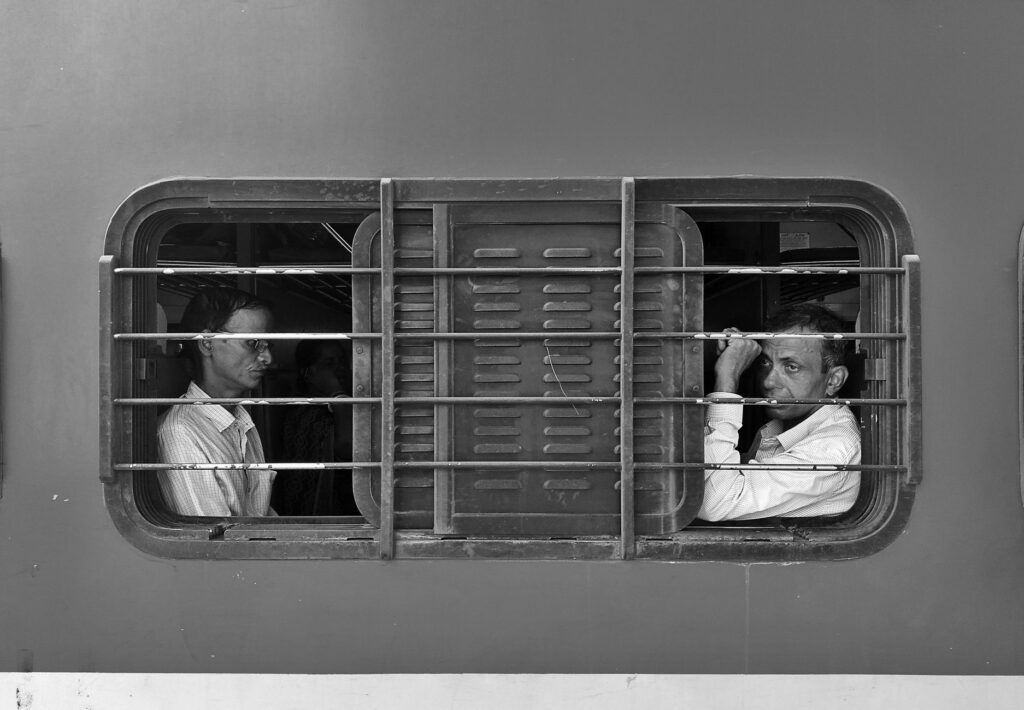
One of the greatest operational obstacles of the Trans-Mongolian Railway is the difference in track gauge among the participating countries. Russia and Mongolia employ the Russian broad gauge (1,520 mm), while China uses the standard international gauge (1,435 mm). This technical divergence means that through trains crossing the border must undergo a complex bogie-exchange process at frontier stations such as Naushki or Erenhot.
During this procedure, which can take several hours, passenger or freight cars are lifted using massive hydraulic jacks while axles and running gear underneath are replaced. This logistical operation requires millimeter precision and strict coordination between the railway crews of both nations, minimizing downtime at a border where rigorous customs regulations and security controls converge.
Economic Impact and Freight Connectivity
Beyond passenger transport, the Trans-Mongolian line is a vital artery for international trade and land-based economic corridors linking Asia and Europe. Containerized transport along this route offers an intermediate alternative between maritime shipping—slower but of higher capacity—and air freight—faster but prohibitively expensive for bulky goods.

Logistics companies and state railway operators regularly coordinate full freight trains carrying manufactured goods, raw materials, and industrial components from Chinese production hubs to markets in Eastern and Central Europe. Customs efficiency and the digitization of freight manifests have improved markedly over the past decade, reducing historical border bottlenecks and optimizing overall transit times.
Railway Architecture and Iconic Stations
The stations along the Trans-Mongolian route are not merely functional infrastructures, but genuine architectural monuments reflecting the history and cultural identity of the regions they traverse. From the neoclassical grandeur of Yaroslavsky Station in Moscow to the functional and austere design of terminals deep within Siberia and Mongolia, each building tells a narrative about the expansion of industrial modernity eastward.
The stations of the Trans-Mongolian railway function as cultural thresholds where Russian imperial architecture, socialist realism, and nomadic Mongolian aesthetics converge.
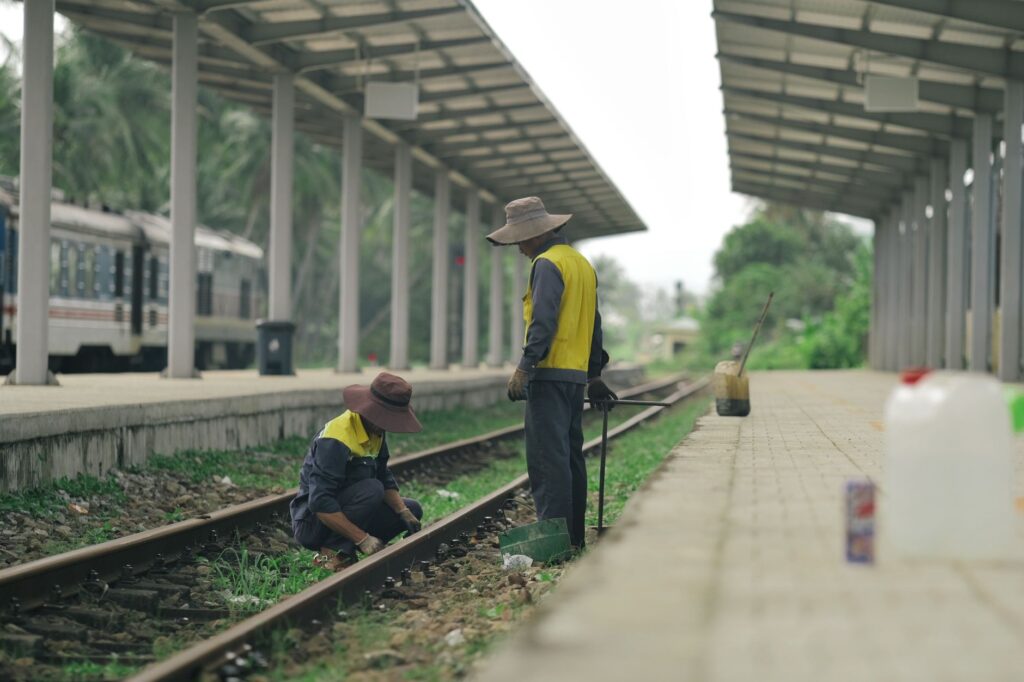
In Ulaanbaatar, the central station blends Soviet architectural elements with traditional Mongolian ornamental motifs, serving as the heartbeat of the nation’s transport network. These terminals are equipped with essential services for long-distance travelers, including waiting rooms, maintenance facilities, and technical checkpoints to ensure the safety of convoys before continuing into more arid terrain.
Passing Through Ulaanbaatar and the Mongolian Steppe
The section traversing Mongolia offers one of the most unique visual and logistical experiences of the journey. The train meanders through the vast green steppe in summer and white plains in winter, where the horizon appears infinite and human presence is reduced to scattered nomadic yurt (ger) camps. The railway tracks act as the backbone connecting the country’s sparse urban centers to the outside world.
For the Mongolian economy, the railway is the primary route for exporting minerals, coal, and livestock products to Russian ports and Chinese markets. The management of this corridor is jointly operated by the Mongolian and Russian railways through a joint venture, underscoring the geopolitical and economic importance Ulaanbaatar places on this infrastructure to maintain commercial sovereignty alongside its powerful neighbors.
Entering China and the Gobi Desert
After leaving the Mongolian steppe, the Trans-Mongolian line enters the Inner Mongolian plateau and crosses the vast expanses of the Gobi Desert on Chinese territory. This sector presents severe environmental conditions characterized by high winds, shifting dunes, and extreme thermal swings. Chinese engineers have deployed modern sand-fixing technologies and vegetative barriers along the tracks to protect trains from frequent sandstorms.

The final arrival in Beijing marks the terminus of a journey spanning over a week that crosses three radically different climate and cultural zones. Central Beijing Station handles both freight convoys and international passenger services daily, consolidating a transport node that connects directly with China’s high-speed rail network and the maritime routes of the South China Sea.
Practical Information for Trip Planning
Planning a journey or freight shipment along the Trans-Mongolian route requires detailed knowledge of regulatory and operational requirements. While historically promoted as a great tourism adventure, obtaining visas for Russia, Mongolia, and China today is a strict prerequisite that must be managed months in advance. Customs regulations regarding the transport of currency, cultural goods, and food products are rigorous.
- Documentation: A valid passport with a minimum validity of six months and specific visas for each of the three countries along the route.
- Tickets and Reservations: Ticket purchases must be made through authorized agencies or official national railway platforms up to 60 to 90 days in advance.
- Currency and Payments: Travelers must carry Russian rubles, Mongolian tugriks, and Chinese yuan, as foreign card usage may be limited in the more remote sections of the trip.
- Climate and Equipment: Temperatures vary extremely; it is essential to pack appropriate clothing for both the rigors of the Siberian winter and the high summer temperatures in the Gobi.
Conclusion on the Future of the Route
The Trans-Mongolian Railway remains a steadfast masterpiece of Eurasian connectivity. In a world where commercial aviation dominates long-distance passenger transit, this railway corridor demonstrates the enduring relevance and resilience of heavy overland transport. Its capacity to adapt to modern trade flows and sustainable infrastructure demands ensures it will continue to serve as a strategic bridge between cultures, economies, and geographies for decades to come.