
The Penumbra of the Grill and Absolute Respect for the Product
In the greenest and most humid valleys of Guipúzcoa, where the Cantrabrian Sea beats with contained fury against coastal cliffs and morning mist clings to centuries-old farmhouses, time seems measured in degrees of radiant heat. Here, cooking is neither a laboratory science nor an exercise in ephemeral avant-garde; it is an act of ancestral faith presided over by fire. The traditional grills of the Basque Country do not seek to disguise flavor, but to strip it down to its purest essence through the meticulous use of oak and beech embers.
Entering one of these gastronomic sanctuaries is crossing the threshold into another temporal dimension. The aroma of burnt wood infused with sea salt and animal fat permeates the sandstone walls. There is no ambient music or decorative artifice: the only sound marking the rhythm is the steady sizzle of fat kissing hot iron and the respectful murmur of diners arriving from all corners of the globe in search of an irreplaceable culinary experience.

The Anatomy of Fire: Charcoal, Iron, and Patience
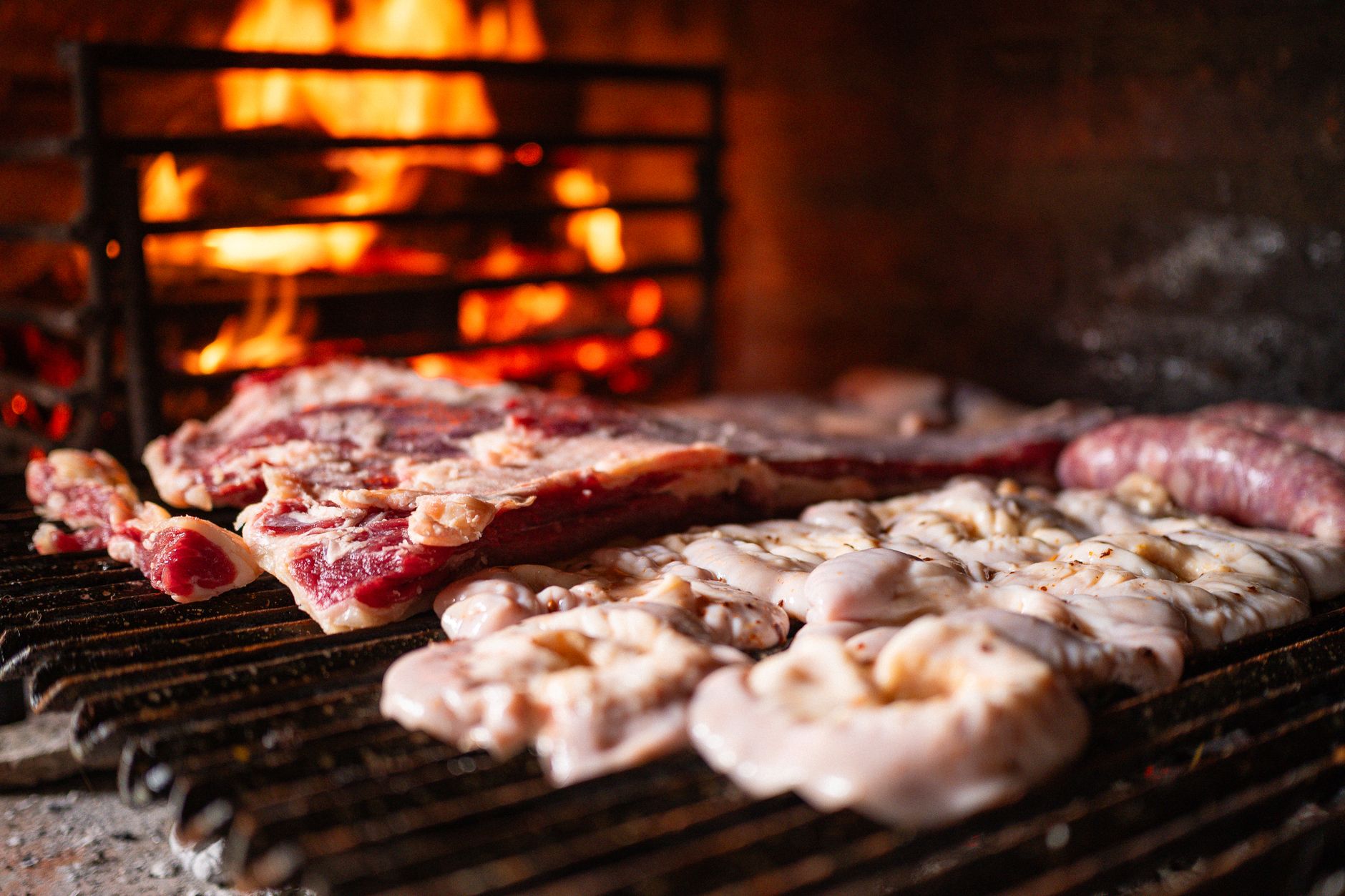
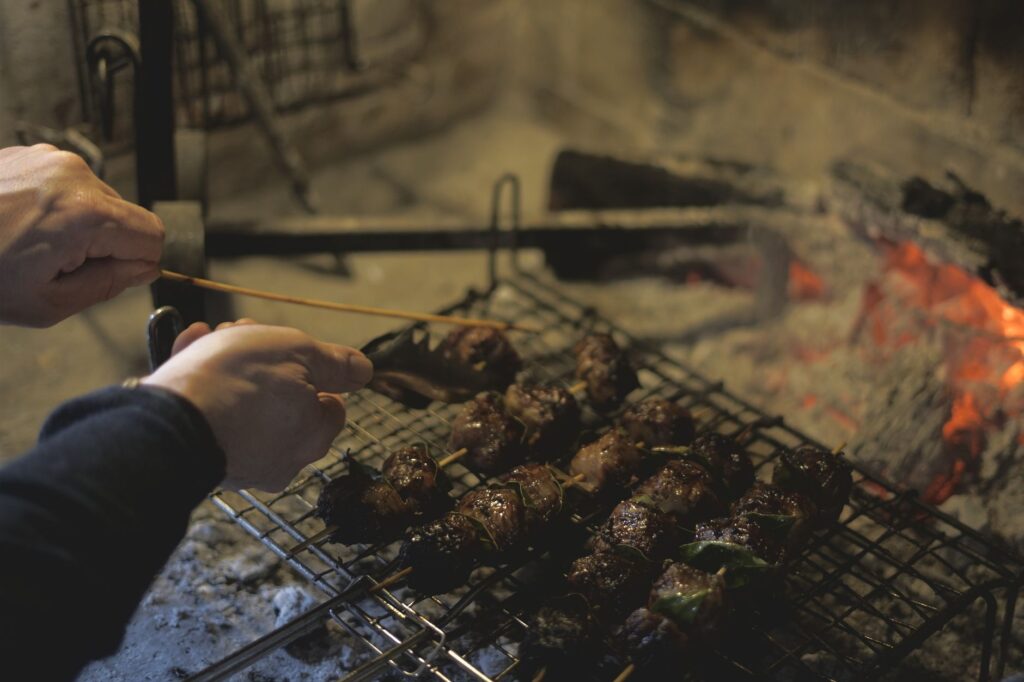
Unlike conventional barbecue, where direct flame and haste usually char the surface while the center remains cold, the Basque grill is an exercise in artisanal thermal engineering. Master grillers, heirs to a lineage of men and women who have dedicated their lives to the trade, manipulate mobile grills with pulleys and counterweights that allow them to adjust the distance between food and embers with millimetric precision.
The secret lies not in violent fire, but in the constant caress of silent embers and absolute respect for the timing of the raw material.
The charcoal used is never random; holm oak or white oak wood is rigorously selected, burned down beforehand into homogeneous coals that emit steady heat without acrid smoke that could ruin the delicate texture of wild fish. The height of the grill is a dynamic variable changing second by second, requiring uninterrupted attention that only decades of accumulated experience before searing heat can grant.
Wild Fish: From the Cantabrian Sea to the Iron Grid
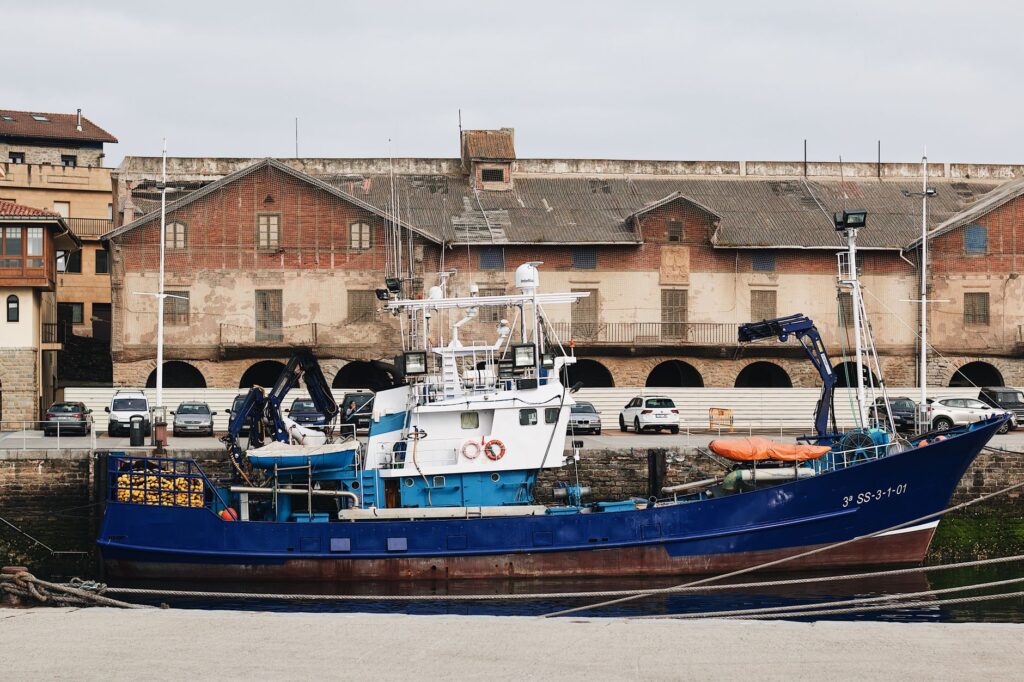
Turbot, red seabream, common seabream, and hake are the undisputed kings of Guipuzcoan embers. Captured in the cold, rough waters of the Cantabrian Sea by the inshore fishing fleet, these specimens arrive at local markets in Orio, Getaria, and San Sebastián just hours later. Their culinary treatment on the grill is a masterclass in technical minimalism.
Before touching the iron, the fish is basted exclusively with a generous stream of extra virgin olive oil, local apple cider vinegar, and coarse sea salt. Placed upon the metallic clamp-style grill, the griller ensures the skin toasts lightly without sticking. The critical point is reached when the central bone separates easily and the inner flesh turns pearlescent, juicy, and completely flaked into translucent layers.
The Mastery of Women Grill Masters and Generational Handover
For decades, collective imagination linked fire management exclusively to the rugged man of the farmhouse. However, the real history of Basque gastronomy is deeply sustained by women—the grill masters who, from the backrooms of taverns and modest family dining rooms, laid the foundations of this globally admired technique.
Historical figures who populated the ports of Getaria transformed the simple act of grilling fish into a ritual of popular haute cuisine. Today, this legacy is transmitted in local cooking schools and, above all, through direct apprentice-to-master learning. The new generations of cooks understand that modernity in the grill does not consist of altering tradition, but of protecting it with scientific rigor and ecological sensitivity.
Ox and Old Cow Chops: Texture and Dry Aging
If fish represents the marine delicacy of the Cantabrian, old cow or ox chops embody the telluric power of the Basque interior. Selecting the meat is a critical process: older animals raised in natural pastures of northern Spain or selected European ranches, featuring optimal intramuscular fat infiltration and dry aging that ranges from four to eight weeks in controlled-atmosphere chambers.
Cooking the chop on the grill is a visual and olfactory spectacle. Unlike fish, the meat is exposed to very intense and close heat at first to caramelize the external juices via the Maillard reaction, creating a crusty, saline surface. It is then moved away so gentle heat can penetrate the heart of the cut, achieving a uniform pink tone and a melting texture that dissolves on the palate with almost no resistance.
The Secrets of Refritxina: Vinegar, Garlic, and Chili Pepper
No grilled fish in the Basque Country is ever served entirely naked. The crowning touch is the traditional refritxina or hot dressing, an emulsion made in a pan with extra virgin olive oil, thin slices of blonde garlic, and pickled Ibarra peppers, lightly sharpened with a few drops of cider or white vinegar.
- Superior quality extra virgin olive oil as the base of the emulsion.
- Las Pedroñeras garlic cut into uniform slices, patiently browned without burning.
- Whole or sliced Ibarra chili peppers, providing freshness and subtle heat.
- The final gesture: pouring the sizzling liquid over the freshly grilled fish, causing an unmistakable aromatic burst.
This dressing does not mask the product; on the contrary, it acts as a chemical bridge that enhances the marine salinity of the fish and balances the fat with the precise acidity of the vinegar, rounding out a bite that defines the culinary identity of an entire region.
Atlantic Pairing: Txakoli and Cider Houses
Understanding the culture of the Basque grill without its liquid environment is impossible. The inseparable companion of grilled fish is txakoli, a young, slightly sparkling, fresh, acidic white wine with marked mineral and citrus notes stemming from steep hillside vineyards facing the sea, mainly within the Getariako Txakolina, Bizkaiko Txakolina, and Arabako Txakolina designations of origin.

Txakoli is not merely an accompanying wine; it is the necessary corrective acid required to cleanse the palate between bites of fatty fish.
For red meat, the offering expands toward classic Rioja Alavesa reds, crianzas and reservas where noble wood complements the power of the chop. And during the winter season, which coincides with the opening of traditional sagardotegiak or cider houses, the grill menu merges with the culture of txotx, where natural cider is poured directly from giant wooden barrels.
Practical Information for the Gastronomic Traveler
Planning a route through the traditional grills of Guipúzcoa requires advance booking and respect for local rhythms. The most iconic establishments are usually located in small coastal towns or secluded interior farmhouses, making car rental practically indispensable.
Booking months in advance is essential, especially during summer months and weekends. Many of these venues operate with strict lunch and dinner schedules, adapted to the rhythm of fresh fish available at the fish market each morning. Checking weekly closing days, typically concentrated between Monday and Tuesday, is highly recommended.
The dress code is casual yet respectful of the classic atmosphere of the dining rooms. As for the budget, it varies considerably depending on the chosen cut: large wild fish and premium steak chops are priced by weight, so asking for the price per kilo before confirming the order with the waiter is always wise.
Epilogue: The Permanence of Authenticity Against Time
In an era dominated by speed, passing trends, and the global standardization of food, the traditional grills of Guipúzcoa stand as bastions of cultural resistance. They do not pursue Michelin stars as a marketing strategy, but as the inevitable consequence of unnegotiable rigor.
Sitting before a solid wood table in a Basque farmhouse, watching the silent dance of the griller among embers, and tasting the first bite of a tender, steaming turbot is reconnecting with the very origins of human civilization around fire. It is definitive proof that the greatest culinary sophistication often lies in knowing when to stop interfering and let nature speak through the embers.