The Geography of Isolation and the Temperament of the Wind
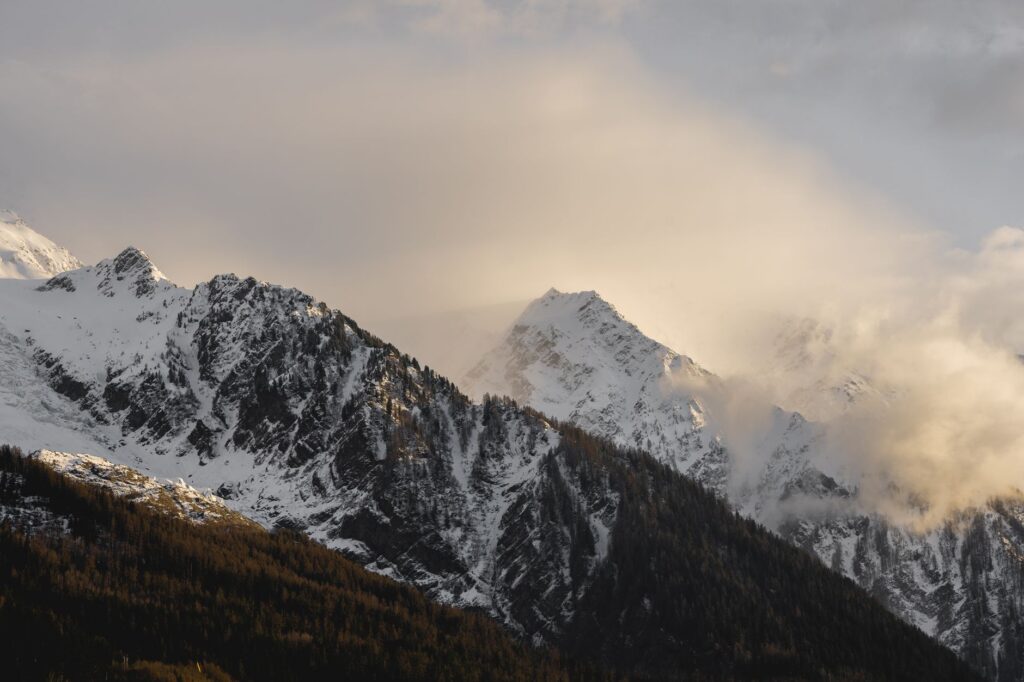
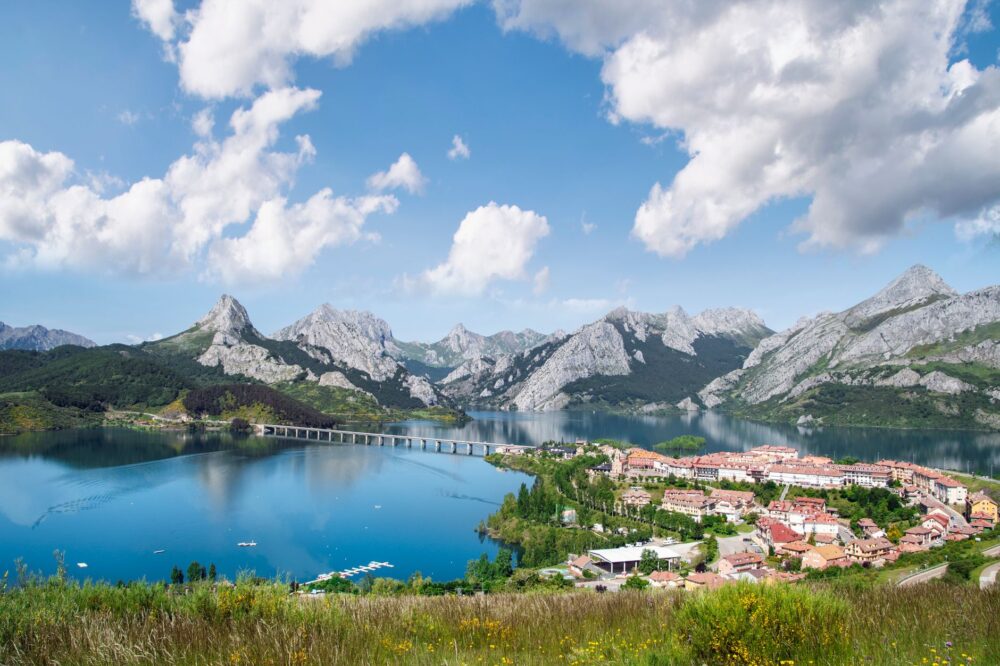
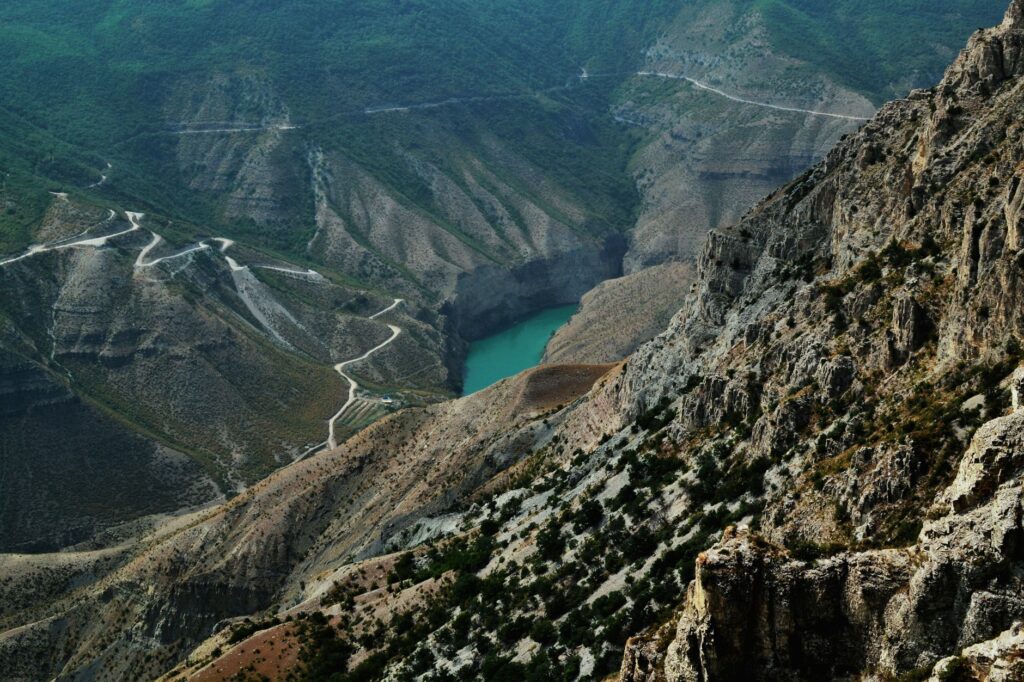
In the heart of the Picos de Europa, geography is not a decorative accident, but a rigorous filter that conditions human, animal, and culinary life. The limestone peaks, marked by deep gorges carved by the Cares and Sella rivers, shape a territory where stone dominates the horizon and isolation has historically been the norm and safeguard of its most archaic traditions. Here, the Atlantic mountain climate imposes long winters marked by persistent snowfall that blocks traditional access routes, and brief yet intense summers when high-altitude pastures explode into a unique botanical biodiversity. This extreme environment forges the character of its inhabitants and unmistakably defines the identity of its most prized products.
Unlike flat valleys where industrial agriculture has transformed the landscape and production methods, the high pastures of León and Asturias retain an agrarian structure that is almost feudal in its community operation, yet deeply wise in its ecological management. The shepherds who still drive their livestock upward in search of summer pastures are merely repeating an ancient ritual of vertical transhumance. They know how to read the signs of the sky, they are familiar with every sinkhole and every spring, and they understand that the quality of the milk sustaining the cheese depends not on whim, but on the infinite variety of wild herbs and flowering plants carpeting the rocky slopes.
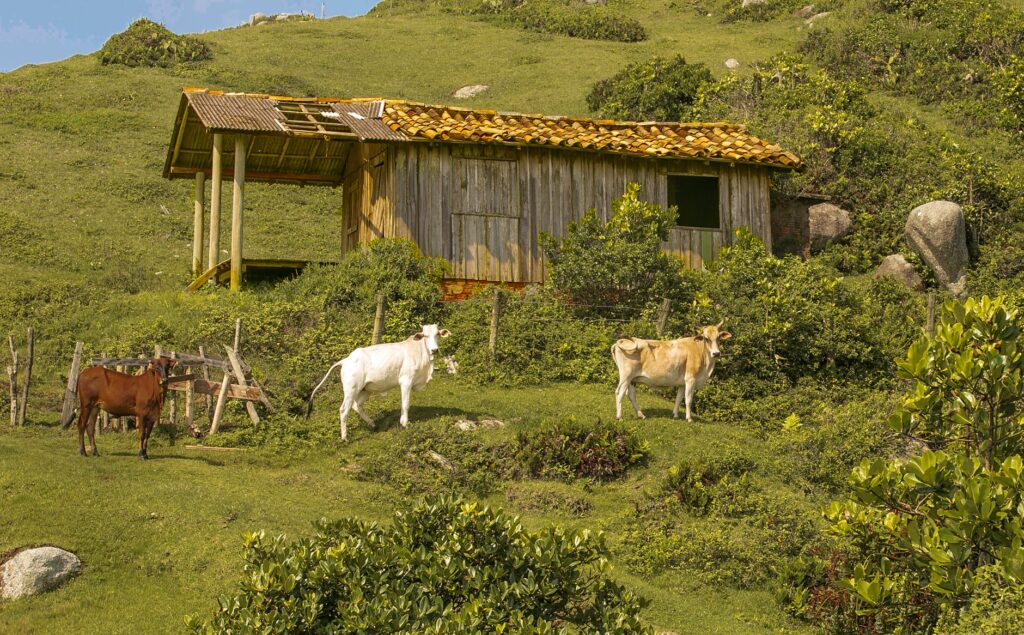
Indigenous Livestock: Guardians of Alpine Biodiversity
The foundational pillar supporting the excellence of Valdeón cheese and the few high-altitude cheeses of the Picos de Europa is the livestock. Native breeds such as the Alpine Brown cow, the adapted Grazalema Merino sheep, and above all the hardy goats and crossbreed cows that withstand steep slopes, are authentic machines for transforming the harshness of the terrain into a rich, complex, and aromatic fat. Every bite of alpine pasture—from gentian to hellebore and wild clover—translates into organoleptic notes impossible to replicate on the valley floor.
Managing livestock at these altitudes requires titanic physical effort and empirical veterinary knowledge passed down from generation to generation. The animals climb along paths where vertigo is constant, selecting the best shoots and naturally fertilizing a fragile soil battered by erosion. This symbiotic relationship between animal, pasture, and shepherd constitutes the true intangible heritage of the region, a fragile balance currently threatened by rural depopulation and strict EU sanitary regulations that often ignore the logic of artisan tradition.

The Alchemy of Cold and Humidity: The Birth of the Blue
The production process of Valdeón cheese, protected under a Protected Geographical Indication (PGI), is an exercise in patience and respect for biological rhythms. The milk, raw or subjected to minimal thermal treatments depending on the farm and format, is curdled by adding natural rennet at meticulously controlled temperatures. After cutting the curd and draining the whey, the cylindrical molds receive the paste without excessive mechanical pressing, allowing the internal structure to retain small air pockets.
It is in the maturation phase that true culinary alchemy occurs. The wheels are traditionally moved to natural caves carved into the limestone rock, where relative humidity hovers around ninety percent and the temperature remains constant year-round. In this subterranean habitat, bathed by cool air currents, strains of Penicillium proliferate spontaneously or through inoculation. These fungi colonize the interior of the cheese through micro-fissures, creating those characteristic blue-green veins that give the product its elegant pungency, creamy texture, and unmistakable aroma of cellar and undergrowth.
The cave is not a warehouse; it is the stone womb where the cheese breathes, matures, and acquires its definitive soul under the invisible tutelage of humidity and rock.
From Cave to Plate: Architecture of Complex Flavors
Tasting Valdeón cheese demands an exercise in sensory attention. At first glance, its rugged rind, in shades of gray and ochre often covered by a subtle mantle of white and reddish molds, anticipates a product with character. When cut, the paste appears ivory-colored, semi-soft, crossed by a capillary network of cavities lined with intense blue. On the nose, it displays sharp lactic notes that quickly evolve into memories of toasted nuts, noble-rancid butter, and the mineral dampness of the earth’s depths.
On the palate, its attack is unctuous, almost melting on the tongue, immediately giving way to a balanced salinity and a noble final bitterness that recalls fresh mushroom and wet grass. Far from industrial blue cheeses saturated with salt and additives, artisan Valdeón offers persistent complexity that cleanses the palate and inevitably invites another bite.
The Role of Family Dairies and Artisan Resistance
Behind every wheel of Valdeón marketed with rigor lie small family dairies, many settled in localities like Posada de Valdeón or Caín, which have successfully navigated the pressure of mass markets. These human-scale enterprises combine the inherited tradition of grandmothers and mothers with hygienic control technologies indispensable for meeting European Union food safety standards. Investment in controlled fermentation rooms and aging chambers has allowed production to stabilize without sacrificing its artisan soul.
However, generational turnover remains the great pending assignment. Young people in the region face the dilemma of continuing a demanding trade subject to weather caprices and administrative bureaucracy, or emigrating to urban centers in search of less demanding jobs. Public institutions and producer associations are promoting valorization and culinary tourism initiatives, attempting to demonstrate that the profitability of these small farms depends inexorably on a radical defense of authenticity and differential quality.
High-Altitude Pairings: Beyond Sweet Wine
The organoleptic potency of Valdeón cheese has traditionally challenged the classical rules of oenological pairing. While the historical accompaniment in the region has been Asturian natural cider—whose acidity and natural carbonation cut through the cheese’s fat and cleanse the palate with surgical efficiency—fine dining has explored new synergies with surprising results. Red wines with prolonged aging and high acidity, such as those made from Mencía grapes in El Bierzo or Prieto Picudo in León, find in the cheese’s unctuousness a perfect counterpart.
Likewise, experts recommend exploring pairings with barrel-fermented white wines endowed with good structure, or even low-proof spirits and artisan stout or porter beers, whose roasted and coffee notes converse directly with the empyreumatic nuances of the fungus. The secret lies in always seeking balance between the cheese’s lactic fat and the freshness or astringency of the accompanying liquid.
Practical Information for the Culinary Traveler
For travelers interested in experiencing Valdeón cheese culture and the Picos de Europa environment firsthand, rigorous planning is essential due to the terrain’s topography. The best time to visit the region spans from June to September, when mountain passes are open and livestock grazes freely in the high meadows, allowing visitors to observe traditional grazing practices.
- How to get there: Road access is primarily via the LE-243 road from Riaño or descending the impressive Beyos gorge along the N-625. Private vehicle and extreme caution are recommended during rainy periods or heavy fog.
- Recommended routes: The Cares Trail (from Caín to Poncebos) allows visitors to comprehend the geological scale of the gorge that simultaneously isolates and connects both valleys.
- Cheese dairy visits: It is essential to arrange a prior appointment with local producers in Posada de Valdeón and Santa Marina de Valdeón, as most are small family workshops with very limited visitor capacity.
- Accommodation and dining: Rural stone and wood guest houses offer warm stays, while local taverns serve traditional slow-cooked stews ideal for combating nighttime temperature drops.
The traveler who approaches Valdeón looking solely for a gourmet product is mistaken; one comes here to understand a philosophy of life where food is the edible testimony of human resilience against the mountain.
Visual Close and Landscape Memory
When the sun begins to decline behind the limestone walls of the Picos de Europa, casting copper-red hues over the peaks and violet shadows over the enclosed valleys, life in the high pastures recovers its ancestral silence. In the semi-subterranean cellars, the cheeses continue their slow, invisible evolution, transforming morning milk into a treasure of flavor and culture. Valdeón cheese is not merely a food with a designation of origin; it is irrefutable proof that human beings, when dialoguing with respect and patience with a hostile environment, are capable of extracting beauty and sustenance from the most inaccessible crevices of the planet.