
The Origin of a Culture Bound to the Sea
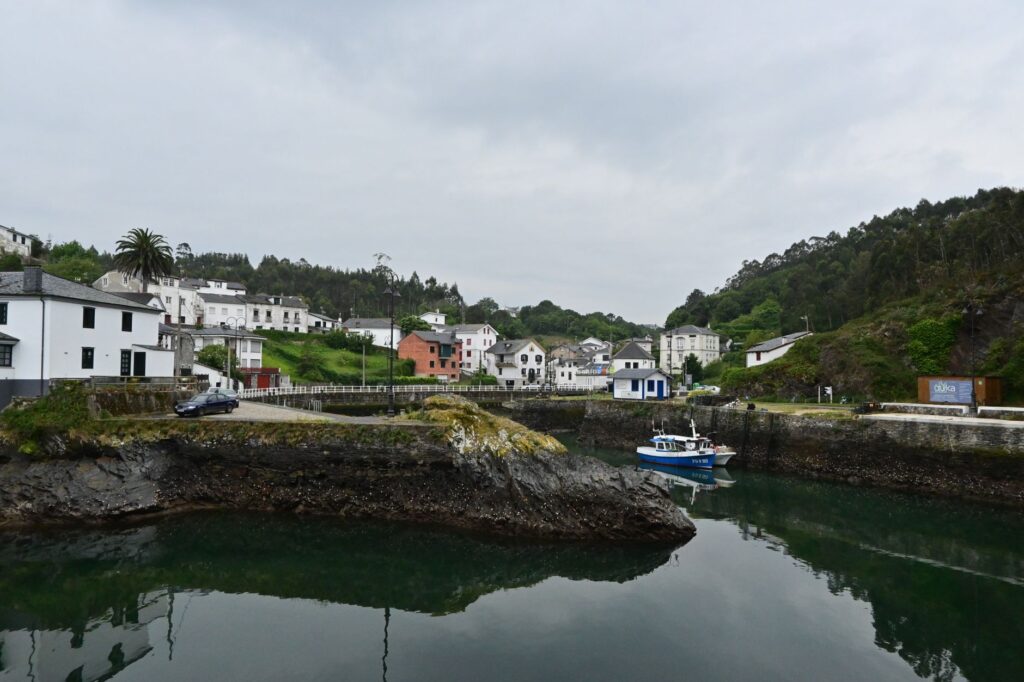
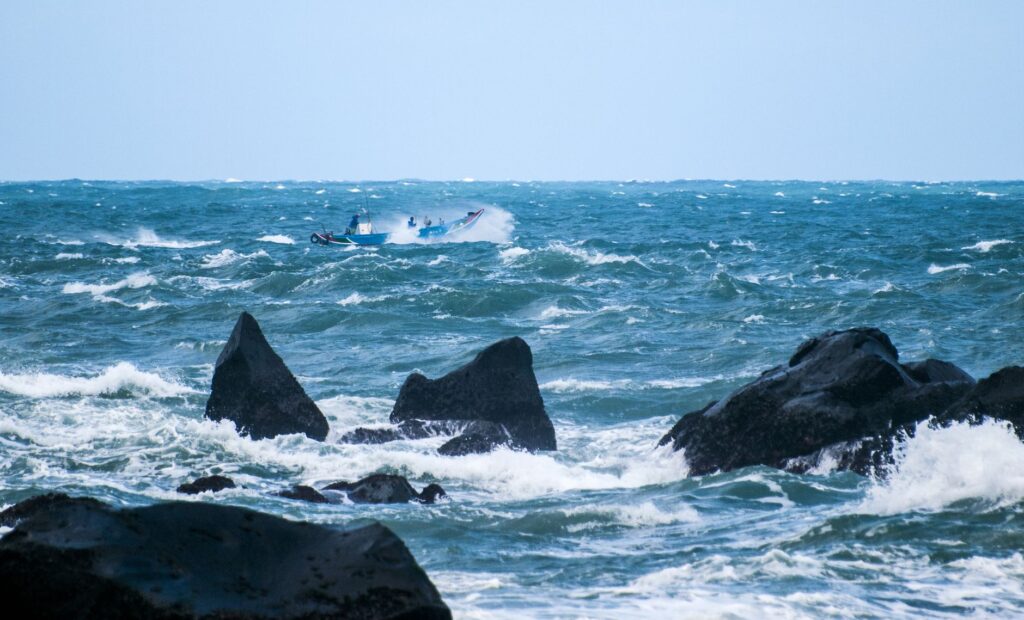
The history of Basque gastronomy cannot be understood without the subtle smoke that rises from the fishing ports of the Bay of Biscay. In towns like Getaria, Orio, and Hondarribia, fire is not merely a cooking element; it is an inherited language passed down through generations. The ancient arrantzales, men and women weathered by salt spray and northern winds, discovered that fish caught in the rough waters of the Cantabrian Sea required reverent treatment. The unmatched freshness of hake, turbot, or seabream was not enough; true alchemy occurred when the noble product met the radiant heat of holm oak embers.
This mastery of live fire has deep roots in the subsistence economy of the 19th and early 20th centuries. Port taverns began grilling the catches that failed to find immediate buyers at the fish market or the daily surplus of artisanal fishing. What began as a practical solution to feed seafaring families transformed, over the years, into a sophisticated culinary technique that now attracts travelers from all over the world. The apparent simplicity of the process conceals millimeter precision where the margin of error is measured in seconds.
The Architecture of the Basque Grill
Unlike Castilian meat grills, where the cut is placed at a distance from the direct heat source, the classic Basque fish grill operates on a completely different logic. It is a metal device shaped like a double clamp or cage, specifically designed to cradle the whole fish without tearing its skin or breaking its delicate flesh. This tool allows the piece to be turned with a single fluid motion, ensuring uniform cooking on both sides without the need to handle the interior.
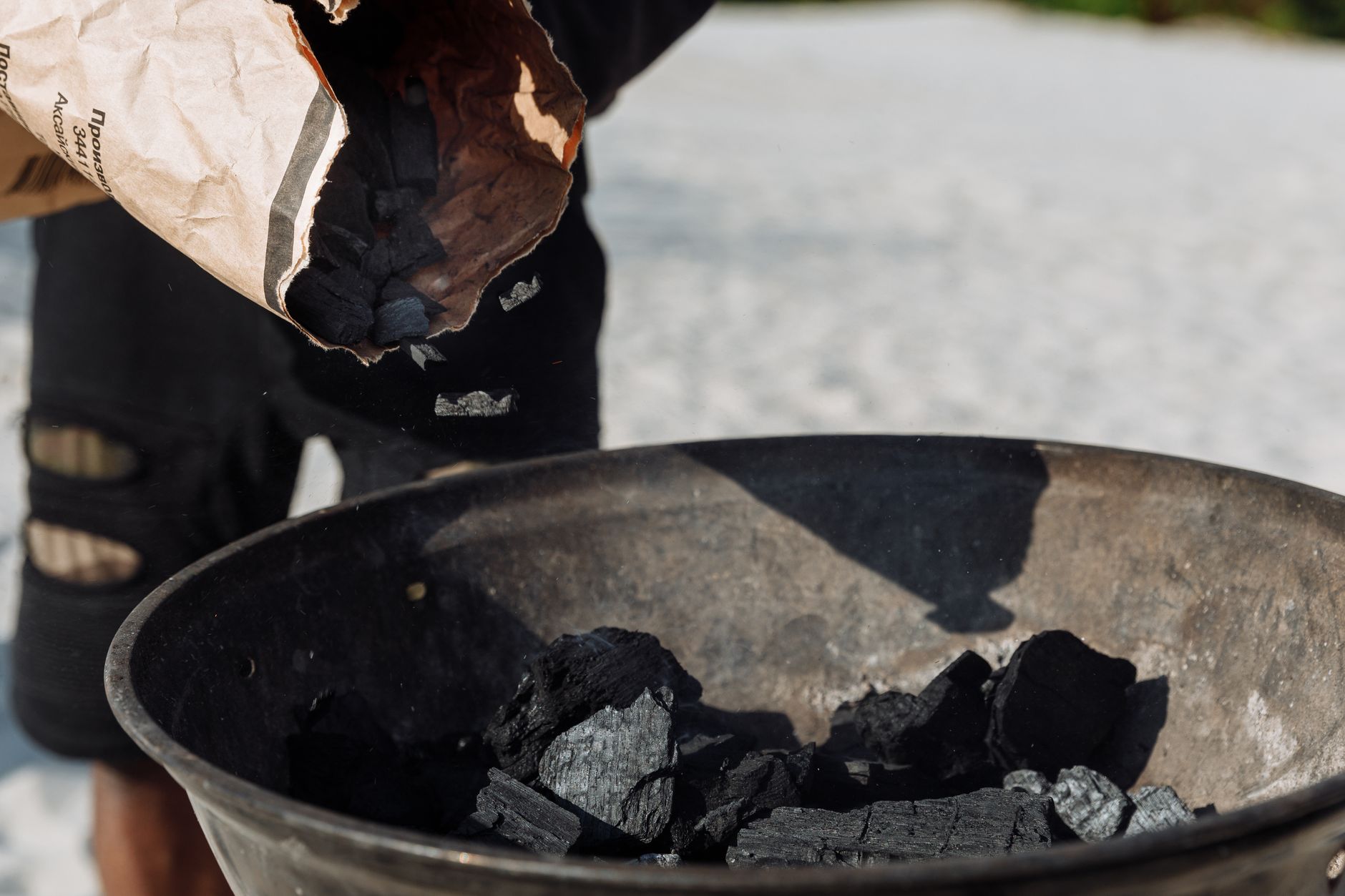
The charcoal used is another fundamental pillar of the system. Traditionally, holm oak or oak wood is employed, preferably dry, providing a constant, clean heat devoid of resins that might impart bitter flavors to the product. The master griller must calculate with exactitude the distance between the embers and the grill, a space regulated by cranks or by adding and removing charcoal. Draft control and ash management form part of an empirical knowledge base that requires years of practice facing the fire.
Wild Produce as the Sole Protagonist
In the culinary philosophy of the Gipuzkoan coast, there is an unshakeable dogma: the ingredient dictates all human intervention. Fish must be strictly wild, caught through sustainable fishing methods such as hook-and-line or traditional purse seines. Species vary according to seasonality and ocean currents. In spring, mackerel and bluefin tuna flood the markets; in summer, Cantabrian anchovy reaches its fatty peak; and during the autumn and winter months, red seabream and large wild turbot reign undisputed over the embers.
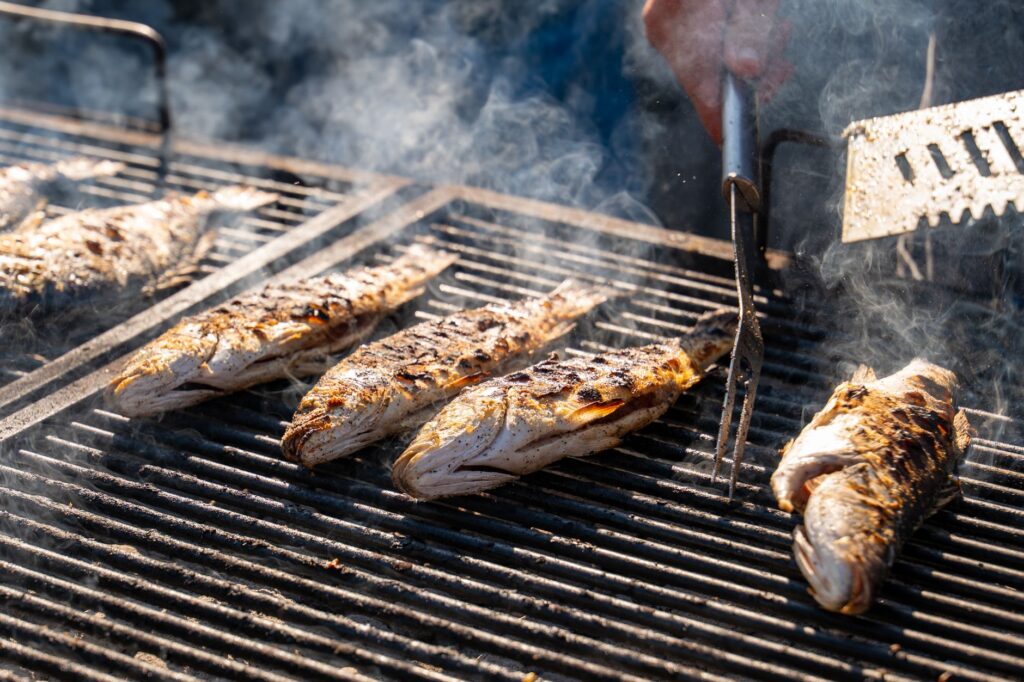
Pre-cooking handling is minimal. Complex marinades or excessive spices that mask the iodized flavor of the sea are strictly avoided. The fish is cleaned with cold sea water or fresh water, carefully scaled, and seasoned with coarse sea salt, preferably dry and marine. Salt not only seasons but acts as a protective agent that helps retain internal juices during the first minutes of contact with the intense heat of the embers.
The fire of the grill does not mask; it strips the product bare and reveals with raw honesty whether the sea has been respected or mistreated in its capture.
The Exact Moment of the Sizzle and the Dressing
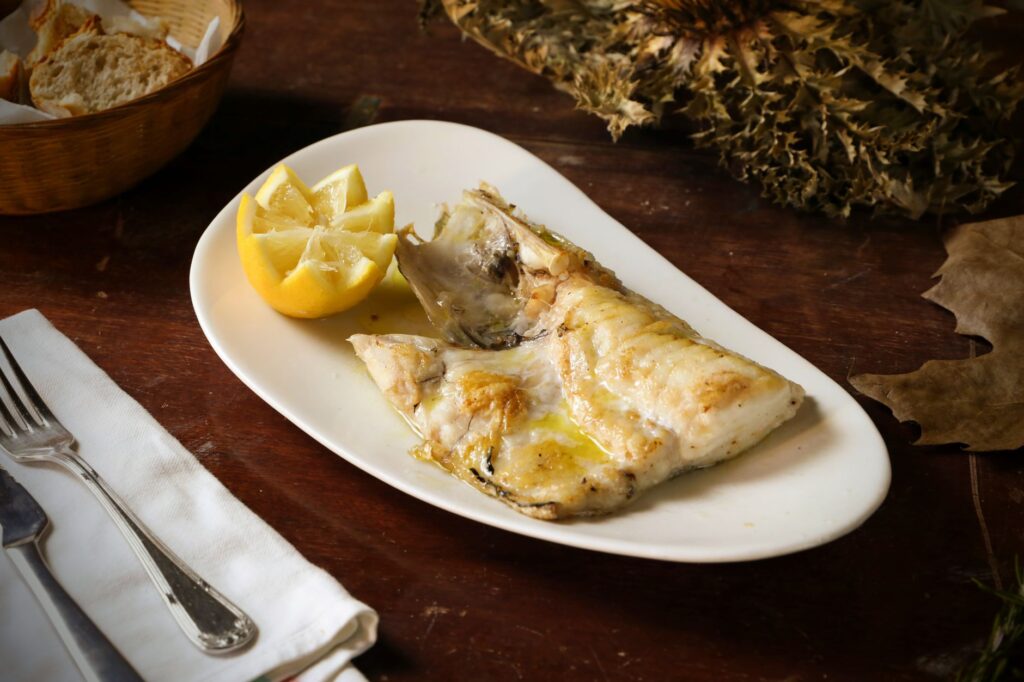
The cooking point in the Basque grill is recognized by a fascinating physical phenomenon: when surface proteins coagulate and the backbone begins to separate infinitesimally from the flesh, the fish is ready to leave the heat. It is at this precise moment that one of the great secrets of tradition comes into play: the refrito dressing. Made with extra virgin olive oil, patience-browned garlic slices, and a touch of cider vinegar or white wine, this emulsified liquid is poured over the fish fresh from the grill.
The thermal shock between the hot fish, the aromatized oil, and the vinegar produces a characteristic sizzle popularly known as ‘the cry’. This improvised emulsion mixes with the natural juices released during grilling, creating a light, brilliant, and deeply umami sauce that impregnates every flake of pearly white meat.
The Essential Temples of Fire
Along the coastal strip connecting San Sebastián with the French border, historic addresses have consecrated their existence to the cult of marine embers. In Getaria, names like Elkano or Txoko met with the genius of Pedro Arregui, who in the second half of the 20th century revolutionized the culinary world by deciding to grill turbot flat and whole, with skin and scales, something previously considered eccentric. His legacy remains alive in the hands of his son Igor Arregui.
Nearby in Orio, traditional grills have kept the flame of Donostia-style seabream alive. Each establishment preserves its own nuances: the thickness of the grill bars, the exact height above the ground, or the precise proportion of vinegar in the final dressing. Visiting these gastronomic sanctuaries requires understanding that this is not a conventional restaurant, but rather an interpretation center of the seafaring culture of the Bay of Biscay.
Sustainability and the Future of Coastal Produce
The great challenge facing traditional grills today is the preservation of fishing grounds and periodic shortages of certain emblematic species. Climate change and historical overfishing have forced fishing guilds to apply stricter closures and commit resolutely to absolute traceability. Today, high-end restaurants and top-tier grills demand certificates of origin guaranteeing that each seabream or hake was caught respecting quotas and minimum sizes.
This ecological awareness has also permeated diners. The contemporary traveler no longer seeks merely gastronomic hedonism, but demands transparency and respect for the marine environment. The survival of Basque grills depends directly on the health of the Cantabrian Sea, establishing a perfect symbiosis between the conservation of marine ecosystems and the continuity of an ancient technique.
Practical Information for the Gastronomic Traveler
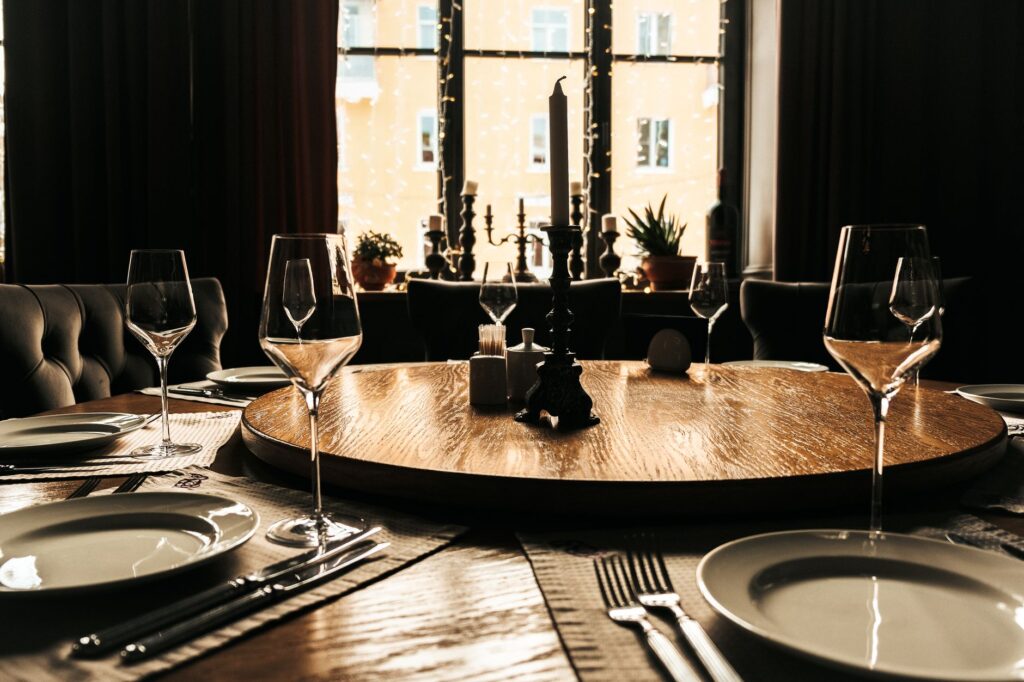
Planning a route through the grills of the Basque coast requires keeping several essential logistical factors in mind. Most of these establishments are concentrated in the provinces of Gipuzkoa and Biscay, easily accessible by rental car or via the Euskotren network from San Sebastián or Bilbao. Booking several weeks or even months in advance is essential, especially during weekends and summer months.
Key Tips for Your Visit:
- Seasonality: The best time to taste seabream and fatty fish spans from late autumn to early spring.
- Transportation: If planning to visit multiple fishing ports in a single day, a car is the most flexible option, though attention must be paid to parking restrictions in historic coastal centers.
- Etiquette: In many of these grills, the atmosphere is family-run and nautical, but respect for the product and the silence necessary to appreciate the griller’s work are part of the cultural experience.
- Pairing: No meal at a Basque grill is complete without a bottle of Getaria Txakoli (D.O. Getariako Txakolina), whose fresh, lightly sparkling, and acidic profile perfectly cuts through the fat of grilled fish.
Eating grilled fish in the Basque Country is an exercise in collective memory; every bite connects the traveler to centuries of seafaring wisdom and ocean stewardship.
The Intangible Legacy of the Masters of Smoke
The culture of fish grills in Getaria and the Basque coastal territory extends far beyond nutrition, resting at the core of the anthropological identity of a people. In an era dominated by standardization and industrial cooking, these temples of charcoal and tide demonstrate that the highest sophistication lies in restraint, in the purity of gesture, and in profound knowledge of nature. The smoke of holm oak, the silvery skin of the fish, and the crackle of the dressing form a unique sensory symphony that continues to captivate those who approach the Basque coast in search of truth and authenticity.