
The Geography of Cold and Silence in the Teruel Sierras
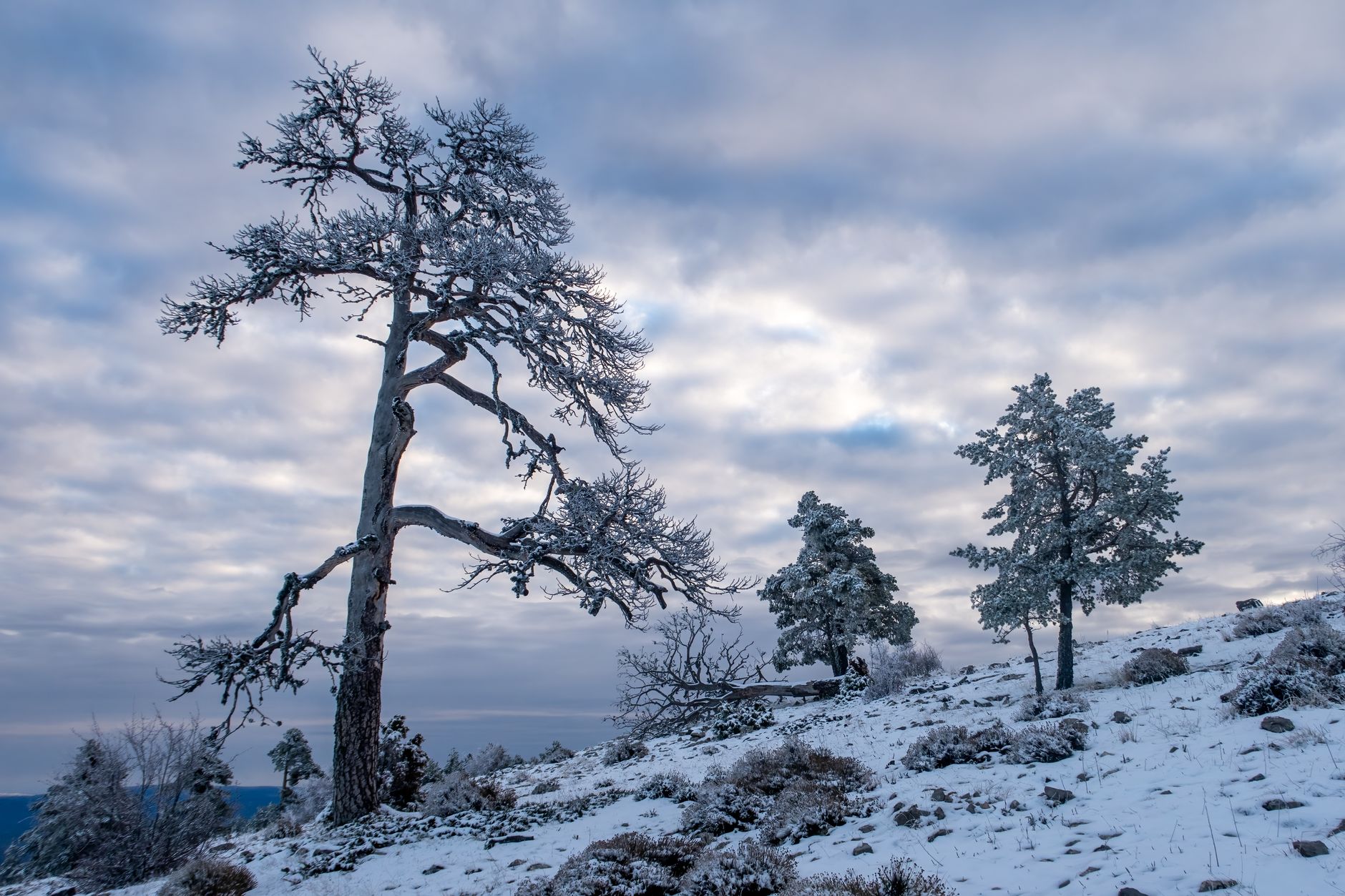
Winter in the Maestrazgo does not announce itself with the stridency of great coastal snowfalls, but rather with an ash-grey light that cuts through the slopes of the Gúdar and Javalambre sierras like an obsidian blade. Here, at over a thousand meters of altitude, the earth contracts under nocturnal frosts that harden the soil into limestone. It is in this harsh territory, whipped by the north wind and dominated by slopes of holm oaks and gall oaks, that one of the most enigmatic mycological treasures on the planet grows: Tuber melanosporum, universally known as the black truffle.
Unlike the mushrooms that explode after autumn rains, this subterranean ascomycete requires a very precise geological and climatic pact. It needs calcareous, poor, and well-drained soils, but above all, it demands relentless thermal oscillation: dry, sunny summers that force the host tree to stress its roots, followed by freezing winters where the mycelium, in absolute darkness, matures its complex aroma. The morning mists blanketing towns like Sarrión or Mora de Rubielos are not mere meteorological accidents; they are the invisible sign that the black diamond season has begun.
The Holm Oak Grove: A Symbiotic Ecosystem Beneath the Soil
To understand the truffle, one must abandon the idea of the solitary fruit and view the forest as an interconnected organism. The truffle is the fruiting body of a mycorrhizal fungus that establishes a perfect symbiotic alliance with the roots of specific trees, mainly holm oaks (Quercus ilex) and Portuguese oaks (Quercus faginea). In this relationship, the tree yields the sugary products of its photosynthesis to the fungus, while the mycelium radically expands the plant’s capacity to absorb water and minerals, especially phosphorus and nitrogen.
This underground pact leaves an unmistakable footprint on the surface of the terrain: the so-called «burnt patch» or bruciata. Around the trunk of the mycorrhized tree, grass and shrubs disappear, leaving a halo of sterile, cracked earth where the fungus inhibits the growth of other plants by emitting allelopathic compounds. Walking through these truffle-producing oak groves is reading an invisible map. Experienced foragers do not look for visible mushrooms; they read the texture of the lime, the slope’s inclination toward the midday sun, and the diameter of that bald circle where the earth seems to exhale an acrid, ammoniacal perfume on days of highest humidity.
The Art of Foraging: The Alliance Between Man, Smell, and Canine
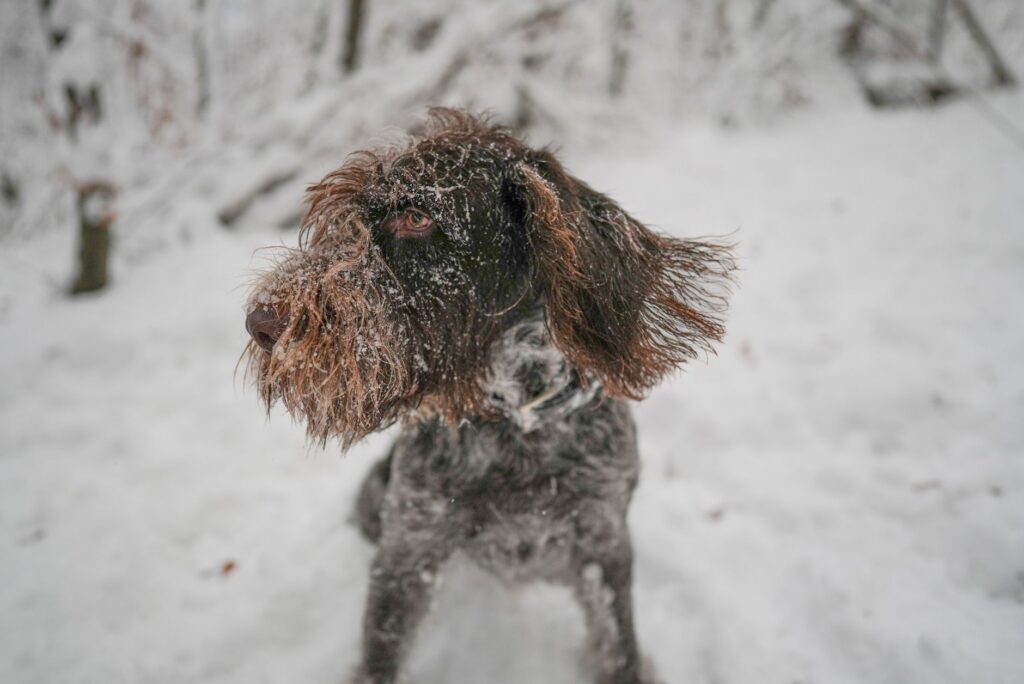
For centuries, the gathering of the black truffle was shrouded in an almost magical secrecy, populated by legends about the use of sows guided by their instinct for the aroma of androstenone—a compound similar to the pheromones of the breeding boar—rooting in the earth to unearth the bounty. Today, although an isolated specimen is occasionally harvested with pigs, the work falls almost entirely on dogs specifically trained for this task.
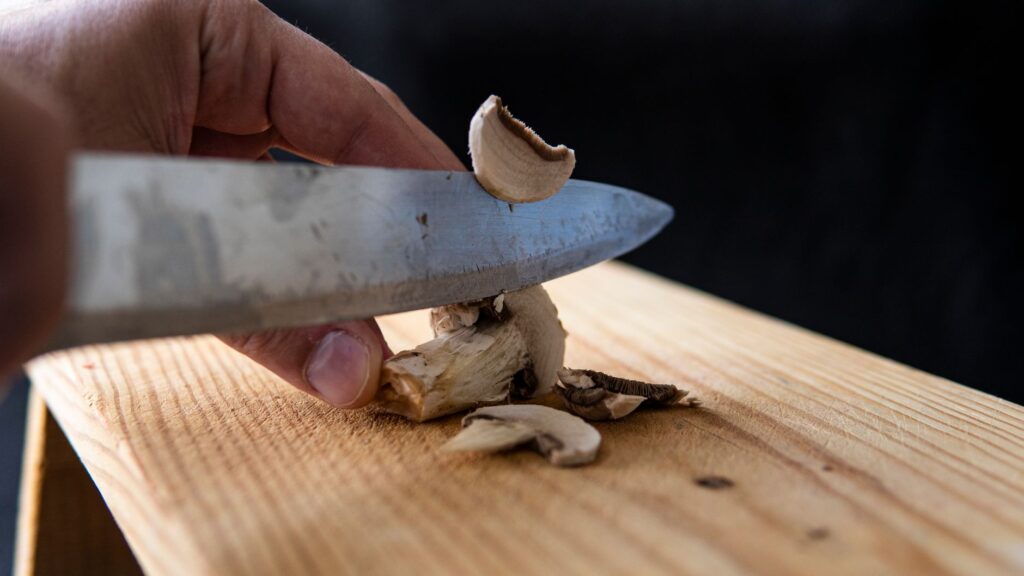
Training a truffle dog is a years-long process based on play, patience, and positive reinforcement. Puppies of various breeds, from mixed breeds to Lagotti Romagnoli, learn to associate the complex volatile aroma of the ripe truffle with a reward. When the hound begins to scratch gently at the base of a holm oak, the gatherer interrupts the gesture with a soft command, moves the earth aside with a special short, wide-bladed knife—the truffle spade—and extracts the specimen with the care an archaeologist uses to free a piece of Roman pottery.
Truffle foraging is not a mechanical harvest; it is a silent dialogue between the dog’s memory, the man’s intuition, and the endurance of the winter soil.
Breaking the earth prematurely, extracting an immature truffle that has not yet developed its black spores and penetrating aroma, is an attack on the biological cycle of the forest that true professionals strictly avoid.
From Earth to Slice: The Commercial Geography of Sarrión
The economic and cultural epicenter of this universe is unquestionably situated in the Gúdar-Javalambre region, with Sarrión at the helm. Known as the world capital of the black truffle, this town hosts the most important truffle market in the world during the winter months. On Saturday mornings, local farmers, foragers, and international buyers gather in a commercial ritual where trust and visual agility are the only tools required.
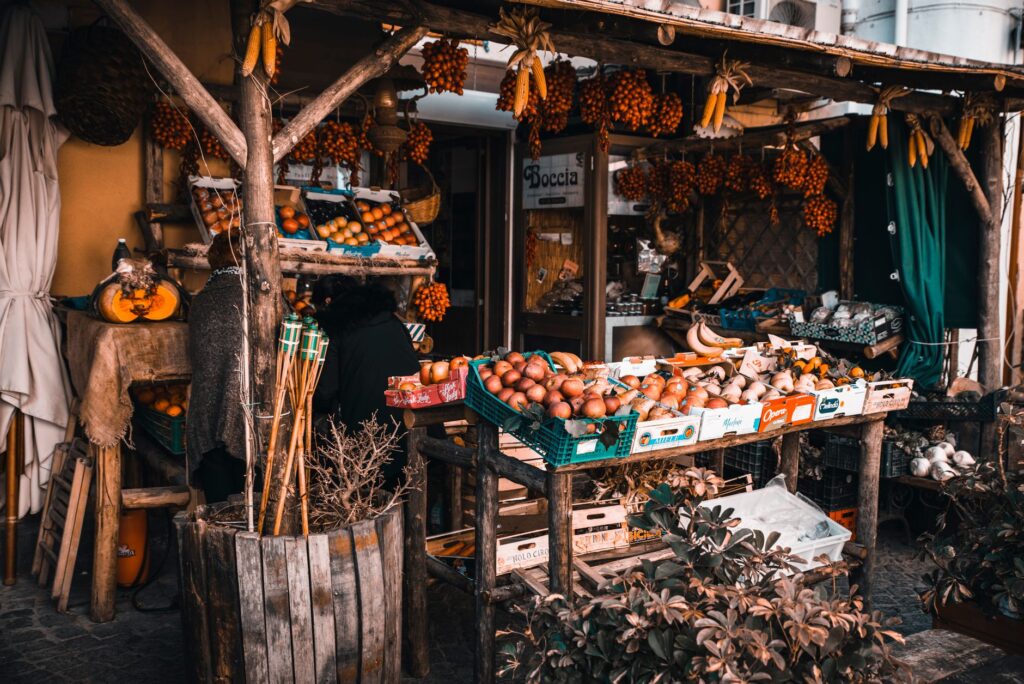
At the market, there are no flashing neon signs or luxury display windows. Truffles arrive in wicker baskets, protected with damp cloths. They are classified by size, shape, and maturity. The extra-category ones, round and without imperfections, are destined for high-end fresh markets in Paris, London, Tokyo, or New York. Those of smaller caliber or with slight marks are used for the processing industry—preserves, flavored oils, butters, and cheeses. The setting of the weekly price, based on the law of supply and demand and conditioned by the rainfall of previous months, sets the economic pace for entire villages in Spain’s interior.
The Chemistry of Aroma: Why Tuber melanosporum Bewitches Cuisine
The gastronomic value of the black truffle does not lie in caloric intake or substantial texture, but in its astonishing aromatic complexity. Science has identified more than two hundred volatile compounds in Tuber melanosporum, among which dimethyl sulfide, various alcohols, aldehydes, and ketones stand out, evoking notes of damp undergrowth, roasted hazelnut, wet earth, old leather, and subtle ammoniacal nuances.
This organoleptic profile possesses a fundamental physical characteristic: it is highly fat-soluble and thermolabile. This means truffle aromas easily adhere to fats—butter, egg yolks, cream, extra virgin olive oil—and vanish or transform unpleasantly if subjected to excessive or prolonged temperatures. For this reason, traditional Maestrazgo cuisine has never subjected the truffle to long cooking times. It is a finishing ingredient, a final touch that transforms a humble preparation into a memorable dish.
The Territory’s Recipe Book: Fat, Egg, and Bread as Vehicles
In the kitchens of manor houses and mountain inns throughout the Maestrazgo, truffle gastronomy has remained faithful to an almost monastic sobriety. Here, the goal is not to mask the product with complex sauces; the objective is to provide a fatty support that allows its entire aromatic potency to be released.
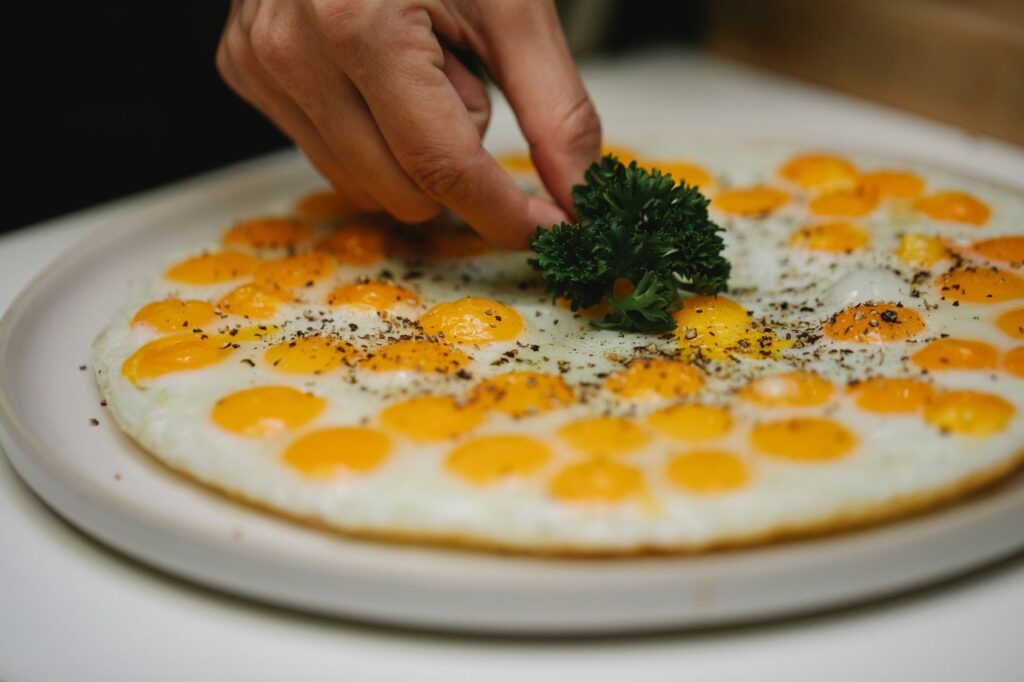
One of the most representative dishes of popular culture is truffled eggs. Several days before consumption, fresh eggs with porous shells are placed in an airtight container alongside a whole black truffle. Thanks to the porosity of the shell, the volatile compounds pass through the membrane and perfume the yolk from the inside without the truffle ever touching it physically. These eggs are used to prepare a simple omelet or broken fried eggs where the gentle heat of the pan awakens the essential oils.
Another undisputed classic is Teruel-style breadcrumbs (migas) or garlic soups enriched with thin shavings of grated truffle at the very last moment, just as the dish steams on the rustic wooden table. Country bread, toasted and rubbed with a little pork lard or oil, acts as the perfect surface to receive the dark shavings that immediately release a perfume of the winter forest.
High Cuisine and the Black Diamond: Vanguard with Roots
If popular cuisine has treated the truffle with reverential respect, contemporary high cuisine has managed to elevate it to an art form through technical precision. Benchmark restaurants in Aragon, Catalonia, and the Basque Country integrate the black truffle of Gúdar-Javalambre into seasonal menus where the wild or rigorously cultivated product dialogues with reduced broths, dairy emulsions, and native tubers.
In these establishments, using the Japanese mandoline to obtain millimeter-thin slices has become a gesture of surgical precision. The goal is for the truffle not to act as a mere decorative status element, but as the guiding thread that provides the earthy acidity needed to balance fatty dishes such as game stews—wild boar or roe deer—or fatty Cantabrian fish treated with low-temperature cooked lards.
True modernity surrounding the truffle does not consist of disguising it with chemical artifices, but of returning its absolute prominence through the purity of stocks and respect for fat.
The Future of Black Gold: Climate Change and Sustainability
Despite commercial and gastronomic success, the truffle-growing sector in the Maestrazgo currently faces unprecedented ecological challenges. The sustained increase in average temperatures and the irregularity of summer precipitation put the delicate balance enabling the fructification of Tuber melanosporum at risk. Traditional oak groves suffer episodes of extreme water stress that force producers to rethink soil management systems.
Faced with wild foraging, which increasingly accounts for a smaller percentage of total sales due to forest degradation, planted and technified trufficulture has become the region’s economic engine. Farmers invest in supplementary localized irrigation systems—providing relief watering in the driest summer months—and in the genetic selection of certified mycorrhized trees. This scientific effort guarantees not only the economic survival of entire regions at risk of depopulation, but also the preservation of a unique cultural landscape where man and forest have signed an ancient pact.
Practical Information for the Traveler and Gastronome
Planning a wine and gastronomic trip to the Maestrazgo during the truffle season—running from November to March—requires keeping in mind a series of operational guidelines to ensure an authentic and respectful experience.
- Season for Visiting: The optimal months are January and February, when truffle maturation reaches its aromatic zenith and local markets operate at full capacity.
- How to Get There: The main access is via the A-23 (Mudéjar) highway, connecting Zaragoza and Teruel with the Gúdar-Javalambre region. Truffle towns are located a short distance from the main route via secondary and winding county roads.
- Accommodations and Dining: Numerous rural houses and charming small hotels in Sarrión, Mora de Rubielos, and Alcalá de la Selva offer specific packages including truffle hunting sessions with dogs and monographic tasting menus.
- Fresh Purchases: When purchasing truffles at local markets or directly from producers, verify that the specimen is firm to the touch, emits a penetrating aroma, and presents a black interior with well-defined white veins. It should be stored in the refrigerator wrapped in absorbent paper inside an airtight container, changing the paper daily.
Epilogue: The Invisible Trace That Remains
When the season draws to a close around mid-March, frosts begin to yield to a milder light, and the Maestrazgo holm oaks initiate a new cycle of silent budding. The black truffle disappears from markets until the following winter, leaving behind an indelible trace in the gustatory memory of those privileged to taste it in its natural environment. It is not simply a luxury food, but the edible testimony of a harsh land that, in the heart of winter, is capable of distilling the purest and most complex essence of nature.