Introduction to a Continental Artery
The Trans-Mongolian railway is not merely a means of transportation; it is a geopolitical structure in motion, a steel scar cutting through some of the most remote and inhospitable landscapes on Earth. Connecting the vast Russian steppe with the high Mongolian plateaus and the bustling urban centers of China required not only a titanic feat of twentieth-century engineering, but also unprecedented diplomatic and logistical vision. Across thousands of kilometers, this rail corridor has served as an umbilical cord for commerce, migration, and cultural exchange between Europe and East Asia.
Understanding the magnitude of this route involves looking past the classic romance of sleeping cars and delving into the complex machinery that makes it possible for international trains to cross borders with differing track gauges, extreme climates, and intricate customs regulations. In an era where commercial aviation dominates long-distance travel, the Trans-Mongolian remains a physical reminder of Eurasia’s continental scale, inviting travelers to experience territory in a slow and deeply reflective manner.
Origins and Geopolitics of the Trans-Mongolian Route
The genesis of the route we know today as the Trans-Mongolian is intimately tied to the expansion of the Soviet railway empire and its complex relations with the People’s Republic China and the Mongolian People’s Republic during the Cold War. While the original Trans-Siberian—which reaches Vladivostok—was built in the late nineteenth and early twentieth centuries, the branch descending toward Ulaanbaatar and continuing to Beijing was consolidated significantly later, completing its key segments in the 1950s.

This layout was designed with more than just commercial purposes in mind; its conception responded to strategic defense needs and ideological cohesion among socialist blocs. The transport of raw materials, troops, and industrial supplies transformed Mongolia’s economy, integrating it into a global network of production. The stations that emerged along the tracks quickly evolved into makeshift urban hubs, drawing nomadic populations toward sedentarization and reshaping the demographic map of Central and East Asia.
The Challenge of Track Gauge and Border Logistics
One of the most fascinating and complex aspects of traveling the Trans-Mongolian occurs at the borders, particularly at the crossing between Naushki (Russia) and Sükhbaatar (Mongolia), and subsequently at the Sino-Mongolian border in Erenhot. Because the Russian Empire adopted a wider track gauge (1,520 mm) than the standard gauge used across much of Europe and China (1,435 mm), direct trains must undergo an operation as meticulous as it is astonishing.
During these technical stops, which can last several hours, the carriages are literally lifted by gigantic hydraulic jacks while passengers remain on board or step down onto the platforms. The bogies (the wheelsets and axles) are replaced with others adapted to the new track gauge. This procedure, executed with millimeter precision by teams of experienced workers, illustrates the technical friction that still exists between different railway regions and underscores the complexity of keeping a transcontinental line in continuous operation.

Station Architecture: Monuments of Concrete and Memory
The stations along the Trans-Mongolian are much more than mere stopping points; they act as architectural museums and neural centers for local communities. From solid Stalinist-style buildings in Siberia, with symmetrical facades and imposing columns, to the modern, functional architecture of major Chinese terminals, each stop tells a story about the era in which it was built or remodeled.
In Mongolia, many stations combine utilitarian Soviet elements with subtle references to traditional nomadic aesthetics, utilizing local colors and geometric patterns. These spaces house everything from improvised local markets selling fermented dairy products and crafts to waiting rooms where local workers, cross-border traders, and international travelers converge in search of fresh provisions for the next leg of the journey.
The Trans-Mongolian is not merely a transit between two geographical points; it is an immersion into the geological and human scale of the world’s largest continent.
Landscape Transition: From Taiga to Infinite Steppe
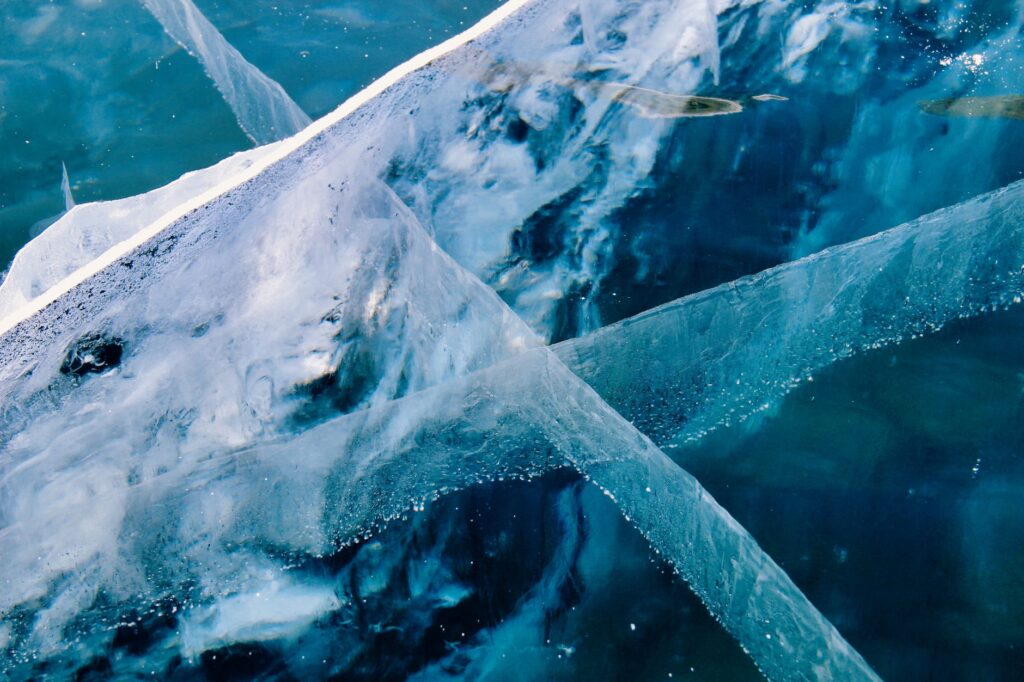
The aesthetic and geographical value of the route lies in the extraordinary diversity of ecosystems it crosses in a matter of days. Departing from the dense birch and conifer forests of the Siberian taiga, the train winds alongside Lake Baikal—the deepest and largest freshwater reserve on Earth—whose crystal-clear waters offer an unmatched visual spectacle in any season.

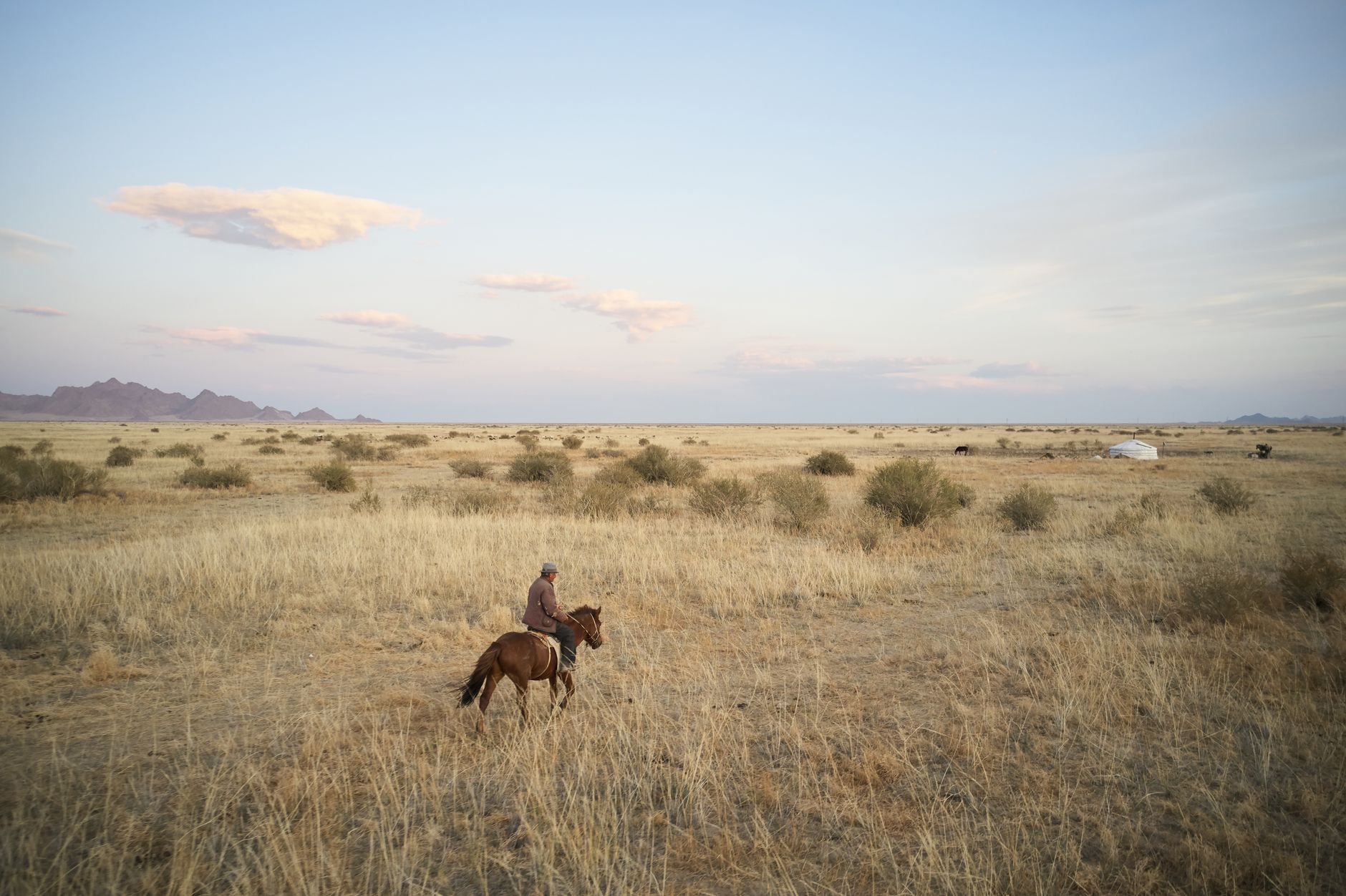
As the tracks push southward, arboreal vegetation abruptly gives way to the immensity of the Mongolian steppe. Here, the landscape transforms into a monochrome canvas of endless horizons where herds of horses, sheep, and Bactrian camels dot the prairie. The absence of prominent geographical features accentuates the sensation of isolation and vastness, allowing travelers to contemplate a pastoral way of life that has remained virtually unchanged for centuries.
Life On Board: The Microcosm of the Sleeping Car
Traveling on the Trans-Mongolian for a week or more requires adapting to the peculiar dynamics of life on board. The carriages, traditionally divided into classes such as the *Kupe* (four-berth compartments) or *Spalny Vagon* (two-berth compartments), function as floating communities where language barriers dissolve through the sharing of food, maps, and gestures.
The social heart of the carriage is the *samovar*, a traditional water heater located at the end of the corridor that operates twenty-four hours a day. Morning queues form around it to prepare tea, instant coffee, or instant noodles. The food in the dining car subtly evolves as borders are crossed: Russian borscht soup and potato dishes gradually give way to Mongolian mutton stews and, finally, to the spiced flavors of northern Chinese cuisine.
Practical Information for Planning the Journey
Planning a trip along the Trans-Mongolian corridor requires rigorous advance preparation due to complex visa requirements, climatic seasonality, and the management of ticket purchases. Travelers must obtain separate visas for Russia, Mongolia, and China (depending on nationality and the specific route), ensuring they comply with validity periods and the necessary multiple entries.
Choosing the time of year completely defines the experience. Summer months (June to August) offer moderate temperatures and extended daylight hours, although they coincide with the peak tourism season. Conversely, the Siberian and Mongolian winter—extending from November to March—features extreme temperatures frequently dropping below minus thirty degrees Celsius, offering in return breathtaking white landscapes and a true winter adventure experience.
Contemporary Challenges and Modernization of the Network
In the twenty-first century, the Trans-Mongolian faces new challenges stemming from digitalization, the demand for higher commercial speeds, and regional geopolitical tensions. While government projects exist to modernize tracks, increase freight capacity, and introduce more efficient passenger trains, the basic infrastructure continues to require constant investment to maintain safety standards.

Likewise, sustainable tourism has become a central debate. Local communities along the route seek to balance the economic benefits brought by international travelers with the preservation of their natural resources and cultural heritage. Waste management and the environmental impact of rail traffic in fragile areas like the Baikal basin are unavoidable priorities for current railway operators.
Conclusion: The Value of Slow Travel in the Digital Age
In a hyperconnected world where speed is valued above experience, the Trans-Mongolian railway represents a valuable resistance against urgency. Crossing borders on rails allows geographical and cultural transitions to be assimilated with the pause they deserve, transforming transit into a substantial part of the journey.
Beyond logistics, visas, and schedules, the true essence of this route lies in the ability to observe the gradual shift of the world through a train window. It is a journey that reminds us that the vastness of Eurasia continues to harbor spaces where time seems to stand still and where distance is measured in the rhythmic cadence of metal upon track.