Introduction to One of the Last Great Terrestrial Migrations
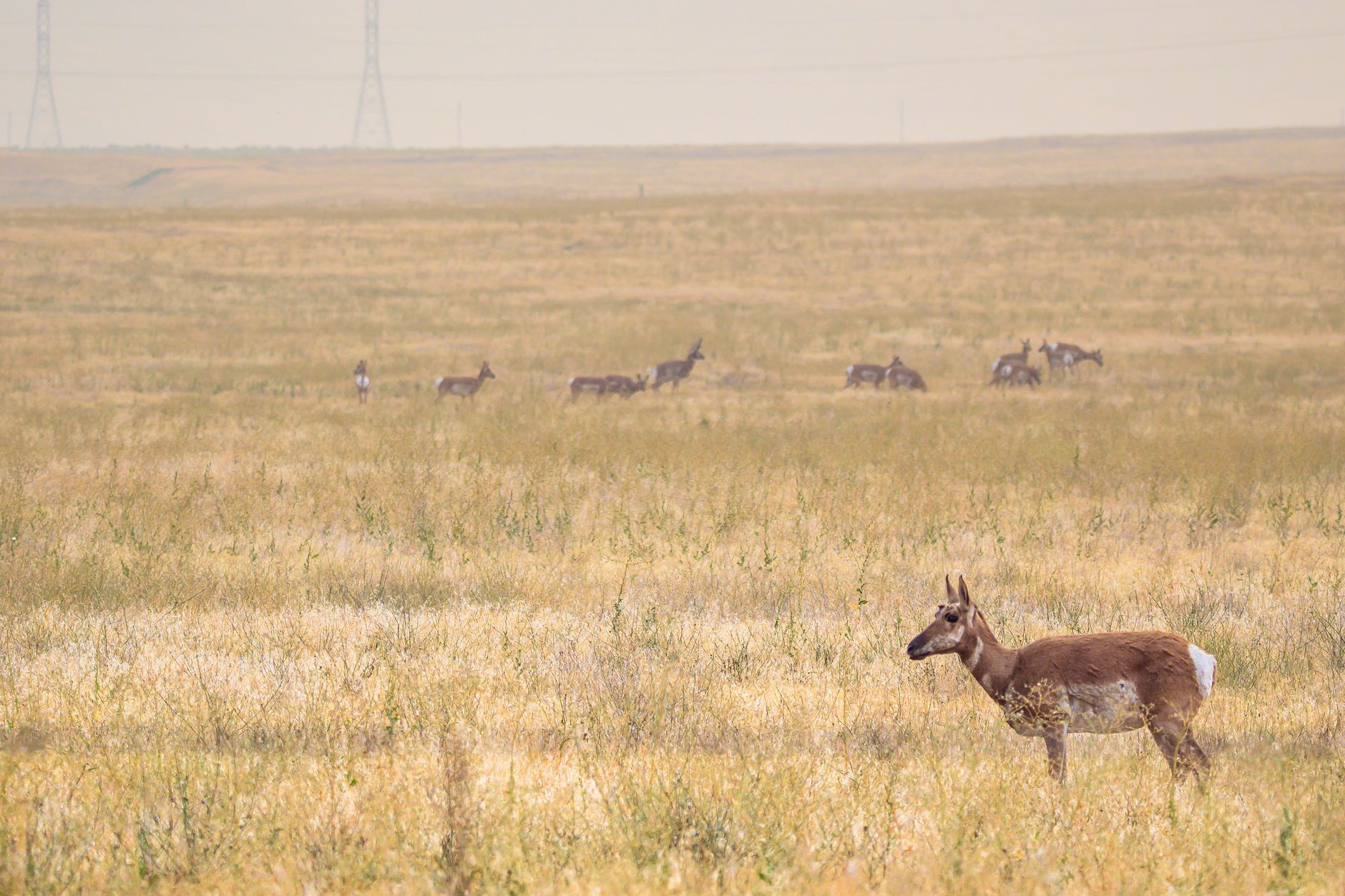
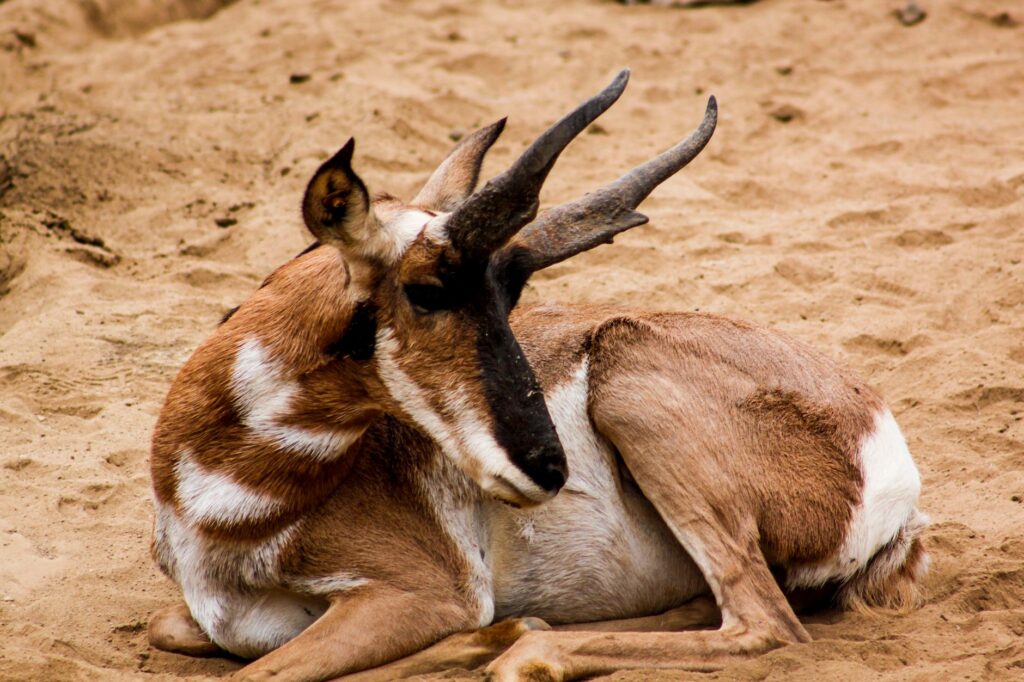
Across the vast, windswept expanses of the American West, where sagebrush plains merge with the rugged peaks of the Rocky Mountains, one of the planet’s most ancient and resilient natural spectacles unfolds every autumn. This is not the famous bison exodus nor the dramatic river crossings of wildebeests in the Serengeti, but the silent yet steady journey of the pronghorn (Antilocapra americana). Often mistakenly called an antelope, this animal is the western hemisphere’s fastest land mammal, capable of sustaining speeds exceeding 80 kilometers per hour. Its evolutionary lineage is entirely unique: it is the sole surviving representative of the family Antilocapridae, a living testament to the Pleistocene fauna that once inhabited the continent, competing for survival against American cheetahs and dire wolves.
The Greater Yellowstone Ecosystem (GYE), a territory spanning over 89,000 square kilometers across Wyoming, Montana, and Idaho, hosts one of the most studied populations of this species. Specifically, the herd known as the Sublette pronghorn undertakes one of the longest land mammal migrations in the United States, traveling approximately 270 kilometers round-trip each year between their summer breeding grounds in Yellowstone National Park and their winter ranges in the Upper Green River Valley. This route, widely known as the Path of the Pronghorn, has remained virtually unchanged for at least 6,000 years, passed down through generations via social learning and the collective memory of adult females.
The Exceptional Biology of North America’s Speed Corridor
To understand the magnitude of this migration, one must examine the unique anatomy and physiology of the pronghorn. Unlike deer or bovines, the pronghorn possesses extraordinary cardiorespiratory adaptations that allow it to run at high speeds without accumulating an excessive oxygen debt. Its heart and lungs are disproportionately large relative to its body mass, and its wide trachea facilitates rapid pulmonary ventilation. These traits did not evolve by chance; they are the result of intense evolutionary selective pressure exerted by extinct predators that once roamed the same grasslands.
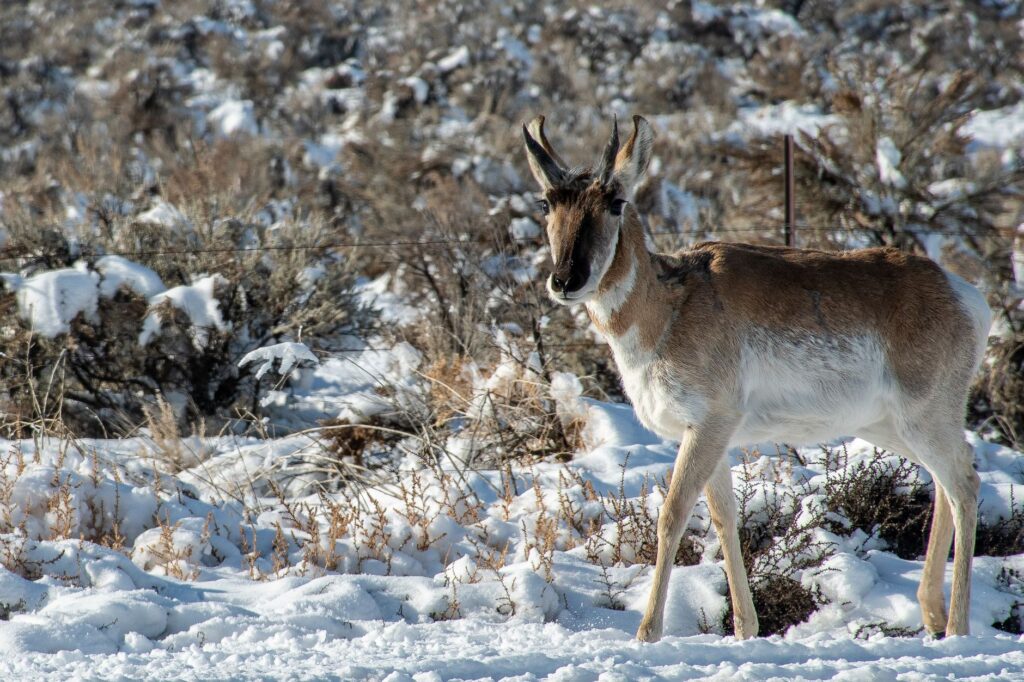
However, speed alone is not enough to guarantee survival in the twenty-first century. Migration is a behavioral response driven by the ecological necessity to track high-quality forage resources as the seasons change. In summer, the alpine meadows of Yellowstone offer tender shoots rich in the nutrients essential for lactation and fawn rearing. When the first October snowfalls threaten to block access to forage and freeze water sources, the pronghorns begin a southward journey seeking lower valleys where accumulated snow is shallower and they can paw through snow to access sagebrush (Artemisia tridentata) and dry grasses.
Geographic Bottlenecks and Anthropogenic Threats
Despite its legendary speed, the modern pronghorn faces extreme vulnerability when confronted with human infrastructure. Along its historical route, the Path of the Pronghorn narrows at a critical pinch point known as the bottleneck of Trapper’s Point, a natural corridor barely eight hundred meters wide wedged between steep cliffs and the Green River. This mandatory passage has been utilized by wildlife for millennia, but in recent decades it has been threatened by land fragmentation, residential sprawl, and, above all, the expansion of natural gas extraction industries.
The impact of physical barriers on migration is devastating. Wire fences, traditionally designed for cattle and sheep, represent a nearly insurmountable obstacle. While some cervids can jump over these structures, the pronghorn prefers to pass underneath, frequently becoming entangled and dying from hypothermia or predation. Furthermore, the paving of national highways such as Route 191 has fragmented habitat, turning road crossings into deadly hotspots for vehicle collisions. The loss of even a few breeding females can destabilize the demographic viability of the entire migratory herd.

Conservation Strategies and Wyoming’s First Wildlife Overpass
Faced with the clear decline of populations in the late twentieth century, scientists, government agencies, and non-governmental organizations joined forces to implement a conservation approach grounded in empirical science and collaboration with local landowners. The turning point came with the federal designation of the first protected migration corridor in the United States, the Path of the Pronghorn, in 2008, which prohibited new harmful infrastructure on federal public lands along the route.
Conservation engineering also played a starring role. In 2012, the Wyoming Department of Transportation (WYDOT), in collaboration with conservation groups and the Yellowstone Park Foundation, inaugurated a series of wildlife overpasses and underpasses along the Trapper’s Point gorge and Highway 191. These bridges and culverts, covered in native vegetation and flanked by high guide fences, taught animals to safely cross the asphalt. Satellite telemetry tracking data demonstrated resounding success: the usage rate of the overpasses by pronghorn exceeded ninety percent within a few years, drastically reducing vehicle collisions and restoring ecological connectivity.
The conservation of large terrestrial migrations depends not solely on protecting national parks, but on the collaborative stewardship of shared landscapes among wildlife, livestock operations, and rural communities.
The Vital Role of Ranchers and Conservation Easements
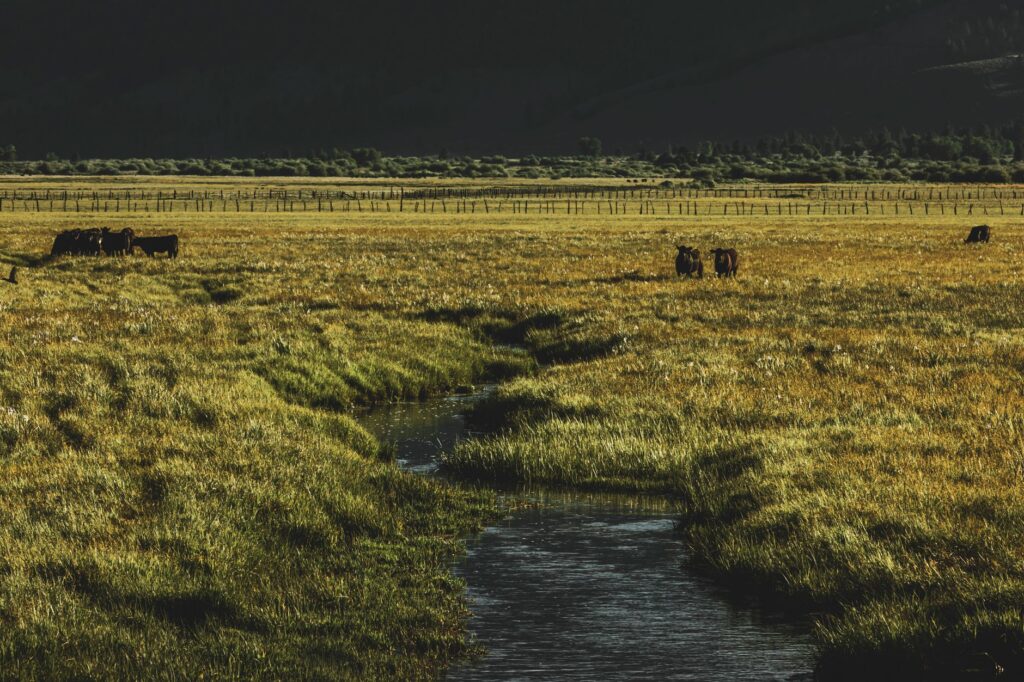
One of the most complex and fascinating aspects of pronghorn management in the Upper Green River Valley is coexistence with traditional open-range ranching. Much of the migratory route crosses private family-owned ranches that have operated in the region for over a century. Far from being enemies of conservation, many of these ranchers have become indispensable allies through voluntary conservation easement programs.
These legal tools enable landowners to retain ownership and agricultural or livestock use of their lands in exchange for permanently giving up the right to subdivide the property for real estate or commercial development. Likewise, community initiatives such as Fence Modifiers have mobilized volunteers to modify thousands of miles of barbed-wire fencing, raising the bottom wire off the ground to allow pronghorns to pass freely without compromising livestock containment. This balance demonstrates that preserving biodiversity in the American West is inseparable from maintaining the rural culture and economy of the traditional ranch.
Climate Uncertainty and Changing Forage Patterns
As we advance deeper into the twenty-first century, novel challenges threaten ecosystem stability. Climate change is drastically altering temperature and precipitation patterns across the Greater Yellowstone Ecosystem. Springs are arriving earlier each year, causing alpine plant green-up to occur before pronghorns complete their spring migration from the southern valleys. As a result, animals may arrive at their summer ranges when the nutritional quality of forage has already begun to decline.
Additionally, the persistence of prolonged droughts increases the frequency and intensity of wildfires and the degradation of sagebrush grasslands, reducing available food during critical transitional months. Wildlife biologists are utilizing high-frequency GPS collars and environmental sensor technology to monitor in real time how pronghorns respond to these phenological shifts. The adaptive capacity of the species is constantly tested, demanding more flexible adaptive management policies based on updated scientific data.
Practical Information for the Responsible Traveler and Observer
For naturalists, photographers, and researchers interested in closely witnessing the reality of the pronghorn and the Yellowstone landscape, rigorous planning is essential. Wildlife viewing tourism in this region requires a strict ethical code to avoid disturbing the fragile biological cycles of migratory species.
When to Travel
The most recommended periods to observe migratory dynamics are autumn months (September and October), when herds begin their southward movement, and spring (May and June), when they return northward with newborn fawns. During winter, weather conditions are exceptionally severe, with temperatures frequently dropping below minus 30 degrees Celsius, and many secondary routes remain closed to traffic.
Getting There and Where to Stay
The primary access to the southern end of the corridor is through Jackson Hole Airport (JAC) or driving from Salt Lake City, Utah, taking US Highway 191 northbound. The towns of Pinedale and Dubois serve as excellent logistical bases for exploring surrounding valleys and accessing local interpretive centers. Renting a four-wheel-drive (4WD) vehicle is mandatory due to unpredictable mountain road conditions.
Safety and Observation Guidelines
Federal and state law prohibits approaching closer than 90 meters to large mammals, including pronghorns, and 100 meters to large predators such as grizzly bears and wolves. The use of high-powered binoculars or telephoto camera lenses is mandatory. Never attempt to feed wildlife or block migratory routes to secure a better photograph, as any disruption in their energy budget can seriously compromise their survival during seasonal stress periods.
The Future of the Corridor: Global Conservation Lessons
The story of the pronghorn in the Greater Yellowstone Ecosystem transcends the mere protection of an iconic species; it represents a triumph of interdisciplinary cooperation among conservation science, governmental management, civil engineering, and the commitment of local communities. It proves that maintaining large-scale ecological processes is entirely feasible in an increasingly urbanized and interconnected world.
Protecting the invisible paths walked by wildlife is the true challenge of contemporary conservationism: ensuring that space is not merely a static refuge, but a dynamic home where life can continue to flow freely.
As the sun sets behind the snowy crests of the Wind River Range and the last group of pronghorns gracefully crosses the Trapper’s Point overpass toward safe southern pastures, nature reminds us that preserving our natural heritage is not an aesthetic luxury, but an inescapable moral and scientific responsibility for future generations.