
The Backbone of an Untamed Continent
Crossing Australia from south to north is not merely a geographic endeavor; it is a challenge to human scale and a masterclass in logistical perseverance. The Ghan, the train that traverses the 2,979 kilometers separating Adelaide on the southern coast from Darwin in the tropical north, represents one of the most impressive engineering feats in the Southern Hemisphere. This steel giant does not just carry travelers seeking remote vistas; it serves as a living testament to how engineering managed to tame one of the harshest environments on Earth: the Australian Outback. Over nearly three days and two nights, the convoy crosses four distinct climatic zones, from the temperate vineyards of the south to the tropical jungles of the Top End, passing through the absolute void of the Red Centre.
The significance of The Ghan within Oceania’s transport system is strategic. While today it stands as an icon of luxury tourism, its existence is fundamental to understanding the connectivity of a nation where distances are measured in days of driving rather than hours. The rail infrastructure supporting this service is the result of decades of planning and massive investment that only reached fruition in 2004, when the final stretch between Alice Springs and Darwin was completed, closing a historic gap that had left the north of the country isolated from the national rail grid for over a century.
«The Ghan is not just a mode of transport; it is the steel thread that holds the vast and disconnected puzzle of the Australian desert together.»
The Legacy of the Afghan Cameleers
The train’s name is itself a tribute to the history of transport on the continent. It is an abbreviation of «The Afghan Express,» honoring the cameleers from Afghanistan, Pakistan, and Persia who, in the mid-19th century, were brought to Australia to explore the interior. In an era when horses succumbed to the heat and lack of water, camels became the only viable way to transport materials for the construction of telegraph lines and the first railways. Without these pioneers and their caravans, the colonization and development of Australia’s central regions would have been impossible.
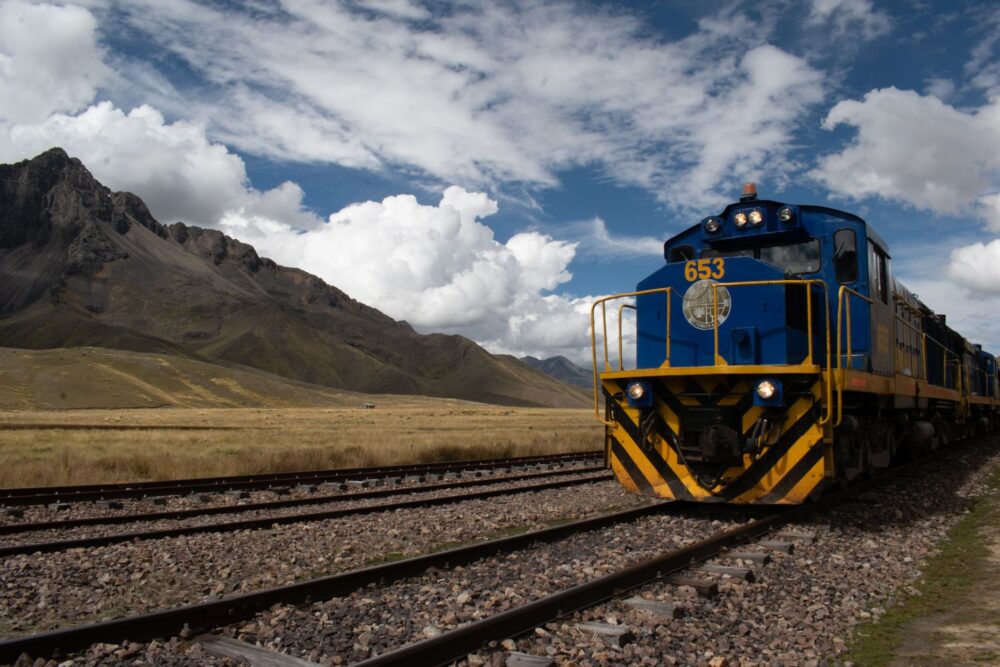
The original route, begun in 1878, was a narrow-gauge system that suffered constantly from flash floods and extreme heat that warped the rails. Travelers of that era often had to disembark to help clear sand from the tracks or even forage for firewood. Today, while comfort is absolute, the spirit of those pioneers permeates every kilometer. The transition from camel trains to NR-class diesel locomotives symbolizes the technological progress of a nation built on the necessity of overcoming isolation.
Engineering Against the Void: Building the Transcontinental Line
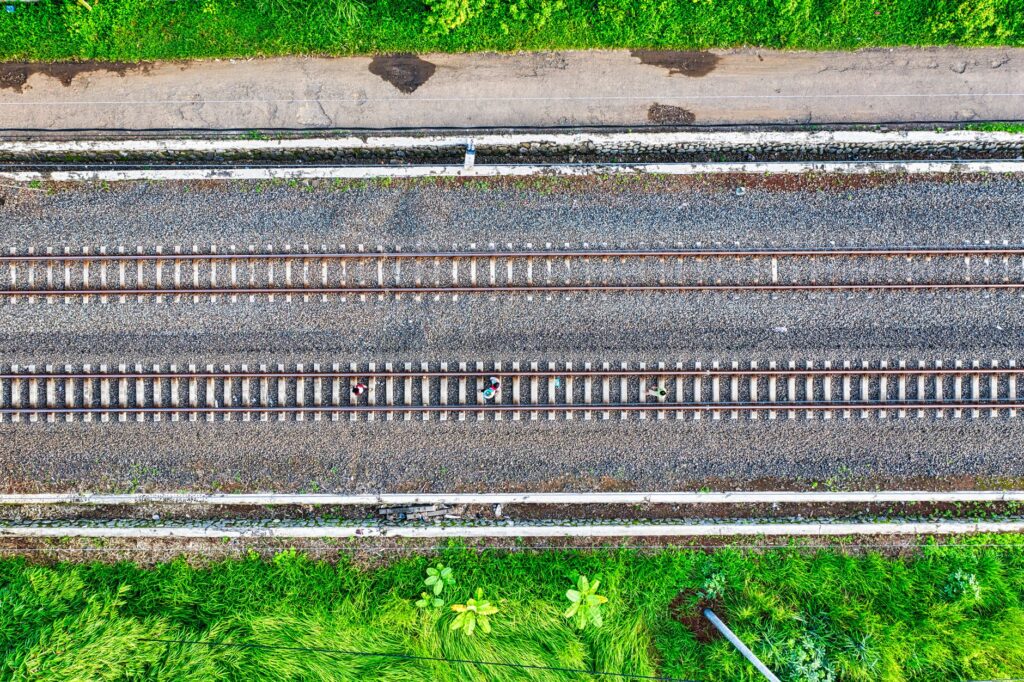
The construction of the final leg to Darwin is considered one of the greatest civil engineering projects in modern Australian history. The project required the installation of over two million concrete sleepers and the movement of millions of tons of earth to raise the track above floodplains prone to catastrophic monsoonal flooding in the north. Unlike the old tracks, the current line is standard gauge, allowing freight trains up to 1.8 kilometers long to operate efficiently, supplying remote communities in the Northern Territory.

The technical challenge lay not only in the distance but in the thermal oscillation. In the desert, temperatures can exceed 45 degrees Celsius during the day and drop below freezing at night. This requires constant maintenance of rail tension and solar-powered signaling systems in areas where no power grid exists for hundreds of kilometers. The Ghan operates as a high-efficiency closed system, where every stop is timed to allow the passage of freight convoys carrying vital minerals and supplies.
Logistics and Life Onboard: A Kilometer-Long Hotel
Operating a train that often exceeds 700 meters in length—and can reach a full kilometer during peak season—requires military-grade logistical precision. The Ghan is not just a locomotive and passenger carriages; it is a mobile city. It features restaurant cars, social lounges, high-end kitchens, and independent power generation systems. The supply of potable water and waste management are constant challenges, as the train must be self-sufficient during the long stretches between Adelaide, Alice Springs, and Darwin.
For the traveler, the experience is divided into service levels that define the comfort of the journey. Platinum Service offers spacious cabins with private en-suites, while Gold Service maintains the classic elegance of rail travel. The onboard gastronomy is a showcase of regional produce: from Northern Territory barramundi to kangaroo meat and wines from the southern valleys. This hospitality logistics is coordinated by a team working in rotating shifts, ensuring that service never falters as the train crosses the absolute silence of the Nullarbor Plain and the arid regions of the center.
Alice Springs: The Gordian Knot of the Desert
The stop in Alice Springs is much more than a break in the journey; it is the logistical heart of the trip. Located almost exactly at the geographic center of Australia, this town was born from the telegraph and consolidated by the railway. Here, the train makes an extended stop allowing passengers to explore the MacDonnell Ranges. From a transport perspective, Alice Springs functions as the distribution hub for the continent’s vast center. Everything that arrives here, from fuel to fresh food, depends heavily on the rail line that The Ghan shares with freight trains.
The landscape changes drastically upon leaving «The Alice.» The soil turns a deep, vivid red due to the high concentration of iron oxide, and vegetation thins to hardy spinifex and acacia shrubs. It is in this stretch that the sheer immensity of Oceania becomes palpable. The railway runs parallel to the Stuart Highway, the only major road crossing the continent, highlighting the duality of Australian transport: asphalt for flexibility and rail for capacity and endurance.
«Watching the sunrise over the red iron plains from the train window is to understand the true scale of freedom and isolation in the Southern Hemisphere.»

Katherine and the Transition to the Tropics
As the train pushes northward, the desert gives way to savanna and, eventually, a tropical environment. The stop in Katherine is crucial for understanding the region’s water geography. Here, the rail transport system meets the river routes of Nitmiluk National Park. The engineering of the bridge over the Katherine River is a critical point of the line, designed to withstand massive river surges during the «Top End Wet» (the rainy season).

In this stage of the journey, humidity rises, and the landscape is populated by giant termite mounds and paperbark trees. The train’s logistics must adapt to these conditions; air conditioning systems work at maximum capacity to counter the tropical heat. For the traveler, it is a time to observe the cultural transition, where the influence of local Aboriginal nations, such as the Jawoyn, becomes more present in the journey’s narrative and the excursions connecting the railway to ancestral lands.
Darwin: The Gateway to Asia
The end of the journey in Darwin marks the arrival at Australia’s northernmost port and its closest connection to Southeast Asia. The Darwin rail terminal is a modern facility symbolizing Australia’s aspirations to become a regional logistical hub. The arrival of The Ghan in Darwin is not just the end of a tourist trip, but the fulfillment of a national dream of total connectivity.
Darwin is a resilient city, rebuilt after the bombings of World War II and the devastation of Cyclone Tracy in 1974. The railway has injected new economic life into the city, facilitating the export of livestock and mineral resources through its deep-water port. For the traveler, Darwin offers a vibrant conclusion with its night markets and constant warm climate, serving as the gateway to Kakadu and Litchfield National Parks.
Practical Information and Trip Planning
Traveling on The Ghan requires meticulous planning due to high demand and seasonality. The train operates with different frequencies depending on the time of year. Peak season coincides with the Australian winter (May to August), when temperatures in the center are pleasant and skies are clear. During the summer (December to February), the heat can be extreme, and it is the wet season in the north, which can offer spectacular green landscapes but also logistical challenges.
- Duration: The standard journey from Adelaide to Darwin takes approximately 54 hours.
- Connections: It is recommended to arrive in Adelaide at least two days early to explore the Barossa or McLaren Vale wine regions.
- Luggage: Due to limited space in cabins, there is a check-in service for heavy luggage, allowing only essentials to be taken into the cabin.
- Bookings: It is essential to book at least six months in advance, especially for Platinum Service.
- Health: While the train has basic assistance, travelers with complex medical conditions should consider the extreme remoteness of some sections of the route.
The Value of Slowness in an Accelerated World
In an era dominated by low-cost flights and digital immediacy, The Ghan defends a different philosophy of travel. It is a reminder that transport is not just the act of moving from point A to point B, but an opportunity to understand the texture of the land and the history of those who inhabit it. The Australian rail network, with The Ghan as its crown jewel, remains a vital component of national identity and a triumph of human will over geography.
Concluding this journey is to have witnessed the transformation of a country. From the agricultural plains of the south to the spiritual heart of Alice Springs and the tropical vigor of Darwin, the train offers a cinematic and educational perspective that no other mode of transport can match. It is, ultimately, the iron route that defines the character of Oceania: vast, relentless, and profoundly majestic.