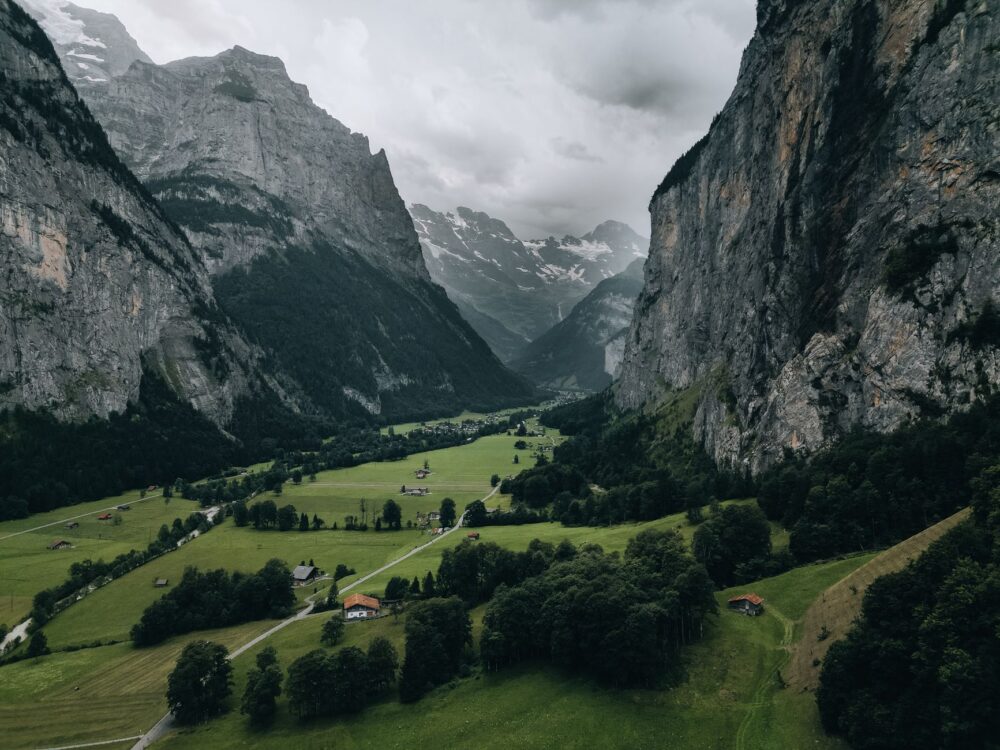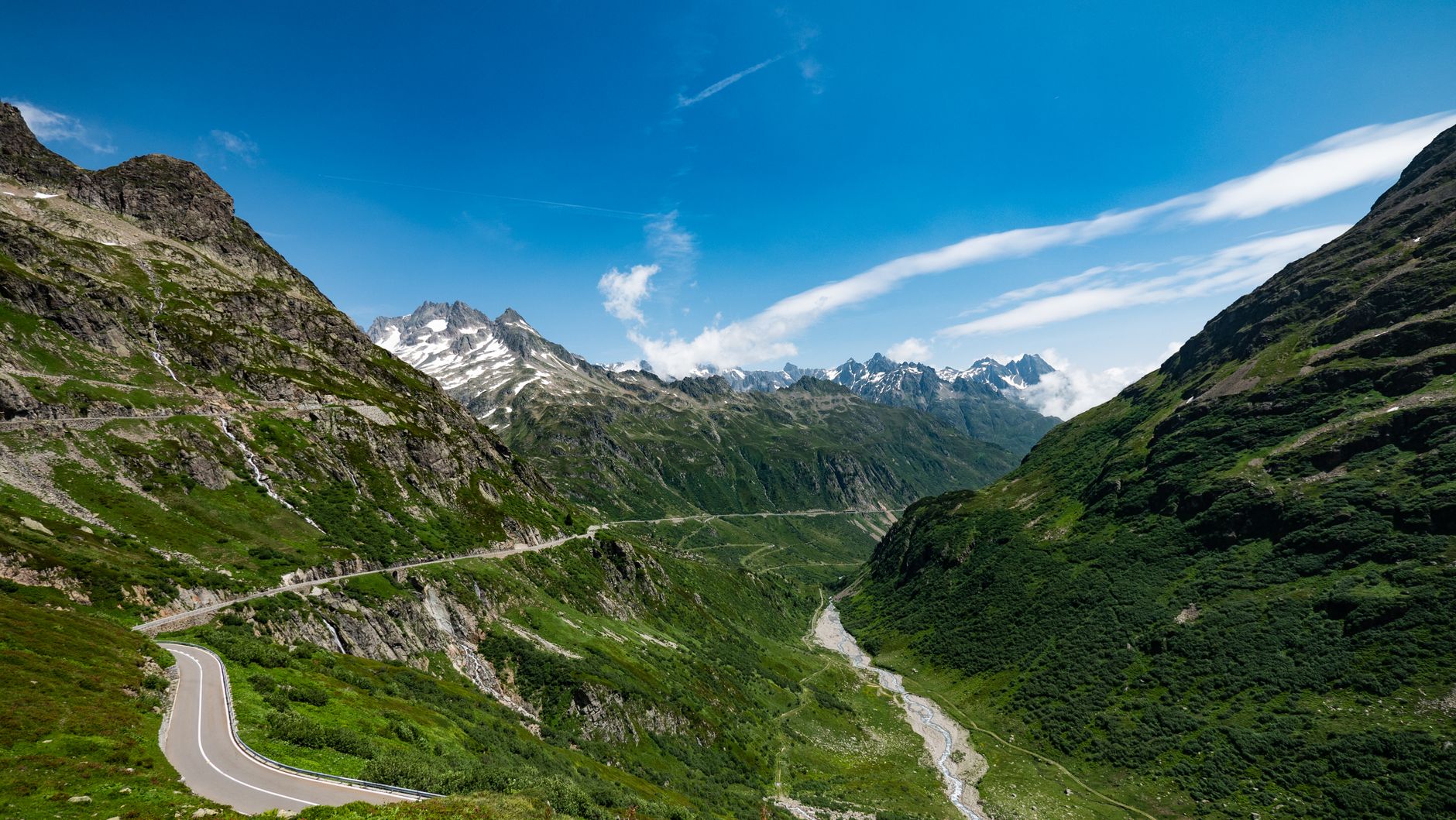

The silence in the Saas Valley, in the Swiss canton of Valais, is interrupted only by the murmur of the Saaser Vispa river and the distant cracking of the Fee Glacier. Suddenly, a yellow silhouette emerges from a hairpin turn carved into the granite rock. There is no roar of a diesel engine, nor any black smoke columns to tarnish the crystalline air at 1,800 meters above sea level. The legendary PostBus (CarPostal), the postal bus service that has structured Swiss rural life for over a century, glides past with an almost imperceptible whisper. It is a 100% electric vehicle, powered by local hydroelectric energy. This journey is not just a feat of modern engineering, but the living testimony of a silent revolution that is redefining social cohesion and ecological survival in the most isolated communities of the Alpine arc.
Historically, the high valleys of the Alps faced an unforgiving dilemma: winter isolation or environmental degradation caused by mass tourism and individual car traffic. Today, the Swiss response relies on «soft mobility» (sanfte Mobilität), an integrated public transport model that combines narrow-gauge railways, community cable cars, and electric mountain buses. This system not only guarantees the right to mobility for local residents but also preserves the fragile natural environment that constitutes their main economic livelihood. Decarbonizing transport in mountain communities is not an aesthetic luxury, but an existential necessity to halt the retreat of alpine glaciers.
A legacy of connection on yellow wheels
To understand the importance of the postal bus in Switzerland, one must look back to the horse-drawn carriage era of the 19th century. The federal postal service did not just deliver letters; it became the sole lifeline for inhabitants of the most remote hamlets in Graubünden, Ticino, and Valais. With the arrival of the combustion engine in 1906, the iconic yellow vehicles—equipped with the classic three-tone horn inspired by Rossini’s William Tell opera—took on the task of connecting deep valleys with the lowlands’ railway networks. The PostBus became a symbol of national identity and territorial cohesion.
Today, this network covers more than 12,000 kilometers of lines, reaching corners where no other public transport dares to venture. However, maintaining this level of coverage in the face of the climate crisis demanded a radical transformation. The state-owned enterprise PostFinance and its transport division committed to fully decarbonizing their fleet by 2040. In the alpine valleys, this process has acquired a special urgency. The transition involves not only changing engines but also redesigning the energy infrastructure of entire communities, turning local depots into smart charging hubs powered by small-scale hydroelectric plants and solar panels installed on the roofs of traditional chalets.
«The energy transition in the peaks is not measured in kilowatts, but in the trust of shepherds and hoteliers who know the bus will arrive on time, whether there are two meters of snow or a summer storm»
The challenge of topography: physics and batteries at 2,000 meters
Electrifying mountain transport presents technical challenges that do not exist in urban flatlands. Steep gradients of up to 15%, extreme temperatures dropping below minus twenty degrees Celsius in winter, and the need to run high-consumption heating systems represent a trial by fire for lithium-ion technology. Battery range, which can exceed 300 kilometers on flat terrain, is significantly reduced when climbing continuously for an hour to overcome elevation gains of over a thousand meters.
To overcome this obstacle, Swiss engineers have turned to the laws of physics and local geography. The energy recuperation system allows an electric bus to recover up to 40% of the energy consumed during its ascent when descending the other side of the pass. During the descent, the electric motor acts as a powerful generator and regenerative brake, preventing wear on mechanical brakes and recharging the battery cells naturally. Furthermore, route planning has been synchronized with high-power overhead pantographs at valley terminals, where vehicles charge during the ten-minute passenger boarding window.
Thermal management in extreme conditions
Extreme cold is the great enemy of battery chemistry. To prevent charging capacity from plummeting during winter nights in Graubünden, PostBus depots have been equipped with geothermal preheating systems. While the vehicle is plugged into the grid overnight, the cabin and battery pack are warmed using grid energy, ensuring the bus starts its day at the optimal operating temperature without consuming a single kilowatt of its driving range. This technological integration ensures the service maintains a 99.8% reliability rate, identical to that of the old diesel models.
Car-free communities: the Saas-Fee and Zermatt model
The impact of this transport revolution is most visible in communities that have decided to completely ban private automobiles. Saas-Fee and Zermatt, separated by the towering ridge of the Mischabel massif, are global pioneers in this approach. In Saas-Fee, visitors must leave their vehicles in a large parking lot at the entrance of the village. From that point on, public space belongs to pedestrians, children’s sleds, and a fleet of small electric delivery vehicles and community shuttles.
This car-free model is only possible thanks to an impeccable logistical network. Electric postal buses connect the Visp railway station, at the bottom of the Rhône Valley, with the Saas-Fee terminal every half hour. The transfer of passengers and luggage is an exercise in Swiss choreography: travelers step off the bus, and in less than five minutes, their bags are transferred to small electric carts operated by hotels or communal taxi services. The result is a mountain urban environment free of noise, smoke, and architectural barriers, where children play in the streets and the air retains high-altitude purity.

The Alpine Pearls network: conscious, emission-free tourism
The success of these local initiatives led to the creation of «Alpine Pearls,» an international association that today groups municipalities in Switzerland, Austria, Italy, Germany, and Slovenia committed to car-free tourism. To earn the «Pearl» seal, a community must guarantee that any traveler can reach their destination and move around the territory using exclusively public transport, bicycles, shared electric vehicles, or pedestrian paths.
In Switzerland, destinations like Disentis-Sedrun or Werfenweng (in neighboring Austria, but operating under the same mobility design principle) offer visitors a «mobility card» that grants unlimited access to all local transport for free or at a symbolic price included in the tourist tax. This approach radically changes the travel experience. The journey ceases to be a stressful chore behind the wheel and becomes part of the vacation itself. Tourists read, converse with locals, or gaze at snow-capped peaks through the wide panoramic windows of mountain buses and trains, integrating into the slow pace of the land.
Socioeconomic impact in peripheral valleys
Beyond the ecological benefits, decarbonizing and strengthening the public transport network has a profound social impact on alpine demographics. Many mountain regions in Europe suffer from depopulation and aging. Young people emigrate to cities due to a lack of opportunities and the difficulty of getting around without a car in valleys where basic services have gradually disappeared.

In Swiss valleys, the presence of regular, green, and affordable public transport acts as an umbilical cord that anchors the population to the territory. A student from a hamlet in the Engadin can attend high school in Chur, and an artisan from the Val d’Hérens can sell their products in the markets of Sion without needing to maintain a private car, the cost of which is prohibitive for younger incomes. Sustainable mobility thus reveals itself as the most effective social cohesion tool of the 21st century, guaranteeing territorial equity and access to essential public services for all citizens, regardless of where they live.
«Public transport is not a commercial service subject to the laws of supply and demand; it is the glue that holds a country’s geography together and ensures that no citizen is left to fend for themselves behind a mountain»
Last-mile logistics: from luggage to alpine milk
One of the most overlooked and fascinating facets of the electric PostBus is its multifunctional nature. On many of these mountain routes, the buses do not just transport people; they continue to fulfill their original mission of carrying mail, parcels, and light goods. In the highest valleys, where large private courier companies do not find it profitable to operate daily, the yellow bus is responsible for distributing e-commerce packages, medicines for local pharmacies, and spare parts for agricultural machinery.
This integrated logistics system utilizes adapted storage spaces in the back of the buses or special trailers designed not to compromise the vehicle’s aerodynamics. Even during the cheese-making season, some PostBus services help transport milk cans from high mountain farms down to valley dairy cooperatives. This shared use of infrastructure drastically reduces the number of commercial delivery vans on mountain roads, lowering pavement wear and minimizing overall CO2 emissions for the regional logistics sector.
Practical guide for the car-free traveler in the Alps
Traveling through the Swiss Alps without a car is not only viable but is the most comfortable and rewarding way to explore the region. To plan a trip based on soft mobility, it is essential to understand the tools and passes that facilitate the integration of different transport modes.
- The Swiss Travel Pass: The unified Swiss ticketing system, embodied in the Swiss Travel Pass, proves that total tariff integration is the fundamental pillar of democratic and sustainable mobility. This pass allows unlimited travel across the entire rail network of the Swiss Federal Railways (SBB), postal buses (PostBus), lake boats, and most urban transport systems in over 90 cities, in addition to offering significant discounts on mountain cable cars.
- The SBB Mobile App: This is the digital brain of your journey. It allows you to check real-time connections combining train, bus, cable car, and even walking routes. The precision of the schedules is legendary; short connection times are guaranteed thanks to the synchronized timetable system (Taktfahrplan), where all transport modes arrive and depart at regular, coordinated intervals.
- Iconic PostBus Routes: Do not miss the Grimsel Pass route or the crossing of the Simplon Pass. These lines, now partially operated with clean vehicles, offer spectacular views of glaciers and deep gorges, with stops at well-marked historic hiking trails.
- Luggage Transport Services: The Swiss Railways offer a luggage forwarding service from station to station or directly from hotel to hotel. Travelers can drop off their bags in the morning at a valley station and pick them up in the evening at their mountain hotel, allowing them to hike or take bus connections with complete freedom and lightness.
The horizon of total alpine decarbonization
The path toward the total decarbonization of alpine mobility is not without challenges, but the course is firmly set. As battery technology advances and green hydrogen begins to emerge as a viable alternative for extreme distances and harsher weather conditions, the Swiss model stands as a beacon of inspiration for other mountainous regions of the planet, from the Pyrenees to the Andes.
The transition to zero-emission fleets in remote valleys demonstrates that the geographical periphery can lead the vanguard of global ecological innovation. By protecting the silence of their valleys and the purity of their air, alpine communities not only secure their own future but also remind the world that true progress is not about moving faster, but about moving in perfect harmony with the environment that cradles us.