Introduction to Vienna’s Bread Culture
The aroma of toasted sourdough, wood-fired crusts, and caraway seeds defines the morning awakening in any Viennese neighborhood. This is not merely a daily consumer product; it is an anthropological pillar that has structured urban life since the days of the Austro-Hungarian Empire. In the Austrian capital, bread does not simply accompany a meal—it leads, explains, and solemnizes it. Exploring the city’s historic food markets means stepping into a living archive where traditional milling survives the relentless pace of industrial modernity.
Far from the standardized aisles of large supermarkets, Vienna’s open-air markets—led by the Naschmarkt and the Brunnenmarkt—function as sanctuaries where artisan bakers defend ancient cereal varieties. Here, rye is not an exotic choice, but the absolute protagonist. Dense, dark, and slightly tangy rye represents the resilience of an Alpine and Central European agriculture that refuses to surrender to refined wheat. Each loaf tells a story of eras when grain conservation during long, harsh winters determined the survival of entire communities.
The Historic Geography of Viennese Markets
To understand the present state of Viennese bread, tracing its historical cartography is essential. The city’s markets were born alongside ancient defensive bastions and the Danube’s fluvial trade routes. The Naschmarkt, with origins tracing back to the 18th century, began as a dairy and vegetable trading post where suburban farmers sold their harvest surpluses. Over the decades, bakery stalls assumed a central role due to the proximity of traditional ovens that supplied both the aristocracy and the working class.

Unlike other European markets that have transformed exclusively into tourist enclaves, Viennese markets retain a deeply rooted dual function. On one hand, they act as everyday pantries for district residents; on the other, they serve as a showcase for the cultural diversity characterizing contemporary Austria. Among stalls of organic vegetables and traditional butcher shops, market ovens display a bread variety spanning from Bohemian traditions to Hungarian influences. This blend of imperial influences explains why Viennese baking possesses such a rich and specific technical and sensory vocabulary.
Rye and Sourdough: Science and Patience
The production of rye bread in Vienna adheres to strict biological and chemical laws passed down through generations of master bakers. Unlike wheat, rye contains very low gluten content and a high concentration of pentosans—complex sugars that bind water differently and hinder the formation of an open crumb structure. For this reason, pure rye bread inevitably requires natural sourdough (Sauerteig), whose acidity slows amylase activity and allows the crumb to acquire that compact, moist, and dark mahogany texture.
In the bakehouses supplying Viennese markets, fermentation can last up to twenty-four hours. Bakers control ambient temperature with millimetric precision, aware that any variation alters the microbiological balance of wild yeasts and lactic bacteria. This slow process not only guarantees optimal shelf life without chemical additives, but also develops complex flavor profiles dominated by notes of malt, dark cocoa, and toasted nuts.

The Breakfast Ritual and the Cold Cut Culture
The significance of bread in Vienna cannot be fully grasped without analyzing its role in the daily breakfast ritual (Frühstück). Viennese breakfast is not a rushed routine, but a meditative pause usually structured around a board of varied breads. Small pieces, such as the Kaisersemmel—with its characteristic star-shaped relief—coexist with generous slices of dark rye bread spread with fresh cultured butter and accompanied by local cured meats like Tiroler Speck or aged mountain cheeses.
In market stalls, vendors slice bread to order, adjusting thickness according to the customer’s intended culinary use. A thin slice of caraway rye serves as the ideal base for marinated herring or pungent radish spreads, while thicker rustic loaves accompany beef stews and traditional soups. This gastronomic versatility turns bread into the true binding agent of Austrian cuisine, balancing the richness of animal fats and the acidity of fermented vegetables.
Emblematic Varieties: Beyond Schwarzbrot
The baking repertoire sold in Vienna’s markets encompasses dozens of traditional denominations. *Schwarzbrot* (black bread) tops the list, but alongside it exist specialties with highly specific geographical names and ingredients. The *Wachauer Laberl*, an irregular-crusted, highly open-crumbed roll native to the Danube wine region, is made with an enriched dough including spices like fennel and coriander. Its production is so protected that only a few traditional bakers are authorized to craft it under original standards.
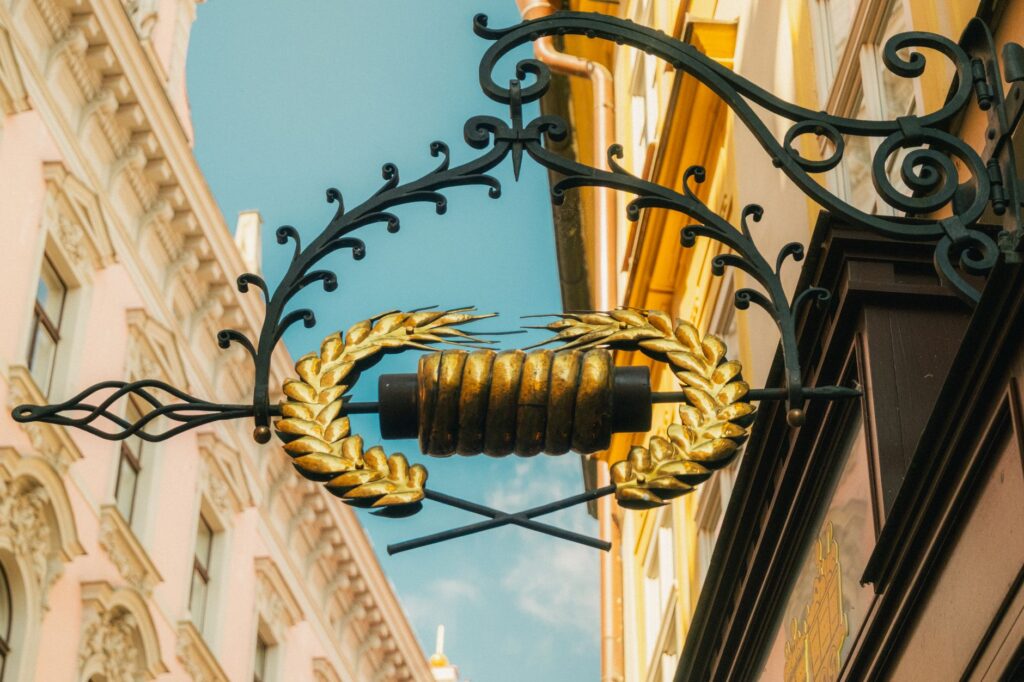
Artisanal bread in Vienna is not a nostalgic luxury item, but a daily contract between the farmer, the miller, and the consumer that preserves the biodiversity of the Alpine soil.
Another essential variety is *Landbrot* (country bread), combining rye and wheat in varying proportions depending on the production zone. It is frequently enriched with boiled potato in the dough (*Erdäpfelbrot*), a historical technique designed to retain moisture longer and provide a tender texture that remains intact for days. These recipes prove that traditional Viennese baking stems from profound economic wisdom aimed at maximizing local agricultural resources.

Generational Turnover and New Bakehouses
Over recent decades, the rise of industrial bakery goods and frozen doughs threatened to erase the small family-run bakehouses of Vienna’s neighborhoods. However, recent years have witnessed a renaissance driven by a new generation of bakers trained in scientific techniques yet deeply committed to tradition. These young artisans recover antique stone mills, select pesticide-free grains cultivated in Lower Austria, and reclaim the value of prolonged fermentations.
In the markets, these new projects coexist with century-old stalls run by families with three generations behind the counter. This synergy has revitalized public interest, especially among younger demographics. Urban baking workshops and guided sourdough tastings have become regular fixtures in Vienna’s markets, transforming weekly shopping into an educational and sensory experience. Modern consumers no longer seek merely cheap food, but traceability, honesty, and environmental respect.
Practical Information for Exploring Vienna’s Bread Markets
For travelers and gastronomic enthusiasts wishing to explore Vienna’s bread culture firsthand, planning the itinerary according to market schedules and local customs is recommended. The best time to visit spaces like the Naschmarkt or the Kutschkermarkt is in the morning, between 8:00 and 11:00 AM, when loaves fresh from the oven reach their optimal temperature and texture.

- Naschmarkt: Located on Wienzeile, open Monday through Saturday from 6:00 AM to 7:30 PM (food and bakery stalls usually close around 6:00 PM). Ideal for finding both traditional Viennese stalls and international specialties.
- Kutschkermarkt: Situated in the 18th district (Währing), renowned for its neighborhood atmosphere and farmers’ markets on Fridays and Saturdays, where small producers sell pure rye breads baked in rural wood-fired ovens.
- Brunnenmarkt: In the 16th district (Ottakring), offering a fascinating multicultural perspective blending traditional Austrian bakeries with Middle Eastern and Eastern European bakehouses.
- Buying Tip: Always request bread sliced to order (*geschnitten*) if you lack a proper serrated knife in your accommodation, and store rye loaves in linen bags or paper to preserve the crust.
Visual and Heritage Conclusion
Walking among the stalls of Viennese markets at dusk, when the warm lights of bakeries illuminate piles of dark loaves, reveals the true cultural dimension of bread in this city. It is not merely flour and water, but an accumulated archive of patient gestures, silent temperature calculations, and an agricultural landscape shaped by human hands over centuries. In every dense crumb of rye survives the memory of an empire that found its most enduring sustenance in the sobriety of the countryside.
Buying bread in Vienna is an act of respect toward a millennial chain where time, rather than haste, continues to dictate food quality.
Thus, the traveler who pauses to savor a slice of artisanal Viennese bread right in the middle of a market not only tastes an excellent product, but participates in an unalterable communal ritual. Vienna’s bread culture proves that the most lucid modernity does not consist in inventing artificial flavors, but in knowing how to preserve, with rigor and sensitivity, the infinite complexity of the essential.