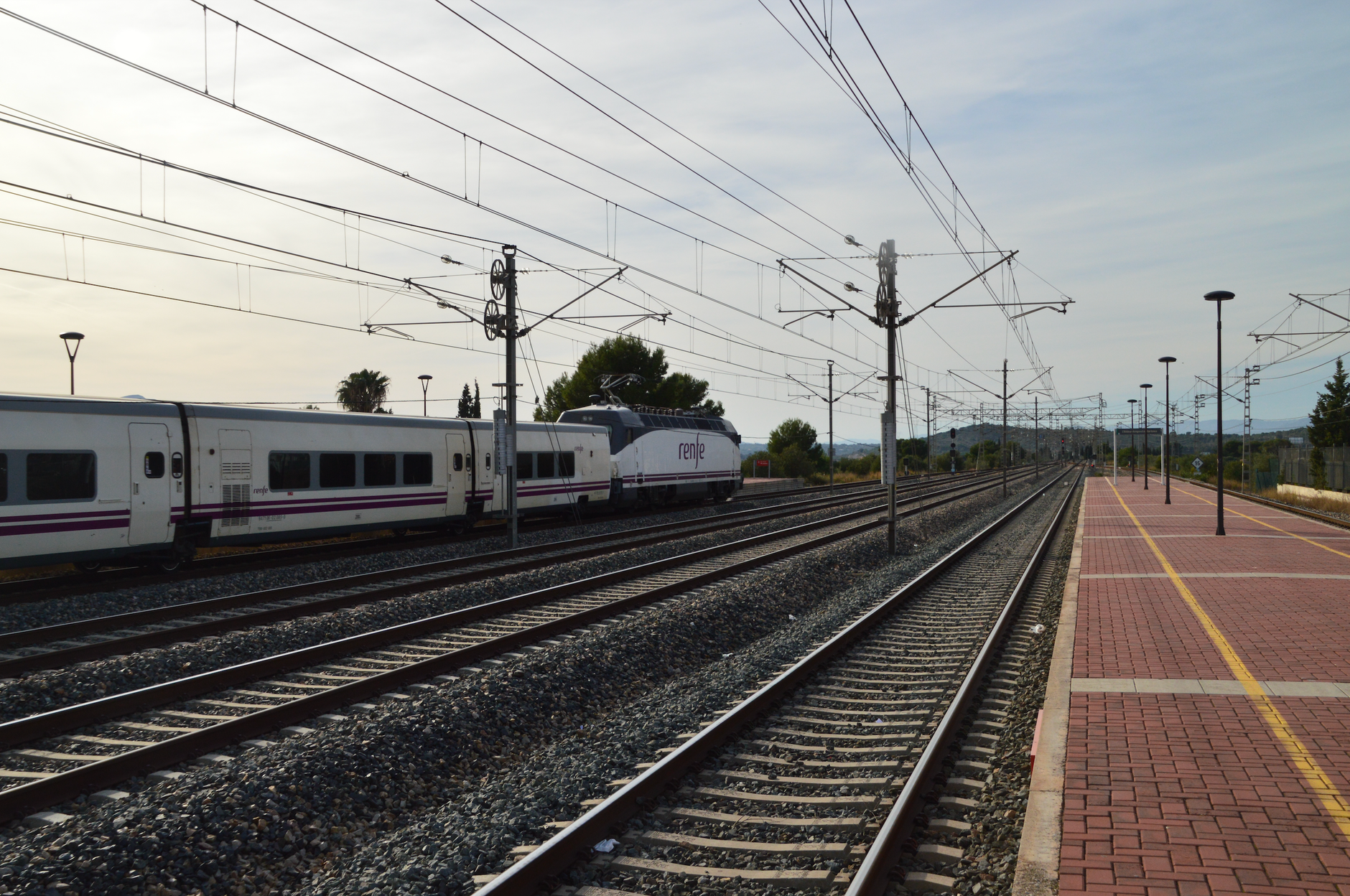
Introduction to the backbone of peninsular mobility
The Iberian Peninsula currently boasts the most extensive high-speed railway network in Europe and the second largest in the world, surpassed only by China. This massive deployment of infrastructure, initiated in the late 20th century with the Madrid-Seville line, has fundamentally transformed the economic geography, tourism, and daily commutes of millions of citizens. Far from being merely a fast mode of transport, the peninsular high-speed network has solidified itself as a premier geopolitical and civil engineering project, designed to overcome historical orographic barriers and bring peripheral territories closer to major European decision-making centers.
The planning and construction process for these railway corridors has required complex technical solutions, ranging from the drilling of kilometer-long tunnels through the Central System and the Cantabrian Mountains to the engineering of monumental viaducts across river valleys. Unlike other European nations where high-speed rail was superimposed onto dense pre-existing networks, the peninsula often saw the creation of a grid system from scratch, adapted to standard international track gauge to ensure cross-border interoperability—a technical and regulatory challenge that has defined the last three decades of transport policy.
The historical milestone of the Madrid-Seville line and network takeoff
The turning point in the history of modern transport in Spain occurred in April 1992 with the launch of the New Rail Access to Andalusia (NAFA). Coinciding with the Seville Universal Exposition, this line demonstrated the technical and commercial viability of high-speed rail in a country with complex topography and considerable intercity distances. The decision to adopt the international standard track gauge (1,435 millimeters) instead of the traditional Iberian gauge (1,668 millimeters) marked a strategic departure that would dictate the future development of the entire national rail system.
Throughout the 1990s and the early 2000s, the model expanded northeast toward the Madrid-Barcelona-French Border corridor, consolidating a vital economic axis that concentrates a substantial share of the country’s GDP. This infrastructure not only reduced travel times between the nation’s two largest metropolises to under three hours but also massively diverted commercial aviation traffic along that corridor, establishing a new paradigm of sustainability and efficiency in medium and long-distance transport.
Civil engineering and overcoming orographic barriers
Constructing high-speed lines across the Iberian Peninsula means confronting one of the most rugged topographies in Europe. The presence of parallel and transverse mountain ranges has demanded an extraordinary effort from engineers and builders. To maintain the strict gradients and curvature radii required by high-speed trains—capable of exceeding 300 kilometers per hour—it has been necessary to design alignments where tunnels and viaducts represent a very high percentage of the total length of the lines.
A paradigmatic example of this cutting-edge engineering is found in the northern and northwestern access routes, where lines must navigate the Central System and the Cantabrian Mountains. The geological complexity of these rock formations has required the use of state-of-the-art tunnel boring machines and the implementation of advanced ventilation, evacuation, and safety systems. Likewise, viaduct design has evolved to minimize environmental impact on river valleys and protected natural areas crossed by the rail corridors.
Track gauge and European interoperability
One of the greatest historical challenges faced by the peninsular railway has been the incompatibility of the traditional Spanish track gauge with the European standard. While the rest of Europe predominantly adopted the UIC gauge (1,435 mm), Spain and Portugal inherited a 1,668 mm gauge which, although providing greater stability in difficult terrain, technologically isolated the peninsular system from the rest of the continent.
To resolve this limitation without needing to abruptly convert thousands of kilometers of existing tracks, railway engineering developed advanced gauge-changing systems in service, allowing trains with variable axles to run interchangeably on Iberian and standard gauge tracks. Nevertheless, the long-term goal remains the progressive conversion of the main freight and passenger corridors to the European gauge, ensuring true seamless connection with the Trans-European Transport Networks (TEN-T).
Market liberalization and low-cost high-speed rail
In recent years, the peninsular rail sector has undergone a profound commercial transformation resulting from the liberalization of the passenger market, in compliance with European Union directives. The arrival of new private operators to compete with the incumbent historical operator has democratized access to high-speed rail, multiplying frequencies and drastically reducing ticket prices.
This market opening has generated an exponential increase in passenger numbers, placing high-speed railway stations at the center of urban mobility. The emergence of low-cost services has transformed the traveler profile, turning the train into an everyday option for work, study, and leisure commutes previously made by road or air. However, this surge in demand has also posed new challenges in managing infrastructure capacity, especially at major rail nodes such as Madrid and Barcelona.
High-speed rail has ceased to be a symbol of technological prestige and has become the critical infrastructure that underpins the economy and territorial cohesion of the peninsula.
Cross-border connectivity and the Atlantic Corridor
While the domestic network is highly developed, high-speed rail connection with Portugal remains one of the most significant pending tasks for peninsular mobility. Although political and technical commitments exist to connect Madrid to Lisbon and link Galicia with northern Portugal via the Atlantic Axis, progress has been conditioned by budgetary differences and divergent investment schedules between the two states.
Conversely, the connection with France through the eastern Pyrenees is fully operational, though its logistical performance for freight transport remains below initial expectations due to limitations on access ramps and a lack of equivalent high-capacity connections on the French side. The future development of the Atlantic Corridor and the Mediterranean Corridor remains essential to consolidate the peninsula as the premier logistical gateway for goods and passengers between Europe, Africa, and the Atlantic.
Environmental sustainability and energy efficiency
In the current context of climate emergency, the railway stands out as the most sustainable and efficient mass transport mode. Powered overwhelmingly by electricity generated from renewable sources, peninsular high-speed trains emit an insignificant fraction of the greenhouse gases produced by road transport or commercial aviation.
Administrations and railway operators are also implementing ecodesign measures in rolling stock, regenerative braking systems, and intelligent management of electricity consumption at traction substations. Despite these clear benefits, the construction of new high-speed lines generates significant territorial and environmental impact during construction phases, requiring rigorous environmental impact statements and the execution of corrective measures, such as wildlife crossings and landscape integration of the routes.
Practical information for the rail traveler
Planning a trip on the Iberian Peninsula’s high-speed network requires understanding a series of essential operational guidelines to ensure a smooth experience. Unlike road or bus transport, high-speed stations feature security controls similar to those at airports, so it is recommended to arrive at the facilities at least thirty minutes before the train’s scheduled departure time.
Tickets are typically sold with various fare types and classes—ranging from economical options without flexibility to premium modalities including onboard catering services. Thanks to the interoperability of current sales platforms, it is possible to combine journeys from different operators under unified passenger rights regulations, which guarantee automatic compensation for significant delays exceeding limits established by European legislation.
The future of the train: digitalization and next-generation high-speed rail
The technological horizon for the peninsular railway involves the complete digitalization of traffic management and the adoption of advanced signaling systems such as ERTMS (European Rail Traffic Management System). These technologies allow safety intervals between trains to be reduced, increasing the capacity of existing lines without the need to build new parallel tracks.
Likewise, research focuses on the development of lighter, more aerodynamic, and efficient trains capable of optimizing energy consumption on demanding routes. The integration of artificial intelligence in predictive maintenance of tracks and overhead lines guarantees very high punctuality levels, cementing the high-speed train as the undisputed pivot for sustainable mobility in 21st-century Southern Europe.
Investing in the railway network is not just betting on speed, but guaranteeing a future where geographical distance is no longer an obstacle to equal opportunities among territories.