
A Kingdom Suspended Between Mists and Sacred Peaks
The Kingdom of Bhutan stands as one of the most singular geographies on the planet, a territory where the towering Himalayan mountain range defines not only the physical horizon but also the pulse of daily life. Far from the accelerated dynamics of mass tourism, this country has built an identity rooted in the balance between modernity and the strict conservation of its ancestral values. Snow-capped peaks, deep valleys, and crystal-clear rivers compose an exceptional scenic backdrop that captivates those who venture within its borders.
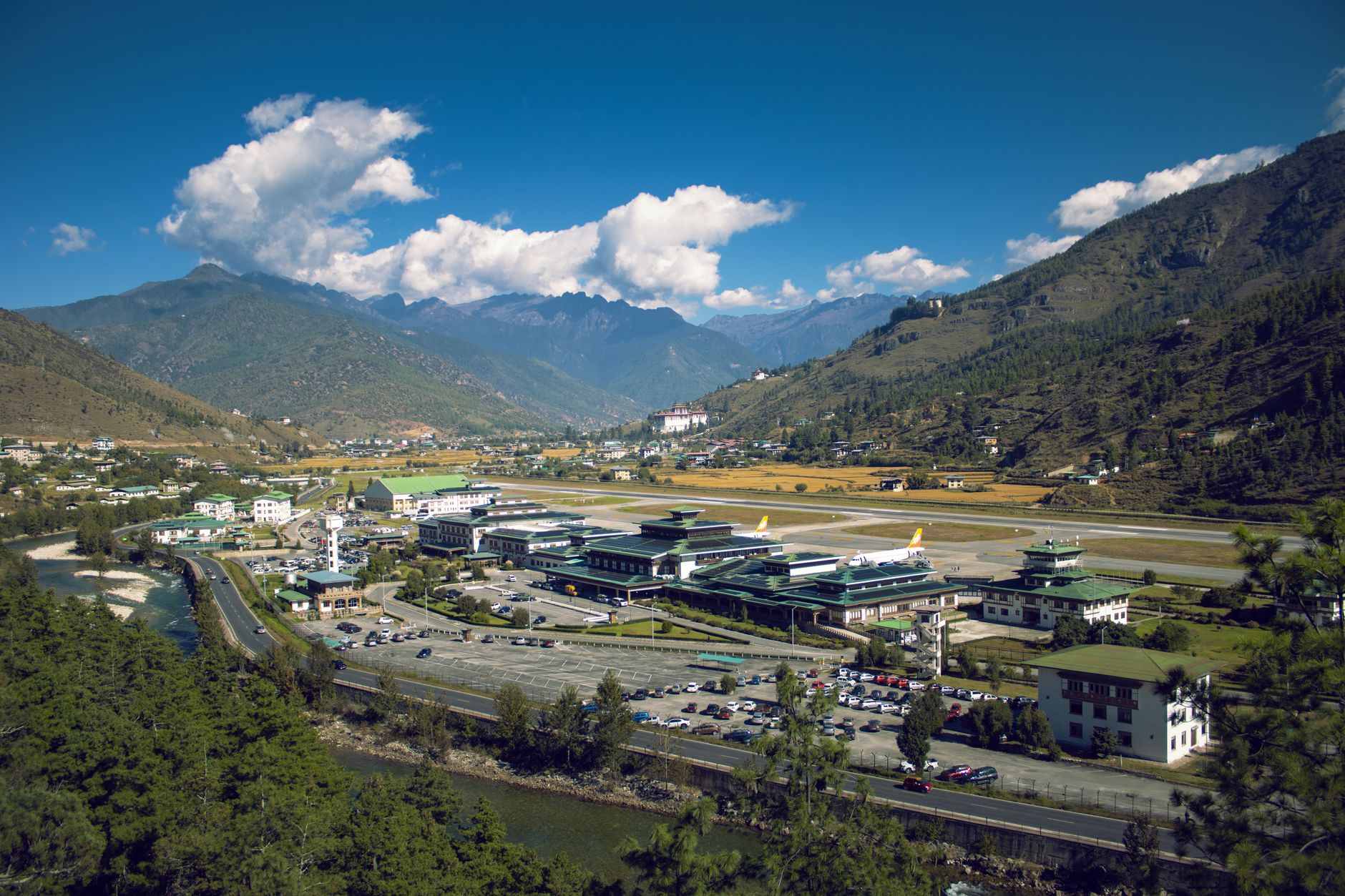
Arrival at Paro Airport, nestled in a narrow valley surrounded by mountains exceeding five thousand meters, constitutes a clear statement of intent. Aircraft must execute highly technical maneuvers guided exclusively by the expertise of a select group of authorized pilots. This initial contact with Bhutanese territory anticipates a journey where wild nature and human intervention treat one another with mutual respect, establishing a tacit pact that prioritizes environmental integrity above any unbridled expansion.
The Philosophy of Gross National Happiness as a Compass
Unlike most contemporary nations that measure economic success exclusively through Gross Domestic Product, Bhutan introduced an alternative indicator in the late nineteen-seventies: Gross National Happiness (GNH). This official doctrine dictates that socioeconomic development must seek a harmonious balance with the spiritual and cultural values of society. GNH rests upon four fundamental pillars: sustainable and equitable socioeconomic development, environmental conservation, the preservation and promotion of culture, and good governance.
Gross National Happiness is not a romantic chimera, but a rigorous state policy that conditions every legislative decision and infrastructure project undertaken in the country.
This holistic approach translates into concrete regulations affecting diverse sectors such as agriculture, construction, and tourism. For instance, legislation mandates that at least sixty percent of the national territory must remain under permanent forest cover, a goal consistently met through strict forestry policies. Thus, Bhutanese forests act not merely as green lungs, but also as vital carbon sinks within the context of global climate change.
Traditional Architecture: The Art of Building Without Iron Nails
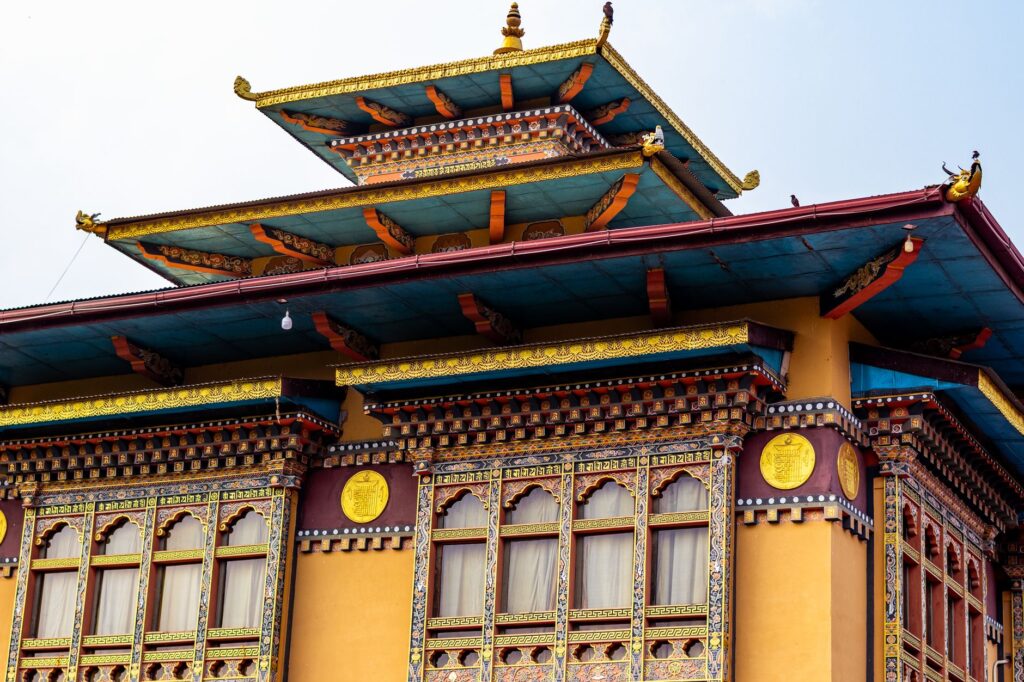
Bhutan’s urban and rural landscape is characterized by an aesthetic uniformity rarely found elsewhere in Asia. Buildings strictly adhere to the canons of traditional architecture, known as zorig chusum, which encompasses thirteen traditional arts and crafts. Residential structures, called *khyim*, and imposing fortress-monasteries, known as *dzongs*, are erected using centuries-old techniques based on stone, solid timber, and rammed earth, frequently without employing a single iron nail in their primary structures.
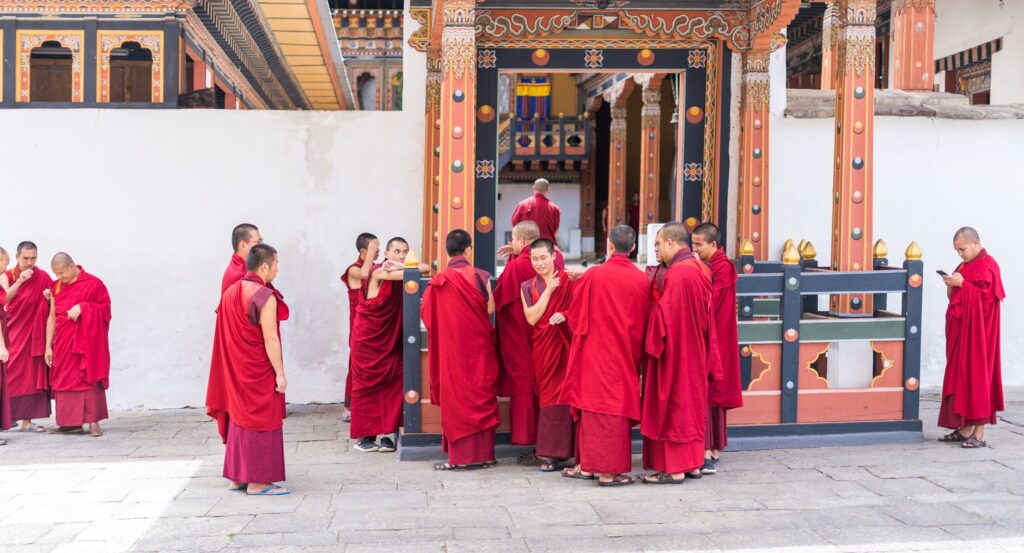
The *dzongs* represent the epicenter of administrative and religious life in each district. These monumental structures, characterized by battered walls, small high windows, and complex polychrome wooden roofs, house both civil authorities and monastic communities. Walking through their interior courtyards reveals the profound intertwining of temporal power and Buddhist faith, two spheres that walk hand in hand in Bhutan.
Spirituality as Everyday Social Fabric
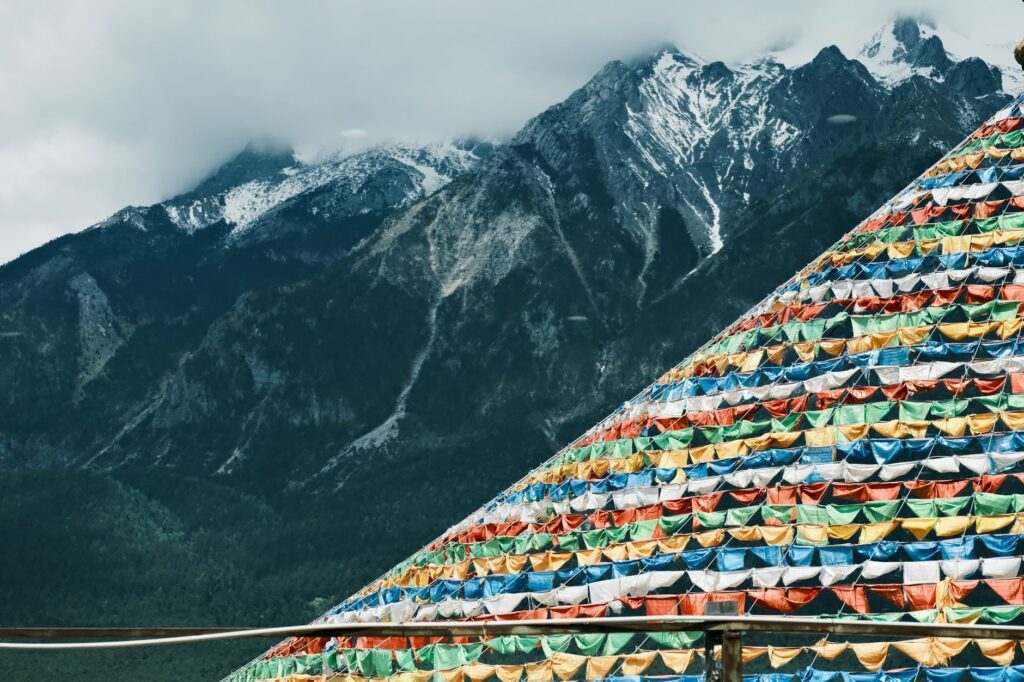
Tibetan Buddhism permeates every corner of Bhutanese life. Vibrantly colored prayer flags—white, yellow, green, red, and blue—flutter incessantly across mountain passes, bridges, and rooftops, dispersing blessings with the wind. Rock monasteries and cliffside temples are not mere tourist attractions, but active centers of devotion and study where young novices memorize sacred texts to the sound of Tibetan singing bowls and ceremonial trumpets.
Among all sanctuaries, the celebrated Taktshang monastery, popularly known as the Tiger’s Nest, stands out, clinging precariously to a vertical cliff nine hundred meters above the Paro Valley. Its ascent, through mossy pine forest trails, demands considerable physical effort rewarded by the profound quietude of the sacred enclosure. Pilgrimage to these sacred sites constitutes an act of spiritual purification and renewal for both local residents and respectful travelers.
Sustainable Tourism: The High-Value, Low-Impact Model
To prevent the detrimental effects of overtourism that have degraded other heritage destinations in the Himalayas, the Bhutanese government implemented a model based on the principle of «high value, low impact.» This system relies on a daily tourism fee, formally termed the Sustainable Development Fee (SDF), paid by international visitors. Funds collected through this fee are directly allocated to public education, universal healthcare, and environmental conservation programs.
This approach ensures that tourism is not a source of ecological or social deterioration, but a controlled resource directly benefiting local communities. Local tour operators work under strict guidelines to ensure itineraries respect the carrying capacity of ecosystems and minimize visitors’ carbon footprints during their stay in the country.
Protected Biodiversity and Biological Corridors
Bhutan’s natural wealth extends far beyond its dense forests. Situated at the confluence of the Indomalayan and Palearctic ecozones, the country harbors extraordinary biodiversity including globally endangered species such as the snow leopard, the takin—the national animal—the red panda, and the Bengal tiger. To ensure the survival of these populations, Bhutan has established a network of national parks and nature reserves covering over forty percent of its land area.
A pioneering aspect of its environmental policy is the creation of a system of biological corridors connecting protected areas. This network enables wildlife to migrate freely across different altitudinal zones without encountering insurmountable urban or agricultural barriers, reducing human-wildlife conflict and maintaining the genetic diversity of native species.
Local Gastronomy: Flavors of the High Mountains
Bhutanese cuisine reflects the rigorous conditions of its mountainous geography, prioritizing energy-dense ingredients that help combat high-altitude cold. The central element of the diet is red rice, a native variety cultivated in terraced valleys distinguished by its firm texture and characteristic terracotta color. It accompanies virtually every dish, with chili taking absolute prominence, used not merely as a condiment but as a principal vegetable.
The national dish, known as ema datshi, consists of a direct and robust combination of hot chiles cooked with a thick sauce made from homemade yak or cow cheese, demonstrating that culinary simplicity can house great complexity of flavors.
Alongside ema datshi, gastronomy includes preparations of dried yak or pork meat, buckwheat noodle soups, and traditional momos—dumplings filled with vegetables or meat consumed throughout the Himalayas. Meals are typically accompanied by *suja*, a salted tea infused with yak butter, essential for warming up after long hikes along mountain trails.
Contemporary Challenges Facing Modernization
Despite its firm commitments to tradition and the environment, Bhutan currently faces complex challenges stemming from globalization and widespread access to digital technologies. Younger generations of Bhutanese experience tensions between the desire to preserve their cultural heritage and the allure exerted by economic opportunities and Western lifestyles. Rural migration toward urban centers such as Thimphu raises questions regarding the sustainability of traditional farming communities.
Likewise, climate change represents a direct and measurable threat to high-mountain ecosystems. The rapid retreat of Himalayan glaciers increases the risk of sudden flash floods from glacial lake outburst floods (*GLOF*), a phenomenon endangering infrastructure situated in river valleys. National authorities actively participate in international forums to demand greater global climate action, reminding the world that countries with the lowest historical emissions are often the most vulnerable to their consequences.
Art and Craft as Guardians of Identity
The thirteen traditional Bhutanese arts do not constitute static museum relics, but living crafts rigorously transmitted from generation to generation in institutions such as the Zorig Chusum Institute in Thimphu. From woodcarving and thangka painting—religious scroll paintings—to weaving complex patterns on backstrap looms and silversmithing, each discipline demands years of apprenticeship and deep spiritual discipline.
The preservation of these artisanal techniques ensures that the kingdom’s material culture maintains its authenticity and aesthetic excellence in the face of mass industrial production. Textiles crafted from natural wool and vegetable dyes, especially the male *gho* and female *kira*, remain mandatory attire in public offices, schools, and official ceremonies, reinforcing an unbreakable sense of community belonging.
Practical Information for the Responsible Traveler
Planning a visit to Bhutan requires understanding the administrative and financial requirements established by the country’s Department of Tourism. International travelers must process their permits through authorized tour operators and pay the Sustainable Development Fee for each night of their stay. The best time to visit the kingdom comprises the spring months (March to May) and autumn (September to November), when clear skies allow views of snow-capped peaks and traditional *tshechus* or religious festivals are held.

It is strongly recommended to purchase travel insurance covering emergency high-mountain medical evacuations, given that health infrastructure in remote areas is limited. Respect for local customs, modest dress when visiting temples, and refraining from handing out money or candy to children along trekking routes are basic rules of courtesy ensuring harmonious and respectful coexistence with the local population.
A Legacy of Balance for the Global Future
The journey through Bhutan leaves an enduring impression that another model of development is possible, one where economic growth is not prioritized over ecological health or social cohesion. The firmness with which the kingdom protects its pristine landscapes, ancient architecture, and spiritual fabric offers a valuable lesson for a contemporary world immersed in climate and cultural crises.
The experience of traversing its silent valleys confirms that a society’s true wealth lies in its capacity to care for its environment and its people. Far from being a territory anchored in the past, Bhutan projects itself into the future as a living laboratory of sustainability, demonstrating that the preservation of identity and openness to the world can coexist in harmony.
Source in EN: Diario Las Américas